Tesla Home Charging Times: The 2026 Lineup at a Glance
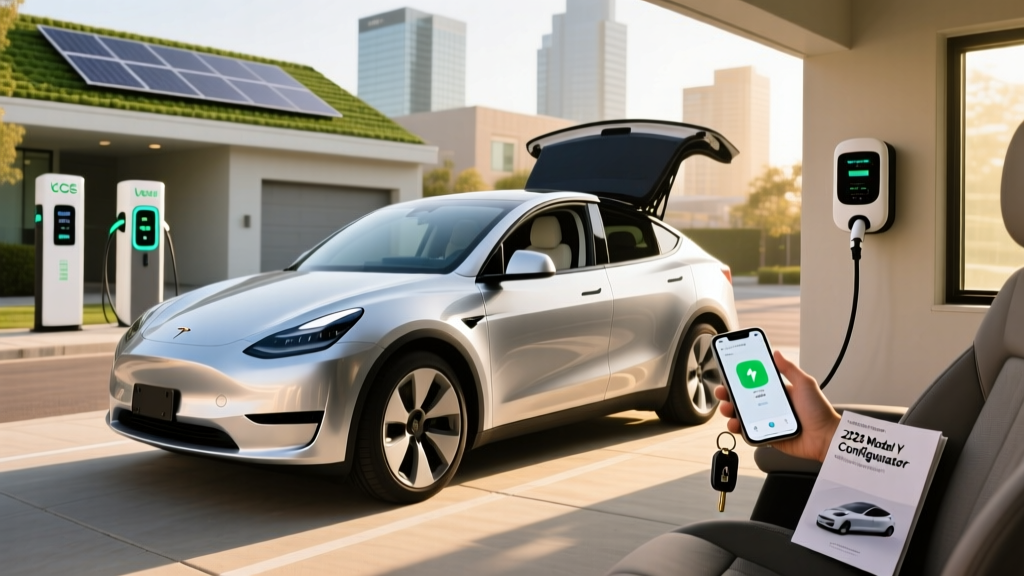
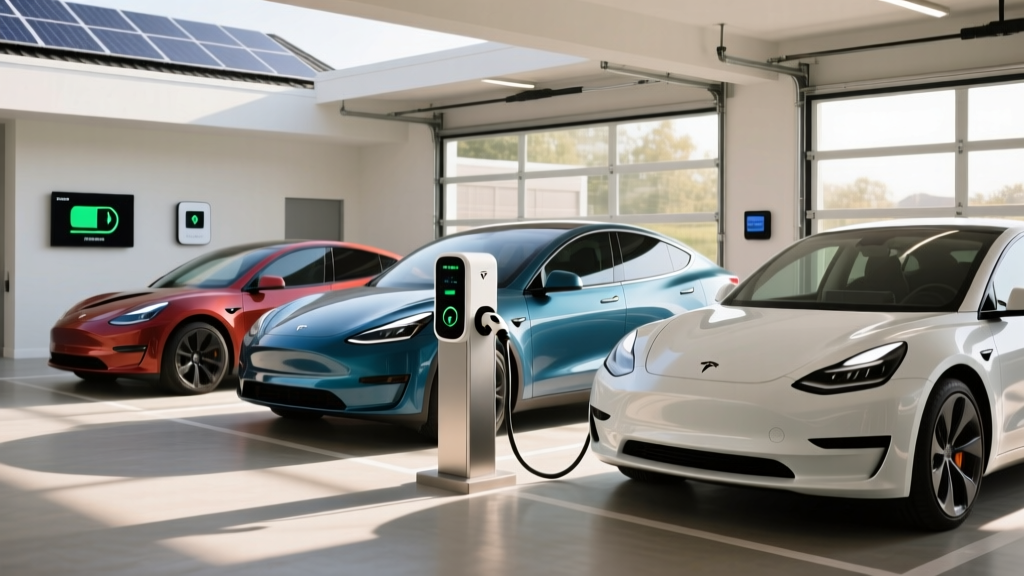
If you're asking how long to charge a Tesla at home, the honest answer depends on two things you control: the circuit you install, and which Tesla you plug in. A 60-amp Level 2 wall connector on a Model 3 Long Range adds roughly 44 miles of range per hour — enough to refill a depleted pack overnight. Plug that same car into a standard 120V outlet and you're looking at four days, not four hours. Below, we break down real 2026 charge times across the lineup using Tesla's published onboard-acceptance rates and EPA range figures.
| Model (trim) | Battery (kWh usable) | EPA range (mi) | Level 2 time 0–100% | Mi/hr at 48A |
|---|---|---|---|---|
| Model 3 RWD | ~60 (LFP) | 272 | ~6.0 hr | ~44 |
| Model 3 Long Range AWD | ~79 (NMC) | 363 | ~7.5 hr | ~44 |
| Model 3 Performance | ~79 (NMC) | 315 | ~7.5 hr | ~42 |
| Model Y Long Range AWD | ~79 (NMC) | 320 | ~7.5 hr | ~42 |
| Model Y Performance | ~79 (NMC) | 285 | ~7.5 hr | ~38 |
| Model S Long Range | ~100 (NMC) | 402 | ~9.5 hr | ~42 |
| Model X Long Range | ~100 (NMC) | 348 | ~9.5 hr | ~37 |
| Cybertruck AWD | ~123 (NMC) | 340 | ~11.5 hr | ~30 |
Source: fueleconomy.gov and Tesla's 2026 owner manuals. Times assume a continuous 48A/240V circuit and warm battery; cold packs precondition more slowly.
Level 1 vs Level 2 vs Wall Connector: What's Actually Happening
The single biggest variable in how long to charge a Tesla at home is whether you're using Level 1 (120V), a mobile connector on a 240V dryer outlet, or a hardwired Tesla Wall Connector. The car itself is not the bottleneck — every 2026 Tesla accepts at least 11.5 kW on Level 2 (48 amps), and the Cybertruck can accept up to 17 kW when paired with an 80-amp Wall Connector.
| Setup | Voltage / Amps | Power (kW) | Mi/hr added | 10–80% time |
|---|---|---|---|---|
| Level 1 (standard outlet) | 120V / 12A | ~1.4 | ~4 | ~44 hr |
| Mobile Connector, NEMA 14-50 | 240V / 32A | ~7.7 | ~30 | ~7 hr |
| Wall Connector (48A) | 240V / 48A | ~11.5 | ~44 | ~5 hr |
| Wall Connector (80A, Cybertruck) | 240V / 80A | ~17.0 | ~44 | ~6 hr |
Two physics notes that matter in the real world:
- kW is power (how fast electrons flow); kWh is energy (how much the battery holds). A 79-kWh battery charged at 11.5 kW takes roughly 79 ÷ 11.5 = 6.9 hours, plus ~5–10% overhead for thermal management and the top-of-charge taper.
- Charging slows above ~80% SoC. The last 20% can take as long as the first 60% because the Battery Management System throttles current to protect the cells. For daily driving, schedule your Tesla to stop at 80% unless you need a full pack for a road trip.
Tesla's EPA numbers assume a blended drive cycle. Expect 5–10% less on sustained 75-mph highway runs, and 20–35% less in sub-freezing weather without preconditioning. A Model 3 Long Range rated at 363 EPA miles typically delivers 310–330 highway miles in mild weather and 240–280 in a 20°F winter commute.
Model 3, Model Y, S, X, Cybertruck: Home-Charging Profiles
Model 3 (RWD, Long Range, Performance)
The base RWD uses an LFP (lithium iron phosphate) pack. LFP is heavier and slightly less energy-dense than NMC, but it tolerates daily 100% charges and degrades more slowly — Tesla recommends charging LFP to 100% at least weekly to keep the BMS calibrated. The Long Range and Performance trims use NMC chemistry and should be kept at 80% for daily use. On a 48A Wall Connector, every Model 3 variant refills overnight; a typical 40-mile daily commute replaces in under an hour.
Model Y (Long Range, Performance)
Same 79-kWh NMC architecture as the Model 3 LR, but the taller, heavier crossover sacrifices roughly 40 miles of range. Home charging behavior is identical — 44 mi/hr on a Wall Connector. The Juniper-refreshed Model Y also runs a more efficient heat pump, which narrows the winter range gap versus older versions.
Model S and Model X
The ~100-kWh packs here are the reason these models need 9–10 hours on a 48A circuit. If you regularly drive the Model S's full 402-mile EPA range in a day (road-trip territory), plan on a dedicated 60-amp circuit and a Wall Connector to guarantee a full refill before morning. Model X towing duty cycles push consumption above 350 Wh/mi, which stretches home refill time further.
Cybertruck
The Cybertruck's ~123-kWh pack is the largest Tesla sells, and it's the only current Tesla that benefits from an 80-amp Wall Connector (17 kW acceptance). On a 48A circuit, budget 11–12 hours for a full charge — fine for overnight, tight if you tow and need a same-day turnaround. Real-world highway efficiency is around 450–500 Wh/mi, so a 300-mile day of towing can consume the entire pack.
What a Home Installation Actually Costs
The Wall Connector itself is $420 from Tesla. The electrical work is where variance lives. Most 2026 installs we've surveyed fall into three buckets:
- Best case (panel adjacent to garage, spare 60A breaker): $600–$1,200 for conduit, wiring, permit, and a licensed electrician's labor.
- Typical case (50–80 ft run through walls/attic, new 60A breaker): $1,400–$2,400.
- Panel upgrade required (older 100A service to 200A): add $2,000–$4,500.
Tesla's in-app installer marketplace and the federal Residential Clean Energy Credit (IRC §25D) can offset 30% of equipment and installation through 2032. Check with a tax professional — this is separate from the §30D vehicle credit.
Charging Cost at Home vs. Gas and Supercharging
At the U.S. residential average of $0.165/kWh (EIA, 2026), fully charging a Model 3 Long Range (79 kWh) costs about $13 — roughly equivalent to 4 gallons of gas at $3.30/gal. Over 15,000 miles a year, that's approximately $620 in home electricity versus $1,600+ in gasoline for a comparable 28-MPG ICE sedan. Supercharging at $0.35/kWh roughly doubles the home rate, so the economic case for a Tesla hinges on home access.
Tax Credits, Pricing, and Which Trim Pays Back
Federal §30D eligibility for 2026 Teslas is nuanced. The Model 3 RWD and Long Range AWD built at Fremont have periodically qualified for up to $7,500, but critical-mineral and battery-component sourcing rules shift annually — always confirm on the current IRS list and via the dealer's point-of-sale attestation. Buyer income caps ($150k single / $300k joint AGI) and the $55,000 sedan MSRP cap apply. The Model Y, X, and Cybertruck fall under the $80,000 SUV/truck cap and have more consistent partial or full eligibility.
| Model | Base MSRP | Est. §30D credit | Effective price |
|---|---|---|---|
| Model 3 RWD | $38,990 | Up to $7,500 | from ~$31,490 |
| Model 3 Long Range AWD | $45,240 | Up to $7,500 | from ~$37,740 |
| Model 3 Performance | $52,990 | $0 (over $55k cap) | $52,990 |
| Model Y Long Range | $44,990 | Up to $7,500 | from ~$37,490 |
| Model Y Performance | $48,990 | Up to $7,500 | from ~$41,490 |
| Model S LR | $79,990 | $0 (over cap) | $79,990 |
| Model X LR | $84,990 | $0 (over cap) | $84,990 |
| Cybertruck AWD | $79,990 | $0 (over cap) | $79,990 |
MSRP reflects Tesla.com pricing as of early 2026. Verify current §30D eligibility at irs.gov — sourcing rules change.
Warranty, Tech, and Daily-Use Quirks
All 2026 Teslas carry an 8-year / 100,000-mile battery and drive-unit warranty (120,000 miles on Model S/X), with a contractual 70% minimum state-of-health retention. Tesla's 15.4-inch center touchscreen, native NACS charge port, and Supercharger network access remain the segment's most integrated stack. Autopilot is standard; Full Self-Driving (Supervised) remains a SAE Level 2 driver-assist system — you must keep eyes on the road and hands ready to intervene. It is not self-driving.
Pros
- Class-leading DC fast-charge speeds (250 kW peak on V3 Superchargers, 10–80% in ~25–30 min)
- Native NACS port — no adapters on Superchargers
- LFP option on Model 3 RWD tolerates daily 100% charging
- Over-the-air updates continuously improve efficiency and thermal management
- Supercharger network remains the most reliable U.S. DC network
Cons
- Build-quality variance still surfaces on early-production units
- No Apple CarPlay / Android Auto — Tesla-only UI
- Model S/X prices out of §30D eligibility
- Cybertruck's 123-kWh pack is slow to refill on anything under 80A
- Insurance premiums run 15–30% above segment average in most states
Who Should Buy Which Tesla (and Who Shouldn't)
- Commuters under 80 miles/day: Model 3 RWD. LFP longevity and a 6-hour Level 2 refill make it the lowest-cost, lowest-stress Tesla to own.
- Families needing cargo space: Model Y Long Range. 76 cu ft behind the front seats, available 7-seat layout, and a 320-mile buffer for weekend trips.
- Road-trippers and tow rigs: Model S Long Range (402 mi EPA) or Cybertruck (tow rating 11,000 lb). Budget for 80A home charging on the Cybertruck.
- Apartment dwellers without home charging: reconsider. Teslas lose most of their economic advantage on 100% public Supercharging.
Frequently Asked Questions
How long does it take to charge a Tesla at home on a regular outlet?
A standard 120V / 12A outlet (Level 1) adds roughly 4 miles of range per hour to a Model 3. Fully recharging a 79-kWh Long Range pack takes 40–50 hours — practical only as a trickle top-up for low-mileage drivers.
Is a Tesla Wall Connector worth it over the Mobile Connector?
Yes, if you can install a 60-amp dedicated circuit. The Wall Connector delivers 48A (11.5 kW) versus the Mobile Connector's 32A (7.7 kW) on a NEMA 14-50 — a 50% reduction in charge time. It also has better cable management, Wi-Fi firmware updates, and a longer cord.
Does charging to 100% damage the Tesla battery?
For NMC packs (Long Range, Performance, Model S/X, Cybertruck), frequent 100% charges accelerate degradation. Schedule to 80% daily. For LFP packs (Model 3 RWD), Tesla actually recommends 100% at least weekly for accurate SoC calibration.
Do I need to upgrade my electrical panel for a Tesla charger?
Maybe. A 60A Wall Connector circuit requires roughly 72A of panel headroom. Homes with 100A service or heavy existing loads (AC, electric range, dryer) often need a 200A upgrade — budget $2,000–$4,500 and factor in local permit timelines.
How much does it cost to charge a Tesla at home per month?
At 15,000 miles/year and $0.165/kWh, a Model 3 Long Range (27 kWh/100 mi) costs roughly $52/month. The Cybertruck, at ~48 kWh/100 mi, runs closer to $90/month.
Does a Tesla qualify for the $7,500 federal tax credit in 2026?
It depends on the trim, your AGI, and that month's battery-sourcing rules. The Model 3 RWD/LR and Model Y have been eligible; Model S, X, and Cybertruck exceed MSRP caps. Confirm at irs.gov before ordering and use the dealer's point-of-sale transfer option if eligible.