Charging speed is the single most practical spec an EV buyer can evaluate, yet it's often buried under marketing claims about "lightning-fast" electrons. For Tesla owners and prospective buyers, the answer to how long it takes to charge a Tesla depends on three variables: which model you own, what charger you're plugged into, and the battery chemistry under the floor. Below, we break down exact charge times across the full 2026 Tesla lineup, pair them with real-world range expectations, and explain the physics behind the numbers.
The Quick Answer: Tesla Charge Times at a Glance
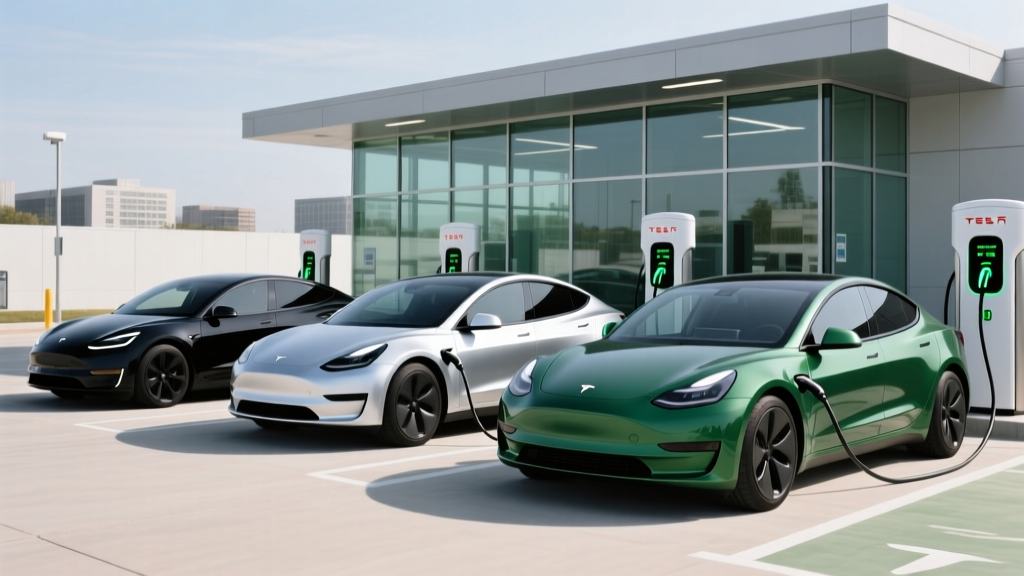
Tesla's Supercharger network and home wall connector are the two ecosystems that matter most. Here's the headline data before we get into the weeds:
| Model / Trim | Battery (kWh usable) | Chemistry | Max DC kW | 10–80% DC Time | Level 2 (mi/hr) |
|---|---|---|---|---|---|
| Model 3 RWD | ~60 | LFP | 170 | ~27 min | ~37 mi/hr (11.5 kW) |
| Model 3 Long Range AWD | ~79 | NMC | 250 | ~22 min | ~44 mi/hr (11.5 kW) |
| Model 3 Performance | ~79 | NMC | 250 | ~22 min | ~44 mi/hr |
| Model Y Long Range AWD | ~82 | NMC | 250 | ~25 min | ~44 mi/hr |
| Model Y Performance | ~82 | NMC | 250 | ~25 min | ~44 mi/hr |
| Model S Long Range | ~100 | NMC | 250 | ~28 min | ~44 mi/hr |
| Model S Plaid | ~100 | NMC | 250 | ~28 min | ~44 mi/hr |
| Model X Long Range | ~100 | NMC | 250 | ~30 min | ~44 mi/hr |
| Cybertruck AWD | ~123 | NMC | 350 | ~22 min | ~44 mi/hr |
Source: Tesla spec sheets and fueleconomy.gov. Times measured under optimal battery preconditioning at a V3/V4 Supercharger.
Real-World Range vs. the EPA Sticker
The EPA range number on the window sticker assumes a mixed driving cycle with moderate temperatures. Real-world results diverge based on speed, elevation, and especially ambient temperature.
EPA 363 mi (Model 3 Long Range): Expect ~300–320 mi at sustained 75-mph highway speeds in mild weather. In sub-30°F winter conditions, plan for 240–270 mi before you need to plug in. City driving with regenerative braking recovers more energy, pushing real-world range closer to the EPA figure or slightly above.
Model Y Long Range (EPA 320 mi) behaves similarly, though its taller, less aerodynamic profile means highway range drops more sharply above 70 mph. The Cybertruck's angular shape and heavy curb weight hit efficiency hardest — EPA 340 mi with the Max Range pack, but real-world highway towing can cut that to under 200 mi.
DC Fast Charging: How the Curve Actually Works
Peak kW is a marketing number; sustained kW is what matters. A Model 3 Long Range may peak at 250 kW, but only between roughly 10% and 35% State of Charge (SoC). After that, the charge curve tapers to protect battery health.
| SoC Window | Model 3 LR Avg kW | Model Y LR Avg kW | Cybertruck Avg kW |
|---|---|---|---|
| 10–35% | ~240 kW | ~235 kW | ~330 kW |
| 35–60% | ~180 kW | ~175 kW | ~250 kW |
| 60–80% | ~110 kW | ~105 kW | ~170 kW |
| 80–100% | ~40 kW | ~35 kW | ~55 kW |
Preconditioning matters. If you navigate to a Supercharger in the Tesla nav system, the car preheats the battery to the optimal temperature window (~95°F) before you arrive. Skip this step and your peak kW may be cut in half for the first 5–10 minutes, adding 8–12 minutes to your stop.
Home Level 2 Charging: What You Actually Need
Most Tesla owners do 90%+ of their charging at home on a Level 2 wall connector. The Tesla Wall Connector delivers up to 11.5 kW (48 amps) on a NACS plug, adding roughly 44 miles of range per hour for Long Range models and 37 mi/hr for the RWD Model 3.
Installation reality check: A 60-amp dedicated circuit requires 6 AWG copper wire and a 240V breaker. Typical install costs run $600–$1,800 depending on panel proximity. If your main panel is maxed out at 100 amps, a panel upgrade to 200 amps can add $1,500–$3,500. Always get a quote from a licensed electrician before committing.
For NEMA 14-50 outlet users (Mobile Connector), expect 29–37 mi/hr depending on the model — slower than the hardwired Wall Connector but more portable.
2026 Pricing, Trims, and Federal Tax Credit Eligibility
Tesla's lineup has consolidated in recent years. Here's the 2026 MSRP picture and how the IRS §30D tax credit applies:
| Model | Base MSRP | As-Tested (typical) | §30D Credit Eligibility |
|---|---|---|---|
| Model 3 RWD | $38,990 | $39,990 | Up to $7,500 (if sourcing rules met) |
| Model 3 LR AWD | $45,490 | $47,990 | Up to $7,500 |
| Model Y LR AWD | $44,990 | $47,490 | Up to $7,500 |
| Model S LR | $79,990 | $84,990 | Not eligible (exceeds $55K sedan cap) |
| Model X LR | $79,990 | $85,990 | Not eligible (exceeds $80K SUV cap — verify yearly) |
| Cybertruck AWD | $79,990 | $99,990 | Not eligible (exceeds $80K truck cap) |
Critical caveats: The §30D credit has buyer income caps ($150K single / $300K joint MAGI), an MSRP cap ($55K for sedans, $80K for SUVs/trucks/vans), and battery critical-mineral and component sourcing requirements that shift annually. The credit can be transferred at point of sale as a discount. Always verify current-year eligibility on irs.gov or with a tax professional before assuming $7,500 off.
Efficiency: MPGe and Cost Per Mile
Tesla remains the efficiency benchmark in the EV market. The Model 3 Long Range achieves an EPA-rated 131 MPGe combined, translating to roughly 26 kWh per 100 miles. At the national average residential electricity rate of ~$0.16/kWh, that's about $0.042 per mile — versus $0.12–$0.15/mile for a 30-MPG gas car at $3.50/gallon.
The Cybertruck is the least efficient Tesla at ~95 MPGe combined (roughly 35 kWh/100 mi), making it more expensive to fuel than a Model 3 but still cheaper per mile than most full-size gas pickups.
Who Each Tesla Suits Best
- Model 3 RWD: Budget-conscious commuters who can charge at home and don't need 300+ mi of range. LFP chemistry means you can (and should) charge to 100% daily.
- Model 3 Long Range / Performance: Road-trippers and two-car households replacing a gas sedan. Best efficiency-to-range ratio in the lineup.
- Model Y Long Range: Families needing crossover cargo space (76 cu ft behind front seats) without sacrificing range. The best-selling Tesla for good reason.
- Model S / X: Luxury buyers who want air suspension, premium interiors, and the longest range. Tax credit ineligible — buy for the product, not the incentive.
- Cybertruck: Truck buyers who tow (up to 11,000 lbs) and want V2L capability. Accept that highway range while towing will be under 200 mi.
Pros, Cons, and the Competition
- Supercharger network reliability (20,000+ stalls in North America)
- Class-leading efficiency (kWh/100 mi)
- Over-the-air updates continuously improve features
- Best-in-class DC charge curve on V3/V4 stalls
- LFP option on Model 3 RWD reduces cost, extends cycle life
- Model S/X pricing exceeds §30D MSRP caps
- No Apple CarPlay / Android Auto
- Build quality inconsistency still reported
- Insurance premiums 20–40% above segment average
- FSD (Supervised) remains SAE Level 2 — driver must stay engaged
Versus key competitors: The Hyundai Ioniq 6 SE charges nearly as fast (10–80% in ~18 min at 350 kW) and qualifies for the tax credit. The BMW i4 xDrive40 offers a more traditional luxury interior. The Ford Mustang Mach-E GT undercuts the Model Y Performance on price. Tesla's edge remains the Supercharger ecosystem and software integration — if those matter to you, the charge-time advantage is real.
Frequently Asked Questions
Can I charge a Tesla to 100% every day?
Only if your Tesla has an LFP battery (Model 3 RWD). Tesla recommends setting the charge limit to 80–90% for daily use on NMC batteries (Long Range, Performance, Model S/X) to maximize long-term battery health. LFP batteries should be charged to 100% at least once a week for accurate SoC calibration.
How long does a Tesla battery last?
Tesla warranties its batteries for 8 years / 100,000 miles (Model 3/Y RWD) or 8 years / 120,000 miles (Long Range, Performance, S/X), retaining at least 70% capacity. Real-world degradation data from fleet studies shows most Tesla batteries retain 85–90% capacity at 100,000 miles, with the curve flattening significantly after the initial 20,000-mile drop.
Does charging speed degrade as the battery ages?
Minimally. Increased internal resistance from degradation may reduce peak charge rates by 5–10% over the battery's life, but this is largely offset by Tesla's thermal management and BMS updates. You won't notice a meaningful difference in daily charging.
Is Tesla's Autopilot actually self-driving?
No. Autopilot and FSD (Supervised) are SAE Level 2 driver-assistance systems. The driver must keep hands on the wheel and eyes on the road at all times. Full self-driving (Level 4/5) remains unavailable to consumers. Only robotaxi services like Waymo operate at Level 4 in geofenced areas.
What's the cheapest way to charge a Tesla at home?
A NEMA 14-50 outlet with the Mobile Connector (~$200 for the outlet install if your panel supports it) is the budget option. For fastest home speeds, the Tesla Wall Connector ($475 hardware + $600–$1,800 install) on a 60-amp circuit is the standard recommendation. Time-of-use utility plans can cut your per-kWh cost to $0.06–$0.09 if you charge overnight.