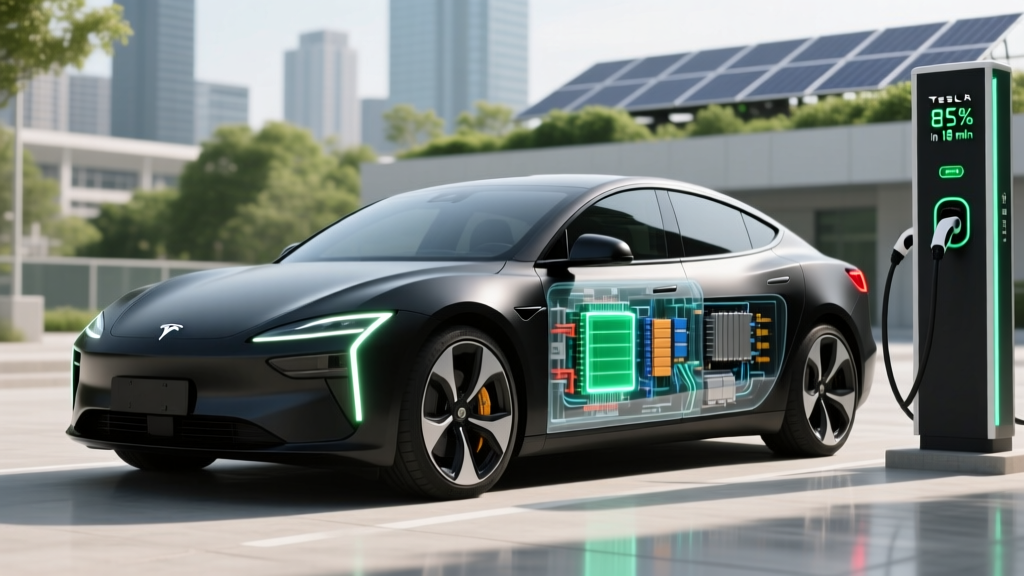
Quick Answer: How Long to Charge an EV?
Charging time depends on three factors: your charger's power output (measured in kilowatts, or kW), your EV's battery capacity (measured in kilowatt-hours, or kWh), and the vehicle's maximum acceptance rate. Here are the real-world benchmarks for a typical 2026 EV with a ~75 kWh battery:
- Level 1 (120V household outlet, ~1.4 kW): 50+ hours for a full charge — adds roughly 3–5 miles of range per hour.
- Level 2 (240V home or public charger, 7.2–19.2 kW): 4–11 hours for a full charge — adds 20–60 miles of range per hour.
- DC Fast Charging (50–350 kW public stations): 10–80% in 15–45 minutes depending on peak acceptance rate and battery preconditioning.
Most EV owners do 80–90% of their charging at home on Level 2 overnight. DC fast charging is reserved for road trips. Level 1 is a fallback or works for plug-in hybrids with smaller batteries.
The Three Charging Levels: Speed, Cost, and Use Case
Understanding EV charging starts with knowing the difference between kW (kilowatts) — the rate at which electricity flows, like water pressure from a hose — and kWh (kilowatt-hours) — the total energy stored in your battery, like the size of the bucket you're filling. A bigger bucket or a slower hose means more time.
| Charging Level | Voltage | Power Output (kW) | Miles of Range Added/Hour | Typical Full Charge Time (75 kWh Battery) | Best For |
|---|---|---|---|---|---|
| Level 1 | 120V AC | 1.2–1.9 kW | 3–5 mi/hr | 40–62 hours | PHEVs, emergency top-ups, low-mileage drivers |
| Level 2 (standard) | 240V AC | 7.2–11.5 kW | 20–35 mi/hr | 7–11 hours | Daily home charging, workplace charging |
| Level 2 (high-power) | 240V AC | 11.5–19.2 kW | 35–60 mi/hr | 4–7 hours | Large-battery EVs, faster overnight fills |
| DC Fast Charge (50 kW) | 200–500V DC | 50 kW | ~150–180 mi/hr | ~1.5 hrs (full); 10–80% in ~60 min | Older DC stations, budget networks |
| DC Fast Charge (150 kW) | 200–920V DC | 150 kW | ~400–500 mi/hr | N/A (rarely full); 10–80% in ~25–35 min | Highway corridor charging |
| DC Fast Charge (250–350 kW) | 200–920V DC | 250–350 kW | ~600–900 mi/hr | N/A; 10–80% in ~15–22 min | Tesla Superchargers, Electrify America, IONNA |
Source: Charging times calculated from U.S. Department of Energy / fueleconomy.gov EV charging data and manufacturer specifications.
Real-World Charging Times for Popular 2026 EVs
Manufacturer peak charge rates tell only part of the story. No EV sustains its peak kW rate from 10% all the way to 80%. The charge curve tapers as the battery fills — much like slowing down as you pour the last bit of water into a full glass to avoid spilling. A vehicle that peaks at 250 kW might average only 130–160 kW across a 10–80% session.
| Vehicle (2026 Model Year) | Battery (kWh, Usable) | Chemistry | Peak DC Rate (kW) | 10–80% DC Time | Level 2 Time (Full, 11.5 kW) | EPA Range |
|---|---|---|---|---|---|---|
| Tesla Model Y Long Range | 75 kWh | NMC | 250 kW | ~22 min | ~7.5 hours | 320 mi |
| Hyundai Ioniq 5 (Long Range) | 77.4 kWh | NMC | 240 kW (800V) | ~18 min | ~7.8 hours | 305 mi |
| Ford F-150 Lightning (Extended) | 131 kWh | NMC | 150 kW | ~41 min | ~12.5 hours | 320 mi |
| Chevrolet Equinox EV (3RS) | 85 kWh | NMC | 150 kW | ~35 min | ~8.5 hours | 315 mi |
| Tesla Model 3 RWD (Standard) | 57.5 kWh | LFP | 170 kW | ~25 min | ~5.8 hours | 272 mi |
| BMW iX xDrive50 | 105.2 kWh | NMC | 200 kW | ~34 min | ~10.5 hours | 324 mi |
Real-World Charging Caveat
These 10–80% times assume the battery is preconditioned (warmed to optimal temperature) and the charger can deliver the vehicle's peak rate. In cold weather (below 40°F), expect 10–80% times to increase by 20–40% unless you precondition via the vehicle's navigation-routed charging. At high-altitude or crowded DC stations, shared power cabinets can also reduce delivered kW.
EV Charging Cost vs. Gas: The Real Numbers
One of the strongest ownership arguments for an EV is fuel cost savings — but the math depends heavily on how and where you charge. Home electricity rates vary from roughly $0.08/kWh in parts of the South and Midwest to $0.30+/kWh in California and the Northeast. Public DC fast charging typically runs $0.30–$0.55/kWh depending on the network and time of day.
| Fueling Method | Cost per Unit | Cost per 1,000 Miles | Annual Cost (12,000 mi) |
|---|---|---|---|
| Home Level 2 (national avg. $0.16/kWh, EV at 3 mi/kWh) | $0.16/kWh | $53 | $640 |
| Home Level 2 (California avg. $0.28/kWh) | $0.28/kWh | $93 | $1,120 |
| Public DC Fast Charging (avg. $0.40/kWh) | $0.40/kWh | $133 | $1,600 |
| Gas car (28 MPG combined, $3.30/gal) | $3.30/gal | $118 | $1,414 |
| Gas truck/SUV (20 MPG combined, $3.30/gal) | $3.30/gal | $165 | $1,980 |
The takeaway: Home-charged EVs save $500–$1,300/year vs. gasoline for most drivers. If you rely exclusively on public DC fast charging, those savings shrink significantly or disappear, especially in high-electricity-rate states. This is why home charging access is the single most important ownership variable.
For a full breakdown of current federal incentives, the IRS §30D Clean Vehicle Credit offers up to $7,500 for qualifying new EVs, subject to MSRP caps ($55,000 for cars, $80,000 for SUVs/trucks), buyer income limits ($150K single / $300K joint AGI), and battery critical-mineral sourcing requirements. As of 2026, this credit can be transferred to the dealer as a point-of-sale discount. Always verify eligibility with a tax professional.
Home Charging Setup: What It Actually Costs and Takes
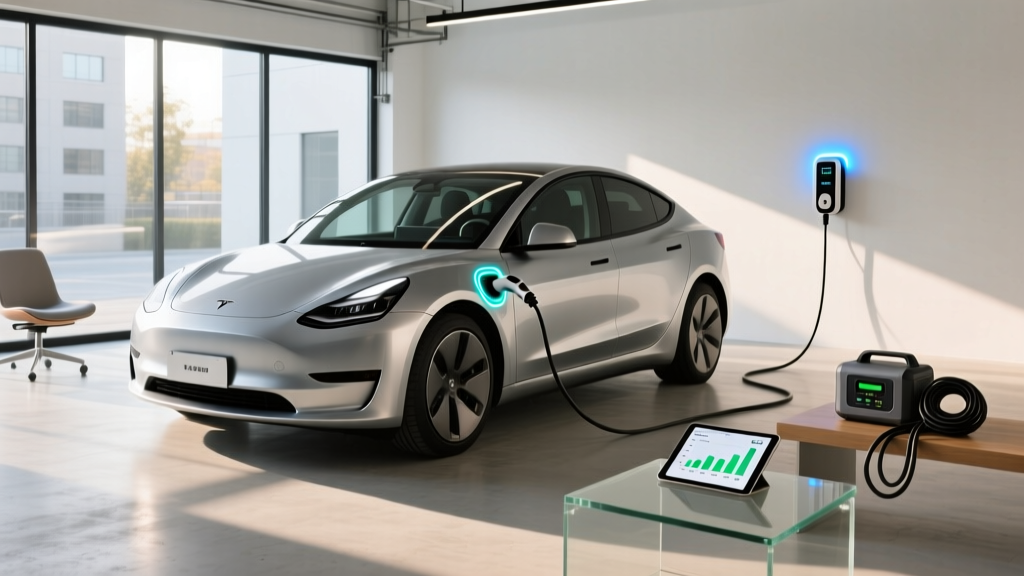
Most EV owners install a Level 2 home charger, which requires a 240V circuit — the same type your electric dryer or oven uses. Here's what a typical installation involves:
| Component | Typical Cost Range | Notes |
|---|---|---|
| Level 2 charger hardware (hardwired or NEMA 14-50 plug) | $300–$700 | Popular 2026 options: ChargePoint Home Flex, Emporia Level 2, Tesla Wall Connector |
| Electrician labor (new 240V/50A circuit, 20–50 ft run) | $500–$1,500 | Varies heavily by region, wall/floor penetration, conduit length |
| Electrical permit | $50–$200 | Required in most jurisdictions; inspection included |
| Panel upgrade (if needed — 100A to 200A service) | $1,500–$3,500 | Older homes with 100A panels may need an upgrade to support a 40A+ EV circuit |
| Total (no panel upgrade) | $850–$2,400 | Most homes with 200A panels fall in this range |
| Total (with panel upgrade) | $2,350–$5,900 | Less common but a real cost for older homes |
Many utilities offer rebates of $200–$500 for Level 2 charger installations, and some states provide additional incentives. A licensed electrician should always assess your panel capacity before installation — never assume your panel has spare capacity without a load calculation.
Common EV Charging Myths vs. Facts
| Myth | Fact |
|---|---|
| "Charging an EV takes hours, so road trips are impossible." | DC fast chargers add 150–300 miles in 15–25 minutes on modern EVs. Combined with rest stops and meal breaks, road-trip impact is minimal for most routes. |
| "You need a special charger at home — it's too expensive." | A basic Level 2 install averages $850–$2,400. Many EVs also come with a portable Level 1 cord that works on any 120V outlet for overnight trickle charging. |
| "Fast charging ruins the battery." | Modern battery thermal management systems protect against degradation. Data from Recurrent shows minimal long-term degradation difference between frequent and infrequent DC fast charging users. |
| "EVs don't work in cold weather." | Cold reduces range by 15–30% and slows charging, but preconditioning and heat pumps (standard on most 2026 EVs) mitigate both. EVs start instantly in cold — no cold-crank issues like gas engines. |
| "Level 1 charging is useless." | For PHEVs with 25–45 miles of electric range, or BEV drivers covering under 30 miles/day, Level 1 (adding 3–5 mi/hr overnight) can fully replenish daily use in 8–10 hours. |
EV vs. Gas vs. Hybrid: Charging and Fueling Compared
How does EV charging time actually compare to refueling a gas car or a hybrid? The honest answer involves both time and convenience trade-offs.
| Factor | Battery EV (BEV) | Plug-in Hybrid (PHEV) | Gas/Hybrid (HEV) |
|---|---|---|---|
| "Refuel" time (typical stop) | 15–35 min (DC fast, 10–80%) | 2–4 hours (Level 2 for electric portion); 5 min for gas | 3–5 min at a gas station |
| Home "refueling" | Overnight, 4–11 hours (Level 2) — wake up "full" every day | Overnight, 2–4 hours for 25–45 mi electric range | Not possible (no home gas pump) |
| Stops per 500-mile trip | 1–2 charging stops (20–30 min each) | 1–2 gas stops + optional charging | 1–2 gas stops (5–10 min each) |
| Daily fueling convenience | Plug in at home — no detours | Plug in at home for short commutes | Must visit gas station weekly |
| Annual fuel cost (12K mi) | $640–$1,600 | $700–$1,200 (mix of electric + gas) | $1,200–$2,000 |
The key insight: EV charging is slower per stop but happens while you sleep. A gas car refuels faster, but you must physically go to a station. For the ~85% of driving that's local (under 50 miles/day), home-charged EV owners spend near-zero time "fueling" — they simply plug in when they park and unplug when they leave.
First-Time EV Buyer Decision Framework
Which Charging Setup Is Right for You?
Choose a BEV with Level 2 home charging if:
- You have a garage, carport, or driveway with access to a 240V outlet or the ability to install one.
- Your daily driving is under 80 miles (covers 95%+ of US drivers, per fueleconomy.gov data).
- You take road trips 5 or fewer times per year and are comfortable planning 20-minute DC fast-charge stops.
- You want the lowest per-mile fuel cost and minimal maintenance (no oil changes, fewer brake replacements due to regenerative braking).
Choose a PHEV if:
- You can install Level 2 (or even Level 1) at home but frequently drive 200+ miles in a day.
- You want electric-only commuting (25–45 mi range) without any range concern on longer trips.
- You live in an area with sparse DC fast-charging infrastructure.
Rely on public charging (no home install) only if:
- Your workplace offers free or subsidized Level 2 charging.
- You live near reliable public Level 2 or DC fast chargers and your daily mileage is moderate.
- You understand that public-only charging costs 2–3x more than home charging and requires time planning.
Wait or choose a hybrid (HEV) if:
- You have no realistic access to home, workplace, or reliable public charging.
- You live in an apartment with no charging options and no plans to move.
- Your budget cannot accommodate the higher upfront cost of a BEV or PHEV even after incentives.
What First-Time Buyers Should Know About Charging Speeds
When shopping for an EV, pay attention to these three specs that directly affect your charging experience:
- Maximum DC fast-charge rate (kW): This determines how quickly you can charge on road trips. A 250 kW-capable vehicle (Hyundai Ioniq 5, Tesla Model Y) charges meaningfully faster than a 150 kW-capable one (Chevrolet Equinox EV) on compatible stations.
- Onboard charger capacity (kW): This determines Level 2 speed. Most EVs accept 11.5 kW on Level 2; some accept up to 19.2 kW with a 48A+ home charger and 60A circuit. Check your vehicle's spec — buying a 19.2 kW home charger won't help if your car only accepts 11.5 kW.
- Battery preconditioning: Vehicles that precondition the battery when you navigate to a DC fast charger (Tesla, Hyundai/Kia E-GMP platform, BMW, Rivian) charge significantly faster in cold weather. Without preconditioning, cold-weather DC charging can be 30–50% slower.
Charging Connector Compatibility in 2026
The North American Charging Standard (NACS), originally developed by Tesla, has become the dominant connector for 2026 model-year EVs. Most legacy CCS1 vehicles now ship with or offer a NACS adapter. Here's the current landscape:
| Connector | Brands Using It (2026) | DC Fast-Charge Network Access |
|---|---|---|
| NACS (native) | Tesla, Ford, GM, Rivian, Volvo, Polestar, Mercedes-Benz, Hyundai (select) | Tesla Supercharger network + growing NACS stations on Electrify America, IONNA |
| CCS1 (native) | VW ID.4, BMW iX/i4, some Hyundai/Kia trims, Subaru Solterra | Electrify America, EVgo, ChargePoint DC — CCS stations still widely available |
| CCS1 with NACS adapter | Ford, GM, Rivian owners using Tesla-provided adapters | Both CCS and Tesla Supercharger networks |
If you're buying in 2026, NACS-native or NACS-adapter-equipped vehicles have the widest DC fast-charging network access in North America, thanks to the Tesla Supercharger network's ~6,000+ stations and superior uptime record.
Frequently Asked Questions
Can I charge an EV from a regular household outlet?
Yes. A standard 120V outlet delivers about 1.2–1.9 kW (Level 1), adding roughly 3–5 miles of range per hour. For an EV with a 75 kWh battery, a full charge from empty takes 40–60 hours. Level 1 works well as a backup, for plug-in hybrids with smaller batteries, or for drivers covering under 30 miles per day who can top up overnight.
Does fast charging damage the EV battery?
Modern EV battery management systems actively control temperature and charge rate to minimize degradation. Long-term fleet data shows that vehicles using DC fast charging regularly experience only marginally more degradation than those that charge exclusively on Level 2 — typically a difference of 1–3% over 100,000 miles. All major manufacturers warranty their batteries for 8 years/100,000 miles with a minimum 70% capacity retention guarantee.
How long does it take to charge an EV at a Tesla Supercharger?
Tesla V3 Superchargers deliver up to 250 kW. A Tesla Model Y Long Range can add approximately 200 miles of range in 15 minutes, or reach 10–80% in about 22 minutes with battery preconditioning. V4 Supercharger cabinets (rolling out through 2025–2026) support up to 350 kW for future vehicles capable of accepting that rate.
Is it cheaper to charge an EV at home or at a public station?
Home charging is almost always cheaper. At the US average residential rate of ~$0.16/kWh, you'll pay about $5.30 per 100 miles. Public DC fast chargers average $0.30–$0.55/kWh, making the same 100 miles cost $10–$18. Some public Level 2 chargers at workplaces, shopping centers, or municipalities are free or subsidized.
How does cold weather affect EV charging time?
Cold temperatures (below 40°F) slow the electrochemical reactions inside lithium-ion batteries, reducing DC fast-charge acceptance rates by 20–50%. A 10–80% charge that takes 20 minutes in summer might take 30–40 minutes in winter without preconditioning. Most 2026 EVs with navigation-routed preconditioning (the car warms the battery as you drive toward a charger) recover most of this lost speed. Cold also reduces driving range by 15–30% due to cabin heating demands and increased battery resistance.
Do I need to charge my EV to 100% every time?
No — and for NMC batteries, it's better if you don't. Most manufacturers recommend daily charging to 80–90% and reserving 100% for road trips. LFP batteries (found in the Tesla Model 3 RWD and some other standard-range models) are an exception: manufacturers recommend charging to 100% at least once weekly to maintain accurate state-of-charge calibration. Check your owner's manual for chemistry-specific guidance.
What happens if I run out of charge on the road?
Modern EV navigation systems provide accurate remaining-range estimates and proactively suggest charging stops. If you do run out, most EVs can be towed (flatbed only — never with drive wheels on the ground) to the nearest charger. Roadside assistance programs from AAA, manufacturers, and insurance companies increasingly offer mobile charging vans with 10–20 kWh of emergency range.