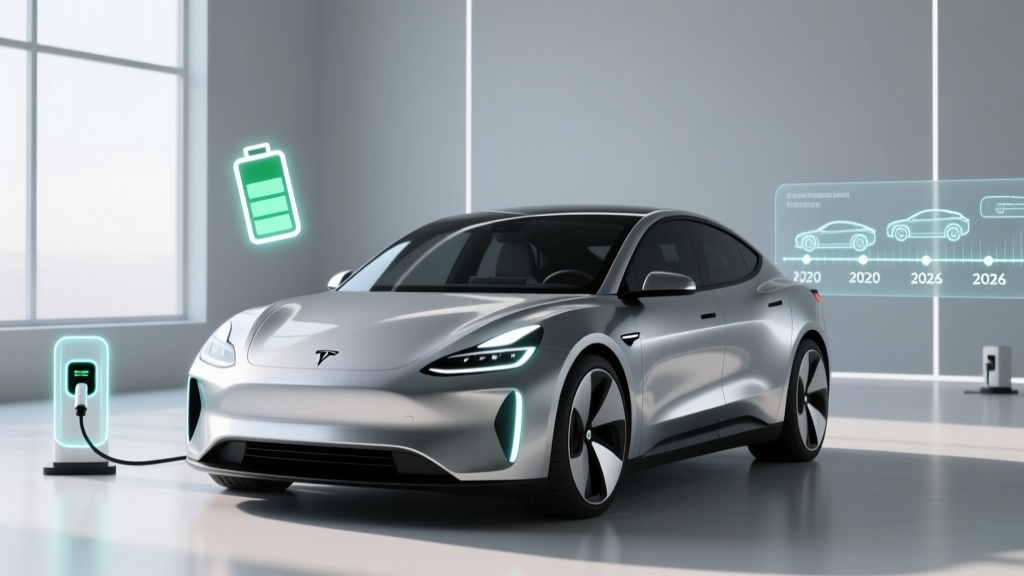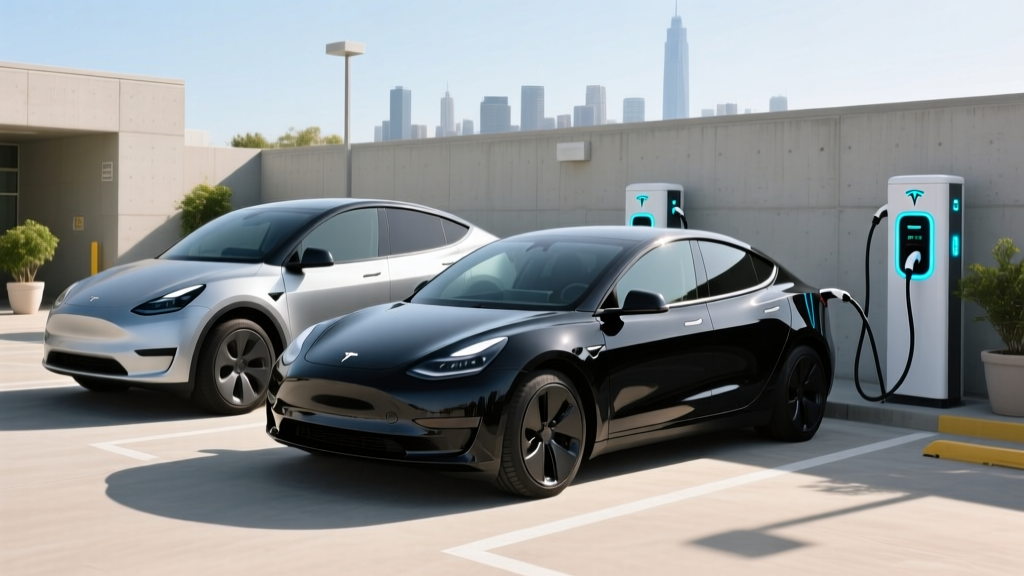
If you are shopping for a Tesla in 2026, one question dominates the research phase: how long does it actually take to charge? The answer depends on which Tesla you buy, what battery chemistry it uses, where you plug in, and how you drive. Tesla's Supercharger network remains the most reliable public DC fast-charging ecosystem in the US, but peak charge rates, battery sizes, and charge-curve behavior vary significantly between the Model 3 Rear-Wheel Drive and the Model Y Long Range AWD.
This guide gives you exact numbers — kW charge rates, 10-80% times, Level 2 home charging speeds, and real-world range — so you can plan road trips, budget for home charger installation, and decide which Tesla trim fits your driving pattern.
2026 Tesla Model 3 & Model Y: Core Specs at a Glance
| Spec | Model 3 RWD | Model 3 Long Range AWD | Model Y Long Range AWD |
|---|---|---|---|
| EPA Range | 272 mi | 363 mi | 320 mi |
| Battery (usable) | ~60 kWh (LFP) | ~79 kWh (NMC) | ~79 kWh (NMC) |
| Max DC Fast Charge | 170 kW | 250 kW | 250 kW |
| 10-80% DC Time | ~25 min | ~27 min | ~27 min |
| Level 2 Home Rate | 11.5 kW (44 mi/hr) | 11.5 kW (44 mi/hr) | 11.5 kW (44 mi/hr) |
| 0-60 mph | 5.8 sec | 4.2 sec | 4.8 sec |
| Horsepower | 283 hp | 384 hp | 384 hp |
| Drivetrain | RWD | Dual-Motor AWD | Dual-Motor AWD |
| MPGe (combined) | 132 MPGe | 125 MPGe | 117 MPGe |
| Efficiency | 25 kWh/100mi | 26 kWh/100mi | 28 kWh/100mi |
| Base MSRP | $38,990 | $45,990 | $46,990 |
| Battery Warranty | 8 yr / 100,000 mi | 8 yr / 120,000 mi | 8 yr / 120,000 mi |
Source: fueleconomy.gov and Tesla.com 2026 specifications. MSRP excludes destination fee.
How Long Tesla Takes to Charge: DC Fast Charging Explained
The headline number Tesla advertises — up to 250 kW on V3 and V4 Superchargers — is a peak rate, not a sustained one. Understanding the charge curve is essential to knowing how long you will actually sit at a charger.
kW vs kWh reminder: kW (kilowatts) measures power — the rate at which energy flows into the battery. kWh (kilowatt-hours) measures energy — the total capacity of the battery. Think of kW as the width of a hose and kWh as the size of the bucket.
Model 3 RWD (LFP Battery) — 170 kW Peak
The base Model 3 uses a lithium iron phosphate (LFP) battery. LFP cells accept charge differently than NMC: they can sustain a relatively flat charge curve but cap at a lower peak rate. On a V3 Supercharger (250 kW capable), the Model 3 RWD peaks around 170 kW and tapers gradually. A 10-80% session takes approximately 25 minutes. Tesla recommends charging LFP batteries to 100% regularly for battery calibration, so a full 10-100% session runs closer to 38 minutes.
Model 3 Long Range & Model Y Long Range (NMC Battery) — 250 kW Peak
The Long Range variants use nickel manganese cobalt (NMC) chemistry, which supports higher peak charge rates. On a V3 or V4 Supercharger, these models hit 250 kW at low state of charge (SoC), but the rate tapers significantly above 50% SoC and drops sharply past 80%. Expect 10-80% in about 27 minutes under ideal conditions (battery preconditioned, warm ambient temperature). From 80-100%, add another 20-25 minutes — which is why road-trip strategy focuses on 10-80% sessions.
Charge Curve Reality Check
Peak kW is not sustained kW. A Model Y Long Range hitting 250 kW at 10% SoC will taper to ~150 kW by 50% SoC and ~60 kW by 80%. The "27 minutes" figure reflects this taper. If you arrive at a Supercharger with a cold battery (no preconditioning), add 5-10 minutes as the battery warms to optimal charge temperature.
Charging Speed Comparison Table
| Charging Method | Power (kW) | Model 3 RWD (mi/hr) | Model Y LR AWD (mi/hr) | Notes |
|---|---|---|---|---|
| Level 1 (120V household) | ~1.4 kW | ~5 mi/hr | ~4 mi/hr | Emergency/trickle only |
| Level 2 (240V, 48A Wall Connector) | 11.5 kW | 44 mi/hr | 39 mi/hr | Full charge in 6-9 hours |
| Level 2 (240V, 32A Mobile Connector) | 7.7 kW | 30 mi/hr | 26 mi/hr | NEMA 14-50 outlet |
| DC Fast (V3 Supercharger) | Up to 250 kW | 170 kW peak | 250 kW peak | 10-80% in 25-27 min |
| DC Fast (CCS adapter, EA/others) | Up to 150 kW | ~150 kW peak | ~150 kW peak | Varies by station |
Real-World Range: What the EPA Sticker Doesn't Tell You
EPA range estimates are measured under controlled laboratory conditions. Real-world range varies based on speed, temperature, elevation, and climate-control usage. Here is what to actually expect from 2026 Tesla models.
Real-World Range Expectations
Model 3 RWD (EPA 272 mi): Expect ~240-255 mi in mixed driving at moderate temperatures. Sustained 75+ mph highway driving drops this to ~210-230 mi. In sub-30°F winter conditions, plan for 180-210 mi.
Model 3 Long Range AWD (EPA 363 mi): Mixed driving yields ~320-340 mi. Highway at 75 mph: ~280-310 mi. Cold weather (below 30°F): ~240-275 mi.
Model Y Long Range AWD (EPA 320 mi): Mixed driving: ~285-305 mi. Highway: ~250-275 mi. Cold weather: ~215-250 mi. The Model Y's taller, less aerodynamic profile costs it 5-8% more highway energy than the Model 3 LR.
Tesla's heat pump (standard on all 2026 models) mitigates cold-weather range loss compared to older EVs using resistive heaters, but any EV loses 15-30% of its range in freezing temperatures due to battery chemistry slowdown and cabin heating demand.
Home Charging Setup: Cost and Speed
Over 80% of Tesla charging happens at home. The speed of your home setup determines whether you wake up with a full battery every morning or need to plan around charging windows.
Tesla Wall Connector ($420): This hardwired Level 2 unit delivers up to 11.5 kW (48 amps) on a 60-amp circuit. For most owners, a full overnight charge from 20% to 100% takes 6-8 hours — more than enough for daily driving.
Mobile Connector with NEMA 14-50 ($200 adapter + outlet): Delivers 7.7 kW (32 amps) on a 50-amp circuit. Adds roughly 30 miles per hour of charging. A full charge takes 9-11 hours.
Installation cost: If your electrical panel has capacity and the run is short (under 30 feet), expect $500-$1,500 for a licensed electrician to install a NEMA 14-50 or hardwire a Wall Connector. Longer runs, panel upgrades (from 100A to 200A service), or permit requirements can push costs to $2,000-$4,500. Always get a quote from a licensed electrician before purchasing equipment.
Preconditioning: Why It Matters for Charge Speed
When you navigate to a Supercharger in the Tesla navigation system, the car automatically begins preconditioning — warming the battery to its optimal charge temperature (roughly 95-104°F). This can shave 5-10 minutes off your 10-80% session in cold weather. If you drive to a Supercharger without using the built-in navigation (e.g., using a phone mount and Google Maps), preconditioning won't activate, and your charge session will start slower.
Pricing, Trims, and Federal Tax Credit Eligibility
Tesla pricing has shifted frequently over the past two years. As of early 2026, here is where the lineup stands — and how the federal §30D tax credit applies.
| Model | Base MSRP | Federal Credit (§30D) | Effective Price | Credit Eligible? |
|---|---|---|---|---|
| Model 3 RWD | $38,990 | Up to $7,500 | ~$31,490 | Yes (meets MSRP cap, sourcing rules) |
| Model 3 Long Range AWD | $45,990 | Up to $7,500 | ~$38,490 | Yes (under $55K sedan cap) |
| Model Y Long Range AWD | $46,990 | Up to $7,500 | ~$39,490 | Yes (under $80K SUV cap) |
Critical §30D eligibility rules (per IRS.gov):
- Buyer income caps: Modified AGI must not exceed $300,000 (married filing jointly), $225,000 (head of household), or $150,000 (single).
- MSRP caps: Sedans (Model 3) must be under $55,000. SUVs/trucks (Model Y) must be under $80,000.
- Battery sourcing: The $7,500 credit splits into two halves — $3,750 for critical minerals sourcing and $3,750 for battery component manufacturing. Tesla's US-built batteries currently satisfy both halves for most trims, but sourcing requirements tighten annually. Verify current eligibility on the IRS clean vehicle credit page before purchasing.
- Point-of-sale transfer: As of 2024, you can transfer the credit to the dealer at purchase, reducing your out-of-pocket cost immediately rather than waiting for tax filing. This applies to Tesla's direct sales model as well.
Tax credit rules change frequently. Consult a tax professional and verify eligibility at irs.gov before making a purchase decision.
Cargo, Interior Space, and Daily Practicality
Model 3: The 2026 Model 3 offers 23 cu ft of trunk space plus a small frunk (front trunk) suitable for a charging cable bag. Rear legroom measures 35.3 inches — adequate for adults on shorter trips but tighter than midsize sedans. The refreshed "Highland" interior (introduced for 2024 and carried forward) adds ventilated front seats, ambient lighting, and a rear touchscreen for climate and media control.
Model Y: The Model Y's crossover profile yields 30 cu ft behind the second row and up to 72 cu ft with seats folded — enough for furniture-store runs or camping gear. Rear legroom is 40.5 inches. The optional third row (very small, best for children under 5'4") reduces cargo space but expands seating to seven. A power-folding second row and a wide-opening liftgate make loading easier than the Model 3's sedan trunk.
Standout Tech
- Autopilot (included): SAE Level 2 driver assistance — adaptive cruise control and lane centering on highways. Requires hands on wheel and active supervision. This is not self-driving.
- Full Self-Driving Supervised ($8,000 option): Adds automated lane changes, traffic light recognition, and city-street navigation. Still SAE Level 2 — the driver must remain fully engaged and ready to take over at any moment.
- 15.4" touchscreen: Handles all vehicle controls, navigation, and entertainment. No physical buttons for climate or volume (a common complaint for new owners).
- Over-the-air updates: Tesla pushes software updates that can add features, adjust range estimates, and improve efficiency over time.
- Sentry Mode / Dog Mode: Camera-based security monitoring and climate-controlled pet safety mode remain Tesla exclusives that competitors have not fully matched.
SAE Automation Level: Level 2
Both Autopilot and FSD Supervised are SAE Level 2 driver-assistance systems. The driver must continuously monitor the road, keep hands on the steering wheel, and be prepared to intervene immediately. Only Level 4 systems (like Waymo's robotaxi service) operate without a human driver. Do not treat any Tesla driver-assist feature as autonomous.
Pros, Cons, and the Verdict
Pros
- Supercharger network: 6,000+ US stalls with unmatched reliability and plug-and-charge simplicity
- Best-in-class efficiency: Model 3 RWD achieves 132 MPGe combined — less energy per mile than any competing EV sedan
- Over-the-air updates keep the car improving post-purchase
- Strong resale value relative to non-Tesla EVs
- Model 3 RWD at ~$31,490 after tax credit is the value leader in premium EVs
- Heat pump standard on all trims reduces cold-weather range loss
Cons
- No physical buttons — all controls through the touchscreen frustrates some drivers
- Model 3 rear seat is tight for tall adults on long trips
- FSD Supervised costs $8,000 and remains Level 2 — not autonomous
- Model Y styling is aging relative to newer competitors (Hyundai Ioniq 5, Ford Mustang Mach-E refresh)
- LFP battery in Model 3 RWD means lower peak charge rate (170 kW vs 250 kW)
- Insurance premiums run 15-25% higher than equivalent gas vehicles in most states
Who Should Buy Which Tesla?
Model 3 RWD: Best for solo commuters and couples who drive under 50 miles daily, have home charging, and want the lowest entry price. The LFP battery's lower charge rate matters less if you charge at home overnight and only use Superchargers a few times a year.
Model 3 Long Range AWD: Best for frequent road-trippers who need 300+ mile range and faster 250 kW charging. The dual-motor AWD adds traction for snow-belt states.
Model Y Long Range AWD: Best for families who need cargo space, car-seat room, and the optional third row. The trade-off is slightly lower efficiency and 40-50 fewer miles of range versus the Model 3 LR.
Frequently Asked Questions
How long does a Tesla take to charge at home on a 240V outlet?
On a Tesla Wall Connector (11.5 kW), a Model Y Long Range charges from empty to full in about 7-8 hours. On a NEMA 14-50 outlet with the Mobile Connector (7.7 kW), plan for 9-11 hours. Most owners charge from 20-80% overnight, which takes 4-5 hours at either rate.
Can I use non-Tesla DC fast chargers?
Yes. Teslas sold in North America use the NACS connector natively. With a CCS adapter (sold by Tesla for ~$250), you can use Electrify America, EVgo, and other CCS stations. However, charge speeds on non-Tesla networks may be limited to 150 kW depending on the station, and plug-and-charge payment integration is less seamless than at Superchargers.
Does the Model 3 RWD's LFP battery last as long as NMC?
LFP batteries generally offer longer cycle life (more charge-discharge cycles before degradation) than NMC, though they are heavier and have lower energy density. Tesla warranties the Model 3 RWD battery for 8 years / 100,000 miles with a minimum 70% capacity retention. Real-world data from high-mileage Teslas suggests both chemistries retain 85-90% capacity at 100,000 miles under normal use. LFP's advantage: Tesla recommends charging to 100% daily, which simplifies routine use.
How much does it cost to charge a Tesla vs. buying gas?
At the US average electricity rate of $0.17/kWh (EIA), charging a Model Y Long Range (79 kWh battery) from 0-100% at home costs about $13.40 for 320 miles — roughly 4.2 cents per mile. A comparable gas SUV at 25 MPG and $3.30/gallon costs 13.2 cents per mile. Home charging saves roughly 60-70% per mile. Supercharger rates vary by location and time of day, typically $0.25-$0.40/kWh, which narrows the gap but still undercuts gas in most markets.
Is the Tesla Model Y worth buying over the Hyundai Ioniq 5 or Ford Mustang Mach-E?
The Model Y wins on Supercharger network access, cargo volume (30 cu ft vs 27 cu ft in the Ioniq 5), and software integration. The Ioniq 5 charges faster on paper (800V architecture, 10-80% in ~18 min on a 350 kW charger) and offers a more conventional interior with physical buttons. The Mach-E offers a more engaging driving feel. If road-trip charging reliability is your top priority, Tesla's network advantage remains decisive in 2026 — though competitors gain access to Superchargers via NACS adoption, easing this gap.
Does the Tesla Model 3 or Model Y qualify for the full $7,500 federal tax credit?
As of early 2026, both the Model 3 and Model Y qualify for the full $7,500 §30D credit for eligible buyers (income under the caps, MSRP under the threshold, and battery sourcing requirements met). Rules tighten annually on critical mineral and battery component sourcing. Always verify current eligibility on fueleconomy.gov and the IRS clean vehicle credit page before purchasing.