Charging speed is the single most practical question prospective Tesla buyers ask — and the answer depends heavily on which model you drive, what battery chemistry it carries, and what kind of charger you're plugged into. Whether you're evaluating a Model 3 for your daily commute or sizing up a Cybertruck for road trips, understanding the real numbers behind Tesla's charging ecosystem is essential before you buy.
In this guide, we break down exactly how long it takes to fully charge every current Tesla model across Level 1 (120V), Level 2 (240V home), and DC fast charging (Supercharger). We'll also cover real-world range expectations, battery chemistry differences, and the ownership economics that make or break the Tesla experience in 2026.
Tesla Charging Times at a Glance: Every Model Compared
The table below summarizes full-charge and partial-charge times across Tesla's 2026 lineup. Note that kW measures charging power (the rate of energy flow), while kWh measures battery capacity (total energy stored). A higher kW rate fills a given kWh battery faster — but no EV sustains its peak charge rate from 0% to 100%.
| Model (Trim) | Battery (kWh usable) | Chemistry | Level 1 (120V / ~1.4 kW) | Level 2 (240V / 11.5 kW) | DC Fast Charge (Peak kW) | 10–80% DCFC Time |
|---|---|---|---|---|---|---|
| Model 3 RWD | ~60 kWh | LFP | ~43 hours (0–100%) | ~5.5 hours (0–100%) | 170 kW | ~25 min |
| Model 3 Long Range AWD | ~75 kWh | NMC | ~54 hours | ~7 hours | 250 kW | ~22 min |
| Model 3 Performance | ~75 kWh | NMC | ~54 hours | ~7 hours | 250 kW | ~22 min |
| Model Y RWD | ~60 kWh | LFP | ~43 hours | ~5.5 hours | 170 kW | ~25 min |
| Model Y Long Range AWD | ~75 kWh | NMC | ~54 hours | ~7 hours | 250 kW | ~22 min |
| Model Y Performance | ~75 kWh | NMC | ~54 hours | ~7 hours | 250 kW | ~22 min |
| Model S Long Range | ~95 kWh | NMC | ~68 hours | ~8.5 hours | 250 kW | ~27 min |
| Model S Plaid | ~95 kWh | NMC | ~68 hours | ~8.5 hours | 250 kW | ~27 min |
| Model X Long Range | ~95 kWh | NMC | ~68 hours | ~8.5 hours | 250 kW | ~27 min |
| Model X Plaid | ~95 kWh | NMC | ~68 hours | ~8.5 hours | 250 kW | ~27 min |
| Cybertruck AWD | ~123 kWh | NMC | ~88 hours | ~11 hours | 250 kW (325 kW w/ V4) | ~28 min (V4: ~22 min) |
| Cybertruck Cyberbeast | ~123 kWh | NMC | ~88 hours | ~11 hours | 250 kW (325 kW w/ V4) | ~28 min (V4: ~22 min) |
Source: Tesla specifications and fueleconomy.gov. Times are approximate and vary based on ambient temperature, battery state of health, and charger availability.
Understanding Tesla's Three Charging Levels
Tesla owners charge across three distinct tiers, each with dramatically different speeds and use cases.
Level 1: 120V Household Outlet (~1.4 kW)
Plugging into a standard wall outlet using Tesla's Mobile Connector delivers roughly 1.4 kW, adding about 3–5 miles of range per hour. This is viable only for overnight top-ups on low-mileage commutes (under 30 miles/day) or as a backup when no other option exists. A full 0–100% charge on a Model 3 RWD takes over 40 hours — essentially impractical for most owners as a primary strategy.
Level 2: 240V Home or Destination Charger (up to 11.5 kW)
This is where the vast majority of Tesla charging happens. A Tesla Wall Connector on a 60-amp circuit delivers up to 11.5 kW, adding approximately 30–44 miles of range per hour depending on the model's efficiency. Most owners install a Wall Connector or use a NEMA 14-50 outlet (which caps at ~9.6 kW / 7.7 kW continuous on a 40-amp circuit). Overnight, a Level 2 charger fully replenishes any Tesla in the lineup — typically 5–11 hours depending on battery size.
DC Fast Charging: Tesla Superchargers (up to 325 kW on V4)
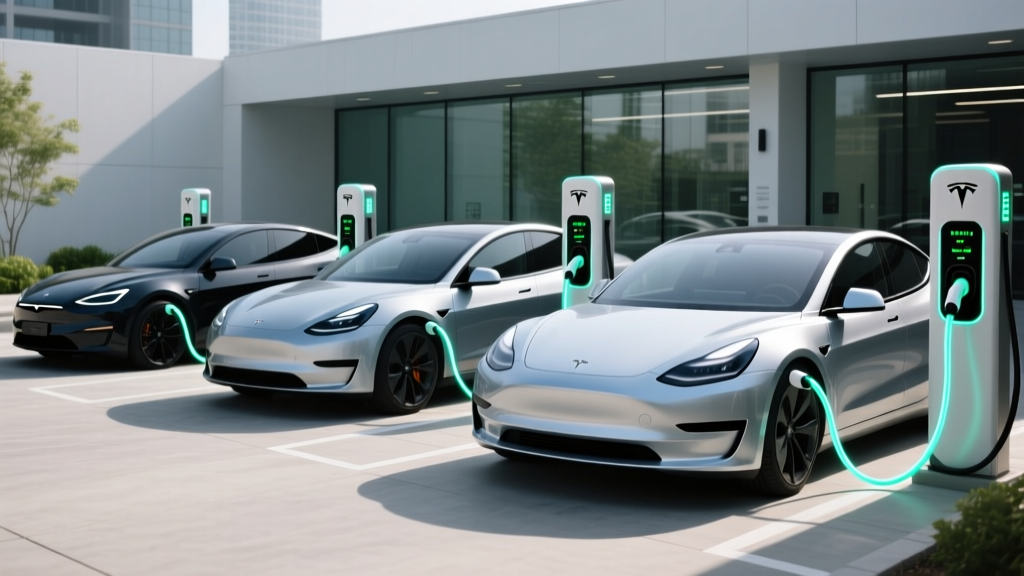
Tesla's Supercharger network remains the gold standard for road-trip charging. The current fleet includes V2 stalls (150 kW peak), V3 stalls (250 kW peak), and the newer V4 architecture which can deliver up to 325 kW to compatible vehicles like the Cybertruck. However, no Tesla sustains peak rate for the entire session — the charge curve tapers significantly above 50–60% state of charge (SoC), and slows dramatically past 80% to protect battery longevity.
This is why the industry-standard metric is 10–80% charge time, not 0–100%. Charging from 80% to 100% on a DC fast charger can take nearly as long as the 10–80% portion due to tapering. On road trips, it's faster to charge to 80% and move on than to wait for a full fill.
Real-World Range vs. EPA Estimates: What You'll Actually Get
EPA range estimates provide a standardized baseline, but real-world range varies significantly based on speed, temperature, terrain, and climate control usage. Here's how Tesla's 2026 lineup translates from sticker to street.
• Model 3 Long Range AWD: EPA 363 mi → Expect ~300–320 mi on highway road trips at 70–75 mph; ~250–270 mi in sub-freezing weather.
• Model Y Long Range AWD: EPA 320 mi → Expect ~270–290 mi highway; ~230–250 mi in cold conditions.
• Model S Long Range: EPA 402 mi → Expect ~340–360 mi highway; ~290–310 mi cold weather.
• Cybertruck AWD: EPA 340 mi → Expect ~280–300 mi highway; ~240–260 mi cold (aerodynamic drag hits harder at speed).
• Model 3 RWD (LFP): EPA 272 mi → Expect ~230–245 mi highway; ~190–210 mi cold.
LFP-equipped RWD models (Model 3 RWD, Model Y RWD) face a double disadvantage in winter: smaller battery capacity and LFP chemistry's slightly greater cold-temperature resistance. However, LFP batteries tolerate regular 100% charging better than NMC, meaning you can charge to full daily without degradation concerns — effectively giving you more usable capacity day-to-day.
Tesla Model Specs, Pricing, and Tax Credit Eligibility
| Model / Trim | EPA Range | 0–60 mph | HP | Drivetrain | MPGe (combined) | Base MSRP | Battery Warranty |
|---|---|---|---|---|---|---|---|
| Model 3 RWD | 272 mi | 5.8 sec | 271 | RWD | 132 MPGe | $38,990 | 8 yr / 100,000 mi |
| Model 3 Long Range AWD | 363 mi | 4.2 sec | 346 | Dual Motor AWD | 132 MPGe | $45,490 | 8 yr / 120,000 mi |
| Model 3 Performance | 315 mi | 2.9 sec | 510 | Dual Motor AWD | 117 MPGe | $52,990 | 8 yr / 120,000 mi |
| Model Y RWD | 277 mi | 6.6 sec | 295 | RWD | 127 MPGe | $44,990 | 8 yr / 100,000 mi |
| Model Y Long Range AWD | 320 mi | 4.8 sec | 384 | Dual Motor AWD | 122 MPGe | $48,490 | 8 yr / 120,000 mi |
| Model Y Performance | 285 mi | 3.5 sec | 456 | Dual Motor AWD | 111 MPGe | $53,490 | 8 yr / 120,000 mi |
| Model S Long Range | 402 mi | 3.1 sec | 670 | Dual Motor AWD | 120 MPGe | $79,990 | 8 yr / 150,000 mi |
| Model S Plaid | 359 mi | 1.99 sec | 1,020 | Tri-Motor AWD | 116 MPGe | $89,990 | 8 yr / 150,000 mi |
| Model X Long Range | 335 mi | 3.8 sec | 670 | Dual Motor AWD | 107 MPGe | $84,990 | 8 yr / 150,000 mi |
| Cybertruck AWD | 340 mi | 3.9 sec | 600 | Dual Motor AWD | 70 MPGe | $79,990 | 8 yr / 150,000 mi |
EPA data via fueleconomy.gov. MSRP excludes destination charges. Specs as published by Tesla for 2026 model year.
Federal Tax Credit: Who Qualifies?
Under IRS §30D rules, the federal EV tax credit provides up to $7,500 — but eligibility is far from automatic. Here's what applies to Tesla buyers in 2026:
- MSRP caps: Vans, SUVs, and pickups up to $80,000; sedans up to $55,000. This means Model 3 RWD ($38,990) and Model 3 Long Range ($45,490) qualify on price, while Model 3 Performance ($52,990) also clears the sedan cap. Model Y trims all fall under the $80,000 SUV cap. Model S, Model X, and Cybertruck are priced near or above their respective caps — verify current eligibility.
- Buyer income limits: Modified AGI must not exceed $300,000 (married filing jointly), $225,000 (head of household), or $150,000 (single).
- Battery sourcing requirements: The credit splits into two halves ($3,750 for critical minerals + $3,750 for battery component assembly), each with annual thresholds for North American sourcing that tighten each year. As of 2026, the sourcing requirements are stringent — some Tesla configurations may qualify for only $3,750 or the full $7,500 depending on the battery supply chain for that specific build.
- Point-of-sale transfer: Buyers can transfer the credit to the dealer at purchase, reducing the out-of-pocket price immediately rather than waiting for a tax refund.
Always verify current eligibility at IRS.gov before purchasing. Tesla's website also indicates credit eligibility per configuration at checkout.
Charging Speed Deep Dive: The Curve Behind the Numbers
The headline peak charge rate — say, 250 kW on a V3 Supercharger — tells only part of the story. Here's what actually happens during a DC fast-charging session:
The charge curve: When you plug in at a low state of charge (10–20%), the battery management system (BMS) allows maximum current flow, and the vehicle ramps toward peak kW. As the battery fills, internal resistance increases and the BMS progressively reduces charge rate to prevent lithium plating and heat damage. On a Model 3 Long Range at a V3 Supercharger, you might see 250 kW at 15% SoC, tapering to ~150 kW by 50%, ~80 kW by 70%, and ~30 kW by 90%.
Preconditioning matters: If you navigate to a Supercharger using Tesla's built-in navigation, the car automatically preconditions the battery — warming it to the optimal temperature for fast charging. Without preconditioning (for instance, arriving at a charger after the car has sat cold), peak charge rates can be 30–50% lower in cool weather until the battery warms up. Always route through the nav for the fastest sessions.
V4 Supercharger advantage: Tesla's newest V4 architecture supports up to 325 kW for compatible vehicles. The Cybertruck can leverage this, reducing its 10–80% time from ~28 minutes (at 250 kW) to ~22 minutes. However, V4 availability is still limited to select corridors as of 2026, and older V3 stalls cap at 250 kW regardless of vehicle capability.
Tech, Interior, and Ownership Experience
Tesla's cabin philosophy is minimalist to a fault — nearly everything routes through the central 15.4-inch touchscreen (17-inch in Model S/X). Physical controls are sparse: no traditional instrument cluster, no stalks on the refreshed Model 3 (turn signals are steering-wheel buttons), and glove-box opening requires a screen tap.
Driver Assistance: Autopilot and FSD Supervised
Autopilot provides competent adaptive cruise control and lane centering on highways. FSD Supervised adds automatic lane changes, traffic-light recognition, and city-street navigation, but its performance remains inconsistent in construction zones, unprotected left turns, and heavy rain. Buyer-beware: FSD is a convenience feature, not a chauffeur.
Cargo and Passenger Space
| Model | Cargo (rear seats up) | Cargo (rear seats folded) | Frunk | Rear Legroom |
|---|---|---|---|---|
| Model 3 | 23 cu ft | — (trunk only) | 3.1 cu ft | 35.2 in |
| Model Y | 30 cu ft | 72 cu ft | 4.1 cu ft | 41.6 in |
| Model S | 28 cu ft | — (liftback) | — | 35.4 in |
| Model X | 15 cu ft (5-seat, behind 2nd row) | 82 cu ft | — | 38.4 in |
| Cybertruck | 34 cu ft (bed, 6-ft) | — | — (front trunk: 7 cu ft) | — (pickup config) |
Pros, Cons, and Who Should Buy a Tesla
Pros
- Best-in-class Supercharger network — 60,000+ stalls globally, extremely reliable uptime
- Over-the-air updates continuously add features and improve efficiency
- Industry-leading energy efficiency (MPGe) across the lineup
- LFP option on RWD trims allows worry-free 100% daily charging
- Strong resale value relative to most EV competitors
- Integrated ecosystem: navigation, charging, preconditioning work seamlessly
Cons
- Minimalist interior frustrates buyers who prefer physical controls and traditional layouts
- Service center wait times can stretch weeks in high-volume metro areas
- FSD Supervised ($8,000) remains a Level 2 system — questionable value proposition
- Model S/X pricing exceeds sedan/SUV tax credit MSRP caps
- No Apple CarPlay or Android Auto — Tesla's proprietary system is the only option
- Panel-turn-signal buttons on refreshed Model 3 require significant adaptation
Who This EV Suits Best
Model 3 RWD / Model Y RWD: Budget-conscious commuters with home charging access who drive under 40 miles daily and want the lowest entry price. LFP battery means you can charge to 100% nightly without guilt.
Model 3 Long Range / Model Y Long Range: The sweet spot for most buyers. Enough range for genuine road trips (300+ real-world miles), dual-motor AWD for snow-belt states, and fast 250 kW Supercharging. Ideal for families and frequent travelers.
Model 3 Performance / Model Y Performance: Enthusiasts who want sports-car acceleration (sub-3.5-second 0–60) with daily-driver practicality. Trade some range for the thrill.
Model S / Model X: Luxury buyers who want maximum range, air suspension, and premium cabin space. Be aware that tax credit eligibility is limited or unavailable at these price points.
Cybertruck: Truck buyers who need a bed, want EV torque for towing (up to 11,000 lbs rated), and don't mind polarizing styling. Real-world highway range drops significantly when towing.
Frequently Asked Questions
How long does it take to fully charge a Tesla at home?
On a 240V Level 2 charger (Tesla Wall Connector at 11.5 kW), expect 5.5 hours for a Model 3 RWD, ~7 hours for Long Range variants, ~8.5 hours for Model S/X, and ~11 hours for the Cybertruck. Most owners arrive home with 30–50% remaining and wake up to a full battery — so actual plug-in time is shorter.
Can I charge a Tesla at a regular wall outlet?
Yes, using the Tesla Mobile Connector with a standard 120V adapter. However, at ~1.4 kW, you'll gain only 3–5 miles of range per hour. A full charge takes 40–90 hours depending on the model. Level 1 is practical only as emergency backup or for very low-mileage drivers.
Does fast charging damage the Tesla battery?
Tesla's battery management system actively manages temperature and charge rate to minimize degradation. Data from high-mileage Tesla fleets shows that exclusive Supercharging adds roughly 1–3% more degradation over 100,000 miles compared to exclusive Level 2 charging. The impact is measurable but not catastrophic. For daily use, Level 2 is preferred; Supercharging is designed for road trips.
Do all Teslas qualify for the $7,500 federal tax credit?
No. Eligibility depends on the vehicle's MSRP (sedans ≤$55,000; SUVs/trucks ≤$80,000), the buyer's income (≤$300K joint / $150K single), and battery-component/critical-mineral sourcing thresholds that tighten annually. As of 2026, Model 3 RWD and Long Range typically qualify, while Model S, Model X, and some Cybertruck configurations may not. Always check IRS.gov for current rules.
Is a Tesla worth buying versus competitors like the Hyundai Ioniq 5 or BMW i4?
Tesla's key advantages are Supercharger network access, energy efficiency, and software integration. Competitors like the Hyundai Ioniq 5 offer faster 10–80% charge times (~18 min at 350 kW chargers), more physical controls, and broader CCS/NACS charging compatibility as other networks adopt Tesla's connector. If Supercharger access and OTA updates matter most, Tesla wins. If you prefer a traditional cabin layout or faster peak charging on non-Tesla networks, competitors are strong alternatives.
What's the real-world range of a Tesla in winter?
Expect a 15–30% range reduction in sub-freezing temperatures, depending on severity and whether you precondition. A Model 3 Long Range rated at 363 EPA miles may deliver 250–280 miles in 20°F weather with cabin heat running. Using seat heaters and a lower cabin temperature mitigates this loss. Preconditioning while plugged in at home preserves range by warming the battery on grid power.