The Short Answer: EV Charging Times in 2026
How long do electric cars take to charge? It depends entirely on the charger type and your battery size. Here are the real numbers for a typical 75 kWh battery (like a Tesla Model Y or Hyundai Ioniq 5):
- Level 1 (120V household outlet): ~50–75 hours from empty to full. Adds 3–5 miles of range per hour.
- Level 2 (240V home/public charger): ~8–12 hours from empty to full. Adds 25–44 miles of range per hour.
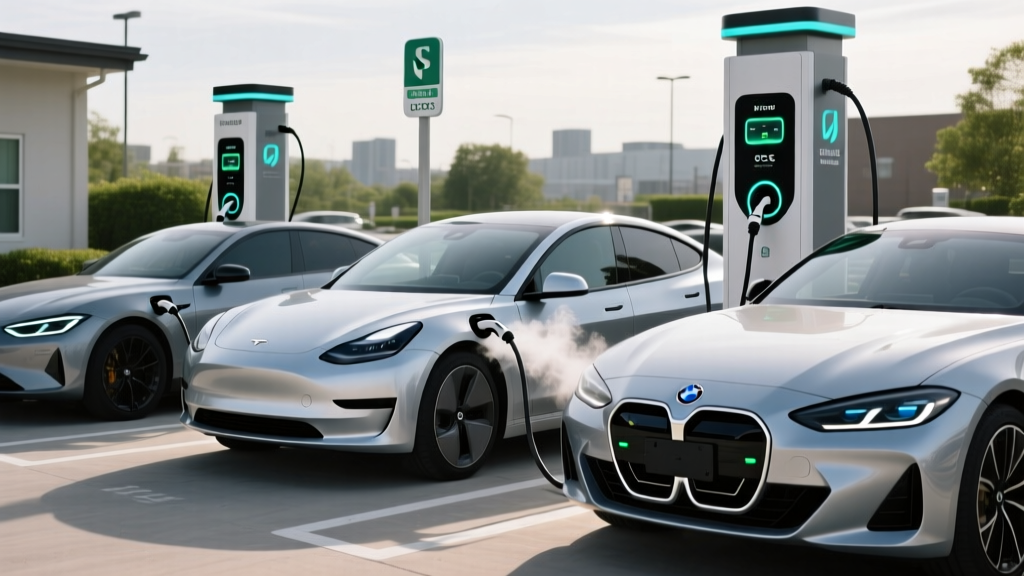
- DC Fast Charging (150–350 kW public station): 10–80% in roughly 18–35 minutes depending on peak kW capability.
Most EV owners charge at home overnight and only use DC fast chargers on road trips. You'll rarely charge from 0% to 100% — the 10–80% window is what matters for daily life and highway stops.
Charging Levels Explained: kW, kWh, and Why They Matter
The single biggest source of confusion for new EV buyers is the difference between kW (kilowatts) and kWh (kilowatt-hours). Think of it like plumbing:
- kWh = the size of your battery tank (energy stored). A 2026 Tesla Model Y Long Range has roughly 75 kWh usable. A Chevy Equinox EV has about 85 kWh.
- kW = how fast energy flows into that tank (power). A Level 2 home charger delivers 7.2–11.5 kW. A DC fast charger can deliver 150–350 kW.
Divide your battery capacity (kWh) by the charger's power (kW) and you get a rough time estimate. But real-world charging involves a charge curve — batteries charge fastest between roughly 10–50% State of Charge (SoC), then taper significantly above 80% to protect cell longevity. That's why manufacturers quote 10–80% times rather than 0–100%.
| Level | Voltage | Power (kW) | Miles Added/Hour | 75 kWh Battery: 10–80% | Best For |
|---|---|---|---|---|---|
| Level 1 | 120V AC | 1.4–1.9 kW | 3–5 mi/hr | ~45–55 hours | Overnight trickle, PHEVs, emergencies |
| Level 2 (Home) | 240V AC | 7.2–11.5 kW | 25–44 mi/hr | ~7–10 hours | Daily home charging, workplace |
| DC Fast (150 kW) | 400V+ DC | Up to 150 kW | ~500+ mi/hr (peak) | ~28–35 minutes | Road trips, highway stops |
| DC Fast (350 kW) | 800V DC | Up to 350 kW | ~1,000+ mi/hr (peak) | ~18–22 minutes | 800V vehicles (Ioniq 5, EV6, Taycan) |
Real-World Charging Times for Popular 2026 EVs
Spec sheets tell one story. Here's what you'll actually experience with some of the most popular EVs on the road, based on manufacturer data and independent testing from sources like fueleconomy.gov and manufacturer press rooms.
| Vehicle | Battery (kWh) | Max DC kW | 10–80% DCFC | Level 2 (11.5 kW) | EPA Range |
|---|---|---|---|---|---|
| Tesla Model Y LR | ~75 (NMC) | 250 kW | ~25 min | ~7.5 hrs | 320 mi |
| Hyundai Ioniq 5 | 77.4 (NMC) | 350 kW (800V) | ~18 min | ~7.3 hrs | 310 mi |
| Ford F-150 Lightning Ext. | 131 (NMC) | 150 kW | ~41 min | ~12.5 hrs | 320 mi |
| Chevy Equinox EV 3RS | ~85 (NMC) | 150 kW | ~32 min | ~8.5 hrs | 319 mi |
| Tesla Model 3 LR | ~75 (NMC) | 250 kW | ~22 min | ~7.5 hrs | 341 mi |
| Rivian R1S Dual Max | ~141 (NMC) | 220 kW | ~38 min | ~13 hrs | 400 mi |
Real-world caveat: These DC fast-charge times assume you've preconditioned the battery (warmed it to optimal temperature, typically via the car's navigation routing to the charger). Without preconditioning, especially in cold weather below 40°F, expect 10–80% times to increase by 30–50%. A battery at 25°F that hasn't been preconditioned may peak at only 50–70 kW even on a 350 kW charger.
EV Charging vs. Gas: Time and Cost Compared
The honest comparison isn't just about minutes at a station — it's about how charging fits into your life versus how fueling fits into a gas car owner's life.
| Metric | EV (Home L2 Charging) | Gas Car (28 MPG Combined) | PHEV (30 mi EV range) |
|---|---|---|---|
| "Refueling" stops per year | ~4–8 (road trips only) | ~35–45 | ~20–30 |
| Time per stop | 20–35 min (DCFC on trips) | 5–8 min | 5–8 min (gas) + overnight (EV) |
| Total annual "fueling" time | ~2–5 hours (mostly on road trips) | ~4–6 hours | ~3–5 hours |
| Annual fuel/energy cost | ~$540 ($0.15/kWh, 3.5 mi/kWh) | ~$1,500 ($3.50/gal) | ~$900 (mixed) |
| Cost per mile | ~$0.045 | ~$0.125 | ~$0.075 |
The counterintuitive reality: EV owners who charge at home spend less total time "refueling" per year than gas car owners, because daily charging happens while you sleep. The time penalty only appears on road trips longer than your car's range — and even there, a 25-minute charge stop every 3 hours aligns well with rest breaks.
The Real Cost of EV Charging: Home, Public, and the Hidden Math
Charging cost varies enormously depending on where and when you charge.
| Charging Location | Typical $/kWh | Cost for 75 kWh (10–80%) | Cost per Mile (3.5 mi/kWh) |
|---|---|---|---|
| Home (national avg. electricity) | $0.16 | ~$8.40 | $0.046 |
| Home (off-peak TOU rate) | $0.08–$0.10 | ~$4.20–$5.25 | $0.023–$0.029 |
| Home (solar, paid off) | ~$0.02–$0.04 | ~$1.05–$2.10 | $0.006–$0.011 |
| Tesla Supercharger (avg.) | $0.28–$0.36 | ~$14.70–$18.90 | $0.08–$0.10 |
| Electrify America / EVgo | $0.31–$0.48 | ~$16.25–$25.20 | $0.09–$0.14 |
| Free workplace/retail charger | $0.00 | $0.00 | $0.00 |
Home Level 2 installation cost: Expect to spend $500–$1,500 for a quality Level 2 charger (ChargePoint Home Flex, Emporia Level 2, Tesla Wall Connector) plus $800–$2,500 for electrician labor and permits if you have a 200-amp panel with spare capacity. If your home needs a panel upgrade to 200A, add $1,500–$3,500. Total realistic range: $1,300–$7,500 depending on your electrical situation.
The federal Alternative Fuel Vehicle Refueling Property Credit covers 30% of home charger equipment and installation costs, up to $1,000 — but only if you live in an eligible census tract. Check IRS guidelines before assuming you qualify.
Common EV Charging Myths — Busted with Data
| Myth | Fact |
|---|---|
| "EVs take hours to charge on road trips" | Modern 800V EVs (Ioniq 5, EV6, Taycan) add 10–80% in 18–22 minutes at a 350 kW charger. That's a quick rest stop — and most drivers need a break every 2–3 hours anyway. |
| "I need to charge to 100% every time" | For NMC batteries, daily charging to 80% maximizes longevity. Only charge to 100% right before a long road trip. LFP batteries (some Tesla Model 3/Y RWD) can be charged to 100% daily without degradation concerns. |
| "You can't charge in the rain" | EV charging connectors are weather-sealed to IP67 standards. You can safely charge in rain, snow, and sleet. The connector won't energize until a secure connection is confirmed. |
| "Charging degrades the battery quickly" | Data from NHTSA-monitored fleets and long-term owner studies show most NMC batteries retain 85–92% capacity after 100,000 miles. Federal law mandates battery warranties of at least 8 years/100,000 miles with a minimum 70% capacity retention threshold. |
| "Public charging is always unreliable" | Reliability varies by network. Tesla Superchargers consistently report 95%+ uptime. Electrify America and EVgo have improved significantly in 2025–2026 but still lag behind Tesla, particularly at older CCS-only stations. Check PlugShare reviews before relying on a specific station. |
| "A regular outlet is fine for daily charging" | Level 1 (120V) adds only 3–5 miles per hour. If you drive 40 miles daily, Level 1 barely keeps up. Level 2 at home is strongly recommended for any BEV driven more than 20 miles/day. |
What First-Time EV Buyers Must Know About Charging
Before you sign a purchase agreement, answer these questions honestly:
1. Can I install Level 2 charging at home?
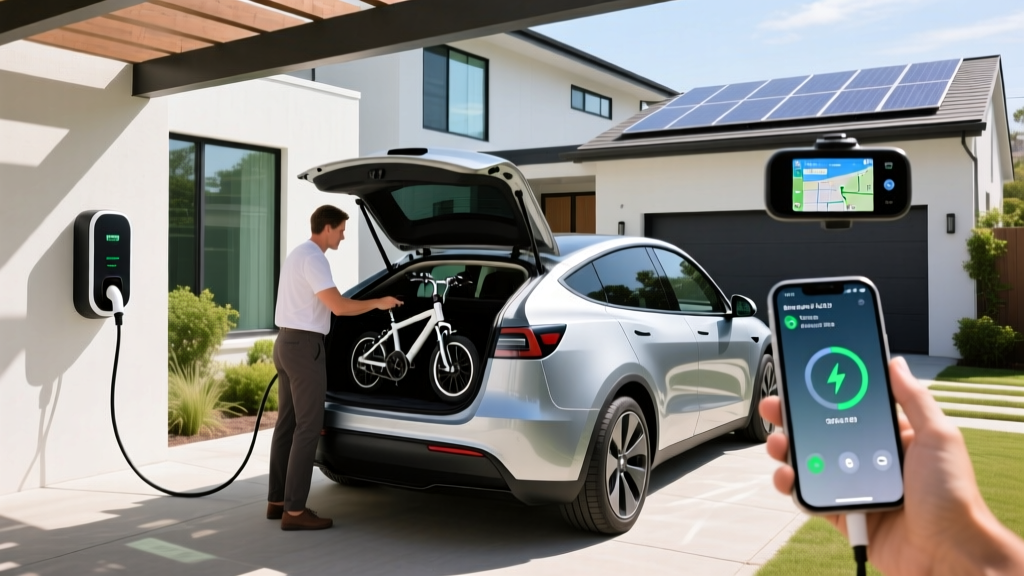
This is the single most important ownership question. If you have a garage or driveway with access to a 240V circuit (or room in your panel for one), home Level 2 charging transforms EV ownership. You wake up every morning with a "full tank." If you live in an apartment or lack dedicated parking, you'll depend on public and workplace charging — which is viable but requires more planning.
2. What's my real-world range?
EPA estimates assume mixed driving at moderate temperatures. Expect:
- Highway driving (70+ mph): 85–90% of EPA range
- Cold weather (below 30°F): 70–80% of EPA range (cabin heating is the main drain; a heat pump reduces this penalty)
- City/regenerative driving: 95–105% of EPA range (regen recovers braking energy)
A 310-mile EPA vehicle may realistically deliver 220–250 miles on a cold winter highway drive. Plan road trips around that number, not the sticker.
3. What connector does the EV use?
As of 2026, the industry has largely standardized on NACS (North American Charging Standard), the Tesla connector. Ford, GM, Rivian, Hyundai, and most other automakers now ship vehicles with native NACS ports. Older CCS1 vehicles can use adapters. CHAdeMO is effectively dead for new vehicles (the Nissan Leaf was the last holdout). Confirm the connector before buying — it determines which public networks you can use natively.
4. What does the charge curve look like?
A vehicle advertising "250 kW max charging" doesn't sustain 250 kW for the entire session. A typical charge curve peaks early (10–30% SoC) and tapers progressively. A 250 kW-capable car might sustain 200+ kW from 10–30%, drop to 150 kW by 50%, and slow to 50 kW above 80%. This is why 10–80% time is the meaningful metric, not peak kW alone.
5. Do I qualify for federal or state incentives?
The IRS §30D federal tax credit offers up to $7,500 for qualifying new EVs — but eligibility depends on:
- MSRP caps: $80,000 for SUVs/pickups/vans; $55,000 for sedans
- Buyer income limits: $300,000 joint / $225,000 head of household / $150,000 single (modified AGI)
- Battery sourcing: Critical minerals and battery components must meet escalating domestic/free-trade-partner thresholds
- Point-of-sale transfer: As of 2024+, you can transfer the credit to the dealer for an immediate price reduction — you don't need to wait until tax filing
Rules change frequently. Consult a tax professional and check the latest IRS guidance before assuming eligibility.
Decision Framework: Which Charging Setup Is Right for You?
Choose a full BEV with home Level 2 if:
- You have a garage/driveway with 240V access or panel capacity for a new circuit
- Your daily commute is under 80 miles round-trip
- You take road trips fewer than 6 times per year (or are comfortable planning DCFC stops)
- You want the lowest per-mile energy cost (~$0.03–$0.05/mile at home)
Choose a PHEV if:
- You can't install home Level 2 charging (apartment, street parking, panel limitations)
- You frequently drive 300+ miles in a day and don't want to plan charging stops
- Your daily commute is under 30 miles (covering most PHEV electric-only ranges of 28–42 miles)
- You want EV-like daily driving with gas-car flexibility for long trips
Choose a BEV and rely on public charging if:
- You have reliable workplace Level 2 charging (free or subsidized)
- You live near dependable DC fast chargers (Tesla Superchargers, Electrify America) within 5–10 minutes of home
- Your daily driving is under 50 miles and you can charge 2–3 times per week publicly
- You accept the higher per-mile cost of public DCFC ($0.08–$0.14/mile) and the time trade-off
Wait on an EV if:
- You regularly tow heavy loads long distances (towing can cut EV range by 40–50%)
- You live in a charging desert with no reliable DCFC within 30+ miles and no home charging option
- You drive 400+ miles in a single day multiple times per month and can't tolerate 20–30 minute stops
Frequently Asked Questions
How long does it take to charge an EV at a Tesla Supercharger?
At a V3 Supercharger (250 kW), a Tesla Model Y Long Range charges from 10–80% in approximately 25 minutes with battery preconditioning. At a V4 Supercharger with higher power availability, expect similar or slightly faster times. Above 80%, charging slows dramatically — going from 80–100% can add another 20–25 minutes, which is why road-trippers typically charge to 80% and move on.
Can I charge my EV with a regular household outlet?
Yes, but slowly. A standard 120V outlet (Level 1) delivers about 1.4 kW, adding roughly 3–5 miles of range per hour. For a 75 kWh battery, a 10–80% charge takes approximately 45–55 hours. Level 1 works for plug-in hybrids with small batteries (15–20 kWh) that can fully charge overnight, or for BEV owners who drive fewer than 20 miles per day and can top up over multiple nights.
Does cold weather affect EV charging speed?
Significantly. Lithium-ion batteries charge much slower when cold. At 25°F without preconditioning, a battery that normally accepts 250 kW may be limited to 50–70 kW until it warms up. Most modern EVs offer battery preconditioning — the car warms the battery while navigating to a charger. Always use this feature in cold weather. Expect 10–80% charge times to increase by 30–50% in sub-freezing conditions if preconditioning isn't active.
Is it bad to use DC fast charging all the time?
Exclusive DC fast charging slightly accelerates battery degradation compared to Level 2 charging — but the effect is smaller than most buyers fear. Studies of high-mileage EVs (including Tesla fleet data) show vehicles that primarily DC fast-charged retained roughly 85–88% capacity at 100,000 miles versus 90–93% for primarily Level 2-charged vehicles. The difference is measurable but rarely impacts real-world usability within a typical ownership period. The bigger degradation risk is repeatedly sitting at 100% SoC in hot weather.
What happens if I run out of charge on the road?
The same thing that happens if you run out of gas: you're stranded until help arrives. Most EVs provide 20–40 miles of low-charge warnings and will reduce power to extend range. Roadside assistance services (AAA, manufacturer programs) increasingly offer mobile charging units that can add 10–20 miles of range — enough to reach a charger. The practical solution is to plan trips using apps like A Better Routeplanner and keep a 10–15% buffer.
How much does it cost to install a Level 2 charger at home?
Total installed cost typically ranges from $1,300 to $4,000 for homes with an existing 200-amp panel and spare breaker capacity. This includes $500–$1,500 for the charger unit and $800–$2,500 for electrician labor, wiring, and permits. If your home has an older 100-amp panel, a service upgrade to 200A adds $1,500–$3,500. Always get quotes from licensed electricians and check whether your utility offers rebates — many do, reducing out-of-pocket cost by $250–$750.