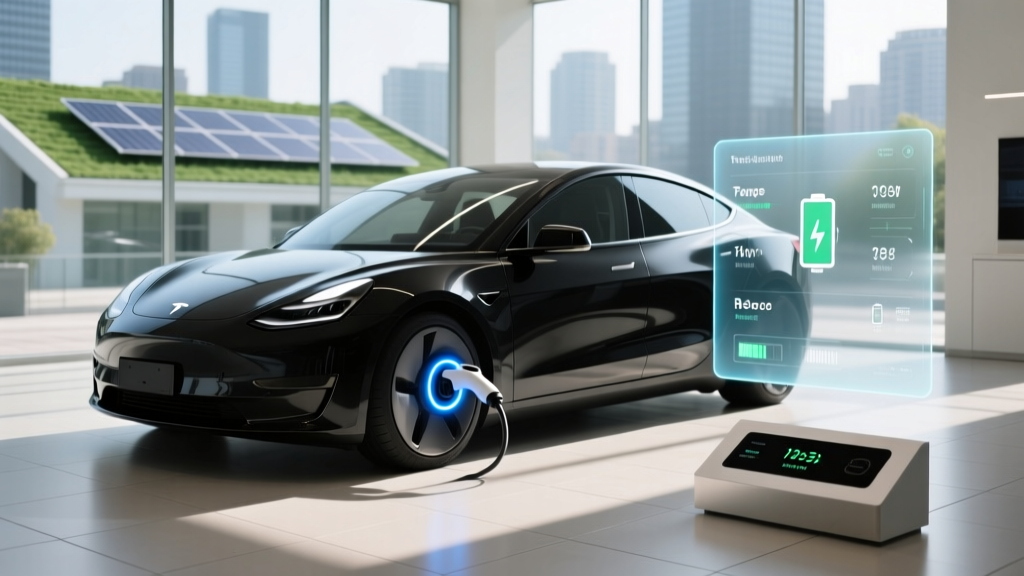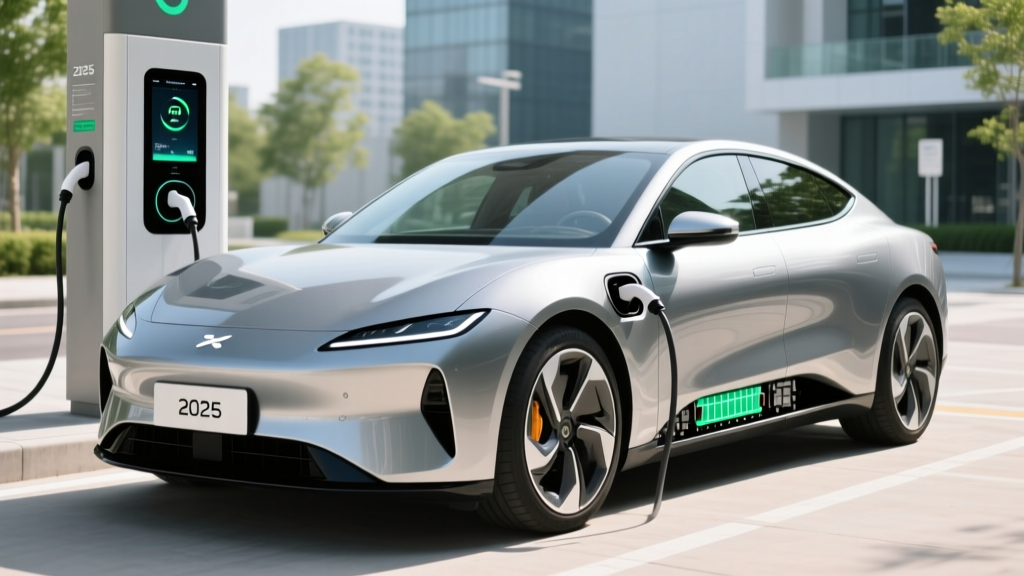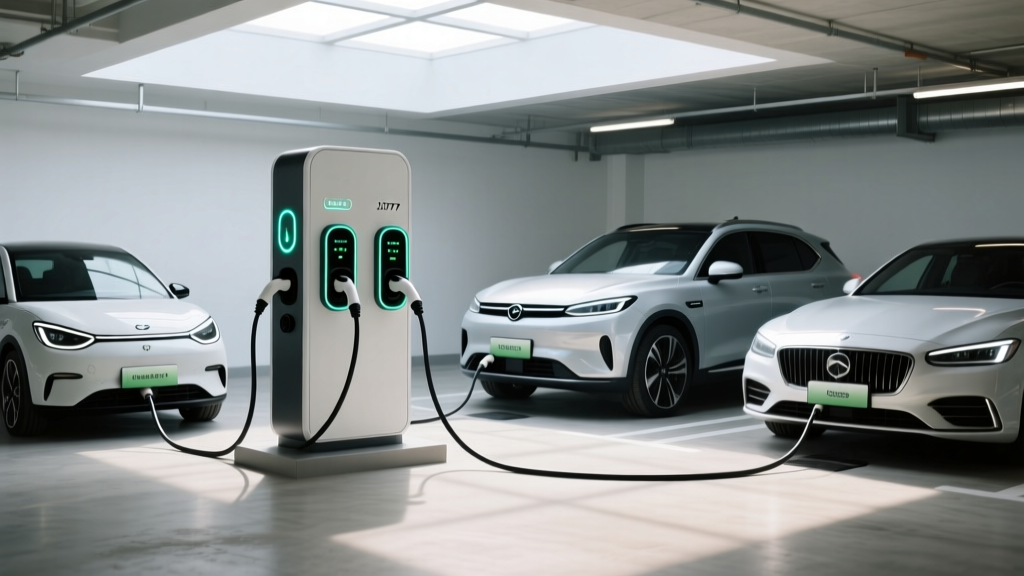
Quick Answer: How Long Does It Take to Charge an Electric Car?
Charging time depends on the charger type and your battery size. For a typical 2026 EV with a 75 kWh battery (like a Tesla Model Y or Hyundai Ioniq 5):
- Level 1 (120V household outlet): ~50–75 hours from empty to full. Adds roughly 3–5 miles of range per hour.
- Level 2 (240V home or public charger): ~8–12 hours from empty to full. Adds 20–40 miles of range per hour.
- DC Fast Charging (150–350 kW public station): 10%–80% in roughly 18–35 minutes depending on peak charge rate and battery chemistry.
Most EV owners charge at home overnight on Level 2 and never visit a gas station. Public DC fast charging is reserved for road trips. The "how long electric car charge" question almost always comes down to whether you have Level 2 access at home.
Charging Levels Explained: kW, kWh, and What They Mean
Before comparing times, the single most important distinction for any EV buyer is kW vs. kWh:
- kWh (kilowatt-hour) is energy — it measures your battery's capacity. A 75 kWh battery holds 75 kWh of electricity, similar to how a 15-gallon gas tank holds 15 gallons of fuel.
- kW (kilowatt) is power — it measures how fast energy flows into the battery. A 150 kW charger delivers energy much faster than a 7.2 kW home unit.
Think of it as filling a bucket: kWh is the bucket's size, and kW is the hose's flow rate. A bigger hose (higher kW) fills the bucket faster, but the bucket's capacity (kWh) determines how much total energy you store.
| Charging Level | Voltage | Power Output (kW) | Miles of Range Added Per Hour | Typical Use Case |
|---|---|---|---|---|
| Level 1 | 120V AC | 1.0–1.4 kW | 3–5 mi/hr | Emergency/trickle; overnight for PHEVs |
| Level 2 | 240V AC | 3.3–19.2 kW | 12–60 mi/hr | Daily home charging; workplace; public destinations |
| DC Fast Charge | 400–800V DC | 50–350 kW | 150–1,000+ mi/hr (peak) | Road trips; rapid top-ups on highways |
Source: U.S. Department of Energy / fueleconomy.gov
Real-World Charging Times for Popular 2026 EVs
Manufacturer-claimed peak charge rates rarely tell the full story. A vehicle rated at 250 kW peak won't sustain that rate for the entire session — the charge curve tapers significantly above 80% State of Charge (SoC) to protect battery health. Here's what real-world sessions look like for current popular models:
| Vehicle | Battery (kWh usable) | Chemistry | Peak DC kW | 10–80% DC Fast | Level 2 (home, 11.5 kW) |
|---|---|---|---|---|---|
| Tesla Model Y Long Range | 75 kWh | NMC | 250 kW | ~25 min | ~8 hrs |
| Hyundai Ioniq 5 (Long Range) | 77.4 kWh | NMC | 240 kW (800V) | ~18 min | |
| Ford F-150 Lightning (Extended) | 131 kWh | NMC | 150 kW | ~41 min | ~12 hrs (at 11.5 kW) |
| Chevrolet Equinox EV (3RS) | 85 kWh | NMC | 150 kW | ~30 min | ~9 hrs |
| Tesla Model 3 RWD | 57.5 kWh | LFP | 170 kW | ~25 min | ~6 hrs |
| BMW iX xDrive50 | 105.2 kWh | NMC | 200 kW | ~31 min | ~11 hrs |
Key insight on charge curves: The Hyundai Ioniq 5's 800-volt architecture lets it sustain high charge rates longer than 400V competitors, which is why its 10–80% time beats vehicles with similar or higher peak kW ratings. Peak kW alone is misleading — sustained power under the curve matters more. Above 80% SoC, charging speed drops sharply on all EVs to prevent lithium plating and thermal stress. This is why road-trip strategy focuses on 10–80% sessions rather than topping to 100%.
EV Charging Cost vs. Gas: The Real Numbers
One of the strongest ownership arguments for EVs is fuel cost savings, but the actual gap depends heavily on where and when you charge. Let's run the math for a realistic annual driving scenario.
| Energy Source | Rate | Efficiency | Cost per Mile | Annual Cost |
|---|---|---|---|---|
| Home Level 2 (national avg. electricity) | $0.17/kWh | 3.5 mi/kWh (28.5 kWh/100mi) | $0.049 | $583 |
| Home Level 2 (off-peak time-of-use rate) | $0.09/kWh | 3.5 mi/kWh | $0.026 | $309 |
| Public DC Fast Charging (avg.) | $0.40/kWh | 3.5 mi/kWh | $0.114 | $1,371 |
| Gasoline (2026 avg. $3.40/gal, 28 MPG combined sedan) | $3.40/gal | 28 MPG | $0.121 | $1,457 |
The takeaway: Home charging on an off-peak rate saves roughly $1,100–$1,150 per year compared to gas. Home charging even at the national average electricity rate saves about $870/year. However, if you rely exclusively on public DC fast charging — which is the reality for apartment dwellers without home charging access — your energy cost nearly equals or sometimes exceeds gasoline. This is the most critical economic variable in EV ownership.
Source: U.S. EIA average electricity pricing; fueleconomy.gov.
Home Charging Setup: What It Actually Takes
For most buyers, the answer to "how long does it take to charge an electric car" is: "overnight, while you sleep." But that assumes you can install a Level 2 home charger. Here's what that involves and what it costs.
Level 2 Home Installation Cost Breakdown
| Component | Low Estimate | High Estimate |
|---|---|---|
| Level 2 charging unit (hardwired, 32–48A) | $400 | $750 |
| Electrician labor (run 240V line, mount unit) | $600 | $2,000 |
| Electrical permit | $50 | $200 |
| Panel upgrade (if needed — 200A service) | $1,500 | $4,000 |
| Total (without panel upgrade) | $1,050 | $2,950 |
| Total (with panel upgrade) | $2,550 | $6,950 |
Panel upgrade gotcha: Many older homes have 100A electrical panels that lack capacity for a 40A or 48A EV charger circuit. A panel upgrade to 200A service adds significant cost and may require utility coordination. Always have a licensed electrician assess your panel before purchasing a charger.
The federal Alternative Fuel Vehicle Refueling Property Credit (IRS §30C) covers up to 30% of home charger equipment and installation costs, capped at $1,000 — but eligibility depends on whether your census tract qualifies as a low-income or non-urban area. Check IRS guidance before assuming you'll receive it.
What If You Can't Charge at Home?
Roughly 30% of U.S. households lack access to dedicated home parking with electrical infrastructure — particularly apartment and condo residents. For these buyers, EV ownership requires a different calculus:
- Workplace charging: Some employers offer free or subsidized Level 2 charging. This can fully replace home charging for a standard commute.
- Public Level 2 networks: ChargePoint, EVgo, and Electrify America operate destination chargers at grocery stores, gyms, and malls. Typical cost: $0.12–$0.25/kWh.
- DC fast charging reliance: If you must rely on DC fast charging 2–3 times per week, expect to spend $1,200–$1,600/year on energy — comparable to gasoline — plus 1–2 hours/week of charging time.
Buyers without home charging should strongly consider a plug-in hybrid (PHEV) like the Toyota RAV4 Prime (42 miles electric-only range, 38 MPG combined after battery depletion) as a bridge solution that eliminates range and charging-access anxiety.
Common EV Charging Myths vs. Facts
| Myth | Fact |
|---|---|
| "Charging an EV takes hours, so road trips are impossible." | A 10–80% DC fast charge takes 18–35 minutes on modern EVs — about the length of a rest stop for food and a bathroom break. On a 600-mile trip, you'll add roughly 40–60 minutes of total charging time compared to a gas car. |
| "EV batteries degrade quickly and cost $20,000 to replace." | Data from Recurrent Auto shows most modern NMC and LFP batteries retain 90%+ capacity after 100,000 miles. Federal law mandates a minimum 8-year/100,000-mile battery warranty. Full replacements are rare and typically covered. |
| "You need to charge to 100% every night." | For NMC batteries, daily charging to 80% extends battery life. LFP batteries (Tesla Model 3 RWD, some BYD models) tolerate 100% daily charging better. Most EVs let you set a charge limit in the app. |
| "Cold weather makes EVs useless." | Cold weather reduces range by 15–30% depending on temperature and whether the vehicle has a heat pump. A 300-mile EPA EV might deliver 220–255 miles in freezing conditions. Preconditioning the battery while plugged in mitigates this significantly. |
| "The electrical grid can't handle everyone driving EVs." | Most EV charging happens overnight during off-peak hours when grid demand is low. Time-of-use rates incentivize this. Utility infrastructure upgrades are ongoing but localized, not a systemic barrier today. |
EV vs. Gas vs. Hybrid: 5-Year Ownership Cost Comparison
Charging time is only one variable. The purchase decision should factor in total cost of ownership across five years and 60,000 miles.
| Cost Category | EV (Tesla Model Y LR, ~$44,990 MSRP) | Gas (Toyota RAV4 LE AWD, ~$30,500 MSRP) | PHEV (Toyota RAV4 Prime, ~$44,500 MSRP) |
|---|---|---|---|
| Purchase price (before incentives) | $44,990 | $30,500 | $44,500 |
| Federal tax credit (§30D, if eligible) | –$3,750 to –$7,500* | $0 | –$3,750 to –$7,500* |
| Fuel/energy (5 years, home charging avg.) | $2,915 | $7,285 | $3,800 (mix of electric + gas) |
| Maintenance (5 years) | $1,500 | $3,500 | $3,000 |
| Insurance (5 years, national avg.) | $9,500 | $7,200 | $8,100 |
| Estimated 5-year depreciation | $18,000 | $12,200 | $17,800 |
| Estimated 5-Year Total | $53,155 – $57,155 | $60,685 | $55,850 – $59,600 |
*Federal EV tax credit (§30D) caveats for 2026: The credit ranges from $3,750 to $7,500 depending on battery critical-mineral and component sourcing requirements. It's subject to buyer income caps ($150K single / $300K joint AGI), vehicle MSRP caps ($55K sedans / $80K SUVs and trucks), and North American final assembly. The credit can be transferred to the dealer as a point-of-sale discount. Always verify current eligibility at irs.gov and consult a tax professional — rules change frequently.
Where EVs win: Lower fuel and maintenance costs offset higher purchase prices over 4–6 years for most drivers who charge at home. EVs eliminate oil changes, transmission fluid, spark plugs, and exhaust system repairs. Regenerative braking significantly extends brake pad life.
Where EVs lose: Higher insurance premiums (15–30% more than comparable gas vehicles, per industry data), steeper depreciation in some segments, and higher upfront cost. For low-mileage drivers (under 8,000 miles/year), the fuel savings may not close the price gap within five years.
First-Time EV Buyer Decision Framework
Should You Buy an EV, Hybrid, or Stick With Gas?
Use this framework to decide based on your specific situation:
Choose a full EV (BEV) if:
- You have access to Level 2 home charging (garage, driveway, or landlord-approved installation)
- Your daily driving is under 80 miles round-trip
- You drive 10,000+ miles per year (fuel savings justify the premium)
- You qualify for the §30D federal tax credit (check income and vehicle MSRP caps)
- You're comfortable planning DC fast-charge stops on road trips 2–4 times per year
Choose a plug-in hybrid (PHEV) if:
- You lack reliable home charging access but want some electric driving
- Your commute is under 35 miles (within electric-only range of most PHEVs)
- You frequently drive in areas with sparse charging infrastructure
- You want EV-like daily driving with gas-car road-trip flexibility
Choose a conventional hybrid (HEV) or gas vehicle if:
- You have zero home charging access and no workplace charging
- You drive fewer than 8,000 miles/year (fuel savings won't offset EV premium)
- You regularly tow heavy loads or drive in extreme cold (-20°F and below) where range loss is severe
- Your budget is strictly under $28,000 and you need the lowest upfront cost
Frequently Asked Questions
Can I charge an EV from a regular 120V outlet?
Yes. Every EV comes with a Level 1 charging cable that plugs into a standard 120V household outlet. It delivers 1.0–1.4 kW and adds roughly 3–5 miles of range per hour. For a 75 kWh battery, a full charge from empty takes 50–75 hours. This is practical as a supplement or for PHEVs with smaller batteries (15–20 kWh), but too slow as the primary charging method for most BEV owners.
Does fast charging damage the battery?
Occasional DC fast charging has minimal impact on modern battery health. Battery management systems actively control charge rate, temperature, and voltage to prevent damage. Data from Recurrent Auto shows that vehicles using DC fast charging 2–3 times per week degrade at nearly the same rate as those that primarily use Level 2. However, daily 100% fast charges in extreme heat will accelerate degradation over time. For daily use, Level 2 at home is gentler and cheaper.
How long does it take to charge an EV at a Tesla Supercharger?
Tesla Supercharger V3 stalls deliver up to 250 kW; V4 stalls support up to 350 kW for compatible vehicles. A Tesla Model Y Long Range (75 kWh, NMC) typically charges from 10% to 80% in about 25 minutes at a V3 stall. Non-Tesla EVs with NACS adapters (now widely available from Ford, GM, Rivian, and others) can also use Superchargers, though charge speed depends on the vehicle's onboard charge acceptance rate.
What happens if I run out of charge on the road?
The same thing that happens if you run out of gas — you need a tow to the nearest charger. However, EVs provide extensive range warnings, navigation to the nearest charger, and "turtle mode" (reduced power) when the battery gets critically low. Running out is rare with modern 250–350+ mile EPA range vehicles and route-planning apps like A Better Routeplanner. Roadside assistance from AAA and most automakers now includes flatbed towing to the nearest charger.
Is it cheaper to charge at home or at public stations?
Home charging is dramatically cheaper. At the national average residential rate of ~$0.17/kWh, you'll pay about $0.05 per mile. Public DC fast chargers from networks like Electrify America and EVgo typically charge $0.32–$0.52/kWh, translating to $0.09–$0.15 per mile — sometimes more expensive than gasoline. If you can install Level 2 at home, do it. It's the single biggest factor in EV ownership satisfaction and cost savings.
How does cold weather affect charging speed?
Cold batteries charge significantly slower. At temperatures below 32°F (0°C), a DC fast charge session that normally takes 25 minutes (10–80%) can stretch to 40–50 minutes unless the battery is preconditioned. Most modern EVs automatically precondition the battery when you navigate to a charger. Always plug in and precondition before a cold-weather fast-charge stop — it's the difference between peak-rate charging and a frustratingly slow session.