Quick Answer: Tesla Charging Times at a Glance
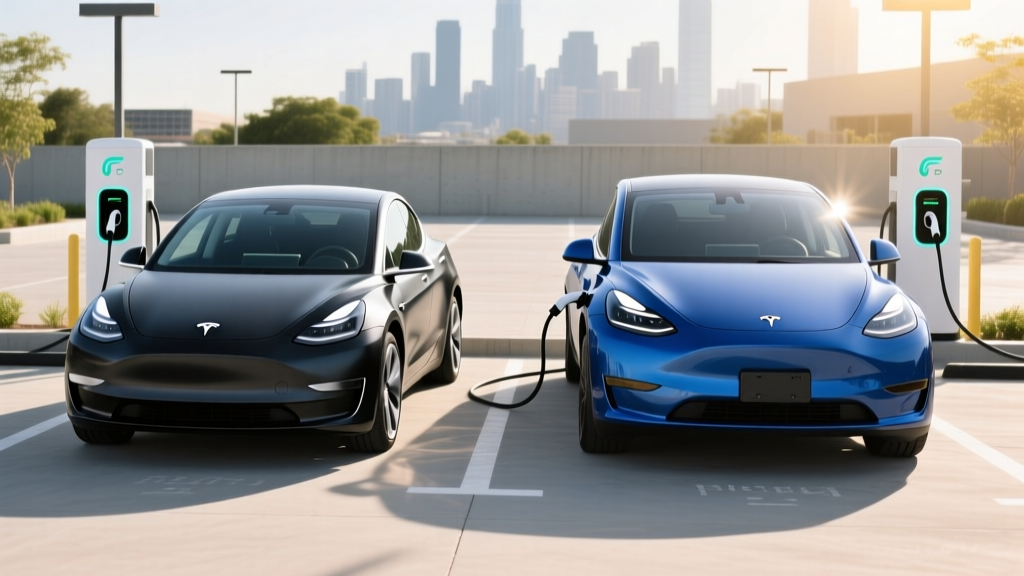
If you've typed "how long does a Tesla take to charge" into a search bar, you're not alone — it's one of the most common questions from first-time EV buyers. The short answer depends on which Tesla you drive, which charger you use, and how much of the battery you need to refill. A 2026 Tesla Model Y Long Range AWD, for example, can add roughly 200 miles of range in about 15 minutes at a V4 Supercharger, while a full home charge from empty on a Level 2 wall connector takes 8–10 hours overnight.
Below, we break down exact charging times for Tesla's two highest-volume vehicles — the 2026 Model 3 and 2026 Model Y — across DC fast charging, Level 2 home charging, and Level 1 trickle charging, with real-world caveats that the spec sheets don't emphasize.
2026 Tesla Model 3: Range, Battery, and Charging Specs
The refreshed Model 3 (internally called "Highland" and now in its second model year) continues with two primary battery configurations. The base Rear-Wheel Drive uses a lithium iron phosphate (LFP) pack, while the Long Range AWD and Performance trims use nickel-manganese-cobalt (NMC) chemistry for higher energy density.
| Spec | RWD | Long Range AWD | Performance |
|---|---|---|---|
| EPA Range | 272 mi | 341 mi | 315 mi |
| Battery (usable) | ~57.5 kWh (LFP) | ~75 kWh (NMC) | ~75 kWh (NMC) |
| Max DC Fast Charge | 170 kW | 250 kW | 250 kW |
| 10–80% DC Time | ~25 min | ~18 min | ~18 min |
| Level 2 (11.5 kW) | ~6 hrs | ~7.5 hrs | ~7.5 hrs |
| 0–60 mph | 5.8 sec | 4.2 sec | 2.9 sec |
| Horsepower | 271 hp | 346 hp | 510 hp |
| Drivetrain | RWD | Dual-Motor AWD | Dual-Motor AWD |
| MPGe (combined) | 132 MPGe | 125 MPGe | 118 MPGe |
| Efficiency | 25 kWh/100mi | 27 kWh/100mi | 29 kWh/100mi |
| Base MSRP | $38,990 | $45,990 | $53,990 |
The EPA rates the Model 3 Long Range at 341 miles. In real-world highway driving at 70–75 mph in mild weather, expect 280–305 miles before needing to stop. In cold weather (below 32°F / 0°C), that figure can drop to 230–260 miles due to battery resistance and cabin heating loads. City driving with regenerative braking recovers energy and often gets closer to the EPA sticker — sometimes exceeding it in stop-and-go traffic.
2026 Tesla Model Y: Range, Battery, and Charging Specs
The Model Y remains Tesla's best-selling vehicle globally. The 2026 "Juniper" refresh brought a redesigned interior, updated suspension, and slightly improved efficiency. Like the Model 3, the RWD uses LFP chemistry while Long Range and Performance models use NMC.
| Spec | RWD | Long Range AWD | Performance |
|---|---|---|---|
| EPA Range | 260 mi | 320 mi | 295 mi |
| Battery (usable) | ~57.5 kWh (LFP) | ~75 kWh (NMC) | ~75 kWh (NMC) |
| Max DC Fast Charge | 170 kW | 250 kW | 250 kW |
| 10–80% DC Time | ~25 min | ~20 min | ~20 min |
| Level 2 (11.5 kW) | ~6 hrs | ~7.5 hrs | ~7.5 hrs |
| 0–60 mph | 6.6 sec | 4.8 sec | 3.5 sec |
| Horsepower | 271 hp | 384 hp | 510 hp |
| Drivetrain | RWD | Dual-Motor AWD | Dual-Motor AWD |
| MPGe (combined) | 123 MPGe | 117 MPGe | 111 MPGe |
| Efficiency | 27 kWh/100mi | 29 kWh/100mi | 31 kWh/100mi |
| Base MSRP | $44,990 | $49,990 | $55,990 |
The Model Y Long Range AWD carries a 320-mile EPA rating. Real-world highway cruising at 70+ mph in moderate temperatures yields roughly 260–285 miles. In winter conditions, plan for 215–240 miles of usable range. The Model Y's larger frontal area and heavier curb weight (4,400+ lbs) make it more sensitive to speed and wind than the Model 3 sedan.
Charging Speed Breakdown: DC Fast, Level 2, and Level 1
Understanding how long a Tesla takes to charge requires separating three distinct charging levels. Here's the hierarchy, with kW (power, the rate of energy flow) and kWh (energy, the battery's total capacity) clearly distinguished:
| Level | Power (kW) | Miles Added/Hour | Typical Use Case | 0–100% Time (Model Y LR) |
|---|---|---|---|---|
| Level 1 (120V outlet) | 1.0–1.4 kW | 3–5 mi/hr | Emergency/trickle top-off | ~70+ hours |
| Level 2 (240V home) | 7.7–11.5 kW | 28–44 mi/hr | Daily overnight charging | 7–10 hours |
| DC Fast (Supercharger V3/V4) | 150–250 kW (peak) | ~1,000+ mi/hr (at peak) | Road trips, rapid top-up | Not used for 0–100% |
DC Fast Charging: The Real Charging Curve
Tesla advertises "up to 250 kW" on V3 and V4 Superchargers, but that's a peak rate, not a sustained one. Lithium-ion batteries can only accept maximum power at low states of charge (SoC). Here's what a typical Supercharger session looks like for a Model Y Long Range:
- 10–30% SoC: Peaks near 250 kW — adds ~100 miles in about 5 minutes
- 30–50% SoC: Tapers to ~200 kW — still very fast
- 50–80% SoC: Tapers to ~120–150 kW — this is where most time is spent
- 80–100% SoC: Drops to ~30–50 kW — charging above 80% is slow and rarely necessary on road trips
This is why Tesla and experienced EV owners recommend charging from 10–80% on road trips rather than waiting for a full battery. That 10–80% window takes roughly 18–22 minutes for the Model Y Long Range and 15–20 minutes for the Model 3 Long Range at a V3 or V4 Supercharger.
Preconditioning matters: If you navigate to a Supercharger using the Tesla's built-in navigation, the car automatically warms the battery to the optimal temperature for fast charging. Without preconditioning — especially in cold weather — peak charge rates can drop by 30–50%, adding several minutes to your stop.
Home Level 2 Charging: The Daily Reality
For most Tesla owners, home charging is where 90%+ of charging happens. The Tesla Wall Connector delivers up to 11.5 kW (48 amps) on a 60-amp circuit, adding roughly 44 miles of range per hour for a Model 3 or 37 miles per hour for a Model Y. A full overnight charge easily covers any daily commute.
Installation costs vary widely. Expect $500–$1,500 for a straightforward install near your electrical panel, or $2,000–$4,000+ if you need a panel upgrade from 100A to 200A service. Always get a quote from a licensed electrician — your home's wiring and panel capacity determine the final cost.
Pricing, Tax Credits, and Total Cost
Tesla's pricing has shifted multiple times, but as of early 2026, here's where the lineup stands — and critically, which models qualify for the federal §30D EV tax credit.
| Model / Trim | Base MSRP | §30D Credit (est.) | Effective Price | Credit Eligible? |
|---|---|---|---|---|
| Model 3 RWD | $38,990 | Up to $7,500 | ~$31,490 | Yes (if sourcing & income requirements met) |
| Model 3 Long Range AWD | $45,990 | Up to $7,500 | ~$38,490 | Yes (if sourcing & income requirements met) |
| Model 3 Performance | $53,990 | Up to $7,500 | ~$46,490 | Yes (below $55K sedan cap) |
| Model Y RWD | $44,990 | Up to $7,500 | ~$37,490 | Yes (if sourcing & income requirements met) |
| Model Y Long Range AWD | $49,990 | Up to $7,500 | ~$42,490 | Yes (below $80K SUV cap) |
| Model Y Performance | $55,990 | Up to $7,500 | ~$48,490 | Yes (below $80K SUV cap) |
- MSRP caps: Sedans must be ≤ $55,000; SUVs/pickups ≤ $80,000 (all Model 3/Y trims currently qualify)
- Income caps: AGI ≤ $150,000 (single), $225,000 (head of household), $300,000 (joint)
- Battery sourcing: Critical minerals and battery components must meet escalating domestic-sourcing thresholds — Tesla's US-built LFP and NMC packs have generally met partial or full credit, but verify at fueleconomy.gov before purchasing
- Point-of-sale transfer: You can transfer the credit to the dealer at purchase, reducing your out-of-pocket cost immediately rather than waiting for tax filing
- Consult a tax professional — individual eligibility varies based on tax liability and other credits
Cargo, Interior, and Tech Features
Beyond charging, these are the practical dimensions and features that define daily ownership:
2026 Model 3 (Highland)
- Cargo: 23 cu ft (rear trunk + frunk combined)
- Rear legroom: 35.2 inches
- Display: 15.4-inch center touchscreen; no instrument cluster
- Notable tech: Tesla Autopilot (Level 2 ADAS), optional FSD (Supervised) at $8,000 or $99/mo, ventilated front seats, ambient lighting, rear passenger screen
- Drawbacks: No physical stalks (turn signals on steering wheel buttons), firm ride on rough pavement, minimalist interior isn't for everyone
2026 Model Y (Juniper)
- Cargo: 72 cu ft (rear seats folded) + 4.1 cu ft frunk
- Rear legroom: 40.5 inches (class-leading for the segment)
- Display: 15.4-inch center touchscreen; available rear screen
- Notable tech: Same Autopilot/FSD suite, power-folding second row, improved NVH over pre-refresh, ventilated front seats
- Drawbacks: Higher starting price than Model 3, slightly less efficient per mile, no third-row option in the US
Tesla Autopilot and Full Self-Driving (Supervised) are SAE Level 2 driver-assistance systems. You must keep your hands on the wheel and eyes on the road at all times. The vehicle can steer, accelerate, and brake within its lane, but it cannot handle all driving scenarios autonomously. True driverless operation (SAE Level 4) is only available through robotaxi services like Waymo in limited metro areas.
Warranty and Long-Term Battery Health
Tesla provides the following warranty coverage for 2026 models:
- Basic vehicle: 4 years / 50,000 miles
- Battery & drive unit (Model 3/Y RWD): 8 years / 100,000 miles
- Battery & drive unit (Long Range/Performance): 8 years / 120,000 miles
- Capacity retention threshold: Tesla warrants that the battery will retain at least 70% of its original capacity during the warranty period
In practice, Tesla's NMC packs typically lose about 5–8% capacity in the first 50,000 miles, then degradation slows considerably. LFP packs (used in RWD models) degrade even more slowly and can be charged to 100% daily without harm — a significant advantage for commuters who want maximum daily range. Tesla recommends charging NMC packs to 80% for daily use and 100% only before long trips.
How Long Does a Tesla Take to Charge? The Bottom Line
Here's the practical summary that answers the core question:
- On a road trip (DC fast charge, 10–80%): 15–25 minutes depending on trim, charger generation, and battery temperature
- At home overnight (Level 2, 0–100%): 6–10 hours — plug in when you get home, wake up fully charged
- From a regular wall outlet (Level 1): 2–3 days for a full charge — only practical as a backup or for very low-mileage drivers
The Tesla Supercharger network — now exceeding 6,000 stations and 65,000+ stalls in North America — remains the most reliable and widespread DC fast-charging network available. With NACS (North American Charging Standard) now adopted by Ford, GM, Rivian, Hyundai, and others, Tesla's charging infrastructure has become the de facto standard, and non-Tesla EVs can access it with a built-in NACS port or adapter.
- Class-leading Supercharger network reliability and coverage
- 250 kW peak DC fast charging (Long Range/Performance) — among the fastest in the segment
- LFP battery option on RWD models allows daily 100% charging with minimal degradation
- Best-in-class energy efficiency (kWh/100mi) reduces charging costs
- Over-the-air updates continuously add features
- Strong resale value relative to most EV competitors
- RWD models limited to 170 kW peak DC charging — slower on road trips
- No physical turn-signal stalks in refreshed Model 3 — polarizing ergonomics
- FSD (Supervised) remains Level 2 and requires constant driver attention despite the name
- Insurance premiums tend to run 15–25% higher than comparable gas vehicles
- Build quality, while improved, still shows occasional panel-gap inconsistencies
- Service center wait times can stretch to several weeks in some metro areas
Who Should Buy a Tesla in 2026?
- Choose the Model 3 RWD if: You're a commuter with home charging, want the lowest entry price (~$31,500 after credit), and rarely take road trips over 200 miles.
- Choose the Model 3 Long Range if: You want maximum sedan range (341 EPA mi), frequently drive highway distances, and value the faster 250 kW Supercharging.
- Choose the Model Y Long Range if: You need SUV cargo space (72 cu ft), carry rear passengers regularly, and want a family-capable EV with 320 miles of range and AWD.
- Choose the Model Y Performance if: You want a 3.5-second 0–60 thrill with practicality, and you're willing to trade ~25 miles of range for the acceleration upgrade.
- Look elsewhere if: You need a truck bed, three-row seating, or prefer traditional physical controls and dealer service networks.
Frequently Asked Questions
How long does a Tesla take to charge at a Supercharger?
At a V3 or V4 Supercharger (250 kW peak), a Model 3 or Model Y Long Range charges from 10–80% in roughly 15–22 minutes. The RWD models, limited to 170 kW, take about 22–28 minutes for the same window. Charging above 80% slows dramatically and is not recommended for road-trip stops.
How long does it take to charge a Tesla at home?
Using a Tesla Wall Connector on a 60-amp circuit (11.5 kW), a Model 3 RWD charges from 0–100% in about 6 hours, while a Long Range or Model Y takes 7–10 hours. Most owners charge overnight and wake up to a full battery every morning. On a standard 240V dryer outlet (NEMA 14-50, ~7.7 kW), add roughly 30–40% more time.
Can I charge a Tesla on a regular 120V outlet?
Yes, using the Mobile Connector with a standard 5-15 adapter, you'll get roughly 3–5 miles of range per hour (1.0–1.4 kW). A full charge from empty would take 50–70+ hours. This works as emergency backup or for drivers covering fewer than 30 miles per day, but it's not practical as a primary charging method.
Does the Tesla Model 3 or Model Y qualify for the $7,500 federal tax credit?
As of early 2026, all Model 3 and Model Y trims fall under the §30D MSRP caps ($55K for sedans, $80K for SUVs). However, eligibility also depends on your adjusted gross income (≤ $150K single / $300K joint) and the battery's critical-mineral and component sourcing requirements, which tighten each year. Verify the latest status at fueleconomy.gov and consult a tax professional before relying on the credit.
Is it worth buying a Tesla vs. competitors like the Hyundai Ioniq 5 or Ford Mustang Mach-E?
Tesla's advantages are the Supercharger network, energy efficiency (lower cost per mile), and software ecosystem. The Hyundai Ioniq 5 offers 800V architecture for faster 10–80% charging (~18 min at 350 kW chargers) and more distinctive styling. The Ford Mustang Mach-E competes on driving dynamics and interior comfort. If charging infrastructure reliability is your top priority, Tesla still leads. If you prefer a more traditional dealership experience or more unique design, the competitors are strong alternatives.
How much does it cost to charge a Tesla vs. buying gas?
At the US average electricity rate of ~$0.16/kWh, charging a Model Y Long Range (75 kWh battery) from 0–100% at home costs roughly $12 — for 320 miles of range. That's about $0.04 per mile. A comparable gas SUV getting 25 MPG at $3.40/gallon costs $0.14 per mile — roughly 3.5× more. Supercharger rates vary ($0.25–$0.50/kWh depending on location and time), making road-trip charging more expensive but still generally cheaper than gasoline per mile.
How long do Tesla batteries last?
Tesla's battery and drive unit warranty covers 8 years / 100,000–120,000 miles (depending on trim) with a minimum 70% capacity retention guarantee. Real-world data from Tesla's fleet suggests most packs retain 85–90% capacity at 100,000 miles. Full battery replacement outside of warranty currently costs between $12,000 and $16,000 depending on the model, though this is rare — most batteries outlast the vehicle itself.