If you are shopping for a Tesla or already own one, the single most practical question is not 0-60 time or top speed — it is how long does it take to charge a Tesla in the real world. Charging speed determines whether a road trip feels effortless or exhausting, whether your morning routine stays intact, and whether home electrical upgrades are worth the investment. The answer varies significantly depending on which Tesla you drive, which battery chemistry it carries, and where you plug in.
This guide breaks down charging times for every current Tesla model sold in the US for the 2026 model year, pairs those figures with EPA range data and real-world expectations, and gives you the exact numbers needed to plan daily driving and long-distance travel.
Charging Speed at a Glance: Every 2026 Tesla Model
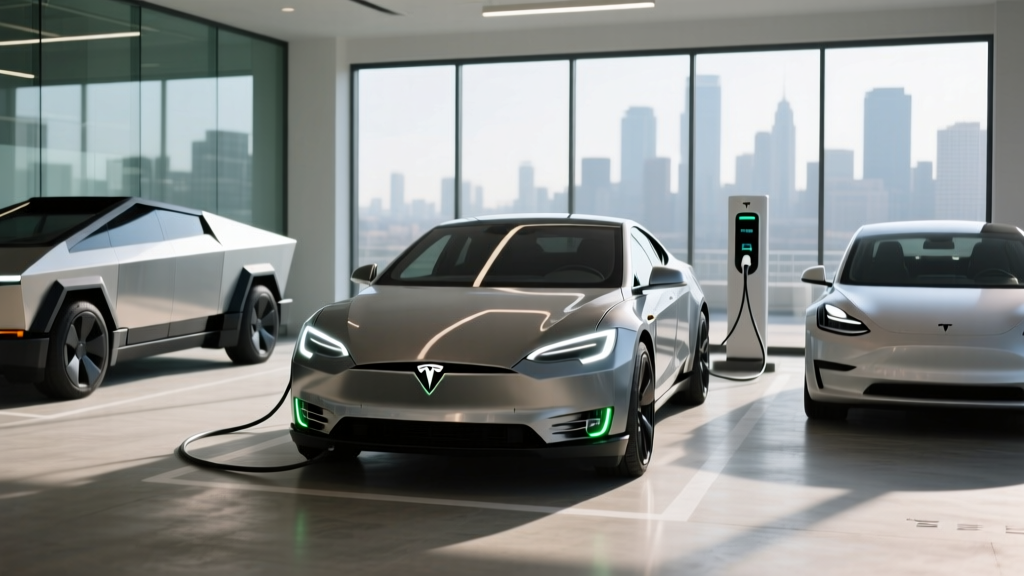
Tesla's Supercharger network delivers up to 250 kW at V3 stalls and up to 350 kW at newer V4 locations, but the vehicle's onboard charge curve — not the station's peak output — dictates how quickly your battery actually fills. Below is a consolidated look at DC fast-charging performance across the lineup.
| Model / Trim | Battery (kWh usable) | Chemistry | Peak DC kW | 10–80% DC Time | Level 2 Rate (kW) | Level 2 Miles/Hr |
|---|---|---|---|---|---|---|
| Model 3 RWD | ~60 | LFP | 170 | ~30 min | 11.5 | ~37 |
| Model 3 Long Range AWD | ~75 | NMC | 250 | ~27 min | 11.5 | ~44 |
| Model 3 Performance | ~75 | NMC | 250 | ~27 min | 11.5 | ~44 |
| Model Y Long Range AWD | ~75 | NMC | 250 | ~27 min | 11.5 | ~41 |
| Model Y Performance | ~75 | NMC | 250 | ~27 min | 11.5 | ~41 |
| Model S Long Range | ~95 | NMC | 250 | ~30 min | 11.5 | ~46 |
| Model S Plaid | ~95 | NMC | 250 | ~30 min | 11.5 | ~46 |
| Model X Long Range | ~95 | NMC | 250 | ~31 min | 11.5 | ~40 |
| Model X Plaid | ~95 | NMC | 250 | ~31 min | 11.5 | ~40 |
| Cybertruck AWD | ~123 | NMC | 250 | ~35 min | 11.5 (17.2 opt.) | ~34 |
Real-World Range vs. EPA Sticker: What to Actually Expect
EPA range estimates are measured under controlled laboratory conditions and represent a blended driving cycle. Real-world range depends heavily on speed, temperature, terrain, and climate-control use. Here is how each model stacks up.
| Model / Trim | EPA Range (mi) | Efficiency (kWh/100 mi) | Real-World Highway (~75 mph) | Cold Weather (20°F, heater on) |
|---|---|---|---|---|
| Model 3 RWD | 272 | 25 | ~220–240 | ~185–210 |
| Model 3 Long Range AWD | 363 | 25 | ~295–320 | ~250–275 |
| Model 3 Performance | 315 | 28 | ~255–280 | ~215–240 |
| Model Y Long Range AWD | 320 | 28 | ~260–285 | ~220–245 |
| Model Y Performance | 285 | 30 | ~235–255 | ~195–220 |
| Model S Long Range | 402 | 28 | ~330–360 | ~280–310 |
| Model S Plaid | 359 | 31 | ~290–320 | ~245–275 |
| Model X Long Range | 335 | 33 | ~270–300 | ~230–260 |
| Cybertruck AWD | 340 | 43 | ~275–305 | ~230–260 |
Home Charging Setup: Level 1, Level 2, and What You Need
Most Tesla charging happens at home. Understanding the three charging levels and their practical speeds eliminates guesswork about daily readiness.
| Level | Voltage / Amps | Power (kW) | Miles Added per Hour | Full Charge Time (75 kWh battery) | Typical Install Cost |
|---|---|---|---|---|---|
| Level 1 (120V outlet) | 120V / 12A | ~1.4 | ~3–5 | ~50+ hours | $0 (existing outlet) |
| Level 2 (NEMA 14-50) | 240V / 40A | ~9.6 | ~30–37 | ~8 hours | $500–$1,500 |
| Level 2 (Tesla Wall Connector, 60A circuit) | 240V / 48A | ~11.5 | ~37–44 | ~7 hours | $800–$2,000 |
The Tesla Wall Connector is the recommended home solution. It delivers up to 11.5 kW on a 60-amp circuit, adding roughly 37–44 miles of range per hour of charging depending on the model. For most owners who drive 30–50 miles daily, plugging in overnight fully replenishes the battery before morning. A NEMA 14-50 outlet is a cheaper alternative that still provides adequate speed for daily use, though it maxes out at ~9.6 kW through the Mobile Connector.
Before installing any Level 2 equipment, have a licensed electrician assess your electrical panel. Older homes with 100-amp service may require a panel upgrade ($1,500–$3,000) to safely support a 60-amp EV circuit alongside existing household loads.
DC Fast Charging in Practice: Road Trip Reality
On a road trip, your charging experience depends on three factors: Tesla's Supercharger network coverage, your vehicle's charge curve, and whether you precondition the battery.
Preconditioning is essential. When you navigate to a Supercharger in the Tesla navigation system, the car automatically warms the battery to optimal charging temperature before you arrive. Without preconditioning — for example, if you drive to a third-party DC charger without routing through navigation — peak charge rates can drop by 30–50% in cold weather. Always route through the car's nav system for the fastest fills.
The 10–80% sweet spot. Tesla's BMS allows the fastest charging between roughly 10% and 80% SoC. Above 80%, charge speed drops dramatically — from potentially 250 kW down to 50 kW or less — to protect the battery. On a road trip, it is almost always faster to charge to 80% and drive on than to wait for a full 100% fill. A Model 3 Long Range, for instance, can add ~200 miles of range in about 15 minutes at a V3 Supercharger, but filling from 80% to 100% can take another 20+ minutes.
Supercharger availability. Tesla operates over 6,000 Supercharger stations and 60,000+ individual stalls in North America. V3 stalls deliver up to 250 kW; V4 stalls (expanding through 2025–2026) support up to 350 kW, though current Tesla vehicles cap at 250 kW on the vehicle side. The Cybertruck is expected to support higher charge rates via its 800-volt architecture in future software updates, but as of early 2026 it peaks at 250 kW.
Full Specs: Performance, Pricing, and Tax Credit Eligibility
| Model / Trim | 0–60 mph (sec) | Horsepower | Drivetrain | Base MSRP | §30D Tax Credit Eligible? |
|---|---|---|---|---|---|
| Model 3 RWD | 5.8 | 271 | RWD | $38,990 | Yes — up to $7,500 (income + sourcing rules apply) |
| Model 3 Long Range AWD | 4.2 | 346 | Dual-Motor AWD | $42,490 | Yes — up to $7,500 |
| Model 3 Performance | 2.9 | 510 | Dual-Motor AWD | $52,990 | Yes — up to $7,500 |
| Model Y Long Range AWD | 4.8 | 384 | Dual-Motor AWD | $44,990 | Yes — up to $7,500 |
| Model Y Performance | 3.5 | 456 | Dual-Motor AWD | $51,490 | Yes — up to $7,500 |
| Model S Long Range | 3.1 | 670 | Dual-Motor AWD | $79,990 | No — exceeds $55,000 sedan MSRP cap |
| Model S Plaid | 1.99 | 1,020 | Tri-Motor AWD | $94,990 | No — exceeds MSRP cap |
| Model X Long Range | 3.8 | 670 | Dual-Motor AWD | $79,990 | No — exceeds $80,000 SUV/truck MSRP cap |
| Model X Plaid | 2.5 | 1,020 | Tri-Motor AWD | $94,990 | No — exceeds MSRP cap |
| Cybertruck AWD | 4.1 | 600 | Dual-Motor AWD | $79,990 | No — exceeds $80,000 truck MSRP cap |
- MSRP caps: Sedans (Model 3) must be under $55,000; SUVs, vans, and trucks (Model Y, Cybertruck) under $80,000.
- Buyer income limits: Modified AGI must not exceed $150,000 (single), $225,000 (head of household), or $300,000 (married filing jointly).
- Battery sourcing: Critical minerals and battery components must meet phased-in domestic/free-trade sourcing requirements that tighten annually. Tesla's US-built batteries with LFP and NMC chemistries have largely met these thresholds for Model 3 and Model Y, but verify current-year rules before purchase.
- Point-of-sale transfer: As of 2024+, buyers can transfer the credit to the dealer at purchase, reducing the out-of-pocket price immediately rather than waiting for tax filing.
Interior, Cargo, Tech, and Warranty
Tesla's interior philosophy is minimalist — a single central touchscreen handles navigation, climate, media, and vehicle settings. There is no traditional instrument cluster; a portion of the touchscreen displays speed and driving data. Build quality has improved notably in the refreshed Model 3 (2024+) and current Model Y, with tighter panel gaps and upgraded materials.
| Model | Front Legroom (in) | Rear Legroom (in) | Cargo Volume, rear seats up (cu ft) | Cargo Volume, rear seats folded (cu ft) |
|---|---|---|---|---|
| Model 3 | 42.7 | 35.2 | 23 (trunk + frunk) | — (sedan) |
| Model Y | 41.8 | 41.6 | 30.2 (rear up) | 72.1 |
| Model S | 42.4 | 35.4 | 28 (trunk + frunk) | — (sedan) |
| Model X | 41.2 | 38.4 (5-seat) | ~42 (behind 2nd row, 5-seat) | ~82 |
| Cybertruck | 41.0 | — | Bed: 6.5 ft × 4 ft | — |
Standout tech: Tesla's infotainment system remains the industry benchmark for responsiveness and over-the-air update frequency. Autopilot (standard) provides SAE Level 2 adaptive cruise and lane centering. Full Self-Driving (Supervised) adds city-street navigation and traffic-light response but remains Level 2 — the driver must remain attentive and hands on or near the wheel at all times. Tesla's app-based preconditioning, Sentry Mode dashcam recording, and Dog Mode climate control are practical differentiators competitors have yet to fully match.
Warranty: All Tesla models carry a 4-year/50,000-mile basic vehicle warranty. Battery and drive unit coverage is 8 years/100,000 miles for Model 3 RWD and 8 years/120,000 miles for Long Range, Performance, Model S, Model X, and Cybertruck. Tesla guarantees at least 70% battery capacity retention over the warranty period — a standard industry threshold per Tesla's warranty documentation.
Pros and Cons: Honest Ownership Assessment
Pros
- Best-in-class DC fast-charge network (Supercharger reliability >99% uptime)
- Strong real-world efficiency (25–28 kWh/100 mi on Model 3/Y)
- Over-the-air updates continuously add features and refine performance
- LFP chemistry on Model 3 RWD allows routine 100% charging without degradation concern
- Class-leading infotainment and app integration
- Point-of-sale tax credit transfer reduces upfront cost on eligible trims
Cons
- Model S, Model X, and Cybertruck do not qualify for the $7,500 federal credit (MSRP cap)
- Highway range at 75+ mph drops 10–20% below EPA — plan accordingly on long trips
- No Apple CarPlay or Android Auto — Tesla's native system is the only option
- Insurance premiums run 15–30% higher than comparable ICE vehicles in most states
- Turn-signal stalk removal on refreshed Model 3 requires adaptation (steering-wheel buttons)
- Cybertruck efficiency (43 kWh/100 mi) makes it the most expensive Tesla per mile to charge
Who Should Buy Which Tesla?
Choose the Model 3 RWD if: You commute under 40 miles daily, want the lowest entry price ($38,990 before credit), and value LFP battery longevity. Charges fully overnight on Level 2 and rarely needs DC fast charging for daily use.
Choose the Model 3 Long Range if: You take regular road trips, live in a cold climate where range loss matters, or want dual-motor AWD traction. The 363-mile EPA range provides a comfortable buffer.
Choose the Model Y Long Range if: You need family cargo space (30+ cu ft with seats up, 72 cu ft folded), prefer an SUV ride height, and want the $7,500 credit. The best-selling EV in the US for practical reasons.
Choose the Model S or Model X if: You prioritize luxury, maximum range (402 mi on Model S LR), or tri-row seating (Model X) and are not dependent on the federal tax credit. Premium pricing reflects premium positioning.
Choose the Cybertruck if: You need a truck bed, want standout design, and can accept the efficiency penalty. Towing capacity of 11,000 lbs leads the EV truck segment, but real-world range while towing drops to roughly 150–180 miles.
Frequently Asked Questions
How long does it take to charge a Tesla at a Supercharger?
At a V3 Supercharger (250 kW), most Tesla models charge from 10% to 80% in approximately 27–35 minutes, depending on battery size. The Model 3 Long Range and Model Y Long Range achieve this in roughly 27 minutes. The larger Cybertruck battery requires about 35 minutes. Always precondition by navigating to the Supercharger via the car's built-in navigation for optimal charge speed.
Can I charge a Tesla on a standard 120V household outlet?
Yes, but slowly. Level 1 charging on a 120V outlet delivers roughly 3–5 miles of range per hour. A full charge from empty could take 50+ hours. This works for overnight top-ups if your daily driving is under 30 miles, but a Level 2 installation is strongly recommended for regular ownership.
Does charging a Tesla to 100% damage the battery?
It depends on the chemistry. Model 3 RWD uses LFP (lithium iron phosphate) cells, which Tesla recommends charging to 100% at least weekly to maintain calibration. Model 3 Long Range, Model Y, Model S, and Model X use NMC (nickel manganese cobalt) cells, where routine charging to 80% is recommended for longevity, reserving 100% for road trips. The battery management system includes top and bottom buffers to protect cells regardless of your charging habits.
How much does it cost to charge a Tesla at home vs. a Supercharger?
At the US average residential electricity rate of ~$0.16/kWh, fully charging a Model 3 Long Range (75 kWh) at home costs roughly $12, translating to about $0.04–0.05 per mile. Supercharger pricing varies by location and time of day but typically ranges from $0.25 to $0.40/kWh, making a full charge $19–$30. Home charging remains the most economical option by a wide margin.
Do all Teslas qualify for the $7,500 federal tax credit?
No. Under current IRS §30D rules, only the Model 3 (all trims, under $55,000 MSRP cap for sedans) and Model Y (under $80,000 cap for SUVs) qualify, subject to buyer income limits ($150K single / $300K joint) and battery sourcing requirements. Model S, Model X, and Cybertruck exceed their respective MSRP caps and are ineligible. Always verify current-year rules at irs.gov before purchasing.
Is a Tesla worth buying vs. competitors like the Hyundai Ioniq 5 or BMW i4?
Tesla's advantages center on Supercharger network reliability, software integration, and efficiency. The Ioniq 5 offers faster 10–80% DC charging (~18 min at 350 kW via its 800V architecture) and a more conventional interior with physical buttons. The BMW i4 provides a traditional luxury sedan experience with Apple CarPlay. If charging infrastructure confidence and software are your top priorities, Tesla leads. If you prefer conventional controls or need CarPlay, competitors are strong alternatives.