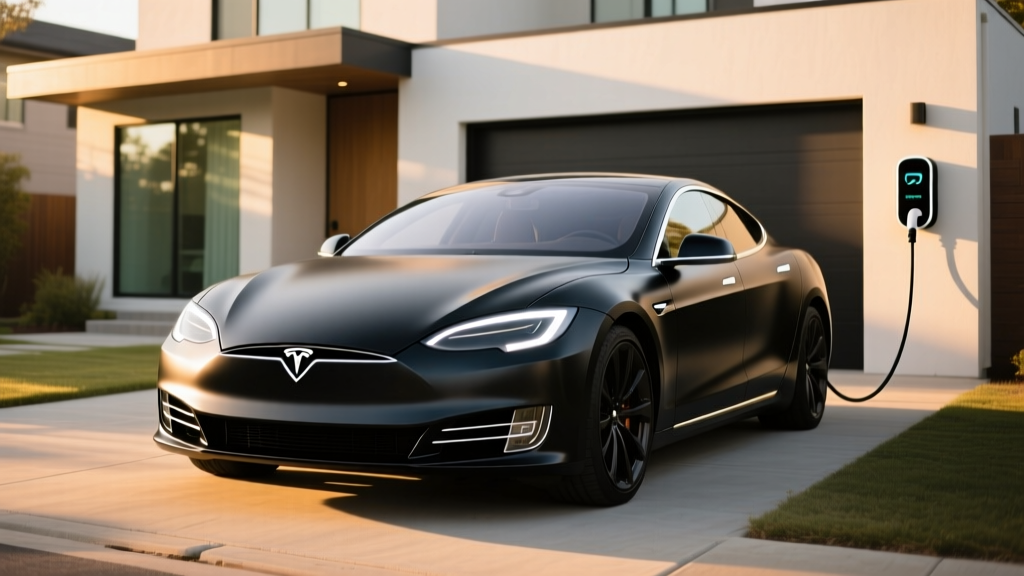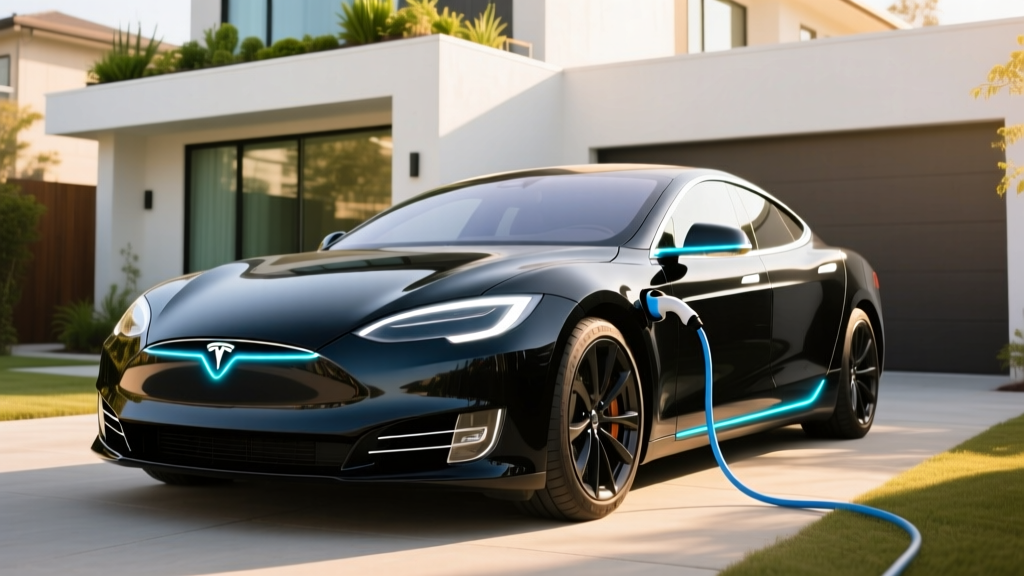
If you're shopping for a Tesla—or already own one—the question "how long does it take to charge a Tesla at home" is probably top of mind. The answer depends on three variables: your Tesla's battery size (kWh), the power output of your home charging setup (kW), and the state of charge you're targeting. In this guide, we'll break down exact home charging times across the 2026 Tesla lineup, explain the critical difference between kW and kWh, and show you the real-world setup costs and times you can expect.
Before we get to the numbers, let's clear up the single most common EV confusion: kW (kilowatts) measures power—the rate at which electricity flows into your car. kWh (kilowatt-hours) measures energy—the total capacity of your battery. Think of kW as the width of a hose and kWh as the size of the bucket. A wider hose (higher kW) fills the bucket (kWh) faster.
Home Charging Times Across the 2026 Tesla Lineup
Every current Tesla accepts up to 11.5 kW on Level 2 AC charging using a Wall Connector or equivalent J1772/NACS adapter. That's the ceiling for most residential electrical panels. Here's what that translates to in real charging hours, model by model.
| Model (2026) | Battery (kWh usable) | Chemistry | Level 1 (120V / ~1.4 kW) | Level 2 (240V / 11.5 kW) | 0→100% Level 2 Time |
|---|---|---|---|---|---|
| Model 3 RWD | ~60 kWh | LFP | ~43 hrs | ~5.2 hrs | ~5.5 hrs |
| Model 3 Long Range AWD | ~79 kWh | NMC | ~56 hrs | ~6.9 hrs | ~7.2 hrs |
| Model Y Long Range AWD | ~79 kWh | NMC | ~56 hrs | ~6.9 hrs | ~7.2 hrs |
| Model S Long Range | ~100 kWh | NMC | ~71 hrs | ~8.7 hrs | ~9 hrs |
| Model X Long Range | ~100 kWh | NMC | ~71 hrs | ~8.7 hrs | ~9 hrs |
A few practical notes from real-world ownership: the 0→100% figure assumes a completely depleted battery, which almost never happens in daily driving. Most owners plug in at 20–30% remaining and wake up at 80–90%. That cuts actual plug-in time to roughly 3–5 hours for most models—well within an overnight window.
Real-World Range vs. EPA Estimates
Model 3 Long Range: EPA 363 mi → expect ~310 mi highway, ~260 mi in freezing temps.
Model Y Long Range: EPA 320 mi → expect ~275 mi highway, ~230 mi in freezing temps.
Model S Long Range: EPA 402 mi → expect ~340 mi highway, ~290 mi in freezing temps.
Model 3 RWD (LFP): EPA 272 mi → expect ~235 mi highway, ~200 mi in freezing temps.
Cold weather hits LFP batteries harder on range (roughly 25–30% loss) compared to NMC (~15–20% loss). Preconditioning the battery while plugged in mitigates this significantly.
Level 1 vs. Level 2: What's the Actual Difference?
Level 1 charging uses a standard 120V household outlet and delivers roughly 1.4 kW (12 amps continuous on a 15-amp circuit). That translates to about 3–5 miles of range per hour of charging. For a Model 3 RWD with a 60 kWh battery, a full charge takes over 40 hours. Level 1 works only if you drive fewer than 30 miles per day and can leave the car plugged in continuously.
Level 2 charging uses a 240V circuit—the same voltage as your electric dryer or oven. Tesla's Wall Connector delivers up to 11.5 kW (48 amps on a 60-amp circuit), adding roughly 35–44 miles of range per hour depending on the model. This is the standard most EV owners install for daily home charging.
| Charging Level | Voltage / Amps | Power (kW) | Miles of Range per Hour | Best For |
|---|---|---|---|---|
| Level 1 (standard outlet) | 120V / 12A | ~1.4 kW | 3–5 mi/hr | Low-mileage drivers, emergency top-ups |
| Level 2 (NEMA 14-50) | 240V / 40A | ~9.6 kW | 28–35 mi/hr | Daily charging, moderate budgets |
| Level 2 (Wall Connector, 60A circuit) | 240V / 48A | ~11.5 kW | 35–44 mi/hr | Fastest home charging, larger batteries |
| DC Fast Charging (Supercharger) | 400V+ DC | Up to 250 kW | ~1,000+ mi/hr (peak) | Road trips, rapid top-ups |
DC Fast Charging: Tesla Supercharger Speeds
Home charging covers 90%+ of most owners' needs, but road trips require DC fast charging. Here's what the 2026 Tesla lineup delivers at Superchargers:
- Model 3 RWD (LFP): Peak 170 kW, 10–80% in ~25 minutes
- Model 3 Long Range: Peak 250 kW, 10–80% in ~20 minutes
- Model Y Long Range: Peak 250 kW, 10–80% in ~22 minutes
- Model S / X: Peak 250 kW, 10–80% in ~25 minutes
Important: peak kW is not sustained kW. Teslas (like all EVs) follow a charge curve—the battery accepts maximum power only between roughly 10–40% state of charge, then progressively tapers to protect cell health. Above 80%, charging slows dramatically. That's why manufacturers quote 10–80% times rather than 0–100%. For road trips, plan to charge from 10% to 80% and then move on—waiting for 100% at a DC fast charger wastes significant time.
2026 Tesla Pricing, Trims, and Federal Tax Credit
Pricing shifts frequently at Tesla, but here are the current MSRPs as of early 2026. Federal tax credit eligibility under IRS §30D depends on MSRP caps, buyer income limits, and battery component/critical mineral sourcing requirements.
| Model | Base MSRP | MSRP Cap (§30D) | Income Cap (AGI) | Est. Max Credit |
|---|---|---|---|---|
| Model 3 RWD | ~$38,990 | $55,000 (sedans) | $150K single / $300K joint | Up to $7,500* |
| Model 3 Long Range | ~$44,990 | $55,000 (sedans) | $150K single / $300K joint | Up to $7,500* |
| Model Y Long Range | ~$44,990 | $80,000 (SUVs) | $150K single / $300K joint | Up to $7,500* |
| Model S Long Range | ~$79,990 | $55,000 (sedans) | $150K single / $300K joint | Not eligible (over cap) |
| Model X Long Range | ~$79,990 | $80,000 (SUVs) | $150K single / $300K joint | Eligible per MSRP; verify sourcing* |
*Tax credit eligibility depends on battery component and critical mineral sourcing requirements that change annually. As of 2026, Model 3 RWD (LFP, CATL cells) may receive a partial credit depending on FEOC (Foreign Entity of Concern) compliance. Always verify current eligibility at fueleconomy.gov and consult a tax professional before purchase. The credit can be transferred to the dealer at point of sale as an immediate price reduction.
Home Charging Installation: What It Costs
The Tesla Wall Connector itself costs around $475, but installation varies dramatically based on your home's electrical infrastructure. Here's a realistic cost breakdown based on 2026 electrician rates:
- Simple install (panel nearby, 60A breaker, short conduit run): $500–$1,200
- Moderate install (longer wire run, conduit through walls/attic): $1,200–$2,500
- Panel upgrade required (200A service upgrade from 100A): $2,500–$5,000+ total
Most homes built after 2000 have 200-amp panels with sufficient spare capacity for a 60-amp EV circuit. Older homes with 100-amp service often need an upgrade. Get a quote from a licensed electrician before committing—many offer free estimates. Some utilities offer rebates of $250–$1,000 for Level 2 installation; check your local provider.
Full 2026 Tesla Model Specs at a Glance
| Spec | Model 3 RWD | Model 3 LR AWD | Model Y LR AWD | Model S LR |
|---|---|---|---|---|
| EPA Range | 272 mi | 363 mi | 320 mi | 402 mi |
| Battery (kWh usable) | ~60 | ~79 | ~79 | ~100 |
| Chemistry | LFP | NMC | NMC | NMC |
| Efficiency (MPGe) | 132 MPGe | 131 MPGe | 123 MPGe | 120 MPGe |
| 0–60 mph | 5.8 sec | 4.2 sec | 4.8 sec | 3.1 sec |
| Horsepower | 271 hp | 384 hp | 384 hp | 670 hp |
| Drivetrain | RWD | AWD (dual motor) | AWD (dual motor) | AWD (dual motor) |
| Cargo (rear + frunk) | 23 cu ft | 23 cu ft | 76 cu ft (seats folded) | 28 cu ft |
| Max DC Fast Charge | 170 kW | 250 kW | 250 kW | 250 kW |
| 10–80% DC Time | ~25 min | ~20 min | ~22 min | ~25 min |
| Level 2 Max (home) | 11.5 kW | 11.5 kW | 11.5 kW | 11.5 kW |
| Battery Warranty | 8 yr / 100K mi | 8 yr / 120K mi | 8 yr / 120K mi | 8 yr / 150K mi |
| Base MSRP | ~$38,990 | ~$44,990 | ~$44,990 | ~$79,990 |
Source: fueleconomy.gov and Tesla's official specification pages. Efficiency figures reflect combined city/highway MPGe as rated by the EPA.
Who Should Buy Which Tesla?
Model 3 RWD suits budget-conscious commuters driving under 50 miles daily who can charge overnight on Level 2. The LFP battery tolerates daily 100% charging better than NMC—Tesla recommends charging LFP to 100% at least weekly to maintain calibration. Trade-off: less range for road trips and noticeable cold-weather range loss.
Model 3 Long Range / Model Y Long Range are the sweet spot for most buyers. The NMC batteries deliver strong real-world range, fast DC charging, and the dual-motor AWD handles snow and rain confidently. Charge to 80% daily, 100% only before road trips.
Model S / Model X serve luxury buyers who need maximum range (Model S) or three-row seating (Model X). Neither qualifies for the federal tax credit in most configurations due to the MSRP cap, so the effective price is significantly higher.
Pros, Cons, and the Competition
Pros
- Supercharger network remains the most reliable DC fast-charging ecosystem in the US
- Class-leading efficiency (kWh/mi) means more range per kWh than most competitors
- Over-the-air updates continuously add features
- 11.5 kW Level 2 acceptance is among the fastest in the industry for home charging
- LFP option on Model 3 offers lower cost with better cycle life
Cons
- No physical buttons or instrument cluster—everything routes through the center screen
- Build quality, while improved, still inconsistent vs. legacy luxury brands
- FSD (Supervised) is SAE Level 2—not self-driving—despite the name
- Insurance costs run 15–30% higher than comparable ICE vehicles
- Model S/X priced out of federal tax credit eligibility
Key competitors include the Hyundai Ioniq 6 (361 mi EPA, 800V architecture for faster DC charging), the BMW i4 eDrive40 (307 mi, more traditional luxury interior), and the Chevrolet Equinox EV (319 mi, lower starting price). The Ioniq 6 charges faster on DC (10–80% in ~18 min on 350 kW chargers), but Tesla's Supercharger network reliability still edges out third-party networks for road-trip confidence.
Frequently Asked Questions
Can I charge a Tesla on a regular 120V outlet?
Yes, using the included Mobile Connector with a NEMA 5-15 adapter. Expect roughly 3–5 miles of range per hour (about 1.4 kW). A full charge on a Model 3 RWD takes over 40 hours. This works only for very low daily mileage or as an emergency backup.
Do I need a Tesla Wall Connector, or can I use a third-party charger?
Teslas sold in 2026 use the NACS (North American Charging Standard) connector natively. You can use any NACS-compatible Level 2 charger, or use a J1772-to-NACS adapter (included with most Teslas) with any J1772 charger. The Wall Connector offers the best integration (automatic authentication, power sharing between two units), but third-party options like ChargePoint Home Flex work fine.
Is it bad to charge my Tesla to 100% every night?
For NMC batteries (Model 3 Long Range, Model Y, Model S/X), Tesla recommends a daily charge limit of 80% to minimize long-term degradation. Set 100% only before road trips. For LFP batteries (Model 3 RWD), Tesla recommends charging to 100% at least once per week for accurate battery management system calibration. LFP chemistry tolerates full-state-of-charge storage better than NMC.
How much does it cost to charge a Tesla at home?
At the US average residential electricity rate of ~$0.17/kWh (EIA, 2025 data), fully charging a Model 3 Long Range (79 kWh) costs about $13.43. A Model 3 RWD (60 kWh) costs about $10.20. Compare that to $45–$60 for a tank of gas in a comparable sedan. Over a year of 12,000 miles, home charging typically costs $400–$600 versus $1,400–$1,800 for gasoline.
Does the Tesla Model 3 or Model Y qualify for the $7,500 federal tax credit?
Potentially, but eligibility depends on multiple factors under IRS §30D: the vehicle MSRP must be under $55,000 (sedans) or $80,000 (SUVs), your modified adjusted gross income must be under $150,000 (single) or $300,000 (joint), and the battery must meet critical mineral and component sourcing thresholds that tighten each year. As of 2026, some Tesla trims qualify for the full $7,500, some for $3,750, and some for none, depending on battery sourcing. Verify at fueleconomy.gov before purchasing.
How long does a Tesla battery last before replacement?
Tesla warranties the battery for 8 years and 100,000–150,000 miles (depending on model) with a minimum 70% capacity retention guarantee. Real-world data from large owner surveys shows most Tesla batteries retain 85–90% capacity at 150,000 miles. Full battery replacement outside warranty costs $12,000–$20,000 depending on the model, but is rarely needed within the vehicle's typical lifespan.