The Quick Answer: How Long Does It Take to Charge an Electric Car?
Charging an electric car takes anywhere from 10 minutes to 50+ hours, depending entirely on three variables: your battery size (measured in kWh), the charger's power output (measured in kW), and your battery's current state of charge. Here's the practical breakdown most buyers need:
- Level 1 (120V household outlet): 40–50 hours for a full charge — adds roughly 3–5 miles of range per hour.
- Level 2 (240V home or public charger): 6–12 hours for a full charge — adds 20–44 miles of range per hour.
- DC Fast Charging (150–350 kW public stations): 10–30 minutes to go from 10% to 80% — adds 100–250+ miles in that window.
For most EV owners who charge at home overnight on a Level 2 charger, the answer is simple: you plug in when you get home and wake up to a full battery every morning — roughly 8 hours for a typical 75 kWh battery on a 48-amp (11.5 kW) home charger. The "charging time" question matters most for road trips, where DC fast-charging speed becomes the critical spec.
Understanding kW vs. kWh: The Two Numbers That Determine Charge Time
Before looking at specific charge times, you need to understand the single most common source of EV confusion: the difference between kW (kilowatts) and kWh (kilowatt-hours).
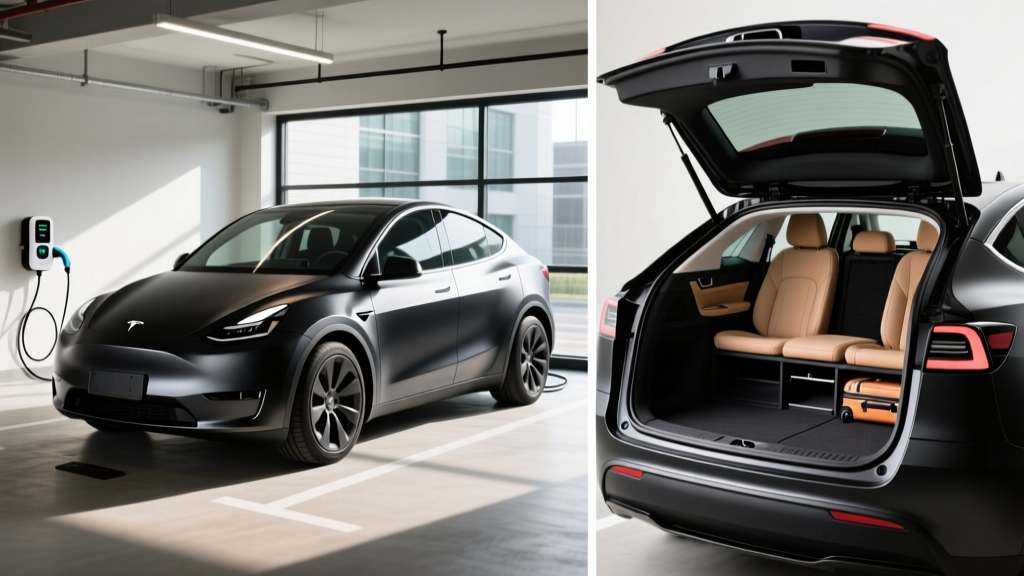
- kWh is your battery's capacity — think of it as the size of your gas tank. A Tesla Model Y Long Range has roughly 75 kWh of usable battery capacity. A Ford F-150 Lightning Extended Range has about 131 kWh.
- kW is the charger's power output — think of it as the diameter of the hose filling your tank. A 150 kW DC fast charger delivers energy much faster than an 11.5 kW Level 2 home charger.
The basic math: Battery kWh ÷ Charger kW = Approximate hours to charge. So a 75 kWh battery on an 11.5 kW Level 2 charger takes roughly 6.5 hours from empty to full. On a 150 kW DC fast charger, that same battery could theoretically fill in 30 minutes — but real-world charging curves make it longer than that. Here's why.
Charging Levels Explained: Speeds, Times, and Where You'll Use Each
| Charging Level | Voltage | Power Output (kW) | Miles of Range Added Per Hour | Typical Use Case | 10–80% Time (75 kWh Battery) |
|---|---|---|---|---|---|
| Level 1 | 120V AC | 1.0–1.4 kW | 3–5 mi/hr | Emergency / overnight top-off | ~52 hours |
| Level 2 (16A) | 240V AC | 3.3–3.8 kW | 11–14 mi/hr | Basic home charging | ~18 hours |
| Level 2 (32A) | 240V AC | 7.2–7.7 kW | 24–28 mi/hr | Common home / workplace | ~9 hours |
| Level 2 (48A) | 240V AC | 11.5 kW | 38–44 mi/hr | Upgraded home charger | ~6 hours |
| DC Fast (50 kW) | DC | 50 kW | ~150 mi/hr (peak) | Older public stations | ~55 minutes |
| DC Fast (150 kW) | DC | 150 kW | ~450 mi/hr (peak) | Electrify America, EVgo | ~25–30 minutes |
| DC Fast (250 kW) | DC | 250 kW | ~750 mi/hr (peak) | Tesla Supercharger V3 | ~18–22 minutes |
| DC Fast (350 kW) | DC | 350 kW | ~1,000+ mi/hr (peak) | EA / Ionity ultra-fast | ~15–18 minutes* |
*Only vehicles with 800V+ battery architectures (Hyundai Ioniq 5, Kia EV6, Porsche Taycan, Lucid Air) can sustain charging near 350 kW. Most EVs peak between 150–250 kW even when plugged into a 350 kW station.
The Charging Curve: Why Peak kW Is Not Sustained kW
Here's the reality that marketing materials rarely show: no EV charges at its peak kW rate for the entire session. Battery management systems deliberately slow charging as the battery fills up to protect cell longevity and manage heat. This is called the charging curve, and understanding it is essential for realistic road-trip planning.
A typical charging session on a DC fast charger looks like this:
- 10–30% SoC: The battery accepts power rapidly, often near its peak kW rate. This is the fastest portion of the charge.
- 30–60% SoC: Charging speed begins to taper gradually. You might see 80–90% of peak power sustained.
- 60–80% SoC: Noticeable taper. Power may drop to 50–70% of peak. This is why manufacturers quote "10–80%" times rather than 0–100%.
- 80–100% SoC: Severe taper. Charging slows to Level 2 speeds or slower to protect the battery. Many road-trippers skip this portion entirely and charge more frequently in the 10–80% sweet spot.
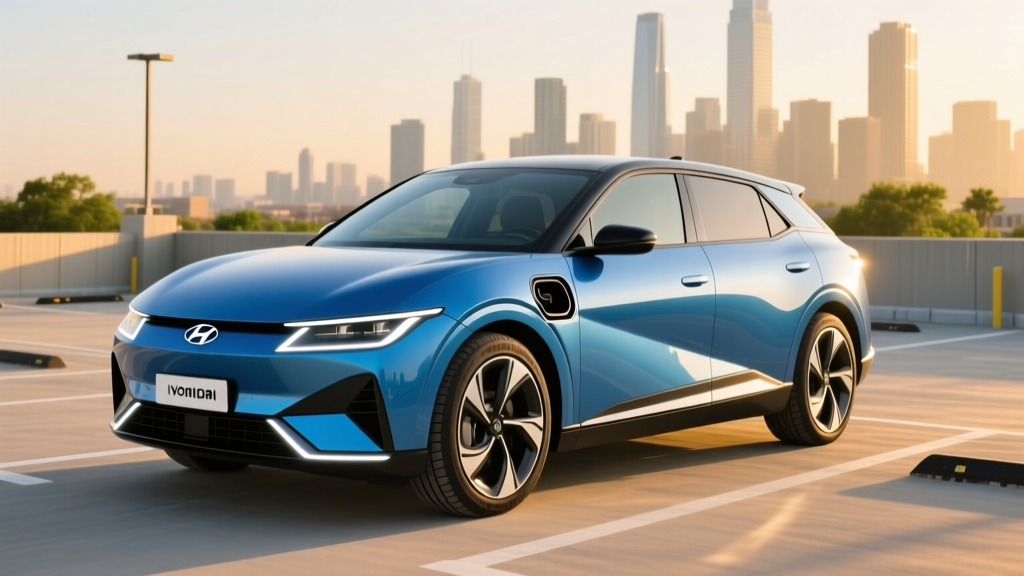
Real-world example: The 2026 Hyundai Ioniq 5 (84 kWh battery, 800V architecture) peaks at roughly 240 kW on a 350 kW charger and achieves a 10–80% charge in about 18 minutes. But the 2026 Tesla Model Y Long Range (~75 kWh, 400V architecture) peaks around 250 kW on a V3 Supercharger with a 10–80% time of approximately 22–25 minutes. The difference is the charging curve shape, not just peak power.
Practical tip: For road trips, plan stops around the 10–80% window. Charging from 80% to 100% at a DC fast charger can take as long as charging from 10% to 80% — it's almost always faster to hit the road at 80% and stop again sooner.
EV Charging Cost vs. Gas: What You'll Actually Spend
Charging time is one factor, but cost is equally important. Here's how the economics compare for a typical mid-size electric SUV driven 12,000 miles per year, using EPA efficiency data from fueleconomy.gov:
| Cost Factor | EV (Home Level 2 Charging) | EV (Public DC Fast Charging) | Gas Car (28 MPG Combined) |
|---|---|---|---|
| Energy/Fuel Cost Per Mile | $0.04–$0.06 | $0.12–$0.18 | $0.12–$0.15 |
| Annual Fuel/Energy Cost (12,000 mi) | $480–$720 | $1,440–$2,160 | $1,440–$1,800 |
| Annual Maintenance | $300–$500 | $300–$500 | $800–$1,200 |
| 5-Year Total Energy + Maintenance | $3,900–$6,100 | $8,700–$13,300 | $11,200–$15,000 |
Key takeaways from the data:
- Home charging is where the savings live. At the U.S. average residential electricity rate of roughly $0.16/kWh (varies significantly by state), charging a 75 kWh battery from empty to full costs about $12. That's roughly 250–300 miles of range for the price of a gallon and a half of gas.
- Public DC fast charging can cost as much as or more than gasoline. Networks like Electrify America and EVgo charge $0.30–$0.48/kWh in many markets. At those rates, the cost advantage of electric shrinks or disappears on road trips.
- Maintenance savings are real and consistent. EVs have no oil changes, no spark plugs, no transmission fluid, and regenerative braking extends brake pad life significantly. Expect to save $400–$700 per year on maintenance versus a comparable gas vehicle.
Real-World Factors That Change Your Charging Time
The spec-sheet numbers above assume ideal conditions. In practice, several variables will stretch or compress your actual charging times:
Battery Temperature and Cold Weather
Lithium-ion batteries charge significantly slower when cold. In freezing temperatures (below 32°F / 0°C), expect DC fast-charging speeds to drop 20–40% unless your vehicle has an active battery preconditioning system. Vehicles like the Tesla Model Y, Hyundai Ioniq 5, and Ford Mustang Mach-E can precondition the battery when you navigate to a charger, warming it to optimal temperature before you plug in. Without preconditioning, a 20-minute 10–80% charge can stretch to 35–45 minutes in winter.
Cold weather also reduces range by 15–30%, meaning you'll need to charge more often on winter road trips — compounding the time penalty. According to testing by IIHS and independent EV analysts, the combination of reduced range and slower charging can add 40–60% more charging time to a winter road trip versus summer.
Your Home Electrical Setup
Not every home can support a 48-amp Level 2 charger without electrical upgrades. Here's what determines your home charging speed:
- 200-amp electrical panel: Typically supports a 48-amp (11.5 kW) charger on a dedicated 60-amp circuit. Most modern homes have this.
- 100-amp electrical panel: May limit you to a 32-amp (7.7 kW) charger or require a panel upgrade ($1,500–$3,000) to support higher amperage.
- Distance from panel to garage/driveway: Longer wire runs increase installation cost. Expect $500–$1,500 for a straightforward install; $2,000–$4,000+ if a panel upgrade or long conduit run is needed.
Always have a licensed electrician assess your panel capacity before purchasing a home charger. The final amperage spec must come from a professional evaluation of your home's electrical load.
Battery Chemistry: LFP vs. NMC Charging Differences
Battery chemistry affects not just range and longevity, but charging behavior:
- NMC (Nickel Manganese Cobalt): Found in most long-range EVs (Tesla Model Y LR, Ford F-150 Lightning, Hyundai Ioniq 5). Offers higher energy density and strong fast-charging speeds, but manufacturers typically recommend daily charging to 80% to preserve longevity. DC fast charging is robust across the 10–80% window.
- LFP (Lithium Iron Phosphate): Used in standard-range models (Tesla Model 3 RWD, some BYD models). Slightly lower energy density but can be charged to 100% daily without degradation concerns. LFP batteries tend to charge slightly slower at DC fast chargers and are more sensitive to cold-weather charging slowdowns. However, their longer cycle life makes them well-suited for high-mileage drivers who charge frequently.
Common EV Charging Myths — Fact-Checked
| Myth | Fact |
|---|---|
| "Charging an EV takes hours, so road trips are impossible." | Modern DC fast chargers add 150–250 miles in 15–25 minutes. Most road-trippers stop every 2–3 hours anyway for food and restrooms. A 15-minute charge stop fits naturally into that rhythm. |
| "You need a special garage setup to own an EV." | Any standard 120V outlet can charge an EV (Level 1), adding 3–5 miles per hour. For drivers who travel under 40 miles daily, Level 1 may be sufficient. However, a 240V Level 2 installation ($500–$2,500) dramatically improves the experience and is recommended for most owners. |
| "Fast charging ruins the battery." | Modern battery management systems actively protect cells during DC fast charging. Data from vehicles with 100,000+ miles of frequent fast charging shows degradation of 10–15% — comparable to vehicles that primarily Level 2 charge. Heat is the enemy, not speed, and thermal management systems handle it. |
| "EVs can't charge in the rain or cold." | EV charging connectors and ports are weather-sealed and rated for rain, snow, and extreme temperatures. You can safely charge in any weather. Cold temperatures slow charging speed but don't prevent it. |
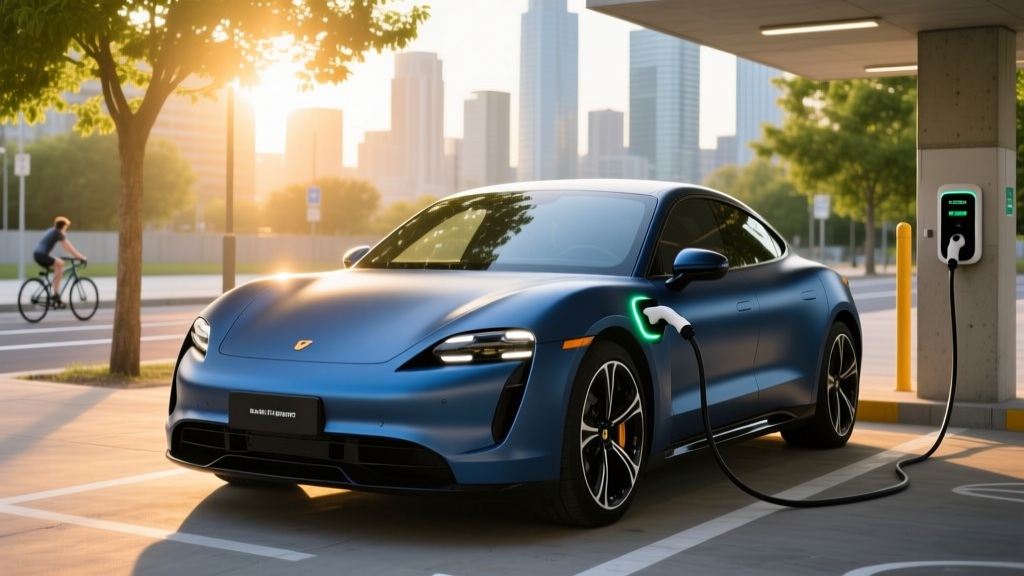
| "All EVs charge at the same speed." | Charging speed varies enormously. A Porsche Taycan on a 350 kW charger can add 60 miles in under 5 minutes. A Nissan Leaf on a 50 kW CHAdeMO charger needs 40+ minutes for the same range. Always check the vehicle's max DC charge rate (in kW) before buying. |
EV vs. Gas vs. Hybrid: The Full Ownership Picture
| Factor | Battery EV (e.g., 2026 Tesla Model Y LR) | PHEV (e.g., 2026 Toyota RAV4 Prime) | Gas Car (e.g., 2026 Toyota RAV4 Gas) |
|---|---|---|---|
| Base MSRP | ~$44,990 | ~$43,690 | ~$30,490 |
| EPA Range / MPG | 320 mi (EPA) | 42 mi electric + 38 MPG gas | 30 MPG combined |
| "Refueling" Time | 6–8 hrs (home L2) / 20 min (DC fast) | 2.5 hrs (L2) / 5 min (gas station) | 5 minutes |
| Annual Fuel Cost (12K mi) | $480–$720 (home) | $600–$900 (mixed) | $1,440–$1,800 |
| Federal Tax Credit (§30D) | Up to $7,500 (eligibility varies) | Up to $7,500 (eligibility varies) | None |
| 5-Year Total Cost of Ownership* | ~$38,000–$44,000 | ~$36,000–$42,000 | ~$37,000–$43,000 |
*5-year TCO estimates include purchase price (after estimated incentives), energy/fuel, maintenance, insurance, and estimated depreciation. Actual costs vary by state, driving habits, electricity rates, and insurance premiums. Consult IRS.gov for current §30D tax credit eligibility rules including MSRP caps, buyer income limits, and battery sourcing requirements.
The Decision Framework: What Charging Setup Is Right for You?
Choose Home Level 2 Charging If:
- You have a garage or dedicated parking spot with access to a 240V outlet or the ability to install one.
- Your daily driving is under 60 miles (covers ~85% of American drivers, per FHWA data).
- You want the lowest per-mile energy cost ($0.04–$0.06/mile).
- You value never visiting a gas station for daily commuting.
Choose a PHEV (Plug-In Hybrid) If:
- You lack reliable home or workplace charging access.
- You frequently take long road trips through areas with sparse charging infrastructure.
- You want electric commuting (25–42 miles) with gas-engine flexibility for longer drives.
- You live in an apartment without charging options and can't install a home charger.
Rely on Public DC Fast Charging If:
- You're on a road trip and need to add 150–250 miles in 15–25 minutes.
- You have no home charging but live near reliable public chargers (note: this is more expensive and less convenient than home charging).
- You're considering whether an EV works without a garage — it can, but expect higher charging costs and less convenience.
Avoid an EV (For Now) If:
- You live in an apartment with no charging access, street-park your car, and have no workplace charging.
- You regularly drive 400+ miles in a single day through rural areas with limited DC fast charger coverage.
- You live in an extremely cold climate (consistent sub-zero temperatures) and cannot garage your vehicle — a PHEV or hybrid may be a better fit until battery heating technology and charging infrastructure improve further.
What First-Time EV Buyers Must Know About Charging
If you're transitioning from a gas car to an EV, the charging paradigm shift is the biggest adjustment. Here are the practical realities experienced owners wish they'd known before buying:
- Your daily routine changes for the better. Instead of stopping at a gas station once a week, you plug in at home every night. It takes 10 seconds to plug in. You start every day with a "full tank." Most EV owners report that charging at home is significantly more convenient than gas station visits.
- Plan road trips around charger locations, not gas stations. Apps like A Better Routeplanner, PlugShare, and your vehicle's built-in navigation will route you through DC fast chargers. Tesla's Supercharger network remains the most reliable; Electrify America and EVgo have expanded significantly but still experience occasional downtime.
- Precondition your battery before fast charging. If your EV offers battery preconditioning (navigation to a charger typically activates it), always use it. A warm battery charges 20–30% faster than a cold one.
- Don't obsess over charging to 100%. For NMC batteries, daily charging to 80% maximizes longevity. Save 100% charges for road trips. LFP batteries can be charged to 100% daily without concern.
- Factor in home charger installation costs. Budget $500–$2,500 for a professional Level 2 installation. Some utilities offer rebates of $200–$500 for charger installation, and the federal Alternative Fuel Vehicle Refueling Property Credit (30C) may cover up to $1,000 of home charging equipment and installation costs for eligible taxpayers.
Frequently Asked Questions
Can I charge an EV with a regular household outlet?
Yes. A standard 120V household outlet provides Level 1 charging at roughly 1.0–1.4 kW, adding about 3–5 miles of range per hour. For a vehicle with a 75 kWh battery, a full charge from empty would take approximately 50+ hours. This is sufficient for drivers who travel under 30–40 miles per day and can charge overnight (10–12 hours adds 30–50 miles). However, most EV owners upgrade to a 240V Level 2 charger for practical daily use.
How long does it take to charge an electric car at a Tesla Supercharger?
Tesla V3 Superchargers deliver up to 250 kW. A Tesla Model Y Long Range (~75 kWh) can charge from 10% to 80% in approximately 22–25 minutes at a V3 station. Tesla V4 Superchargers, rolling out through 2025–2026, support higher power levels, though the vehicle's onboard charging architecture determines the actual charge speed it can accept. Non-Tesla EVs with NACS connectors can also access Superchargers in many locations as of 2025–2026, though charge speeds depend on the vehicle's maximum DC charge rate.
Does fast charging damage my EV battery?
Modern EV battery management systems are designed to handle frequent DC fast charging. Long-term data from high-mileage EVs (including Tesla fleet data and independent studies) shows that vehicles charged primarily via DC fast charging experience only marginally more degradation — typically 1–3% more over 100,000 miles — than those charged primarily on Level 2. The bigger battery longevity factors are avoiding prolonged storage at 100% state of charge, minimizing exposure to extreme heat, and keeping charge levels between 20–80% for daily use on NMC batteries.
How much does it cost to install a Level 2 charger at home?
A typical Level 2 home charger installation costs $500–$2,500, depending on your electrical panel capacity, the distance from your panel to the charging location, and local permit requirements. The charger unit itself costs $300–$700 (popular options include the ChargePoint Home Flex, Emporia Vue, and Tesla Wall Connector). If your home requires an electrical panel upgrade from 100-amp to 200-amp, add $1,500–$3,000. Check with your local utility — many offer rebates of $200–$500 for home charger installation, and the federal 30C tax credit may cover up to $1,000 of combined equipment and installation costs.
How long does it take to charge an electric car at a public charging station?
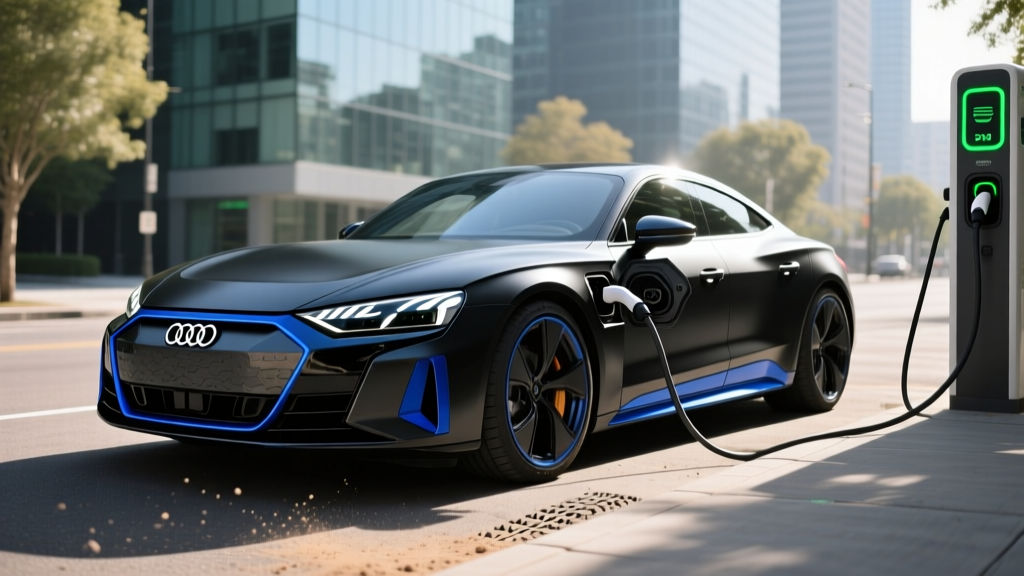
It depends on the station type. Public Level 2 chargers (typically 7.2–19.2 kW) add 25–70 miles of range per hour and are best for topping off while shopping, working, or dining. Public DC fast chargers (50–350 kW) add 100–250+ miles in 15–30 minutes and are designed for road-trip stops. Always check the station's kW rating and your vehicle's maximum charge acceptance rate before plugging in — a 150 kW-capable vehicle on a 350 kW charger will still only charge at 150 kW.
Is charging an EV really cheaper than buying gas?
At home, yes — significantly. At the U.S. average electricity rate of ~$0.16/kWh, charging an EV with 3.5 miles per kWh efficiency costs about $0.046 per mile. A gas car getting 28 MPG at $3.50/gallon costs $0.125 per mile — nearly three times more. However, public DC fast charging at $0.35–$0.48/kWh costs $0.10–$0.14 per mile, which is comparable to or slightly more than gasoline. The economic advantage of an EV is maximized when you charge primarily at home.
Editorial note: EV charging infrastructure, vehicle specifications, and federal incentive rules are current as of the 2026 model year. Always verify tax credit eligibility at IRS.gov and check current EPA range ratings at fueleconomy.gov before making a purchase decision. Home electrical work should always be performed by a licensed electrician.