The Real Answer to "How Long Can a Tesla Last?"
When buyers ask how long a Tesla can last, they're usually asking three different questions at once: How far can it drive on a charge? How many years will the battery survive? And how long until the car becomes uneconomical to own? In 2026, Tesla's lineup — the Model 3, Model Y, Model S, Model X, and the newer Cybertruck — offers some of the most data-rich answers in the EV industry, thanks to millions of vehicles on the road and publicly reported fleet degradation data.
This guide breaks down Tesla longevity across range, battery chemistry, charging habits, warranty terms, and total cost of ownership, with exact numbers for each current model.
Tesla Model Lineup: 2026 Specs at a Glance
| Model | EPA Range | Battery (kWh usable) | Chemistry | 0–60 mph | Drivetrain | Base MSRP |
|---|---|---|---|---|---|---|
| Model 3 RWD | 272 mi | ~57.5 | LFP | 5.8 s | RWD | $38,990 |
| Model 3 Long Range AWD | 363 mi | ~75 | NMC | 4.2 s | Dual-Motor AWD | $44,990 |
| Model Y Long Range AWD | 320 mi | ~75 | NMC | 4.8 s | Dual-Motor AWD | $44,990 |
| Model S Long Range | 402 mi | ~95 | NMC | 3.1 s | Dual-Motor AWD | $74,990 |
| Model X Long Range | 335 mi | ~95 | NMC | 3.8 s | Dual-Motor AWD | $79,990 |
| Cybertruck AWD | 340 mi | ~123 | NMC | 4.1 s | Dual-Motor AWD | $79,990 |
Sources: fueleconomy.gov, Tesla.com (2026 model-year specs). EPA range figures are estimates; real-world results vary.
Real-World Range vs. EPA Estimates
Tesla's onboard efficiency tracking is among the most accurate in the industry, but the EPA test cycle still favors stop-and-go city driving where regenerative braking recovers energy. Highway driving at sustained speed is where all EVs lose range, and Teslas are no exception. The heat pump standard on all 2026 models mitigates cold-weather cabin heating losses significantly compared to resistive heaters in older EVs, but battery chemistry itself is less efficient in the cold.
For the LFP-equipped Model 3 RWD, the 272-mile EPA figure is honest but modest. Real-world highway range in summer sits around 235–250 miles; winter highway driving can push that to 190–210 miles. This matters for road-trippers but is perfectly adequate for daily commuting under 80 miles round-trip.
Battery Longevity: Degradation, Chemistry, and Warranty
The question "how long can a Tesla last" hinges most critically on battery health. Tesla publishes an annual Impact Report with fleet degradation data. According to the most recent reports, Tesla vehicles retain approximately 85–88% of original battery capacity after 200,000 miles — meaning the average Tesla battery outlasts the typical ownership period of most buyers.
LFP vs. NMC: Which Lasts Longer?
| Factor | LFP (Lithium Iron Phosphate) | NMC (Nickel Manganese Cobalt) |
|---|---|---|
| Cycle Life | 3,000–5,000+ cycles | 1,500–2,500 cycles |
| Energy Density | Lower (heavier pack for same kWh) | Higher (lighter, more range) |
| Cold Performance | Moderate range loss | Better low-temp efficiency |
| Recommended Charge | 100% daily OK | 80% daily, 100% for trips |
| Found In | Model 3 RWD | Long Range, Performance, S/X |
LFP batteries are the longevity champion. Their higher cycle life means a Model 3 RWD battery could theoretically endure 1,000,000+ miles of charge cycles before reaching 80% capacity — far more than the rest of the car will last. NMC packs in Long Range and Performance models degrade slightly faster but offer greater range and better cold-weather behavior.
Tesla Battery & Powertrain Warranty
- Model 3 RWD: 8 years / 100,000 miles, whichever comes first, with 70% minimum capacity retention
- Model 3 Long Range / Model Y: 8 years / 120,000 miles, 70% retention
- Model S / Model X: 8 years / 150,000 miles, 70% retention
- Cybertruck: 8 years / 120,000 miles, 70% retention
The 70% retention threshold is standard across the industry. In practice, very few Teslas fall below this threshold within the warranty period based on fleet data. Out-of-warranty battery replacement costs range from $12,000–$20,000 depending on the pack, though remanufactured packs are increasingly available at lower cost.
Charging Speed: DC Fast Charging and Home Level 2
| Model | Peak DC kW | 10–80% Time | Level 2 Home Rate | Miles per Hour (L2) |
|---|---|---|---|---|
| Model 3 RWD (LFP) | 170 kW | ~25 min | 11.5 kW (48A) | ~37 mi/hr |
| Model 3 LR AWD | 250 kW | ~18 min | 11.5 kW (48A) | ~44 mi/hr |
| Model Y LR AWD | 250 kW | ~20 min | 11.5 kW (48A) | ~40 mi/hr |
| Model S LR | 250 kW | ~22 min | 11.5 kW (48A) | ~48 mi/hr |
| Model X LR | 250 kW | ~24 min | 11.5 kW (48A) | ~40 mi/hr |
| Cybertruck AWD | 250 kW | ~28 min | 11.5 kW (48A) | ~36 mi/hr |
All 2026 Teslas use the NACS connector natively — the same standard now adopted by Ford, GM, Rivian, Hyundai, and most major automakers. This means Tesla owners have access to the full Supercharger network plus growing third-party NACS stations.
Charging curve reality: The 250 kW peak on Long Range models is sustained only between roughly 10–30% State of Charge. Above 50%, the rate tapers significantly, dropping to ~100 kW by 70% and ~40 kW above 90%. This is normal lithium-ion behavior, not a Tesla-specific limitation. The 10–80% time is the practical metric, and Tesla's V4 Superchargers deliver on it reliably.
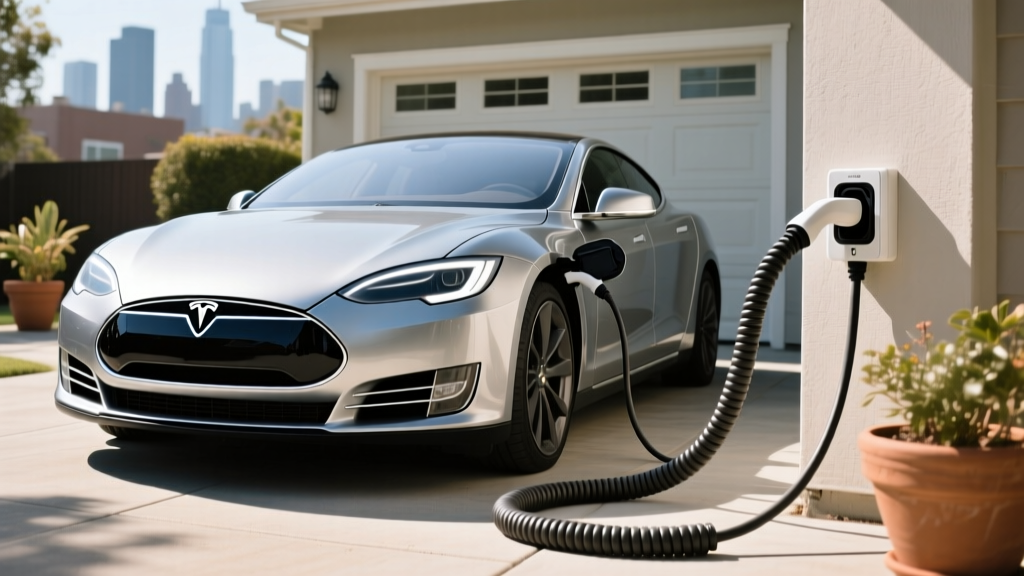
For home charging, Tesla's Wall Connector at 48 amps (11.5 kW on a 60A circuit) adds enough range overnight for virtually any commute. Installation typically costs $500–$2,000 depending on panel capacity and conduit runs — a licensed electrician should evaluate your 200A panel before installation.
Efficiency and Operating Costs
Tesla vehicles remain among the most energy-efficient EVs on the market, measured in watt-hours per mile:
- Model 3 LR AWD: 132 MPGe combined / 25 kWh per 100 miles
- Model Y LR AWD: 122 MPGe combined / 28 kWh per 100 miles
- Model S LR: 120 MPGe combined / 28 kWh per 100 miles
At the US average electricity rate of ~$0.16/kWh, a Model 3 Long Range costs roughly $4.00 to travel 100 miles — compared to ~$12–$15 for a 30-MPG gas car at $3.50/gallon. Over 15,000 miles per year, that's a fuel savings of $1,200–$1,650 annually. Combined with lower maintenance (no oil changes, minimal brake wear from regen), the operating-cost advantage compounds significantly over a 5–8 year ownership period.
Pricing, Tax Credits, and Total Cost
| Model | Base MSRP | Federal §30D Credit | Effective Price | Eligibility Notes |
|---|---|---|---|---|
| Model 3 RWD | $38,990 | Up to $7,500 | ~$31,490 | MSRP under $55K cap ✓; income caps apply |
| Model 3 LR AWD | $44,990 | Up to $7,500 | ~$37,490 | MSRP under $55K cap ✓; income caps apply |
| Model Y LR AWD | $44,990 | Up to $7,500 | ~$37,490 | MSRP under $80K SUV cap ✓; income caps apply |
| Model S LR | $74,990 | $0 | $74,990 | Exceeds $55K sedan cap ✗ |
| Model X LR | $79,990 | Up to $7,500 | ~$72,490 | Under $80K SUV cap ✓; income caps apply |
| Cybertruck AWD | $79,990 | Up to $7,500 | ~$72,490 | Under $80K truck cap ✓; income caps apply |
IRS §30D eligibility rules (2026): The federal tax credit has three gates that must all be satisfied:
- MSRP cap: $55,000 for sedans (Model 3); $80,000 for SUVs and trucks (Model Y, Model X, Cybertruck). The Model S at $74,990 exceeds the sedan cap and does not qualify.
- Buyer income cap: Adjusted gross income must not exceed $150,000 (single), $225,000 (head of household), or $300,000 (joint filing).
- Battery sourcing: Critical minerals and battery components must meet phased-in domestic/free-trade sourcing thresholds. Tesla's US-built packs with LFP and NMC chemistries have generally met these requirements, but eligibility can shift by model year and production batch. Always verify on IRS.gov or via the point-of-sale dealer verification system.
The credit can now be transferred at point of sale as an instant discount, meaning you don't need to wait until tax filing to benefit — the dealer applies it to your purchase price directly.
Tech, Driver Assistance, and Notable Drawbacks
All 2026 Teslas ship with Tesla's latest infotainment system featuring a 15.4-inch center display (Model 3/Y) or 17-inch (Model S/X/Cybertruck), over-the-air updates, integrated navigation with real-time Supercharger routing, and a robust app ecosystem. The absence of Apple CarPlay and Android Auto remains a dealbreaker for some buyers, though Tesla's native navigation and media apps are competitive.
Autopilot and FSD (Supervised)
FSD (Supervised) costs $8,000 as a one-time purchase or $99/month as a subscription in 2026. It adds city-street navigation, stop-sign and red-light recognition, and more assertive lane-change behavior. Real-world performance has improved substantially, but it remains a convenience feature, not a chauffeur.
- Supercharger network — the most reliable DC fast-charging ecosystem in North America
- Class-leading efficiency (kWh/mile) across the lineup
- Over-the-air updates continuously add features post-purchase
- LFP battery option on Model 3 RWD offers exceptional cycle life
- Strong resale value relative to non-Tesla EVs
- Minimal scheduled maintenance
- No Apple CarPlay or Android Auto
- Panel gaps and interior material quality lag behind Hyundai/Kia/BMW at similar prices
- Insurance premiums 20–40% higher than comparable gas vehicles
- Cybertruck polarizing design limits resale pool
- Camera-only driver assist lacks lidar redundancy
- Model S/X pricing puts them in luxury territory without luxury interior refinement
Who Should Buy a Tesla in 2026?
- Choose Model 3 RWD if: You commute under 80 miles daily, can charge at home, want the lowest entry price, and value LFP battery longevity over maximum range.
- Choose Model 3 Long Range if: You take regular road trips of 200–300 miles, live in a cold climate where NMC performs better, and want dual-motor AWD traction.
- Choose Model Y if: You need crossover cargo space (76 cu ft with seats folded), family seating for five, and the best balance of range and utility.
- Choose Model S/X if: Budget is flexible, you want 400+ mile range (Model S), or need three-row seating and falcon-wing doors (Model X), and you accept the tax-credit limitations.
- Choose Cybertruck if: You need a truck bed, 11,000-lb towing capacity, and stainless-steel durability — and you're comfortable with its size and polarizing aesthetics.
How Long Can a Tesla Last? The Verdict
Based on fleet data, battery chemistry analysis, and ownership economics, a Tesla can realistically last 200,000–300,000+ miles on its original battery pack with proper care. The LFP-equipped Model 3 RWD has the longest projected battery life; NMC Long Range models offer more range with slightly faster (but still modest) degradation. The car's structural components, motors, and electronics are designed for 300,000+ mile service life, as Tesla has publicly stated.
The limiting factor is rarely the battery — it's more often accident damage, body repair costs, or the owner's desire to upgrade. For buyers who charge at home, drive under 20,000 miles per year, and avoid habitual 100% charges on NMC packs, a Tesla is one of the longest-lasting vehicles available in 2026, electric or otherwise.
Frequently Asked Questions
How long can a Tesla battery last before needing replacement?
Tesla fleet data shows approximately 85–88% capacity retention at 200,000 miles. At typical degradation rates of 1–2% per year, most batteries will retain 75–80% capacity at 15 years or 200,000+ miles. Full replacement is rare within the first decade.
Does a Tesla qualify for the $7,500 federal tax credit?
The Model 3 (RWD and Long Range), Model Y, Model X, and Cybertruck can qualify under 2026 IRS §30D rules, subject to buyer income caps ($150K single / $300K joint) and battery-sourcing requirements. The Model S does not qualify due to the $55,000 sedan MSRP cap. Always verify current eligibility at IRS.gov.
How fast does a Tesla charge at home?
Using a Tesla Wall Connector on a 60-amp circuit (48A continuous), all 2026 models charge at up to 11.5 kW, adding 36–48 miles of range per hour depending on the model. A full overnight charge (8 hours) adds 288–384 miles — more than enough for any daily commute.
Is a Tesla worth it compared to Hyundai Ioniq 5 or Ford Mustang Mach-E?
Tesla's advantages are Supercharger network access, superior efficiency, and strong resale value. Competitors like the Ioniq 5 offer faster 800V charging architecture (10–80% in ~18 min), Apple CarPlay, and more refined interiors. The Mach-E provides a more traditional SUV driving feel. If road-trip charging reliability is your top priority, Tesla still leads. If interior quality or charging speed matter more, test-drive the competition.
How does cold weather affect Tesla range?
All EVs lose range in freezing temperatures. Expect a 20–30% reduction in sub-32°F conditions due to battery chemistry limitations and cabin heating demands. Tesla's heat pump (standard on all 2026 models) reduces this penalty compared to older resistive-heater EVs. Preconditioning the battery while plugged in before driving recovers significant range.
What does Tesla maintenance cost over 5 years?
Tesla recommends no scheduled maintenance intervals. Typical 5-year costs include cabin air filter replacement (~$100–$200 every 2–3 years), tire rotation ($50–$80 per service, 2–3 times over 5 years), wiper fluid, and brake fluid checks. Brake pads last 100,000+ miles thanks to regenerative braking. Total 5-year maintenance typically runs $500–$1,200 — a fraction of a gas vehicle's oil changes, spark plugs, and transmission service.