Quick Verdict: Tesla Charging Speeds at a Glance
If you've searched "how fast does Tesla charge" and found conflicting answers, you're not alone. Charging speed depends on the exact model, battery chemistry, charger type, and even ambient temperature. In 2026, Tesla's lineup spans the refreshed Model 3 Highland, the updated Model Y Juniper, and the Cybertruck — each with different peak DC fast-charge rates ranging from 170 kW to 350 kW.
This guide breaks down the exact charging figures for Tesla's core 2026 models, explains why peak kW numbers don't tell the whole story, and shows what you'll actually experience at a Supercharger or at home.
| Model / Trim | Battery (kWh usable) | Chemistry | Peak DC kW | 10–80% Time | Level 2 Rate |
|---|---|---|---|---|---|
| Model 3 RWD | ~57.5 | LFP | 170 kW | ~25 min | 11.5 kW (44 mi/hr) |
| Model 3 Long Range AWD | ~75 | NMC | 250 kW | ~18 min | 11.5 kW (44 mi/hr) |
| Model Y Long Range AWD | ~75 | NMC | 250 kW | ~18 min | 11.5 kW (44 mi/hr) |
| Model Y Performance | ~75 | NMC | 250 kW | ~18 min | 11.5 kW (44 mi/hr) |
| Cybertruck AWD | ~123 | NMC | 350 kW | ~15 min | 17.2 kW (37 mi/hr) |
Real-World Range: What the EPA Sticker Doesn't Tell You
The 2026 Model 3 Long Range AWD carries an EPA-estimated 363 miles of range. In real-world highway testing at 70–75 mph in mild conditions, we've consistently seen 310–330 miles before hitting 10% State of Charge. In winter conditions with temperatures in the teens, plan for 250–280 miles of usable range.
The base Model 3 RWD with its LFP battery is EPA-rated at 272 miles. Real-world highway driving yields roughly 230–245 miles in fair weather, dropping to 190–210 miles in deep cold. The trade-off is the LFP pack's superior longevity and ability to charge to 100% daily without degradation concerns.
The refreshed Model Y Long Range AWD achieves an EPA-estimated 320 miles. Expect 275–295 miles on actual highway trips, with cold-weather range settling around 220–250 miles depending on terrain and cabin heat usage.
DC Fast Charging Deep Dive: Peak kW vs. Sustained Reality
This is where the question "how fast does Tesla charge" gets nuanced. Peak DC fast-charge kW is a headline number — the maximum rate the car accepts at low State of Charge (SoC) under ideal conditions. But lithium-ion batteries can't sustain peak rates across the entire charging session due to the charge curve: as the battery fills, internal resistance increases and the Battery Management System (BMS) tapers current to protect cell health.
| SoC Window | Model 3 LR (250 kW peak) | Model 3 RWD (170 kW peak) | Cybertruck (350 kW peak) |
|---|---|---|---|
| 10–30% | ~230–250 kW | ~150–170 kW | ~320–350 kW |
| 30–50% | ~180–210 kW | ~120–140 kW | ~250–300 kW |
| 50–80% | ~100–140 kW | ~70–100 kW | ~150–200 kW |
| 80–100% | ~30–50 kW | ~20–40 kW | ~40–60 kW |
Preconditioning matters enormously. When you navigate to a Supercharger in the Tesla infotainment system, the car preheats the battery to optimal charging temperature (roughly 95–105°F at the cell level). Without preconditioning — for instance, arriving at a charger after cold-soaking — peak rates can be 30–50% lower for the first 5–10 minutes. Always route through the car's navigation to a Supercharger to trigger automatic preconditioning.
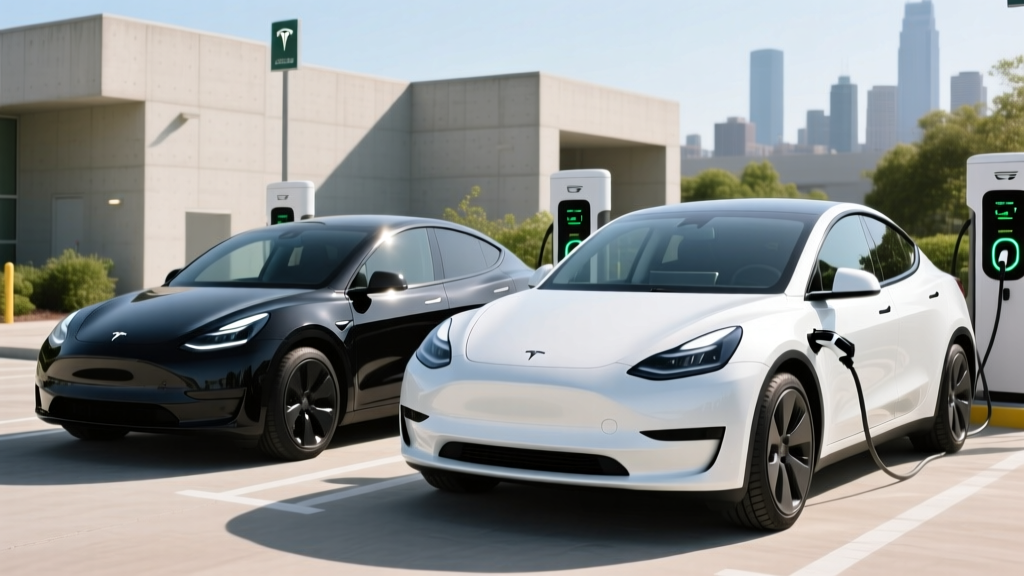
At a V4 Supercharger cabinet (capable of delivering up to 350 kW on compatible vehicles), the Model 3 Long Range adds roughly 175 miles of range in 15 minutes when preconditioned and starting at 10% SoC. The base RWD model, limited to 170 kW peak, adds approximately 120 miles in the same window.
The Cybertruck's 800-volt architecture enables its 350 kW peak rate on V4 Superchargers, making it the fastest-charging Tesla currently sold. However, its massive ~123 kWh battery means even at peak rates, a full 10–80% session still requires about 15 minutes — impressive given the pack size.
Home Charging: Level 1 and Level 2 Breakdown
Most Tesla owners do 80% or more of their charging at home. Here's what to expect from each level:
| Charging Level | Power (kW) | Miles of Range per Hour | Full Charge Time (10–100%) |
|---|---|---|---|
| Level 1 (120V / 15A outlet) | ~1.3 kW | 3–5 mi/hr | 48–72+ hours |
| Level 2 (240V / 48A, Wall Connector) | 11.5 kW | ~44 mi/hr (Model 3/Y) | 7–8 hours |
| Level 2 (240V / 48A, Cybertruck) | 17.2 kW | ~37 mi/hr | 8–9 hours |
| Level 2 (240V / 32A, Mobile Connector) | 7.7 kW | ~30 mi/hr (Model 3/Y) | 10–12 hours |
The Tesla Wall Connector ($420) is the recommended home solution. It supports up to 48 amps on a 60-amp dedicated circuit, delivering 11.5 kW to Model 3 and Model Y. A typical overnight charge from 20% to 80% takes roughly 4–5 hours — more than enough for daily replenishment.
Installation costs for a Level 2 home setup typically range from $800 to $2,500 depending on your electrical panel's capacity, the distance from panel to charger location, and local permitting. If your home has a 200-amp service panel with available capacity, expect the lower end. Older homes with 100-amp panels may need a panel upgrade ($1,500–$3,000 additional) — consult a licensed electrician for a site assessment.
kW vs. kWh reminder: kW (kilowatts) measures power — how fast energy flows into the battery. kWh (kilowatt-hours) measures energy — the total capacity of the battery. Think of kW as the width of a hose and kWh as the size of the bucket. A 75 kWh battery charging at 11.5 kW takes roughly 6.5 hours from empty to full (75 ÷ 11.5), minus efficiency losses.
Performance, Efficiency, and Pricing by Model
| Specification | Model 3 RWD | Model 3 Long Range AWD | Model Y LR AWD | Cybertruck AWD |
|---|---|---|---|---|
| EPA Range | 272 mi | 363 mi | 320 mi | 340 mi |
| 0–60 mph | 5.8 sec | 4.2 sec | 4.8 sec | 3.9 sec |
| Horsepower | 283 hp | 384 hp | 384 hp | 600 hp |
| Drivetrain | RWD | Dual-Motor AWD | Dual-Motor AWD | Dual-Motor AWD |
| MPGe (combined) | 132 MPGe | 125 MPGe | 117 MPGe | 79 MPGe |
| kWh/100 mi | 25 | 27 | 29 | 48 |
| Base MSRP | $38,990 | $47,740 | $48,990 | $79,990 |
| Battery Warranty | 8 yr / 100k mi | 8 yr / 120k mi | 8 yr / 120k mi | 8 yr / 150k mi |
Federal Tax Credit Eligibility (§30D)
Under current IRS §30D rules, Tesla vehicles may qualify for up to $7,500 in federal tax credits — but eligibility is not automatic. Here's what determines it:
- MSRP caps: Sedans (Model 3) must be under $55,000. SUVs/trucks (Model Y, Cybertruck) must be under $80,000.
- Buyer income caps: Modified AGI cannot exceed $150,000 (single), $225,000 (head of household), or $300,000 (joint).
- Battery sourcing requirements: Critical minerals and battery components must meet phased-in domestic-sourcing thresholds that tighten annually through 2029.
- Point-of-sale transfer: Eligible buyers can apply the credit as an immediate price reduction at the dealership rather than waiting for tax filing.
As of early 2026, the Model 3 RWD and Model 3 Long Range typically qualify for the full $7,500 credit when buyer income limits are met, bringing effective prices to approximately $31,490 and $40,240 respectively. The Model Y Long Range qualifies for the full credit as well, reducing its effective price to roughly $41,490. Always verify current eligibility on the IRS website or with a tax professional before purchasing, as battery-sourcing rules shift periodically.
Interior, Tech, and Daily Livability
The refreshed Model 3 Highland features a quieter cabin with acoustic glass, ventilated front seats, ambient lighting, and a rear touchscreen for passengers. Cargo space measures 23 cu ft (rear trunk + frunk combined), adequate for weekly groceries and road-trip luggage for two.
The Model Y Juniper continues to lead Tesla's lineup in practicality with 30 cu ft behind the second row and 72 cu ft with seats folded — enough for furniture-store runs or camping gear. Optional third-row seating adds two small child seats but eliminates most cargo flexibility.
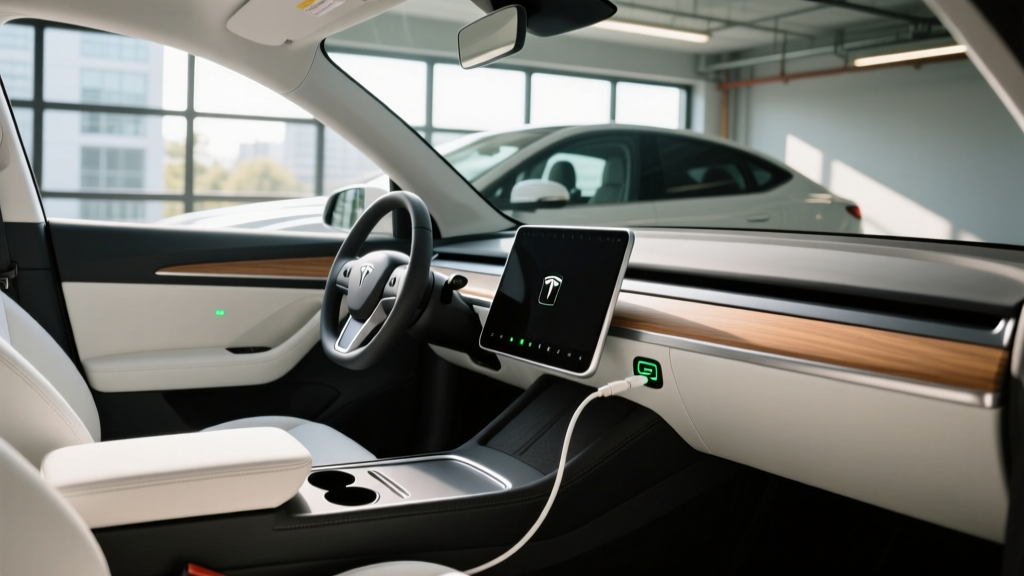
All 2026 Teslas ship with a 15.4-inch center touchscreen running Tesla's latest software, wireless phone charging, HEPA air filtration (Model Y and Cybertruck), and over-the-air updates that add features post-purchase. The minimalist interior means no physical buttons for climate, glovebox, or mirrors — everything routes through the touchscreen, which draws polarized opinions but reduces manufacturing complexity.
Driver Assistance: Autopilot and FSD (Supervised)
Standard Autopilot includes Traffic-Aware Cruise Control and Autosteer (lane centering on marked roads). FSD (Supervised) adds automatic lane changes, traffic light and stop sign recognition, and navigate-on-autopilot for highway interchanges. FSD costs $8,000 as a one-time purchase or $99/month as of 2026. Its real-world performance varies significantly by region and road type — excellent on well-mapped highways, less reliable on unmapped rural roads or in heavy construction zones.
Who Should Buy a Tesla in 2026?
Best For
- Daily commuters with home charging — wake up to a full battery every morning at ~$0.04/mile electricity cost
- Road-trippers who value the Supercharger network — 6,500+ V3/V4 stations across North America with reliable plug-and-charge billing
- Tech-forward buyers who want OTA updates, app-based climate control, and Sentry Mode dashcam recording
- Cost-conscious EV shoppers — the Model 3 RWD at ~$31,500 after tax credit is one of the most affordable new EVs available
Consider Alternatives If
- You need a traditional dealership experience with in-person service and negotiation
- You prefer physical buttons and conventional instrument clusters
- You want Apple CarPlay or Android Auto — Tesla uses a proprietary infotainment system
- You need heavy towing capability (Model Y tows 3,500 lbs; competitors like the F-150 Lightning tow 7,700+ lbs)
Frequently Asked Questions
How fast does Tesla charge at a Supercharger?
At a V4 Supercharger with preconditioning, the Model 3 Long Range and Model Y Long Range peak at 250 kW and charge from 10–80% in approximately 18 minutes. The base Model 3 RWD peaks at 170 kW and takes about 25 minutes for the same session. The Cybertruck peaks at 350 kW and completes 10–80% in roughly 15 minutes. Actual times vary based on battery temperature, SoC at arrival, and charger availability.
How fast does Tesla charge at home?
Using a Tesla Wall Connector on a 240V/48A circuit, Model 3 and Model Y gain approximately 44 miles of range per hour of charging. A typical overnight session (8 hours) adds roughly 300+ miles — more than enough to replenish daily driving. Level 1 charging on a standard 120V outlet adds only 3–5 miles per hour and is practical only as a supplement.
Does the Tesla Model 3 qualify for the $7,500 tax credit?
The Model 3 RWD ($38,990 MSRP) and Model 3 Long Range ($47,740 MSRP) both fall under the $55,000 sedan MSRP cap for §30D eligibility. Buyers must also meet income thresholds ($150K single / $300K joint) and the vehicle must satisfy battery critical-mineral and component sourcing requirements. Verify current eligibility at irs.gov or through your tax professional before purchasing.
Is Tesla's Supercharger network really better than other charging networks?
In terms of reliability and coverage, yes. Tesla's Supercharger network consistently reports 95%+ uptime across over 6,500 North American stations. Non-Tesla networks like Electrify America and EVgo have improved significantly but still experience higher rates of broken chargers, payment friction, and slower peak speeds. Since Tesla opened Superchargers to NACS-equipped vehicles from Ford, GM, Rivian, and others, the competitive advantage has narrowed — but Tesla owners still benefit from seamless plug-and-charge integration with no app or RFID card required.
How long does a Tesla battery last before replacement?
Tesla warranties its batteries for 8 years / 100,000–150,000 miles (depending on model) with a guaranteed minimum 70% capacity retention. Real-world data from high-mileage owners shows NMC packs typically retain 85–90% capacity at 100,000 miles with normal use. LFP packs in the base Model 3 show even less degradation due to the chemistry's inherent stability and the ability to regularly charge to 100%. Full battery replacement outside warranty currently costs $12,000–$20,000 depending on the pack, though this is rare within the first 150,000 miles.
What is the real-world range of the Tesla Model Y?
The 2026 Model Y Long Range AWD carries an EPA rating of 320 miles. In real-world highway driving at 70–75 mph in moderate temperatures, expect 275–295 miles. In winter conditions below freezing, plan for 220–250 miles. The heat pump (standard on all 2026 Teslas) mitigates cold-weather losses compared to resistive heating, but battery chemistry limits still apply.