How Do Electric Vehicles Work? The Short Answer
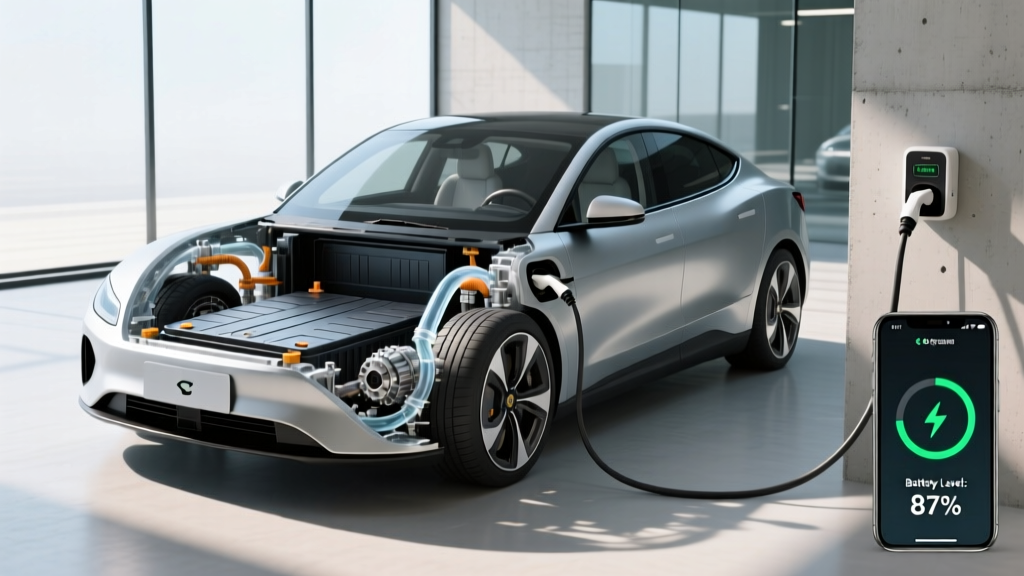
An electric vehicle (EV) stores electricity in a high-voltage battery pack (typically 50–100 kWh) and uses that energy to power one or more electric motors that turn the wheels. Unlike a gas car, there is no internal combustion engine, no multi-speed transmission, no exhaust system, and no fuel tank. When you press the accelerator, a power inverter converts the battery's DC (direct current) electricity into AC (alternating current) for the motor, delivering instant torque and smooth acceleration. When you lift off the pedal or brake, the motor reverses direction and acts as a generator, sending energy back into the battery — a process called regenerative braking. You recharge the battery by plugging into a home outlet, a Level 2 wall charger, or a DC fast-charging station.
The Core Components of Every EV
Strip away the sheet metal and every battery-electric vehicle (BEV) shares a handful of major systems. Understanding them is the fastest way to evaluate any EV on the market.
Traction Battery Pack (kWh)
The battery is the single most expensive component in an EV. Capacity is measured in kilowatt-hours (kWh) — think of it as the "gallon" equivalent for an EV. A larger kWh figure generally means more range, but vehicle weight, aerodynamics, and motor efficiency all affect how far that energy actually takes you. Most 2026 mainstream EVs use either:
- NMC/NCA (Nickel Manganese Cobalt / Nickel Cobalt Aluminum): Higher energy density, more range per pound, but costlier and more sensitive to heat degradation. Common in long-range models like the Tesla Model 3 Long Range (82 kWh usable) and Hyundai Ioniq 5 (84 kWh usable).
- LFP (Lithium Iron Phosphate): Lower energy density but longer cycle life, safer thermal profile, and cheaper to produce. Tesla uses LFP in the Model 3 Standard Range (60 kWh usable). LFP batteries tolerate regular 100% charging better than NMC.
Electric Motor and Inverter
Most EVs use either a permanent-magnet synchronous motor (efficient, common in single-motor setups) or an AC induction motor (durable, often used as a secondary motor in AWD configurations). The inverter is the brain that modulates power flow between the battery and motor, controlling speed and torque with microsecond precision. Power output is measured in kW (kilowatts) — for reference, 1 horsepower ≈ 0.746 kW.
Onboard Charger
When you plug into a Level 1 or Level 2 AC source, the onboard charger converts AC power from the grid into DC power the battery can store. Typical onboard chargers handle 7.2 kW to 11.5 kW — this determines your maximum Level 2 charging speed, not the wall connector's rating.
Thermal Management System
Batteries operate best between roughly 68°F and 86°F (20°C–30°C). Liquid cooling loops heat or cool the battery cells as needed. This system is critical for preserving battery life, enabling fast DC charging (which generates significant heat), and maintaining range in extreme weather.
EV vs Gas Car vs Hybrid: How They Compare
If you're deciding between an EV, a conventional hybrid (HEV), a plug-in hybrid (PHEV), or a gas car, the powertrain architecture determines your daily experience and long-term costs.
| Attribute | BEV (Tesla Model 3 LR) | PHEV (Toyota RAV4 Prime) | HEV (Toyota RAV4 Hybrid) | Gas (Toyota RAV4 LE) |
|---|---|---|---|---|
| Powertrain | Dual-motor AWD, 82 kWh battery | 2.5L 4-cyl + electric motors, 18.1 kWh battery | 2.5L 4-cyl + electric motor, 1.6 kWh battery | 2.5L 4-cyl, 8-speed auto |
| EPA Range / MPG | 341 mi range; 132 MPGe combined | 42 mi electric-only; 38 MPG combined (gas) | 40 MPG combined | 30 MPG combined |
| 0-60 mph | 4.2 seconds | 5.7 seconds | 7.4 seconds | 8.2 seconds |
| Fuel / Energy Cost per Mile | ~$0.04 (home charging at $0.16/kWh) | ~$0.04 electric / ~$0.13 gas | ~$0.12 gas | ~$0.16 gas |
| Base MSRP (2026) | $42,380 | $44,590 | $33,425 | $29,825 |
| Federal Tax Credit (§30D) | Up to $7,500 (eligibility varies) | Up to $7,500 (eligibility varies) | None | None |
| Maintenance (Annual Est.) | ~$300 | ~$550 | ~$500 | ~$650 |
Key distinction: A BEV runs exclusively on electricity. A PHEV offers a short electric-only range (typically 25–50 miles) plus a gas engine for longer trips. An HEV uses a small battery to assist the gas engine but cannot plug in. Each has a use case — the right choice depends on your driving pattern, charging access, and budget.
How Charging Actually Works (Levels, Speeds, and Connectors)
Charging an EV is fundamentally different from filling a gas tank. The speed depends on the power level (kW) of the charger and the vehicle's acceptance rate. Here's the breakdown:
| Level | Power Source | Typical kW | Miles Added per Hour | Best For |
|---|---|---|---|---|
| Level 1 | 120V household outlet | 1.0–1.4 kW | 3–5 mi/hr | Overnight top-ups, PHEVs, low-mileage drivers |
| Level 2 | 240V (dryer-style outlet or hardwired) | 7.2–11.5 kW | 25–44 mi/hr | Daily home/workplace charging (full overnight) |
| DC Fast Charge | 480V+ commercial station | 50–350 kW | 150–1,000+ mi/hr | Road trips, quick top-ups (10–80% in 18–40 min) |
The charging curve matters: DC fast charging does not sustain peak speed from 0% to 100%. A vehicle rated for 250 kW peak might only sustain that rate between 10% and 30% state of charge (SoC), then taper progressively. This is why manufacturers quote "10–80%" charging times rather than 0–100%. Charging above 80% slows dramatically to protect battery health — on a road trip, plan to leave at 80% and move on rather than wait for a full charge.
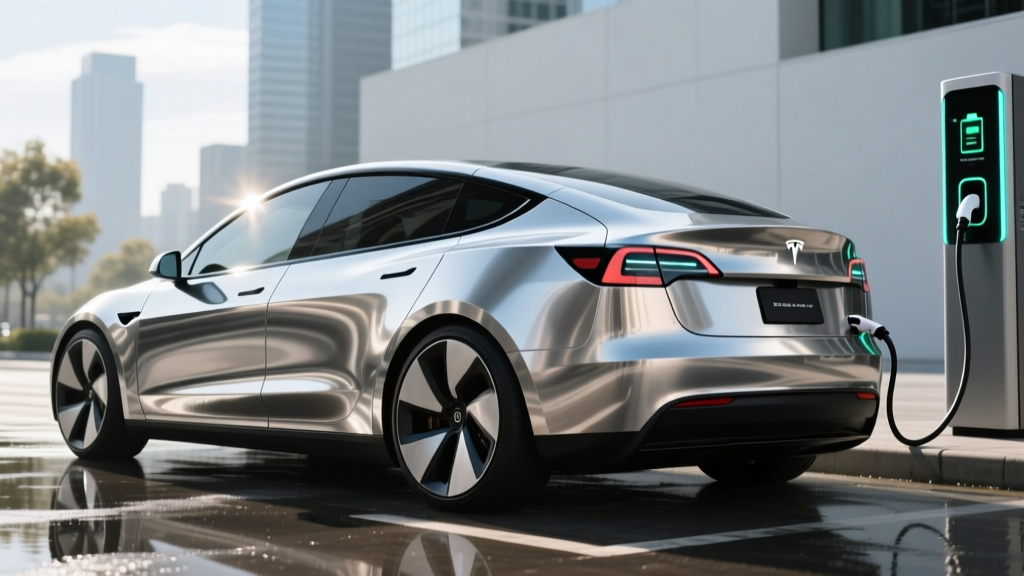
Connector standards in 2026: The North American Charging Standard (NACS), pioneered by Tesla, has become the dominant connector. Most major automakers — Ford, GM, Rivian, Hyundai, Kia, and others — now equip new EVs with NACS ports and provide access to the Tesla Supercharger network. CCS1 is still found on older models and some public stations. CHAdeMO is effectively legacy (Nissan Leaf).
Real-World Range: What the EPA Sticker Doesn't Tell You
The EPA range estimate printed on the window sticker is a useful baseline, but real-world range fluctuates based on several factors every buyer should internalize:
EPA Range vs. Reality
EPA estimate: 341 miles (Tesla Model 3 Long Range AWD, 2026)
Expect in practice:
- City/suburban mixed driving (65–75°F): ~310–330 miles — regen braking recovers energy in stop-and-go traffic.
- Sustained highway driving (70–80 mph): ~260–290 miles — aerodynamic drag rises with the square of speed; efficiency drops noticeably above 65 mph.
- Cold weather (20°F–32°F): ~220–270 miles — battery chemistry slows, cabin heating draws 2–5 kW continuously, and the thermal management system consumes energy to keep cells warm. Expect 15–30% range loss depending on severity.
- Cold weather + highway: ~200–240 miles — the worst-case combination. Plan charging stops conservatively in winter road trips.
Preconditioning is your friend: Most EVs let you schedule departure times or activate battery preconditioning via the app. This warms the battery before you drive (preserving range) and before you arrive at a DC fast charger (enabling peak charge rates). Skipping preconditioning in cold weather can cut fast-charging speed in half.
The True Cost of EV Ownership
EVs typically carry a higher purchase price than comparable gas cars, but lower operating costs can close the gap over time. Here's a realistic 5-year cost projection comparing a mainstream EV against a gas equivalent.
| Cost Category | BEV (Tesla Model 3 LR AWD) | Gas (Toyota Camry SE) |
|---|---|---|
| Purchase Price (MSRP) | $42,380 | $30,570 |
| Federal Tax Credit (§30D) | –$7,500 (if eligible) | $0 |
| Effective Purchase | $34,880 | $30,570 |
| Energy/Fuel (60,000 mi) | $2,400 (home charging @ $0.16/kWh) | $7,200 (gas @ $3.50/gal, 32 MPG avg) |
| Maintenance (5 years) | $1,500 (tire rotations, cabin filter, brake fluid) | $3,250 (oil changes, filters, brake pads, transmission fluid) |
| Insurance (5-year avg) | $9,500 | $7,200 |
| Home Charger Install (Level 2) | $1,200 (one-time) | $0 |
| Estimated Depreciation | $16,500 | $13,000 |
| Total 5-Year Cost | ~$65,980 | ~$61,220 |
Takeaways: The EV costs roughly $4,760 more over five years in this comparison, but the gap narrows substantially with higher annual mileage, cheaper electricity rates, or a lower-priced EV. Insurance is typically 15–25% higher for EVs due to repair complexity and parts cost — always get quotes before purchasing. The IRS §30D tax credit can shift the math dramatically, but eligibility depends on your income, the vehicle's MSRP, battery component sourcing, and whether you choose point-of-sale transfer. Consult a tax professional for your specific situation.
Common EV Myths vs. Facts
| Myth | Fact |
|---|---|
| "EV batteries need replacing every few years." | Federal law mandates EV battery warranties of at least 8 years/100,000 miles. Real-world data from fleet operators shows most NMC and LFP packs retain 85–92% capacity after 100,000 miles. Full replacements are rare and typically covered under warranty. |
| "EVs are worse for the environment because of electricity generation." | Even on coal-heavy grids, an EV produces fewer lifetime emissions than a comparable gas car, per EPA analysis. On cleaner grids (wind, solar, nuclear), the advantage widens substantially. Manufacturing emissions are higher, but the break-even point typically arrives within 1–2 years of driving. |
| "You'll be stranded — there aren't enough chargers." | As of 2026, the U.S. has over 190,000 public charging ports, including 50,000+ DC fast chargers. The Tesla Supercharger network alone exceeds 30,000 stalls. That said, rural corridors and apartment dwellers without home charging remain legitimate pain points. Plan accordingly. |
| "EVs are slow and boring to drive." | Electric motors deliver peak torque from 0 RPM. Even a modest EV like the Hyundai Ioniq 5 (225 HP single motor) hits 0–60 in 7.4 seconds. Performance models like the Tesla Model 3 Performance do it in 2.9 seconds. The low center of gravity (battery under the floor) also improves handling. |
| "The grid can't handle everyone driving EVs." | Most charging happens overnight when grid demand is lowest. Utilities are adding time-of-use rates that incentivize off-peak charging. A mass transition will require grid investment, but current capacity can support significantly more EVs than are on the road today. |
Decision Framework: Is an EV Right for You?
Choose a BEV (Full Electric) If:
- You have access to home or workplace Level 2 charging (the single biggest ownership advantage).
- Your daily driving is under 200 miles round-trip (covers ~95% of American commutes).
- You want minimal maintenance and the lowest per-mile energy cost.
- You qualify for the §30D tax credit, reducing effective purchase price.
- You take road trips 2–4 times per year and can plan DC fast-charging stops.
Choose a PHEV (Plug-In Hybrid) If:
- You want electric-only commuting (25–50 miles) but need gas-engine flexibility for frequent long trips.
- You have home charging but live in an area with sparse DC fast-charging infrastructure.
- You experience extreme cold regularly and don't want to manage winter range loss on road trips.
- You're not ready to commit fully to electric but want to reduce fuel consumption.
Choose an HEV (Standard Hybrid) or Gas Car If:
- You have no access to any charging — no home outlet, no workplace charger, no reliable public infrastructure nearby.
- Your budget is strictly under $28,000 and you need the lowest possible upfront cost.
- You regularly tow heavy loads (trailers, boats) where EV range drops precipitously under load.
- You drive very low annual miles (under 5,000) where fuel savings won't offset a higher purchase price.
What First-Time EV Buyers Must Know Before Signing
- Confirm your home electrical capacity. A Level 2 charger typically requires a 240V/40A–60A circuit. If your home's electrical panel is maxed out (common in older homes with 100A service), a panel upgrade to 200A can add $1,500–$3,000 to installation costs. Get a licensed electrician's assessment before buying.
- Test your real commute, not the spec sheet. Borrow or rent an EV similar to the one you're considering and drive your actual daily route — including highway segments and hills — to gauge real energy consumption.
- Check §30D credit eligibility carefully. The fueleconomy.gov tax credit tool lists qualifying vehicles, but your personal eligibility also depends on modified adjusted gross income ($150K single / $300K joint for new EVs), vehicle MSRP caps ($55K sedans / $80K SUVs and trucks), and battery sourcing requirements. Rules can change annually.
- Factor in insurance early. Get quotes from your current insurer and at least two competitors. EV insurance varies widely — some companies offer EV-specific discounts, while others surcharge for high-repair-cost models.
- Understand the battery warranty. Per federal mandate, the traction battery must be warranted for at least 8 years/100,000 miles against capacity loss below a specified threshold (typically 70% of original capacity). Some manufacturers offer longer coverage. Read the fine print on what triggers a warranty claim.
- Plan for public charging realities. Not all DC fast chargers work reliably. Apps like PlugShare and A Better Routeplanner help, but expect occasional broken stalls, slower-than-advertised speeds, and payment-app frustrations on road trips. The Supercharger network is currently the most reliable option.
Frequently Asked Questions
Do electric vehicles have transmissions?
Most EVs use a single-speed reduction gear rather than a multi-speed transmission. Electric motors produce usable torque across a very wide RPM range (0 to 15,000+ RPM), so multiple gears are unnecessary. The Porsche Taycan and Audi e-tron GT are rare exceptions with a 2-speed gearbox on the rear motor for optimized highway efficiency and launch performance.
How long do EV batteries last?
Current lithium-ion EV batteries are designed to last the life of the vehicle. Real-world fleet data shows average degradation of 1–2% per year under normal use, meaning a battery should retain roughly 85–90% of its original capacity after 100,000 miles. Full replacements outside of warranty are uncommon and costs have been declining — a replacement pack for a mainstream EV ranges from $8,000 to $18,000 depending on capacity and chemistry.
Can I charge an EV from a regular household outlet?
Yes — that's Level 1 charging. A standard 120V/15A outlet delivers roughly 1.0–1.4 kW, adding about 3–5 miles of range per hour. For a PHEV with a 40-mile electric range, overnight Level 1 charging is usually sufficient. For a BEV with a 300+ mile battery, Level 1 is impractical as a primary charging method (a full charge would take 60–80 hours) but works as a backup or for very low-mileage drivers.
What happens if I run out of charge on the road?
The same thing that happens if you run out of gas: you need roadside assistance. Most EVs provide multiple low-battery warnings and will reduce power output to extend remaining range. Many new EVs include built-in roadside assistance for the first 3–5 years. If stranded, a flatbed tow to the nearest charger is the standard solution — avoid rope-towing, which can damage the motor. AAA and other services now offer mobile EV charging vans in some metro areas.
Are EVs safe in a crash?
EVs consistently earn top ratings from IIHS and NHTSA. The battery pack's placement under the floor creates a low center of gravity (reducing rollover risk) and adds structural rigidity. In the event of a collision, high-voltage systems are designed to disconnect automatically. Fire risk from EV battery damage is statistically lower than fire risk in gas-vehicle collisions, though EV battery fires are harder to extinguish and require specialized firefighting approaches.