How Does an Electric Engine Work? The Short Answer
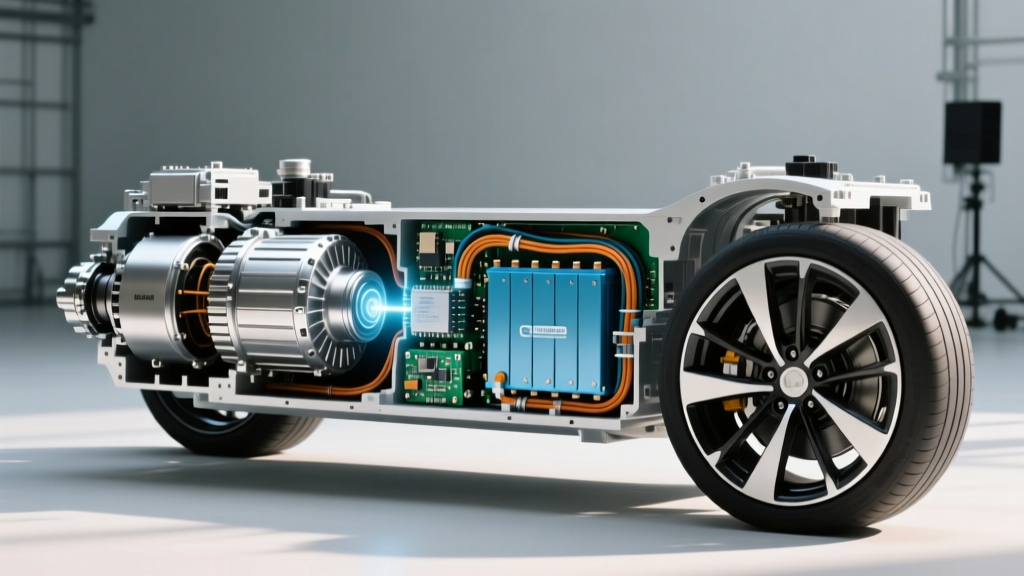
An electric "engine" — more accurately called an electric motor — converts electrical energy stored in a high-voltage battery pack into mechanical rotation that turns the wheels. Here's the chain: grid electricity charges a lithium-ion or LFP battery (measured in kWh, or kilowatt-hours of stored energy). An inverter converts the battery's DC (direct current) into AC (alternating current) to drive the motor. The motor spins, sending torque through a single-speed reduction gear to the wheels. Regenerative braking reverses the process: the motor acts as a generator, converting kinetic energy back into electricity during deceleration, extending range by 5–15% in stop-and-go driving. Unlike a gas engine with hundreds of moving parts, an EV motor has essentially one — the rotor — making it far simpler, more efficient (85–95% energy conversion vs. 20–35% for internal combustion), and nearly maintenance-free.
If you've searched "how electric engine works" because you're considering your first EV purchase, understanding the powertrain isn't just academic — it directly shapes what you'll pay to charge, how far you'll actually go, and what maintenance looks like over a decade of ownership. This guide breaks down the engineering in practical terms and connects it to the buying decisions that matter.
The Core Components: Battery, Inverter, Motor, and Gearbox
Every battery-electric vehicle (BEV) relies on four main powertrain components. Understanding each one helps you read spec sheets with confidence.
1. The Traction Battery Pack (kWh = Your Fuel Tank)
The high-voltage battery is the single most expensive component in any EV, typically representing 30–40% of the vehicle's total cost. Battery capacity is measured in kWh (kilowatt-hours) — this is energy, the total amount of electricity the pack can store. Think of it like gallons in a gas tank.
- Small EVs (e.g., Nissan Leaf, MINI Cooper SE): 40–54 kWh usable
- Mid-size crossovers (e.g., Hyundai Ioniq 5, Tesla Model Y): 63–82 kWh usable
- Large SUVs/trucks (e.g., Rivian R1S, Ford F-150 Lightning Extended): 109–149 kWh usable
Two dominant chemistries define today's EV batteries:
- NMC/NCA (Nickel Manganese Cobalt / Nickel Cobalt Aluminum): Higher energy density, meaning more range per pound. Used in most long-range models. Typically charged to 80% daily for longevity, 100% for road trips.
- LFP (Lithium Iron Phosphate): Lower energy density but longer cycle life, no cobalt, and can be charged to 100% daily without degradation concerns. Used in standard-range Tesla Model 3/Y, some Ford and Hyundai trims. Heavier per kWh but increasingly popular for durability.
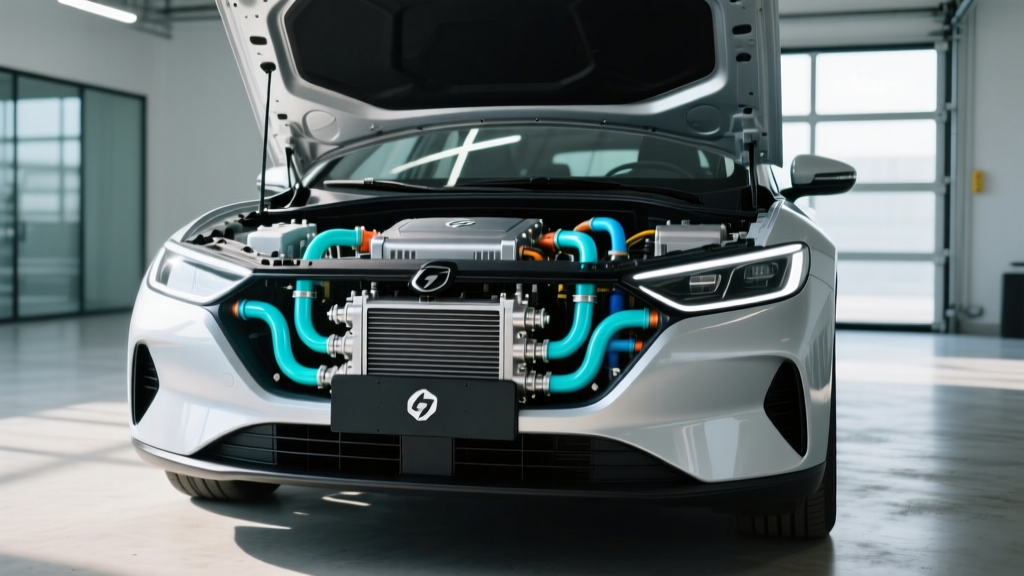
Battery degradation averages 1–2% per year in moderate climates. Most manufacturers warrant 70–75% capacity retention at 8 years/100,000 miles. According to fueleconomy.gov, modern thermal management systems (liquid cooling/heating) have significantly improved longevity compared to early passive-cooled packs.
2. The Inverter (DC to AC Translator)
Batteries store and release DC (direct current) electricity. Most EV traction motors run on AC (alternating current) because AC motors are more efficient and controllable at varying speeds. The inverter sits between the battery and motor, converting DC to AC and precisely controlling the frequency and voltage — which determines motor speed and torque. During regenerative braking, the inverter reverses the flow, converting AC from the motor-as-generator back into DC for the battery. Modern silicon carbide (SiC) inverters, now used by Tesla, Hyundai, and others, operate at higher voltages (800V architectures) with less heat loss, directly improving efficiency by 3–5%.
3. The Electric Motor (Where Rotation Happens)
Two motor types dominate:
- Permanent Magnet Synchronous Motor (PMSM): Uses rare-earth magnets in the rotor for high efficiency (94–96%) and strong low-speed torque. Found in most EVs including Tesla Model 3 rear motor, Hyundai Ioniq 5, and BMW i4. The trade-off is reliance on neodymium and dysprosium supply chains.
- AC Induction Motor (ACIM): Uses electromagnetic induction to create rotor field — no rare-earth magnets. Slightly lower efficiency at part-load but excellent high-speed performance and lower material cost. Often used as the secondary motor in AWD dual-motor setups (e.g., Tesla Model Y front motor) because it can freewheel with zero drag when not needed.
Electric motors deliver maximum torque from 0 RPM — this is why even modest EVs feel punchy off the line. A 2026 Tesla Model 3 Long Range AWD produces 384 hp and hits 0–60 mph in 4.2 seconds, while a comparably priced Toyota Camry V6 (when it existed) took roughly 6.6 seconds.
4. Single-Speed Reduction Gear
Unlike gas cars with 6–10-speed transmissions, most EVs use a single fixed gear ratio (typically 9:1 to 11:1). Electric motors spin efficiently across a massive RPM range (0–15,000+ RPM), eliminating the need for multiple gears. The Porsche Taycan and Audi e-tron GT are rare exceptions, using a two-speed rear gearbox to optimize both launch acceleration and high-speed efficiency.
EV vs. Gas: Efficiency and Cost Compared
The engineering differences translate directly into your wallet. Here's how a typical mid-size electric crossover stacks up against a comparable gas vehicle over five years of ownership.
| Category | EV (e.g., Ioniq 5 SEL AWD) | Gas (e.g., Toyota RAV4 AWD) |
|---|---|---|
| Purchase Price (MSRP) | $47,500 | $36,500 |
| Federal Tax Credit (§30D)* | –$7,500 (if eligible) | $0 |
| Effective Purchase Price | $40,000 | $36,500 |
| Energy/Fuel (5 years) | $3,750 (home charging at $0.14/kWh) | $10,500 ($3.50/gal, 28 MPG combined) |
| Maintenance (5 years) | $1,200 (cabin filter, wipers, tire rotation) | $3,800 (oil, filters, brakes, spark plugs) |
| Insurance (5 years) | $9,500 (avg. ~15% higher than gas) | $8,200 |
| Total 5-Year Cost | $54,450 | $59,000 |
| Cost Per Mile | $0.73 | $0.79 |
*Federal §30D credit eligibility depends on MSRP caps ($55,000 for SUVs, $55,000 for sedans in 2026), buyer income limits ($150K single / $300K joint), battery sourcing requirements, and point-of-sale transfer. Verify current rules at irs.gov. State incentives may apply separately.
The EV's energy cost advantage is dramatic: electricity at $0.14/kWh yields roughly 3.5–4.0 cents per mile for a 3.5 kWh/mile vehicle, while gasoline at $3.50/gallon and 28 MPG costs about 12.5 cents per mile. That's a 3x fuel-cost gap. However, EV insurance premiums remain higher — typically 12–20% above comparable gas models — due to higher repair costs for battery and structural components after collisions.
Real-World Range: What the EPA Sticker Doesn't Tell You
Understanding how an electric engine works means understanding where energy goes — and where it's lost. EPA range estimates are standardized, but real-world results vary significantly based on conditions:
- Highway driving at 75+ mph: Expect 15–25% below EPA range. Aerodynamic drag increases with the square of speed, and EVs have no transmission to optimize high-speed efficiency. An EPA-rated 310-mile EV may deliver 240–265 miles at sustained 75 mph.
- Cold weather (below 30°F / -1°C): Battery chemistry slows, cabin heating draws 2–5 kW continuously, and regenerative braking is limited until the pack warms. Expect 20–40% range reduction depending on severity. A vehicle with a heat pump (standard on most 2026 models from Hyundai, Tesla, BMW) loses roughly 15–25% instead of 30–40%.
- City / stop-and-go driving: This is where EVs shine. Regenerative braking recovers energy, and electric motors are maximally efficient at low speeds. You'll often exceed EPA range in urban driving.
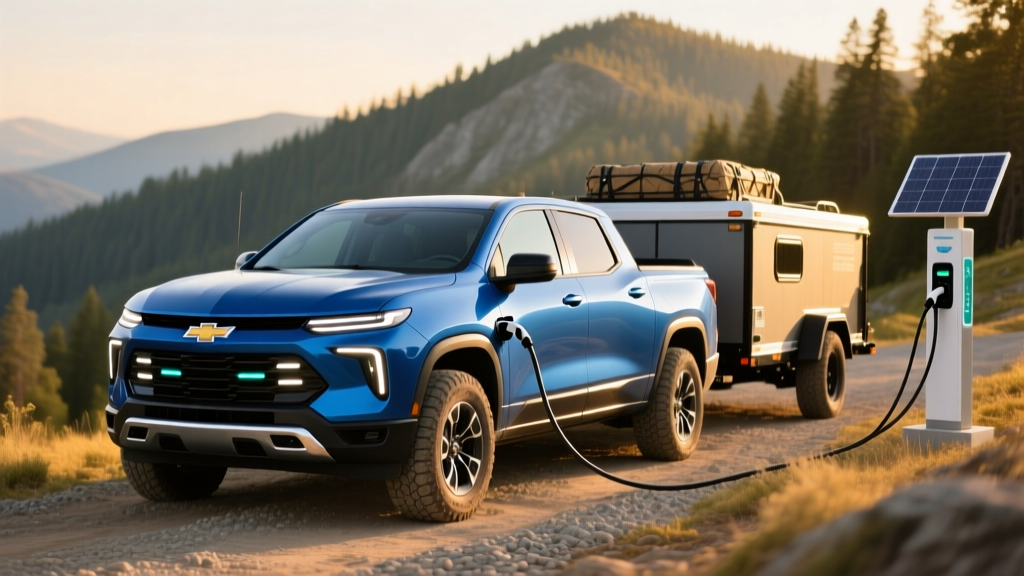
- Towing: Range drops 40–60% when towing near max capacity. An F-150 Lightning rated for 320 miles EPA may deliver 140–180 miles with a 5,000-lb trailer.
Efficiency is measured in MPGe (miles per gallon equivalent) or kWh/100 miles. According to fueleconomy.gov, the 2026 Hyundai Ioniq 5 RWD achieves 117 MPGe combined (29 kWh/100mi), while the AWD version drops to 110 MPGe (31 kWh/100mi). Lower kWh/100mi is better — it means the vehicle uses less energy to travel the same distance.
Charging the Battery: From Grid to Go
The electric motor only works if the battery has energy. Here's how charging actually functions across the three levels:
| Level | Power (kW) | Miles Added Per Hour | 10–80% Time (Typical 75 kWh Pack) | Best For |
|---|---|---|---|---|
| Level 1 (120V outlet) | 1.0–1.4 kW | 3–5 miles | 50+ hours | Overnight top-up, PHEVs, emergencies |
| Level 2 (240V home/public) | 7.2–19.2 kW | 25–65 miles | 5–8 hours | Daily home charging, workplace, hotels |
| DC Fast Charge | 50–350 kW | 180–1,200+ miles/hr | 18–45 minutes | Road trips, commercial fleet turnaround |
Critical concept — the charge curve: DC fast charging does not sustain peak speed. A vehicle rated at "250 kW peak" may only hold that rate between 10–30% State of Charge (SoC), then taper progressively. By 80% SoC, speed often drops to 40–60 kW. This is why manufacturers quote 10–80% times rather than 0–100%. Charging from 80–100% on DC fast charge can take as long as 10–80% itself. For battery longevity, routine daily charging to 80% (NMC) or 100% (LFP) is recommended.
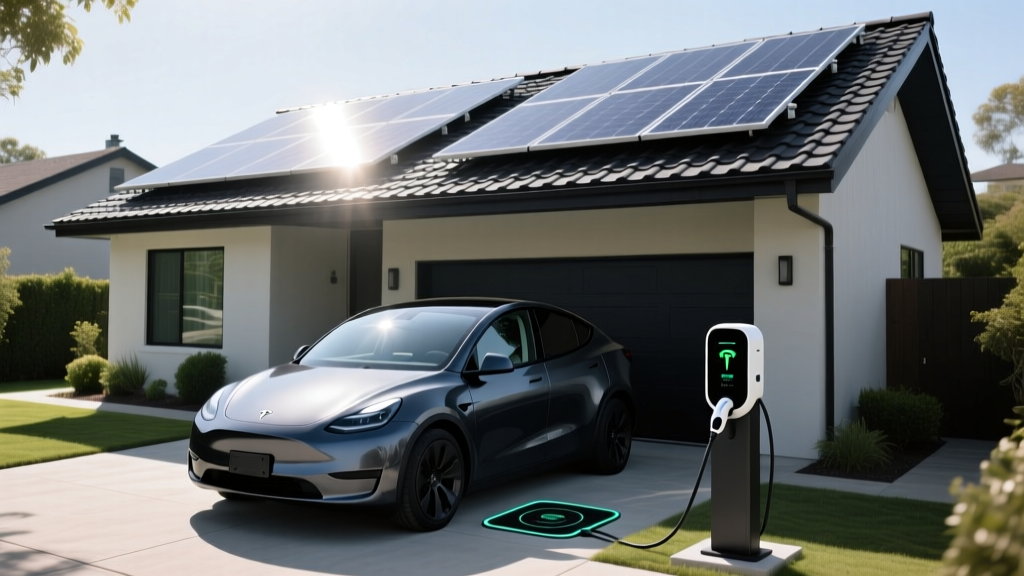
Home Level 2 installation typically costs $800–$2,500 total (charger unit: $350–$700; electrician labor and wiring: $400–$1,500; permit: $50–$300). A 200-amp electrical panel upgrade, if needed, adds $1,500–$3,500. Most EV owners with home charging report it as the single biggest quality-of-life advantage over gas vehicles — waking up to a "full tank" every morning eliminates routine fueling stops.
Common Misconceptions About Electric Motors and EV Ownership
| Myth | Fact |
|---|---|
| "EV batteries need replacing every few years like phone batteries" | Modern liquid-cooled EV batteries degrade 1–2% per year. At 10 years, expect 82–88% original capacity. Replacement costs $8,000–$22,000 but is rarely needed within the warranty period (8 yr/100,000 mi minimum, per federal mandate). |
| "Electric motors are weak compared to gas engines" | Electric motors deliver instant peak torque from 0 RPM. A dual-motor Rivian R1T produces 665 hp and 829 lb-ft, outperforming most V8 trucks. The Lucid Air Sapphire does 0–60 in 1.89 seconds. |
| "EVs are worse for the environment because of battery mining" | Lifecycle analyses (including from Argonne National Lab) show EVs produce 50–70% fewer lifetime emissions than gas cars in the US grid mix, even accounting for battery manufacturing. The grid is getting cleaner every year, widening this gap. |
| "You can't drive an EV in cold climates" | Norway — with harsher winters than most US states — had 82% new-car EV market share in 2024. Cold reduces range 20–40%, but preconditioning (warming the battery while plugged in) and heat pumps mitigate this significantly. |
| "Electric cars need oil changes and complex maintenance" | EVs have no engine oil, no transmission fluid (the reduction gear is sealed and lifetime-lubricated), no spark plugs, no timing belts, no exhaust system, and brake pads last 100,000+ miles thanks to regenerative braking. Scheduled maintenance is typically just cabin air filter replacement and tire rotation. |
EV vs. Hybrid vs. PHEV: Which Powertrain Fits Your Life?
Understanding how electric engines work also clarifies why multiple electrified options exist. Not every driver's situation calls for a full BEV.
Choose a BEV (full electric) if:
- You have reliable home or workplace Level 2 charging access
- Your daily driving is under 200 miles round-trip
- You want the lowest per-mile energy cost and minimal maintenance
- You qualify for the §30D federal tax credit, narrowing the price gap
Choose a PHEV (plug-in hybrid) if:
- You want 25–45 miles of electric-only commuting but need gas flexibility for long trips
- You lack reliable DC fast charging access for road trips in your region
- Your household has one vehicle that must serve all use cases
- Example: Toyota RAV4 Prime offers 42 miles electric + 38 MPG hybrid, $44,500 MSRP
Choose an HEV (standard hybrid, no plug) if:
- You have zero charging access (apartment, street parking, no workplace charging)
- You want better fuel economy without changing any habits
- You drive high annual miles where the MPG savings compound quickly
- Example: Toyota Camry Hybrid achieves 52 MPG combined at ~$30,000
Stick with gas (for now) if:
- You regularly tow heavy loads in rural areas with sparse charging infrastructure
- You drive fewer than 5,000 miles per year (the fuel savings don't offset higher EV purchase price)
- Your budget is firmly under $25,000 and the used EV market in your area is thin
What First-Time EV Buyers Should Know Before Signing
Based on years of testing and ownership, here are the practical realities that spec sheets don't highlight:
- Home charging access is the make-or-break factor. If you can install a Level 2 charger (240V, 32–48 amp circuit), EV ownership is effortless. If you can't — and must rely solely on public charging — the convenience and cost advantages erode significantly. Confirm your electrical panel capacity before purchasing.
- Test the actual charging networks in your area. Download the Electrify America, EVgo, and ChargePoint apps before buying. Check how many DC fast chargers exist within 10 miles of your home and along your most common road-trip routes. Tesla's Supercharger network remains the most reliable, and with the NACS connector adoption (now standard on Ford, GM, Rivian, and most 2026 models), non-Tesla EVs have gained access.
- Insurance quotes before purchase. Get an actual insurance quote for the exact trim you're considering. EV premiums average 12–20% higher than gas equivalents, with some models (Luxury EVs, Tesla) significantly more. This can erase fuel savings if you don't account for it.
- Understand the tax credit rules — they change. The §30D federal credit of up to $7,500 has MSRP caps ($55,000 SUVs/trucks, $55,000 sedans), buyer income limits, and battery component/critical mineral sourcing requirements that shift annually. Some popular models lose eligibility mid-year. Always verify at fueleconomy.gov's tax credit page before committing.
- Preconditioning matters more than you think. If your EV supports scheduled preconditioning (warming or cooling the battery and cabin while still plugged in), use it. It preserves range, enables faster DC charging speeds, and improves regenerative braking performance — especially in cold weather.
- Tire costs are higher. EVs are 15–25% heavier than comparable gas vehicles and deliver instant torque. Expect tire wear 20–30% faster. Budget for EV-rated tires (marked with low rolling resistance and high load index) every 30,000–40,000 miles instead of 50,000+.
Frequently Asked Questions
Do electric motors have horsepower?
Yes. Electric motors are rated in horsepower (or kilowatts — 1 hp = 0.746 kW). A 2026 Tesla Model Y Long Range AWD produces 384 hp from its dual motors. However, unlike gas engines where peak hp occurs at high RPM, electric motors deliver substantial power across nearly the entire RPM range, which is why they feel more responsive in everyday driving.
How long do EV batteries actually last?
Based on aggregated fleet data, modern liquid-cooled lithium-ion and LFP batteries retain 82–90% of original capacity after 8–10 years / 100,000–150,000 miles. Federal law mandates a minimum warranty of 8 years / 100,000 miles (10 years / 150,000 miles in CARB states like California) with a capacity retention threshold typically set at 70%. Complete battery failure is rare; gradual degradation is the norm.
Why is kW different from kWh?
This is the most common confusion for new EV owners. kW (kilowatts) measures power — the rate at which energy flows, like water pressure from a hose. kWh (kilowatt-hours) measures energy — the total amount stored or consumed over time, like gallons in a bucket. A 75 kWh battery charged at 150 kW would theoretically fill in 30 minutes, but charge-curve tapering makes real-world 10–80% times closer to 25–40 minutes.
Can an EV motor tow as much as a gas truck?
Electric motors produce massive torque from zero RPM, giving them excellent towing capability. The Ford F-150 Lightning tows up to 10,000 lbs and the Rivian R1T up to 11,000 lbs. The catch is range: towing at max capacity cuts range by 40–60%, making long-distance towing impractical without careful charging-route planning.
Do I need to charge to 100% every night?
No — and for NMC/NCA batteries, you shouldn't. Daily charging to 80% extends long-term battery health. Set your vehicle's charge limit to 80% for routine use and switch to 100% only before long trips. LFP batteries (found in standard-range Tesla Model 3/Y and select other models) are an exception: manufacturers recommend charging to 100% at least weekly because LFP chemistry doesn't suffer the same high-SoC degradation, and full charges improve the battery management system's state-of-charge accuracy.