Quick Answer: How Are Electric Cars Powered?
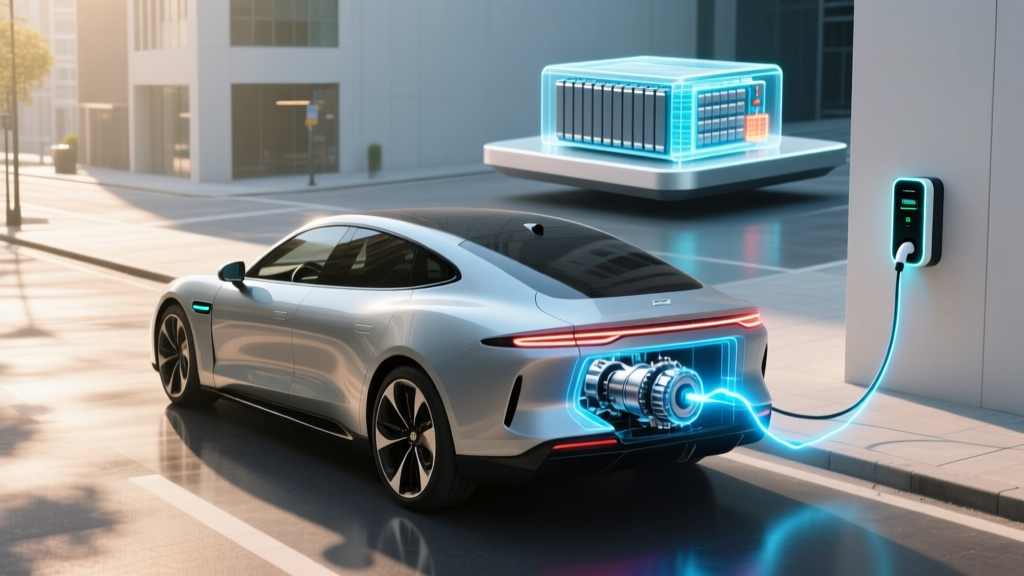
Electric cars are powered by a lithium-ion battery pack (measured in kilowatt-hours, or kWh) that stores electrical energy drawn from the power grid. That energy flows to one or more electric motors (measured in kilowatts, or kW) that convert it directly into rotational force at the wheels. Unlike a gas engine, there is no combustion, no transmission with gears to shift, and no exhaust. A typical modern EV battery holds between 58 and 110 kWh of usable energy, delivering between 200 and 400 miles of EPA-estimated range. At current US average electricity rates of roughly $0.16/kWh, fully recharging a 75 kWh battery costs about $12 at home — compared to roughly $45-$55 to fill a comparable gas car's tank at $3.40/gallon.
The Core Components That Power Every EV
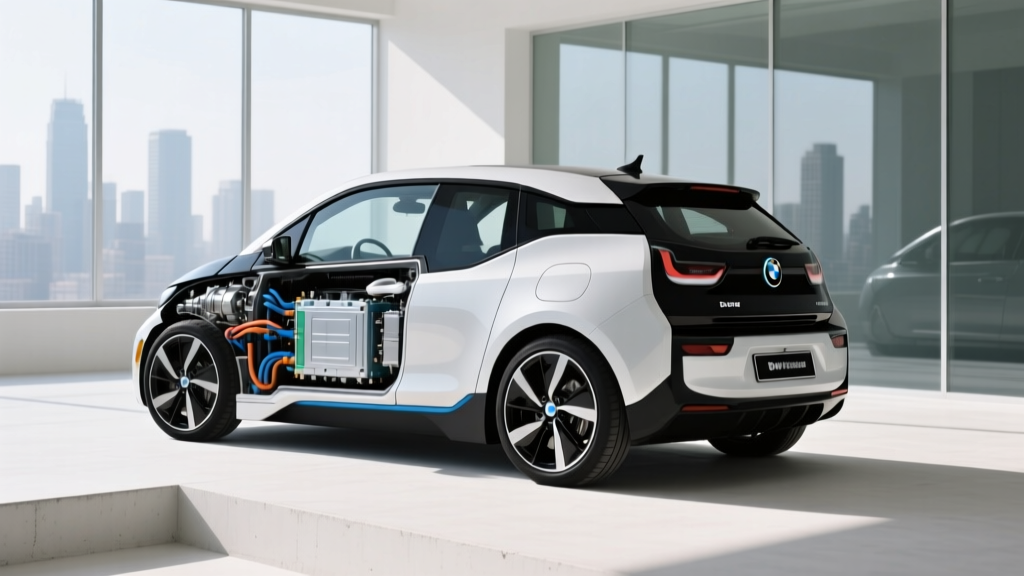
Every battery-electric vehicle (BEV) relies on three fundamental systems working together. Understanding each one is essential before you sign a purchase agreement.
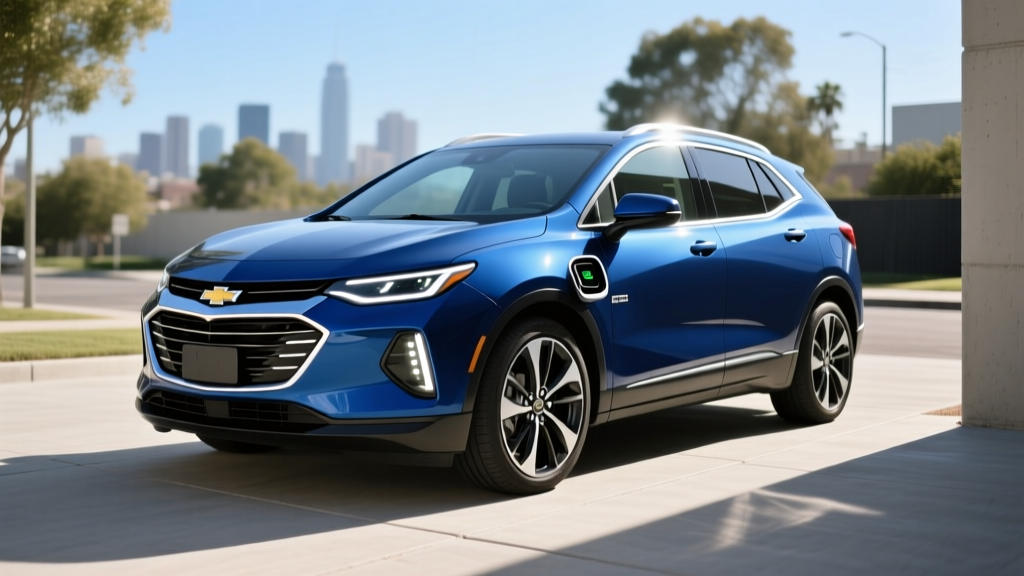
1. The Traction Battery Pack (kWh = energy stored). This is the EV's fuel tank equivalent. Battery capacity is measured in kilowatt-hours (kWh) — the total energy the pack can hold. A 2025 Tesla Model Y Long Range carries roughly 75 kWh of usable capacity; a Chevrolet Equinox EV holds about 85 kWh; a Lucid Air Grand Touring packs 112 kWh usable. Most 2025-2026 EVs use either NMC (nickel manganese cobalt) chemistry for maximum energy density and range, or LFP (lithium iron phosphate) chemistry, which sacrifices some range for longer cycle life, lower cost, and the ability to routinely charge to 100% without degradation concerns. Tesla's standard-range Model 3 and Model Y, for example, use LFP packs.
2. The Electric Motor(s) (kW = power output). Electric motors convert stored electrical energy into mechanical rotation instantly — no revving required. Motor output is measured in kilowatts (kW) or horsepower (1 kW ≈ 1.34 hp). A single-motor Hyundai Ioniq 5 produces 168 kW (225 hp) on the rear axle; a dual-motor Rivian R1S generates up to 495 kW (665 hp) across both axles. The motor's instant torque delivery is why even a modest 200-hp EV feels punchier off the line than a similarly rated gas car.
3. The Power Electronics and Inverter. This component converts the battery's direct current (DC) into the alternating current (AC) that most drive motors use, while also managing regenerative braking — which converts kinetic energy back into stored electricity when you lift off the accelerator. The inverter's efficiency directly affects your real-world range.
EV vs Gas vs Hybrid: Power Delivery Compared
The way an EV delivers power is fundamentally different from internal combustion. Here's how the three powertrain types stack up across the metrics that matter to buyers:
| Metric | Battery EV (e.g., 2025 Ioniq 5) | Gas Car (e.g., 2025 Toyota RAV4) | PHEV (e.g., 2025 RAV4 Prime) |
|---|---|---|---|
| Energy Source | Grid electricity stored in battery | Gasoline combusted in engine | Both: battery + gasoline |
| Energy Capacity | 77.4 kWh usable battery | 14.5-gallon tank (~480 kWh equivalent) | 18.1 kWh battery + 14.5-gal tank |
| EPA Range | 305 miles | ~420 miles | 42 mi electric + ~560 mi gas |
| Efficiency | 114 MPGe combined (29 kWh/100mi) | 30 MPG combined | 94 MPGe (electric) / 38 MPG (gas) |
| Energy Cost per Mile | ~$0.046 (home charging) | ~$0.113 (at $3.40/gal) | ~$0.05 (electric) / $0.089 (gas) |
| 0-60 mph | 5.8 sec (RWD) / 5.2 sec (AWD) | 8.0 sec | 5.7 sec |
| Moving Parts in Drivetrain | ~20 | ~2,000+ | ~2,000+ (ICE side) |
| Base MSRP (2025) | $42,600 | $28,850 | $43,690 |
Sources: fueleconomy.gov, manufacturer spec sheets.
The key takeaway: an EV converts roughly 85-90% of its stored energy into forward motion. A gas engine converts only about 20-30% — the rest becomes waste heat. That efficiency gap is why an EV with a fraction of the stored energy (77 kWh vs 480 kWh-equivalent in a gas tank) still achieves competitive real-world range.
How Electricity Gets Into the Battery: Charging Explained
An EV is only as practical as your ability to replenish its battery. Here are the three charging levels every buyer needs to understand — and the real numbers behind each:
| Charging Level | Power (kW) | Voltage | Miles Added per Hour | Typical Use Case |
|---|---|---|---|---|
| Level 1 (120V outlet) | 1.0-1.4 kW | 120V AC | 3-5 miles | Overnight top-up; PHEVs; emergencies |
| Level 2 (240V home/public) | 7.2-19.2 kW | 240V AC | 25-65 miles | Primary daily charging for most owners |
| DC Fast Charging | 50-350 kW | 400-800V DC | 150-1,000+ miles | Road trips; rapid top-ups (10-80% in 18-40 min) |
Real-world charging nuance most buyers miss: A 2025 Hyundai Ioniq 5 can peak at 240 kW on a 350 kW DC fast charger, achieving a 10-80% charge in approximately 18 minutes under ideal conditions. But "peak" is not "sustained." The charging curve tapers significantly above 50-60% state of charge to protect battery health. Your actual 10-80% session may take 22-25 minutes once thermal conditions are factored in. Always precondition the battery (most EVs do this automatically when you navigate to a charger) to hit peak speeds.
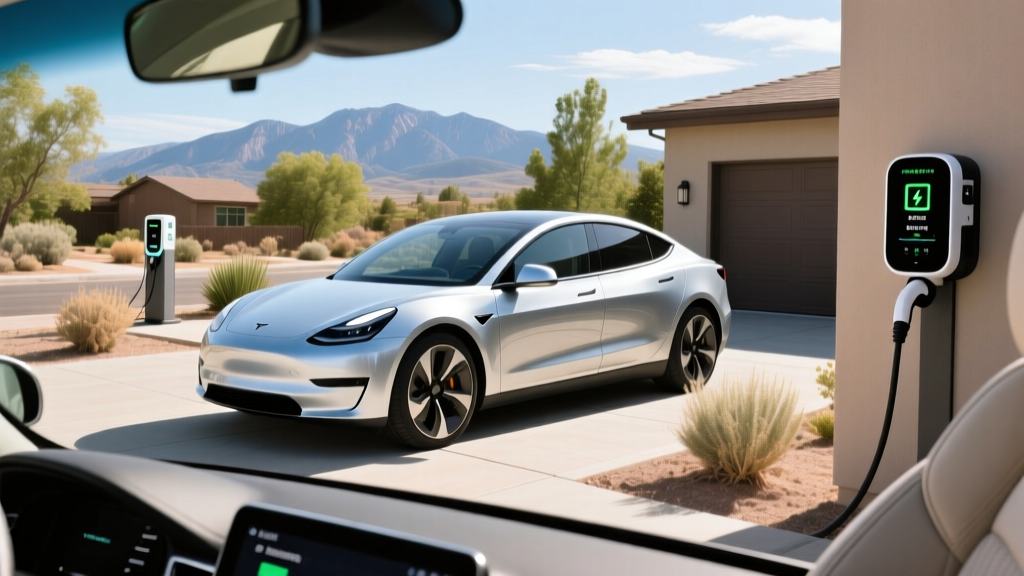
Home charging installation reality: A Level 2 home charger (hardwired 48-amp unit delivering 11.5 kW) typically costs $500-$800 for the equipment plus $800-$2,500 for professional electrician installation, depending on whether your electrical panel needs an upgrade from 100A to 200A service. Total: $1,300-$3,300 for most homes. If you live in an apartment or condo without dedicated parking, home Level 2 charging may not be feasible — a critical ownership consideration.
Real-World Range vs. the EPA Sticker: What Actually Happens
The EPA range number on the window sticker is a useful baseline, but real-world results vary based on four factors every buyer should model before purchasing:
Highway driving. EVs are less efficient at sustained 75-80 mph speeds than in stop-and-go city traffic (the opposite of gas cars, which benefit from steady cruising). Expect highway range to drop 10-20% below the EPA combined figure. A 305-mile EPA-rated Ioniq 5 may deliver 250-275 miles on an all-highway trip at 75 mph.
Cold weather. Lithium-ion batteries lose efficiency in freezing temperatures, and cabin heating draws significant energy (no waste heat from an engine to repurpose). In sustained 20°F weather, expect a 20-35% range reduction. That same 305-mile EV might deliver 200-230 miles in a Midwest winter. EVs equipped with a heat pump (standard on many 2025-2026 models from Hyundai, Tesla, and BMW) recover some of this loss by efficiently extracting ambient heat rather than using resistive heating elements.
Elevation and terrain. Climbing mountain passes consumes energy rapidly; descending regenerates it. Net effect depends on your route profile.
Battery buffer and aging. Manufacturers reserve a top and bottom buffer (typically 3-5 kWh) you can't access to prevent degradation. Over 5-10 years, expect 5-15% total capacity loss depending on chemistry and charging habits. LFP packs generally degrade less than NMC over equivalent cycles.
Common EV Power Misconceptions — Corrected
| Myth | Fact |
|---|---|
| "EVs run on electricity so they have zero environmental impact." | EVs produce zero tailpipe emissions, but the electricity grid that charges them varies from ~80% renewable (e.g., Washington State) to ~60% fossil-fuel-based (e.g., parts of the Midwest). Over a vehicle's lifetime, an EV's total carbon footprint is still 50-70% lower than a comparable gas car in nearly every US region, per EPA analysis. |
| "The battery will need replacing in 5 years and cost $20,000." | Federal law mandates EV battery warranties of at least 8 years/100,000 miles (10 years/150,000 miles in CARB states). Modern packs routinely retain 85-92% capacity at 100,000 miles. Full replacement is rare and typically costs $8,000-$18,000 out of warranty, but most owners never need one. |
| "EVs are slower because they're heavy." | EVs are heavier than equivalent gas cars (battery packs add 800-1,500 lbs), but electric motors deliver instant torque from 0 RPM. A 4,500-lb Tesla Model 3 Performance hits 0-60 in 2.9 seconds — faster than most sports cars at twice the price. |
| "You can't charge in the rain or wash an EV." | All EV charging ports and connectors are weather-sealed to IP67 or higher. Charging in rain, snow, or through a car wash is completely safe and routine. |
| "The power grid can't handle millions of EVs." | Most EV charging happens overnight when grid demand is lowest. The US Department of Energy projects that widespread EV adoption through 2030 will increase total electricity demand by only 5-10%, manageable with current infrastructure and smart-charging (time-of-use) programs. |
Total Cost of Powering an EV: Purchase Through Year 5
Understanding how an EV is powered is incomplete without understanding what that power costs over time. Here's a realistic 5-year ownership cost comparison for a mid-range crossover EV versus a comparable gas vehicle, assuming 12,000 miles/year and national averages:
| Cost Category | EV (e.g., 2025 Equinox EV, ~$35K after credit) | Gas Crossover (e.g., 2025 RAV4, ~$33K) |
|---|---|---|
| Purchase Price (after incentives) | ~$35,000 (eligible for up to $7,500 §30D federal credit; income/MSRP/sourcing rules apply — verify at IRS.gov) | $33,000 |
| Fuel/Energy (5 years, 60K miles) | $2,880 (home charging at $0.16/kWh, 3.0 mi/kWh avg) | $6,800 (30 MPG at $3.40/gal) |
| Maintenance (5 years) | $1,200 (cabin filter, wipers, tire rotation; no oil, plugs, or transmission fluid) | $3,500 (oil changes, filters, brake pads, belts) |
| Insurance (5-year avg) | $9,000 (EV premiums run 15-25% higher on average) | $7,200 |
| Depreciation (est. 5-year) | $18,000 (EV depreciation has improved but remains higher than some gas models) | $14,000 |
| 5-Year Total | $66,080 | $64,500 |
The verdict: On pure cost, the EV and gas crossover are remarkably close over 5 years when the federal tax credit applies. The EV wins decisively on fuel and maintenance but gives back ground on insurance and depreciation. If you charge primarily at home with cheap electricity and drive 15,000+ miles/year, the EV pulls ahead. If you rely on expensive DC fast charging ($0.35-$0.55/kWh at public stations) and drive under 10,000 miles/year, the gas car may cost less.
Decision Framework: Is an EV the Right Power Source for You?
Choose a Battery EV If:
- You have access to home or workplace Level 2 charging — this is the single biggest predictor of EV satisfaction
- Your typical daily driving is under 200 miles, and you take road trips fewer than 6 times per year
- You live in a moderate or warm climate (cold-weather range loss matters less when your daily commute is short)
- You qualify for the federal §30D tax credit (individual income ≤$150K / household ≤$300K; vehicle MSRP ≤$55K for cars, ≤$80K for SUVs/trucks; battery sourcing requirements apply)
- You value low running costs, instant acceleration, and zero tailpipe emissions
Choose a PHEV Instead If:
- You lack reliable home charging but want some electric-only driving for short commutes
- You frequently drive 300+ miles in a single day through areas with sparse DC fast-charging infrastructure
- You want to reduce fuel consumption without any range anxiety
Stick With a Gas Car If:
- You live in an apartment with no charging access and no workplace charging
- You regularly tow heavy loads (towing can cut EV range by 40-60%)
- Your budget is under $25,000 and you need a new vehicle (EV options at this price remain limited in 2025-2026)
What First-Time EV Buyers Must Know Before Signing
If you've decided an EV makes sense for your driving profile, here are the non-obvious ownership realities that separate informed buyers from disappointed ones:
Verify tax credit eligibility before you commit. The §30D federal credit of up to $7,500 has strict requirements: buyer income caps, vehicle MSRP caps, and battery critical-mineral and component sourcing rules that change annually. As of 2025, several popular models qualify for the full credit, some qualify for $3,750, and others qualify for none. The credit can now be transferred to the dealer as a point-of-sale discount. Check current eligibility on fueleconomy.gov and confirm with your tax professional.
Understand the connector landscape. As of 2025-2026, the North American Charging Standard (NACS) — originally Tesla's proprietary connector — has been adopted by Ford, GM, Hyundai, Rivian, Volvo, and most other major automakers. New vehicles increasingly ship with NACS ports natively. CCS1 connectors remain on some 2024-2025 models, with adapters available. CHAdeMO is effectively legacy (Nissan Leaf only). This matters for public charging access: Tesla's Supercharger network, the largest and most reliable in the US, is now open to NACS-equipped non-Tesla vehicles.
Budget for a home charger installation. Factor $1,500-$3,000 into your total purchase cost for a proper Level 2 home charging setup. Some utilities offer rebates of $200-$500 that offset this. If your home has a 200-amp electrical panel with spare capacity, installation is straightforward. If you need a panel upgrade (common in older homes), add $1,500-$3,000.
Tires wear faster on EVs. The instant torque and extra weight of an EV (typically 500-1,000 lbs more than a comparable gas car) accelerate tire wear by 15-30%. Budget for tire replacement every 30,000-40,000 miles rather than the 50,000-60,000 miles you might expect from a gas car. Some manufacturers offer EV-specific tires optimized for low rolling resistance and noise reduction.
Frequently Asked Questions
Do electric cars have engines?
No. Electric cars use electric motors instead of internal combustion engines. There are no pistons, spark plugs, fuel injectors, exhaust systems, or multi-speed transmissions. This mechanical simplicity is why EVs require far less routine maintenance — no oil changes, no timing belts, no catalytic converters.
How long does it take to charge an electric car from empty to full?
On a Level 2 home charger (11.5 kW), fully charging a 75 kWh battery takes about 7-8 hours — typically overnight. On a DC fast charger, a 10-80% charge takes 18-40 minutes depending on the vehicle's peak charge rate and battery temperature. Most EV owners rarely charge from 0% — daily top-ups from 30% to 80% are the norm and are better for battery longevity.
Can you charge an electric car from a regular household outlet?
Yes, but slowly. A standard 120V household outlet (Level 1) delivers about 1.0-1.4 kW, adding roughly 3-5 miles of range per hour. For a PHEV with 30-40 miles of electric range, this is often sufficient overnight. For a BEV with a 300-mile battery, Level 1 would take 3+ days for a full charge — impractical as a primary charging method but useful for emergencies or very low daily mileage.
What happens to an EV battery when it degrades?
EV batteries don't "die" suddenly — they gradually lose capacity over time. Most manufacturers warrant the battery to retain at least 70% of its original capacity for 8 years or 100,000 miles (10 years/150,000 miles in CARB states). In practice, data from fleets and long-term owners shows most modern packs retain 85-92% capacity at 100,000 miles. A 300-mile EV with 10% degradation still delivers 270 miles — more than enough for most daily needs.
Are electric cars powered by gas at all?
Pure battery-electric vehicles (BEVs) use zero gasoline. Plug-in hybrids (PHEVs) combine a battery-and-motor system with a gasoline engine for extended range. Extended-range EVs (EREVs) like the upcoming RAM 1500 REV use a small gas generator to charge the battery but never directly drive the wheels. If you want zero gas consumption, choose a BEV.