The Short Answer: How Does an Electric Car Work?
An electric car replaces the gas engine, fuel tank, and multi-speed transmission with three core components: a lithium-ion battery pack (measured in kWh — kilowatt-hours of stored energy), a power inverter (which converts the battery's DC current into AC current), and one or more electric motors that directly turn the wheels. When you press the accelerator, the inverter draws electricity from the battery and sends it to the motor at a precisely controlled rate. When you lift off or brake, the motor reverses direction and acts as a generator, sending energy back into the battery — a process called regenerative braking. There is no combustion, no exhaust system, no oil changes, and typically a single-speed reduction gear instead of a transmission.
The Core Components That Make an EV Move
Understanding how an electric car works starts with the four major systems that replace dozens of mechanical parts found in a gas vehicle.
1. The Battery Pack (Energy Storage)
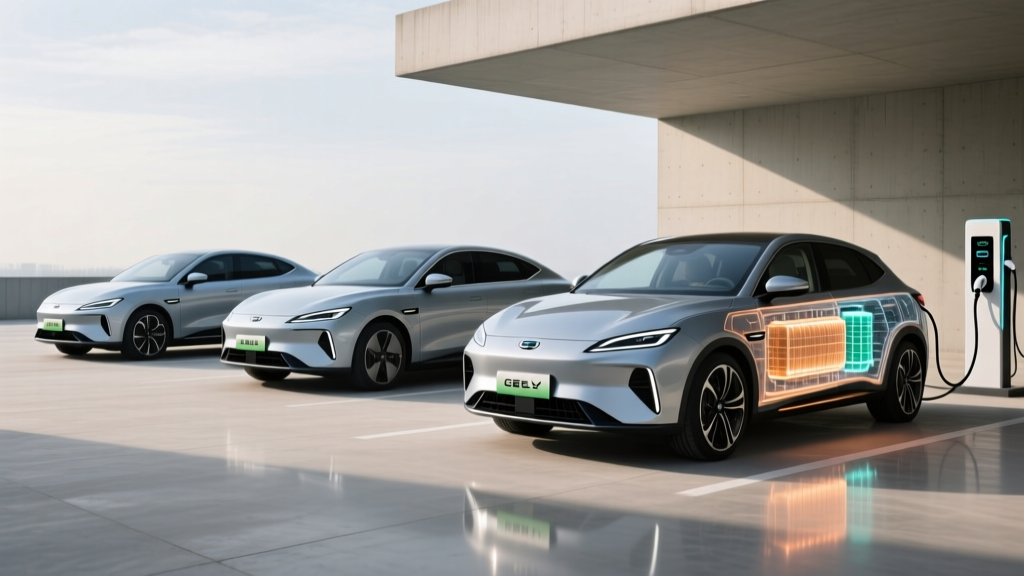
The traction battery is the EV's fuel tank. Current 2026 models range from roughly 40 kWh (Nissan LEAF S) to 131 kWh (GMC Hummer EV). Most mainstream models land between 60 and 100 kWh. Battery chemistry matters:
- NMC / NCA (Nickel Manganese Cobalt / Nickel Cobalt Aluminum): Higher energy density, lighter weight, common in long-range models. Typical degradation: ~10-15% over 8 years.
- LFP (Lithium Iron Phosphate): Lower energy density but far more durable — can handle daily 100% charging with minimal degradation. Used in standard-range Tesla Model 3/Y and several 2026 Chinese-market imports.
Battery packs operate within a usable buffer — manufacturers lock off a few kWh at the top and bottom to prevent overcharge and deep discharge damage. A "75 kWh battery" often has ~72 kWh usable.
2. The Inverter (The Brain)
The inverter converts DC power from the battery into AC power for the motor, and vice versa during regenerative braking. It also controls motor speed and torque by adjusting the frequency and amplitude of the AC signal. Modern silicon carbide (SiC) inverters — used in Hyundai's E-GMP platform and Tesla's latest drives — are significantly more efficient than older silicon-based units, reducing heat loss by 2-5%.
3. The Electric Motor (Propulsion)
Most EVs use either a permanent magnet synchronous motor (PMSM) or an AC induction motor. PMSM designs dominate in 2026 for their efficiency at partial load (highway cruising), while induction motors are often used as secondary motors in AWD setups because they can freewheel with zero drag when not needed. A single motor typically produces between 150 hp (base Nissan LEAF) and 670 hp (Lucid Air Sapphire's front motor alone). Torque is available from 0 RPM — which is why even modest EVs feel punchy off the line.
4. The Thermal Management System
This is the unsung hero. Liquid cooling loops keep the battery in its optimal temperature range (roughly 68–95°F / 20–35°C) during driving, charging, and idle. A heat pump — standard on most 2026 EVs including the Hyundai Ioniq 5, Tesla Model Y, and Volkswagen ID.4 — extracts ambient heat to warm the cabin efficiently, reducing winter range loss by 15-30% compared to resistive heating.
EV vs. Gas Car: How the Numbers Actually Compare
Let's put the engineering into real-world context. Below is a side-by-side comparison using the 2026 Tesla Model 3 Long Range AWD and the 2026 Toyota Camry LE (a common cross-shopping scenario).
| Attribute | Tesla Model 3 LR AWD | Toyota Camry LE (HEV) |
|---|---|---|
| Powertrain | Dual-motor BEV | 2.5L 4-cyl hybrid |
| EPA Range / Tank Range | 341 miles | ~572 miles (13.2 gal × 52 combined MPG) |
| Efficiency | 132 MPGe / 25 kWh/100mi | 52 MPG combined |
| Battery / Fuel Capacity | 79 kWh usable (NMC) | 13.2-gallon tank |
| 0–60 mph | 4.2 seconds | 7.2 seconds |
| Horsepower | 346 hp | 225 hp |
| Base MSRP | $42,380 | $29,995 |
| Fed. Tax Credit (§30D) | Up to $7,500 (eligibility varies) | $0 |
| Fuel / Energy Cost per Mile | ~$0.045 (at $0.13/kWh home rate) | ~$0.065 (at $3.40/gal) |
| Estimated Annual Fuel/Energy (12k mi) | ~$540 | ~$780 |
| Scheduled Maintenance (Annual Avg) | ~$150 (cabin filter, wipers, tire rotation) | ~$450 (oil, filter, brakes, fluid) |
| Powertrain Warranty | 8 yr / 120,000 mi (battery ≥70% capacity) | 5 yr / 60,000 mi (hybrid system: 10 yr / 150,000 mi) |
Sources: fueleconomy.gov, tesla.com/model3, toyota.com/camry. Fuel costs based on U.S. average electricity rate of $0.13/kWh (EIA, 2025) and $3.40/gal gasoline (AAA, early 2026). Actual costs vary by state and utility.
How Charging Actually Works: kW vs. kWh Explained
This is the single most common point of confusion for new EV buyers, so let's nail it down:
- kWh (kilowatt-hour) = a unit of energy, like gallons of gas. A 75 kWh battery holds 75 kWh of energy.
- kW (kilowatt) = a unit of power, like gallons-per-minute flowing from a hose. A 150 kW charger delivers energy at a rate of 150 kW.
Think of it this way: the battery is the bucket (kWh), and the charger is the hose (kW). A bigger hose fills the bucket faster.
| Level | Power (kW) | Connector | Miles Added per Hour | Typical Use Case | Full Charge Time (75 kWh Battery) |
|---|---|---|---|---|---|
| Level 1 | 1.4–1.9 kW | Standard 120V outlet | 3–5 mi/hr | Overnight top-up, PHEVs, emergencies | ~45–55 hours |
| Level 2 (Home) | 7.2–11.5 kW | J1772 / NACS (240V) | 22–44 mi/hr | Daily home charging, workplace | ~7–11 hours |
| DC Fast Charge | 50–350 kW | NACS / CCS / CHAdeMO | 150–1,000+ mi/hr (peak) | Road trips, quick top-ups | 10–80% in 18–40 min |
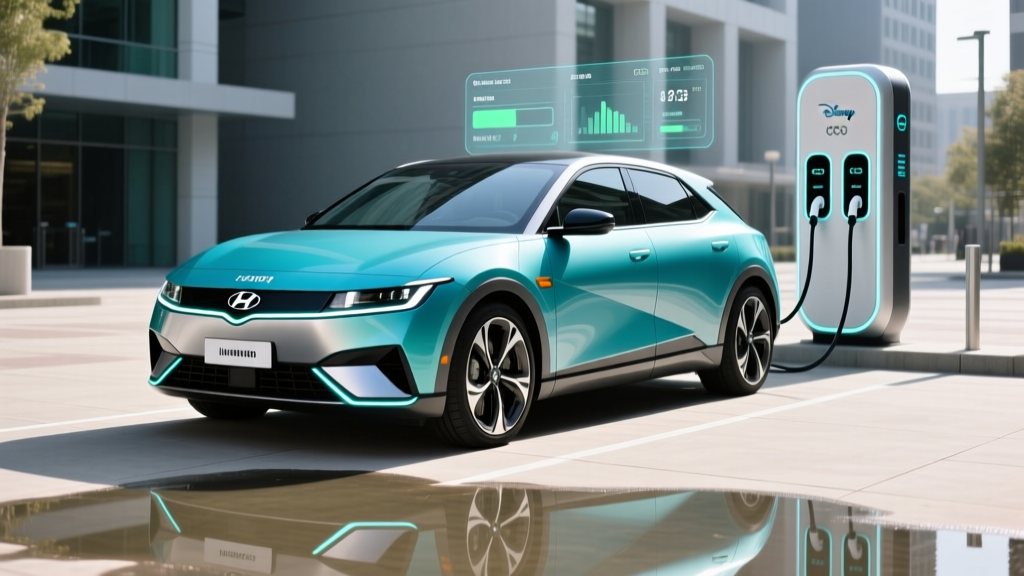
Charging curve reality check: A car that advertises "250 kW peak" does not charge at 250 kW the entire session. DC fast charging follows a tapering curve — the battery charges fastest between 10–50% SoC (State of Charge), slows progressively from 50–80%, and trickles above 80% to protect cell health. A Hyundai Ioniq 5 peaking at 240 kW might sustain that rate for only 5–8 minutes before tapering to ~150 kW, then ~80 kW past 70%. This is why 10–80% time (typically 18 minutes on 800V architectures) is the most useful charging metric.
Preconditioning is critical: most EVs warm the battery to its optimal temperature before a DC fast-charge session if you navigate to a charger in the built-in nav. Skipping preconditioning in cold weather can cut charge speed by 40–60%.
The Real Cost of Owning an EV: 5-Year Breakdown
Purchase price is only part of the equation. Here's a realistic 5-year / 60,000-mile ownership comparison, assuming home Level 2 charging and average U.S. rates.
| Cost Category | EV (Tesla Model 3 LR) | Gas Hybrid (Camry LE HEV) | Gas Only (Honda Accord 1.5T) |
|---|---|---|---|
| Purchase Price (MSRP) | $42,380 | $29,995 | $31,295 |
| Federal Tax Credit (§30D) | −$7,500 (if eligible) | $0 | $0 |
| Effective Purchase | $34,880 | $29,995 | $31,295 |
| Home Charger Install (L2) | $800–$1,500 | $0 | $0 |
| Energy / Fuel (60k mi) | $2,700 | $3,900 | $5,400 |
| Maintenance (5 yr) | $750 | $2,250 | $2,800 |
| Insurance (5 yr avg) | $8,500 | $6,200 | $6,500 |
| Estimated Depreciation | $14,000 | $9,500 | $11,000 |
| Total 5-Year Cost | ~$61,330 | ~$52,845 | ~$57,000 |
Insurance estimates based on national averages from III.org; EV premiums run 15–25% higher on average due to repair costs and parts pricing. Depreciation figures reflect early 2026 used-EV market trends. Tax credit eligibility per IRS §30D rules — subject to MSRP caps ($55,000 sedans / $80,000 SUVs), buyer income limits ($150k single / $300k joint), and battery critical-mineral sourcing requirements. Always verify with a tax professional.
Key takeaway: The EV saves on fuel and maintenance but costs more upfront, carries higher insurance, and may depreciate faster. The break-even point vs. a gas car typically arrives around year 5–7 depending on mileage, electricity rates, and whether you qualify for the full tax credit.
Common EV Misconceptions — Myth vs. Fact
| Myth | Fact |
|---|---|
| "EV batteries need replacing every 5 years." | Modern NMC/LFP packs are warrantied for 8 years / 100,000+ miles at ≥70% capacity. Real-world data from Tesla's 2025 Impact Report shows average degradation of ~12% at 150,000 miles. Full replacement costs $8,000–$20,000 depending on pack size but is rarely needed within the vehicle's useful life. |
| "You can't drive an EV in cold weather." | You can — but expect 20–35% range reduction at 20°F due to battery chemistry and cabin heating demands. A 341-mile Model 3 might deliver ~230–270 miles in deep cold. Heat pumps and preconditioning significantly mitigate this. |
| "EVs are worse for the environment because of electricity generation." | Even on a coal-heavy U.S. grid mix, the EPA and Union of Concerned Scientists calculate that the average EV produces less than half the lifetime CO₂ of a comparable gas car. On cleaner grids (hydro, wind, solar-heavy states), the advantage is 4–5×. Battery manufacturing emissions are offset within 1–2 years of driving. |
| "Public charging is always broken." | Reliability varies widely. Tesla's Supercharger network consistently reports 99%+ uptime. Electrify America and EVgo have improved but still see ~10–15% failure rates at some stations (per J.D. Power 2025 EVX Index). The ongoing shift to NACS connectors is simplifying access in 2026. |
| "EVs are slow and boring to drive." | Instant torque from 0 RPM means a $40,000 Tesla Model 3 LR hits 60 mph in 4.2 seconds — territory that required a $70,000+ sports sedan a decade ago. Even mainstream EVs like the Hyundai Ioniq 5 (5.1 sec) and Chevy Equinox EV (7.4 sec) feel responsive in daily driving. |
| "I need a special electrical panel to charge at home." | Not always. Level 1 charging (120V) works on any standard outlet and adds 3–5 miles per hour — enough for PHEVs or low-mileage BEV drivers. Level 2 (240V) typically requires a 40–60 amp circuit. A licensed electrician can assess whether your existing panel has capacity; a panel upgrade adds $1,500–$3,000 if needed. |
Real-World Ownership: What First-Time EV Buyers Must Consider
Home Charging Access Is the Deciding Factor
If you can install a Level 2 charger at home (garage, carport, or driveway with 240V access), EV ownership is remarkably convenient — you start every morning with a "full tank." If you live in an apartment without charging, rely on street parking, or lack employer charging, daily EV life becomes significantly more challenging. Public DC fast charging costs 2–4× more than home charging ($0.30–$0.55/kWh vs. $0.10–$0.16/kWh) and adds 20–40 minutes to your routine multiple times per week.
Your Driving Pattern Matters More Than Range
A 250-mile EV handles a 40-mile daily commute effortlessly, even in winter, with home charging. But if you regularly drive 300+ miles one-way through charging deserts (rural I-70 in Kansas, parts of I-10 in West Texas), you'll need a 300+ mile EPA-rated EV and careful route planning. Apps like A Better Routeplanner (ABRP) are essential for road-trip logistics.
Climate Impacts Range and Charging
In Phoenix or Miami, your EV will closely match its EPA range year-round. In Minneapolis or Buffalo, budget for 25–35% winter range loss and longer DC charging times (cold batteries charge slower even at fast chargers). Garage parking and preconditioning are major advantages in cold climates.
Towing and Payload Reduce Range Sharply
Towing a 3,000-lb trailer can cut EV range by 40–55% due to aerodynamic drag and weight. The Ford F-150 Lightning's 320-mile EPA range drops to roughly 150–180 miles while towing. If towing is frequent, a diesel or hybrid truck remains the more practical choice in 2026.
Decision Framework: Is an EV Right for You?
If / Then Decision Guide
- IF you have home charging access AND drive under 200 miles/day → Then a BEV (battery EV) is likely your best choice. Models like the Tesla Model 3, Hyundai Ioniq 5, or Chevy Equinox EV cover nearly all daily needs with overnight charging.
- IF you lack home charging BUT have reliable workplace or public charging within 0.5 miles → Then a BEV is viable, but budget for higher public charging costs (~$1,200–$1,800/yr vs. ~$500/yr at home).
- IF you regularly drive 400+ miles in a day or live in a charging desert → Then consider a PHEV (plug-in hybrid) like the Toyota RAV4 Prime (42 mi electric-only, 38 mi combined gas range beyond that) or wait for longer-range solid-state BEVs expected post-2027.
- IF your budget is under $30,000 → Then look at the used EV market (Nissan LEAF, Chevy Bolt EUV, early Model 3) — the used EV tax credit (§25E) offers up to $4,000 on vehicles priced under $25,000 for eligible buyers.
- IF you tow frequently or need maximum cargo range → Then a hybrid truck or diesel remains more practical in 2026. BEV towing range is still a significant limitation.
- IF you're a two-car household → Then start with one EV for commuting and errands, keep a gas or hybrid vehicle for road trips and towing. This is the lowest-risk entry into EV ownership.
FAQ: Your Top Questions About How Electric Cars Work
Do electric cars have transmissions?
Most EVs use a single-speed reduction gear (typically a 9:1 to 10:1 ratio) rather than a multi-speed transmission. Electric motors produce peak torque from 0 RPM and rev to 15,000–20,000 RPM, so multiple gears aren't needed. The Porsche Taycan and Audi e-tron GT are rare exceptions with a two-speed rear axle for improved top-speed performance.
How long do EV batteries last before needing replacement?
Based on current degradation data, most NMC batteries retain 85–90% capacity at 100,000 miles and 75–82% at 200,000 miles. LFP batteries degrade even more slowly. Federal warranty requirements mandate 8 years / 100,000 miles of coverage (at least 70% capacity retention), with California-emissions states requiring 10 years / 150,000 miles. Full pack replacement is rare and typically costs $8,000–$20,000 depending on the model.
Can I charge an EV from a regular wall outlet?
Yes — this is Level 1 charging (120V), which adds roughly 3–5 miles of range per hour. For a car with a 75 kWh battery, a full charge from empty takes about 45–55 hours. Level 1 works well for PHEVs with small batteries (10–18 kWh) or BEV owners who drive under 30 miles daily and can top up overnight. For heavier use, Level 2 (240V) is strongly recommended.
What happens if an EV runs out of charge on the road?
The car will gradually reduce power, display increasingly urgent warnings, and eventually stop — similar to running out of gas. Roadside assistance (AAA, manufacturer programs) can provide a flatbed tow to the nearest charger. Unlike a gas car, you cannot bring a "jerry can" of electricity, though some mobile charging services now exist in metro areas. Planning with apps like PlugShare or ABRP makes this scenario very rare.
Are EVs actually cheaper to own than gas cars?
It depends on your situation. EVs save significantly on fuel ($500–$800/year at home rates) and maintenance ($300–$500/year savings — no oil changes, fewer brake replacements due to regen). But they cost more upfront, carry 15–25% higher insurance premiums, and may depreciate faster. The total cost of ownership typically breaks even around year 5–7 for buyers who qualify for the §30D tax credit and charge primarily at home. Without the credit or with exclusive public charging, the savings gap narrows or disappears.
Do I need to worry about the §30D tax credit expiring?
The federal clean vehicle credit under IRS §30D is currently available through December 31, 2032, but eligibility rules — especially battery sourcing and critical mineral requirements — tighten annually. As of 2026, a growing number of models lose eligibility as sourcing rules exclude vehicles with certain foreign-entity-of-concern (FEOC) battery components. Always check the fueleconomy.gov tax credit lookup tool for your specific model and model year before purchasing.