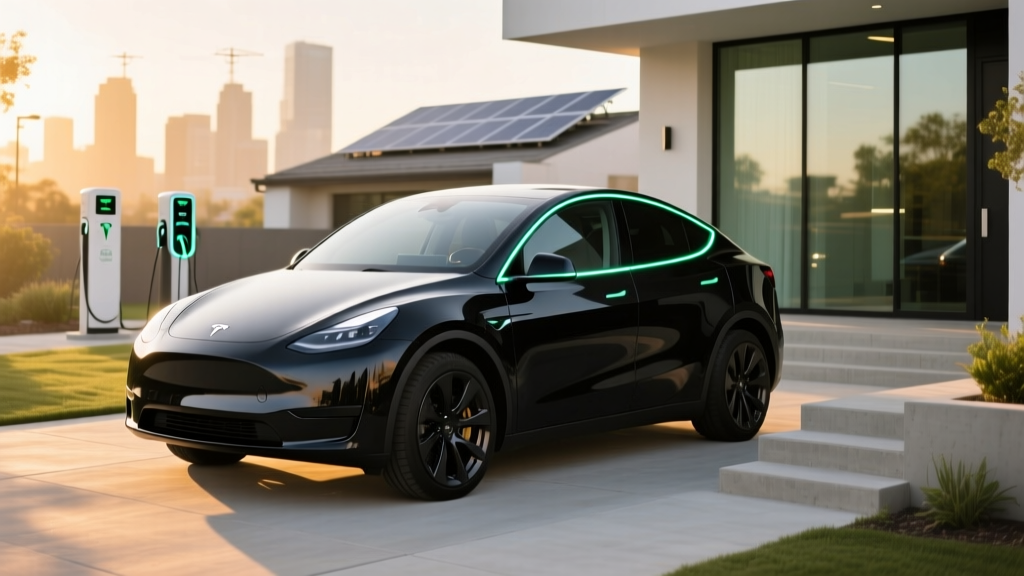
If you've been asking yourself "how can I get a Tesla," you're not alone. The Tesla Model Y remains one of the most sought-after electric vehicles on the market, and for good reason: it blends practicality, range, and access to the Supercharger network into a crossover package that fits most lifestyles. But navigating Tesla's direct-to-consumer ordering process, understanding which trim is right for you, and figuring out federal tax credit eligibility can feel overwhelming.
This guide walks you through exactly how to buy a Tesla Model Y in 2026 — from placing your order online to understanding real-world range, charging infrastructure, and total cost. We'll cut through the marketing and give you the numbers that matter.
How to Order a Tesla Model Y: The Buying Process
Unlike traditional dealerships, Tesla sells directly to consumers. Here's the step-by-step process:
- Configure online: Visit Tesla.com, select the Model Y, and choose your trim (Long Range RWD, Long Range AWD, or Performance), paint color, wheel size, interior, and optional Enhanced Autopilot or Full Self-Driving (Supervised).
- Place a refundable order fee: Tesla typically requires an order deposit (historically $250, though terms can shift). This reserves your build slot.
- Wait for delivery window: Depending on demand and your region, delivery can take anywhere from 2 to 10 weeks. Tesla assigns a VIN as your build date approaches.
- Complete financing or trade-in: You can finance through Tesla, use a third-party lender, pay cash, or lease. Tesla also accepts trade-ins.
- Take delivery: You'll pick up at a local Tesla delivery center or opt for contactless doorstep delivery in eligible zip codes.
Pro tip: Tesla occasionally has existing inventory vehicles available for immediate delivery — check the "Inventory" tab on their site for discounted or ready-to-go units.
2026 Tesla Model Y: Trims, Pricing, and Tax Credits
| Trim | Drivetrain | Base MSRP | Federal Tax Credit (§30D) | Est. Net Price |
|---|---|---|---|---|
| Long Range RWD | Rear-Wheel Drive | $44,990 | Up to $7,500* | ~$37,490* |
| Long Range AWD | Dual-Motor AWD | $47,990 | Up to $7,500* | ~$40,490* |
| Performance | Dual-Motor AWD | $52,490 | Up to $7,500* | ~$44,990* |
*Federal tax credit eligibility under IRS §30D depends on multiple factors: buyer income caps ($150,000 single / $300,000 joint modified AGI), vehicle MSRP caps ($80,000 for SUVs like the Model Y), critical mineral and battery component sourcing requirements, and point-of-sale transfer availability. The Model Y currently qualifies, but sourcing rules tighten annually. Always verify current eligibility at IRS.gov or with a tax professional before purchasing.
As of 2026, Tesla also offers the Model Y at the point of sale — meaning eligible buyers can transfer the credit directly to Tesla at delivery, reducing the purchase price upfront rather than waiting for a tax return offset.
Range, Battery, and Efficiency: Real Numbers
| Trim | EPA Range | Real-World Highway (70 mph) | Cold Weather (32°F) |
|---|---|---|---|
| Long Range RWD | 320 miles | ~275-290 miles | ~240-265 miles |
| Long Range AWD | 303 miles | ~260-280 miles | ~230-250 miles |
| Performance | 277 miles | ~235-255 miles | ~205-230 miles |
Real-world figures based on highway driving at 70-75 mph, moderate HVAC use. Cold-weather estimates assume 32°F with cabin heating. Efficiency degrades further in sub-20°F conditions. City driving with regenerative braking can meet or exceed EPA numbers.
| Spec | Long Range RWD | Long Range AWD | Performance |
|---|---|---|---|
| Battery Capacity (usable) | ~78 kWh | ~78 kWh | ~78 kWh |
| Chemistry | NMC (Nickel Manganese Cobalt) | NMC | NMC |
| MPGe (combined) | 122 MPGe | 117 MPGe | 111 MPGe |
| kWh/100 mi | 27 kWh | 29 kWh | 30 kWh |
The Model Y uses an NMC lithium-ion battery pack, which offers higher energy density than LFP chemistry — meaning more range in a lighter package. However, NMC batteries benefit from being kept between 20-80% state of charge for daily use, reserving 100% charges for road trips. Tesla's battery management system handles much of this automatically, but you'll see a recommended daily charge limit in the app.
For verified EPA figures, see fueleconomy.gov.
Charging Speed: DC Fast Charging and Home Setup
Charging speed is where Tesla still holds a major advantage — not just in peak kW, but in the reliability and density of the Supercharger network.
| Charging Level | Power / Rate | Speed | Notes |
|---|---|---|---|
| Level 1 (120V outlet) | ~1.4 kW | ~3-4 miles/hour | Emergency/trickle only; not practical for daily use |
| Level 2 (240V home) | 11.5 kW (48A) | ~37-44 miles/hour | Full charge in ~8-9 hours; ideal for overnight |
| DC Fast (Supercharger V3) | Peak 250 kW | 10-80% in ~25 min | Peak rate sustained to ~50%, then tapers; 15 min adds ~170 mi |
| DC Fast (Supercharger V4) | Peak 250-350 kW | 10-80% in ~20 min | Newer stations; Model Y hardware currently caps at ~250 kW |
Understanding the charge curve: The Model Y's peak 250 kW rate is not sustained for the entire session. You'll see maximum speed between roughly 10-50% state of charge, after which the rate tapers to protect the battery. Charging from 80-100% on DC fast charging is significantly slower — plan to unplug at 80% on road trips for the best time efficiency.
Home charging reality: Most Model Y owners install a Tesla Wall Connector ($450) on a 60-amp circuit, delivering 48 amps / 11.5 kW. A full overnight charge adds roughly 350+ miles — more than enough for any daily commute. Budget $500-$2,000 for professional installation depending on your electrical panel's capacity and the distance from panel to garage. Older homes may need a panel upgrade ($1,500-$3,000 additional).
Performance and Driving Dynamics
| Spec | Long Range RWD | Long Range AWD | Performance |
|---|---|---|---|
| 0-60 mph | 5.8 seconds | 4.8 seconds | 3.5 seconds |
| Horsepower | ~295 hp | ~384 hp | ~456 hp |
| Top Speed | 135 mph | 135 mph | 155 mph |
| Drivetrain | Single motor RWD | Dual motor AWD | Dual motor AWD |
Even the "base" Long Range RWD Model Y is quick by any standard. The dual-motor AWD versions add traction in rain and snow, making them the safer choice for northern climates. The Performance trim delivers sports-car acceleration with instant torque that no gas crossover can match — but at the cost of roughly 40 miles of range and a firmer ride.
Cargo Space, Interior, and Practicality
The Model Y's crossover shape pays dividends in usability:
- Cargo volume (rear seats up): 30.2 cu ft
- Cargo volume (rear seats folded): 72.1 cu ft
- Front trunk (frunk): 4.1 cu ft — fits a backpack or charging cables
- Rear legroom: 41.6 inches
- Front headroom: 41.0 inches
- Seating: Standard 5-passenger; optional 7-seat configuration (third row best for small children only)
The interior is minimalist — a single 15.4-inch center touchscreen handles navigation, media, climate, and vehicle settings. There are no physical buttons. Love it or hate it, the approach frees up cabin space and keeps the design clean. Build quality has improved meaningfully since the 2025 refresh, with tighter panel gaps and upgraded materials.
Driver Assistance and Tech Features
Tesla's Autopilot and Full Self-Driving (Supervised) are Level 2 driver-assistance systems — not self-driving. The driver must remain fully attentive, keep hands on the wheel, and be prepared to take over at any moment. True autonomous (Level 4) driving is currently limited to geofenced robotaxi services like Waymo.
Standard Autopilot (included): Traffic-aware cruise control and autosteer on marked highways. Works well for reducing fatigue on long drives.
Enhanced Autopilot ($6,000): Adds auto lane change, navigate on Autopilot (automatic highway exits), autosteer on city streets, auto park, and Smart Summon.
Full Self-Driving (Supervised) ($8,000): The full suite, including traffic light and stop sign recognition, and broader city-street autosteer capabilities. Despite the name, FSD still requires active driver supervision.
Notable tech features:
- Over-the-air software updates that add features post-purchase
- Sentry Mode dashcam surveillance when parked
- Dog Mode keeps cabin climate-controlled for pets
- Tesla app with remote preconditioning, location tracking, and charging management
- Native navigation with real-time Supercharger routing and availability
- Drive without supervision — you are legally and practically responsible at all times
- Handle all construction zones, unmapped roads, or severe weather reliably
- Replace attentive driving in complex urban environments
Warranty and Long-Term Ownership
| Component | Coverage |
|---|---|
| Basic Vehicle | 4 years / 50,000 miles |
| Battery & Drive Unit | 8 years / 120,000 miles (Long Range); 8 years / 120,000 miles (Performance) |
| Battery Capacity Retention | Minimum 70% over warranty period |
Tesla's battery warranty guarantees at least 70% capacity retention over 8 years or 120,000 miles. Real-world data from Tesla's fleet suggests average degradation of roughly 10-12% after 150,000 miles — meaning most owners will retain usable range well beyond the warranty period. Out-of-warranty battery replacement currently runs $12,000-$16,000, though prices continue to decline as battery technology improves.
Insurance costs for the Model Y tend to run 15-25% higher than comparable gas crossovers, though Tesla Insurance (available in select states) can sometimes offer competitive rates by using real-time driving data.
Pros, Cons, and Who Should Buy
- Access to the Supercharger network — still the most reliable public DC fast-charging network in the U.S.
- Class-leading efficiency (kWh/100mi) means lower charging costs
- Strong resale value relative to other EVs
- Over-the-air updates continuously improve the vehicle
- Practical cargo space and available 7-seat option
- Eligible for up to $7,500 federal tax credit (with caveats)
- No physical buttons — everything through the touchscreen
- FSD is expensive and still requires full driver supervision
- Firmer ride quality, especially on Performance trim with 21" wheels
- Limited service center locations in rural areas
- Insurance premiums higher than segment average
- NACS (Tesla) connector now standard, but adapters needed for some third-party CCS chargers
- Choose the Model Y if: You want access to the best public charging network, value OTA software updates, need a practical family crossover with strong range, and live near a Tesla service center.
- Consider competitors (Hyundai Ioniq 5, Ford Mustang Mach-E) if: You prefer physical controls, want faster peak DC charging (Ioniq 5 at 350 kW on 800V), need more interior luxury, or want traditional dealer service options.
- Choose Long Range AWD if: You drive in snow/rain regularly and want the best balance of range and traction.
- Choose Performance if: Acceleration matters more than maximum range and you don't mind a stiffer ride.
Frequently Asked Questions
What is the real-world range of the Tesla Model Y?
The EPA rates the Long Range RWD at 320 miles, Long Range AWD at 303 miles, and Performance at 277 miles. In real-world highway driving at 70-75 mph, expect roughly 10-15% less than EPA. In cold weather (below freezing), plan for 20-25% range reduction due to battery chemistry limitations and cabin heating demands.
How fast does the Model Y charge at home and on the road?
At home on a Level 2 (240V, 48A) Tesla Wall Connector, you'll add about 37-44 miles of range per hour — a full overnight charge takes about 8-9 hours. On DC fast charging at a V3 Supercharger, you can go from 10-80% in approximately 25 minutes, though the rate tapers significantly above 50% SoC.
How much does a Tesla Model Y cost after tax credits?
If you qualify for the full $7,500 federal tax credit under IRS §30D (income within limits, vehicle meets sourcing requirements), a Long Range RWD drops from $44,990 to roughly $37,490. However, eligibility depends on your modified adjusted gross income, the vehicle's battery component and critical mineral sourcing, and MSRP caps. Always confirm with the IRS or a tax professional.
Does the Tesla Model Y qualify for the federal EV tax credit?
Yes, the Model Y currently qualifies for up to $7,500 under §30D, as it meets the MSRP cap (under $80,000 for SUVs) and battery sourcing requirements. However, buyer income caps apply ($150K single, $225K head of household, $300K joint), and sourcing rules tighten over time. Check IRS.gov for the latest eligibility details.
Is the Tesla Model Y worth buying vs. competitors?
The Model Y's key advantages are the Supercharger network, strong efficiency, and continuous software improvements. Competitors like the Hyundai Ioniq 5 offer faster peak charging and more interior design flair, while the Ford Mustang Mach-E provides a more traditional driving feel. If public charging reliability and range confidence are your top priorities, the Model Y's ecosystem remains hard to beat.
How do I charge at non-Tesla stations?
The Model Y uses the NACS (North American Charging Standard) connector natively. As of 2025-2026, most major charging networks (Electrify America, EVgo, ChargePoint) are adding NACS cables. For existing CCS-equipped stations, Tesla sells a CCS adapter (~$175). The Tesla navigation system automatically routes through compatible stations.
Getting a Tesla Model Y in 2026 is straightforward: configure online, verify your tax credit eligibility, prepare your home for Level 2 charging, and plan for real-world range that's about 10-20% below the EPA sticker depending on conditions. The Model Y isn't perfect — the touchscreen-only interface and FSD pricing are legitimate gripes — but its combination of range, efficiency, and charging infrastructure access makes it one of the most practical EVs you can buy today.