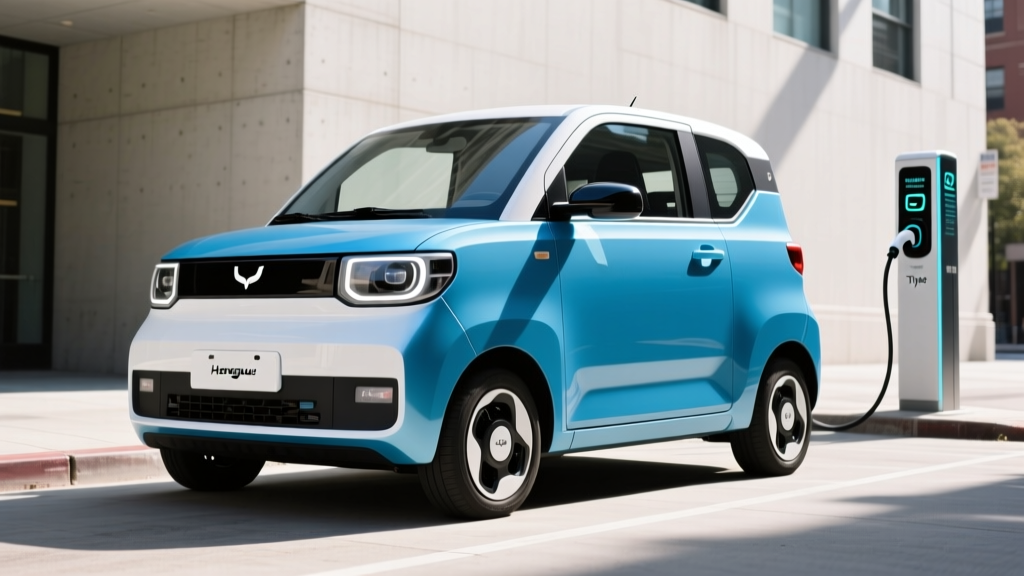
Bottom line: The Wuling Hongguang Mini EV is China's best-selling microcar — priced from roughly ¥29,800 (~$3,000 USD) with 75–106 miles of CLTC range and a 9.2–13.9 kWh LFP battery. However, it is not legally importable for road use in the United States as of 2026. It lacks NHTSA certification, US-spec safety equipment, and EPA compliance. If you're a US buyer seeking an ultra-cheap EV, your realistic alternatives are the used Chevrolet Bolt EV (~$8,000–$12,000 used), a Neighborhood Electric Vehicle (NEV) for low-speed local roads, or waiting for future compliant microcars. Here's the full breakdown of what this car is, why Americans keep searching for it, and what you can actually buy instead.
What Is the Hongguang Mini EV? The Numbers That Went Viral
The Wuling Hongguang Mini EV launched in 2020 as a joint venture between SAIC Motor, GM, and Wuling Automobile. It became China's top-selling EV for multiple consecutive years, with over 1.2 million units sold by 2024. The appeal is simple: an electric car at the price of a used laptop.
Here are the specifications for the current-generation model lineup sold in China as of 2025–2026:
| Spec | Base (120 km) | Mid (170 km) | Gameboy (200/300 km) |
|---|---|---|---|
| CLTC Range | 75 mi (120 km) | 106 mi (170 km) | 124–186 mi (200–300 km) |
| Battery Capacity | 9.2 kWh | 13.9 kWh | 26.5–28.5 kWh |
| Battery Chemistry | LFP | LFP | LFP |
| Motor Output | 20 kW (27 hp) | 20 kW (27 hp) | 30 kW (41 hp) |
| Top Speed | 62 mph (100 km/h) | 62 mph (100 km/h) | 62 mph (100 km/h) |
| AC Charging | ~3.5 hours (full) | ~5.5 hours (full) | ~8.5 hours (full) |
| DC Fast Charging | Not available | Not available | Available (30–80% ~35 min) |
| Length × Width | 115.3" × 58.3" | 115.3" × 58.3" | 118.1" × 59.6" |
| Seating | 4 (tight) | 4 (tight) | 4 (tight) |
| China Price (approx.) | ~$3,000 USD | ~$4,500 USD | ~$6,500–$8,500 USD |
A few observations from an ownership perspective: the 9.2 kWh battery is roughly one-eighth the size of a Tesla Model Y Long Range pack. The 20 kW motor produces about the same power as a 1980s economy car. The top speed of 62 mph means this vehicle is fundamentally designed for city driving in dense Chinese urban environments — not American highways.
The LFP (lithium iron phosphate) battery chemistry is a legitimate strength. LFP cells offer longer cycle life (2,000–5,000 cycles vs. 1,000–2,000 for NMC), better thermal stability, and lower cost. For a microcar that charges to 100% daily, LFP is the right choice.
Why You Can't (Legally) Drive One in the United States
This is the question most US searchers actually need answered. The Hongguang Mini EV cannot be legally imported for street use under current NHTSA and EPA regulations. Here's why:
NHTSA Federal Motor Vehicle Safety Standards (FMVSS): Every vehicle sold or imported for road use in the US must comply with over 50 FMVSS requirements covering crashworthiness, airbags, seatbelts, lighting, mirrors, and more. The Hongguang Mini EV was engineered for Chinese GB safety standards, which differ substantially. It lacks the airbag count, crash structure, and bumper standards required by NHTSA import rules.
EPA emissions certification: Even though EVs produce zero tailpipe emissions, the EPA still requires certification for all motor vehicles imported into the US. Without this, the vehicle cannot clear customs for road use.
The 25-year rule: NHTSA allows import of vehicles at least 25 years old without FMVSS compliance. Since the Hongguang Mini EV launched in 2020, it won't qualify until 2045. There is no shortcut through this restriction for a new vehicle.
What about the "Show or Display" exemption? This applies to vehicles of historical or technological significance, with production under 500 units. The Hongguang Mini EV, with over a million units produced, does not qualify.
NEV/LSV classification: The closest legal path would be classifying it as a Low-Speed Vehicle (LSV) under FMVSS 500. LSVs are limited to 20–25 mph top speed and can only operate on roads with speed limits of 35 mph or less (varies by state). However, the Hongguang Mini EV's 62 mph top speed actually puts it in a regulatory grey zone — too fast to be an LSV without modification, too non-compliant to be a full passenger vehicle. You would need to permanently govern the speed to 25 mph and add LSV-required equipment (headlamps, turn signals, exterior mirrors, parking brake, VIN plate, windshield of specific glass type).
Real-World Range and Charging: What the CLTC Numbers Don't Tell You
Chinese CLTC range figures are notoriously optimistic compared to the US EPA testing cycle. Based on testing methodology differences and real-world reports from Chinese owners, here's a realistic translation:
CLTC vs. Real-World Range Estimates
- Base 120 km (75 mi CLTC): Expect ~50–55 miles in warm city driving, ~35–40 miles in cold weather or at sustained highway speeds
- Mid 170 km (106 mi CLTC): Expect ~70–80 miles warm city, ~50–55 miles cold/highway
- Gameboy 300 km (186 mi CLTC): Expect ~130–145 miles warm city, ~95–110 miles cold/highway
CLTC testing involves lower average speeds and more idling than EPA. Discount CLTC by roughly 25–35% for realistic American driving expectations.
Charging is exclusively via standard Chinese household AC (220V/16A) for the base and mid models. There is no CCS, no NACS, no CHAdeMO port. In the US, you would need a 220V adapter setup — and even then, the charging protocol may not communicate properly with US electrical systems without modification. The Gameboy version adds DC fast charging via GB/T (China's national standard), which is incompatible with US public charging infrastructure entirely.
To put charging times in perspective: the base model's 9.2 kWh battery charging at roughly 2.5 kW takes about 3.5 hours from empty. That's comparable to plugging in a space heater. The energy cost for a full charge at the US average of $0.16/kWh would be approximately $1.47 — genuinely cheap, but the range you get in return is under 55 miles.
What You'd Actually Spend: Total Cost If You Could Import It
Let's run a hypothetical cost analysis assuming you could somehow navigate the import process. This illustrates why the savings aren't what they appear:
| Cost Item | Estimated Amount |
|---|---|
| Vehicle purchase (Mid 170 km, FOB China) | $4,500 |
| International shipping (container, port-to-port) | $2,000–$3,500 |
| US customs duty (2.5% + potential 25% Section 301 tariff on Chinese EVs) | $1,240–$1,240+ |
| Import broker / customs bond | $500–$1,000 |
| FMVSS modification (if attempting LSV conversion) | $2,000–$5,000 |
| State registration, titling, inspection | $200–$600 |
| Insurance (specialty import, limited coverage) | $800–$1,500/yr |
| Total estimated landed cost | $10,500–$17,000+ |
At $10,500–$17,000 all-in, you've eliminated the entire value proposition. A used 2022–2023 Chevrolet Bolt EV with 259 miles of EPA range, DC fast charging (CCS at 55 kW), NHTSA certification, and a full US warranty network sells for $10,000–$14,000 on the used market in 2026.
Federal tax credits under IRS §30D do not apply to the Hongguang Mini EV regardless — the vehicle must be assembled in North America with compliant battery sourcing to qualify for the up-to-$7,500 credit. Chinese-manufactured vehicles are categorically ineligible.
The US Alternatives: What to Buy Instead
If your goal is ultra-low-cost electric transportation, here are vehicles you can actually buy, register, insure, and charge in the United States:
| Vehicle | EPA Range | Battery | DC Charge | Typical Price (2026) | US Legal |
|---|---|---|---|---|---|
| Chevrolet Bolt EV (used 2022–23) | 259 mi | 65 kWh NMC | 55 kW CCS | $10,000–$14,000 | Yes |
| Nissan Leaf S (used 2022–23) | 149 mi | 40 kWh NMC | 50 kW CHAdeMO | $9,000–$13,000 | Yes |
| Mini Cooper SE (used 2022–23) | 114 mi | 32.6 kWh NMC | 50 kW CCS | $14,000–$18,000 | Yes |
| Polaris GEM e2 (NEV/LSV) | ~30 mi | ~11.5 kWh Lead-acid/Li-ion | None (AC only) | $9,000–$12,000 new | LSV only |
| Hongguang Mini EV | 50–80 mi (est.) | 9.2–13.9 kWh LFP | None/GB-T | Not importable | No |
The used Bolt EV is the clear winner for value. At $10,000–$14,000, you get a real highway-capable car with 259 miles of range, access to the entire US public charging network via CCS, eligibility for the used clean vehicle credit (up to $4,000 under §25E if you meet income requirements), and full NHTSA safety compliance. The Bolt EV earned an IIHS Top Safety Pick rating in its final model years.
The Polaris GEM is the closest US-legal equivalent to the Hongguang Mini EV's form factor — a small, low-speed electric vehicle for campus, neighborhood, or resort use. But it's limited to 25 mph and is classified as an LSV, meaning it can only drive on roads with speed limits of 35 mph or below (state rules vary).
Ownership Economics: Micro-EV vs. Budget Full-Size EV
Let's compare the hypothetical 5-year operating costs of a Hongguang Mini EV (if legal) versus a used Chevrolet Bolt EV, assuming 8,000 miles driven annually:
| Category | Hongguang Mini EV (hypothetical) | Used Chevy Bolt EV |
|---|---|---|
| Purchase price (all-in) | $12,000 | $12,000 |
| Federal tax credit | $0 | Up to $4,000 (§25E used) |
| Effective purchase price | $12,000 | $8,000 |
| Annual electricity (8k mi × 0.25 kWh/mi × $0.16) | $320/yr | $384/yr (0.30 kWh/mi) |
| 5-year electricity total | $1,600 | $1,920 |
| 5-year insurance | $5,000–$7,500 (specialty) | $4,500–$6,000 |
| Maintenance (5 yr) | $500 (limited parts access) | $1,200 (dealer network) |
| Depreciation (5 yr) | Unknown / likely steep | ~$4,000–$5,000 |
| 5-year total cost | $19,100–$21,100+ | $15,620–$17,120 |
The Bolt EV's used-vehicle tax credit eligibility, established dealer service network, and predictable depreciation make it substantially cheaper to own over five years — even though the Hongguang Mini EV uses slightly less electricity per mile.
For context against a gas car: a Toyota Corolla getting 33 MPG combined at $3.25/gallon would cost $788/year in fuel for 8,000 miles. The Bolt EV's $384/year in electricity represents a 51% fuel-cost reduction. Over five years, that's $2,020 in fuel savings vs. gas.
Common Misconceptions About the Hongguang Mini EV
| Myth | Fact |
|---|---|
| "I can just import one through Alibaba" | You can purchase one, but US Customs will hold it at port without DOT/EPA clearance letters. It cannot be registered for road use. |
| "It qualifies for the $7,500 EV tax credit" | No. §30D requires North American assembly and compliant battery sourcing. Chinese-manufactured vehicles are excluded. |
| "The 106-mile range is EPA-rated" | The 170 km figure is CLTC-rated, a Chinese test cycle. Real-world US range would be closer to 70–80 miles, less in cold weather. |
| "It's basically a golf cart" | It's a full-speed (62 mph) passenger vehicle in China. Golf carts are limited to 20 mph under a different regulatory framework. |
| "I can charge it on any US public charger" | It uses China's GB/T charging standard. No US public charging station (CCS, NACS, or CHAdeMO) is physically compatible without an adapter that doesn't commercially exist. |
| "GM sells it in the US since they're a partner" | GM's SAIC-Wuling joint venture operates exclusively in China and select Asian markets. GM has announced no US plans for this vehicle. |
Decision Framework: What Should You Actually Do?
If you want the cheapest possible legal EV in the US: Buy a used 2022–2023 Chevrolet Bolt EV for $10,000–$14,000. Check IRS §25E eligibility for up to $4,000 in used-EV credits (income caps apply: $75,000 single / $150,000 joint). You'll have 259 miles of range, CCS fast charging, and a real warranty network.
If you need a neighborhood-only runabout under $12,000: Look at a US-legal LSV like the Polaris GEM or a used FMVSS 500-compliant neighborhood vehicle. Accept the 25 mph speed limit and 35-mph-road restriction.
If you want a tiny, fun EV and have $15,000–$20,000: A used Mini Cooper SE gives you the compact footprint, 114 miles of EPA range, CCS charging, and a premium interior — with full US legality.
If you're outside the US: The Hongguang Mini EV is available in several Southeast Asian and South American markets. Check your local homologation requirements. In India, similar microcars like the Tata Tiago EV (starting ~$8,500 USD, 190 mi range) are locally legal and practical.
If you simply love the Hongguang Mini EV concept: Follow GM's US product announcements. The automaker has studied micro-mobility concepts, and competitors like the Citroën Ami (Stellantis) have been discussed for limited US LSV-type introductions. But as of 2026, nothing matching the Hongguang's price point is US-legal or announced.
Frequently Asked Questions
Is the Hongguang Mini EV sold in the United States?
No. The Hongguang Mini EV is not sold, certified, or legally importable for road use in the US as of 2026. It does not meet NHTSA Federal Motor Vehicle Safety Standards or EPA import requirements. General Motors, which co-owns the SAIC-GM-Wuling joint venture, has not announced plans to bring it to the US market.
How much does the Hongguang Mini EV cost in China?
Prices start at approximately ¥29,800 (~$3,000 USD) for the base 120 km model and go up to roughly ¥60,000–¥70,000 (~$8,500 USD) for the Gameboy 300 km variant. These prices reflect the Chinese domestic market and do not include shipping, tariffs, or modification costs for other countries.
What is the real-world range of the Hongguang Mini EV?
The CLTC-rated range is 75–186 miles depending on variant. In real-world conditions, expect roughly 50–55 miles from the base model in warm city driving, dropping to 35–40 miles in cold weather. The Gameboy 300 km variant delivers approximately 130–145 miles in warm conditions. CLTC ratings are 25–35% higher than comparable EPA ratings.
Can I import a Hongguang Mini EV as a Low-Speed Vehicle?
Technically, you could attempt to modify one to meet FMVSS 500 LSV requirements by governing its speed to 25 mph and adding required safety equipment. However, this process is expensive ($2,000–$5,000+ in modifications), legally complex, and the vehicle still wouldn't meet many LSV-specific equipment standards without significant engineering work. The resulting vehicle would be restricted to roads with speed limits of 35 mph or less.
What's the cheapest EV I can actually buy in the US?
As of 2026, the cheapest new EV is the Nissan Leaf S at approximately $28,140 MSRP (149 mi range). On the used market, 2022–2023 Chevrolet Bolt EVs sell for $10,000–$14,000 with 259 miles of range and may qualify for the $4,000 federal used-EV tax credit under IRS §25E, subject to income limits.
Why is the Hongguang Mini EV so popular in China?
China's dense urban environments, lower average driving speeds, extensive charging infrastructure in tier-1 cities, and government purchase subsidies make micro-EVs practical daily drivers. The Hongguang Mini EV serves as a second car for short commutes, school runs, and grocery trips in cities where parking is scarce and expensive. China's CLTC testing cycle and local safety standards also allow simpler, lighter vehicle designs that wouldn't pass Western crash-test requirements.