For Tesla owners and prospective buyers in Hong Kong, understanding the local electricity tariff structure is just as important as knowing your Model 3's EPA range. Hong Kong's unique power market — dominated by two utility companies with tiered residential rates and a growing but fragmented public charging network — creates a cost picture that differs sharply from mainland China, the US, or Europe. This guide breaks down exactly what you'll pay per kWh, how that translates to cost-per-mile on Hong Kong's roads, and whether a Tesla still makes financial sense in one of the world's most expensive cities.
Hong Kong's Electricity Tariff Landscape in 2026
Hong Kong's residential electricity is supplied by two companies: CLP Power (Kowloon, New Territories, Lantau) and HK Electric (Hong Kong Island, Lamma Island, Ap Lei Chau). Unlike deregulated markets, these are vertically integrated monopolies, and their tariffs are approved by the government under Scheme of Control agreements.
As of early 2026, residential tariffs follow a progressive (tiered) structure:
| Tier (monthly consumption) | CLP Power (HKD/kWh) | HK Electric (HKD/kWh) |
|---|---|---|
| First 200 kWh | ~$0.93 | ~$1.07 |
| 201–400 kWh | ~$1.21 | ~$1.27 |
| 401–600 kWh | ~$1.38 | ~$1.43 |
| Above 600 kWh | ~$1.51 | ~$1.56 |
For a Tesla owner charging at home, most of your consumption will land in the upper tiers. A Model Y Long Range with a ~75 kWh usable battery charged from 10% to 90% four times per month adds roughly 240 kWh to your household bill — pushing you solidly into the $1.38–$1.51/kWh range (CLP) or equivalent HK Electric tier. That translates to roughly HKD $1.30–$1.50 per kWh as a realistic average cost for home charging.
Tesla Models Available in Hong Kong: Specs at a Glance
Hong Kong's Tesla lineup mirrors the global catalog, with the Model 3, Model Y, Model S, and Model X available. The Model 3 and Model Y dominate local registrations thanks to parking-friendly dimensions and the government's EV tax incentive structure. Below are the key specs for the most popular configurations sold in the Hong Kong market:
| Spec | Model 3 RWD | Model 3 Long Range AWD | Model Y RWD | Model Y Long Range AWD |
|---|---|---|---|---|
| Battery (usable kWh) | ~57.5 (LFP) | ~75 (NMC) | ~57.5 (LFP) | ~75 (NMC) |
| WLTP Range | ~491 km | ~629 km | ~455 km | ~565 km |
| EPA-Equivalent Range | ~272 mi | ~341 mi | ~260 mi | ~310 mi |
| 0–100 km/h (0–60 mph) | 6.1s (5.8s) | 4.4s (4.2s) | 6.9s (6.5s) | 5.0s (4.8s) |
| Horsepower | ~283 hp | ~384 hp | ~295 hp | ~384 hp |
| Drivetrain | RWD | Dual-Motor AWD | RWD | Dual-Motor AWD |
| Max DC Fast Charge | 170 kW | 250 kW | 170 kW | 250 kW |
| 10–80% DCFC Time | ~25 min | ~22 min | ~25 min | ~22 min |
| Level 2 AC Charge Rate | 11 kW | 11 kW | 11 kW | 11 kW |
Note: Hong Kong uses WLTP range figures officially. EPA-equivalent estimates are provided for comparison with US-spec data and are approximately 15–20% lower than WLTP.
Public Charging in Hong Kong: Networks, Connectors, and Costs
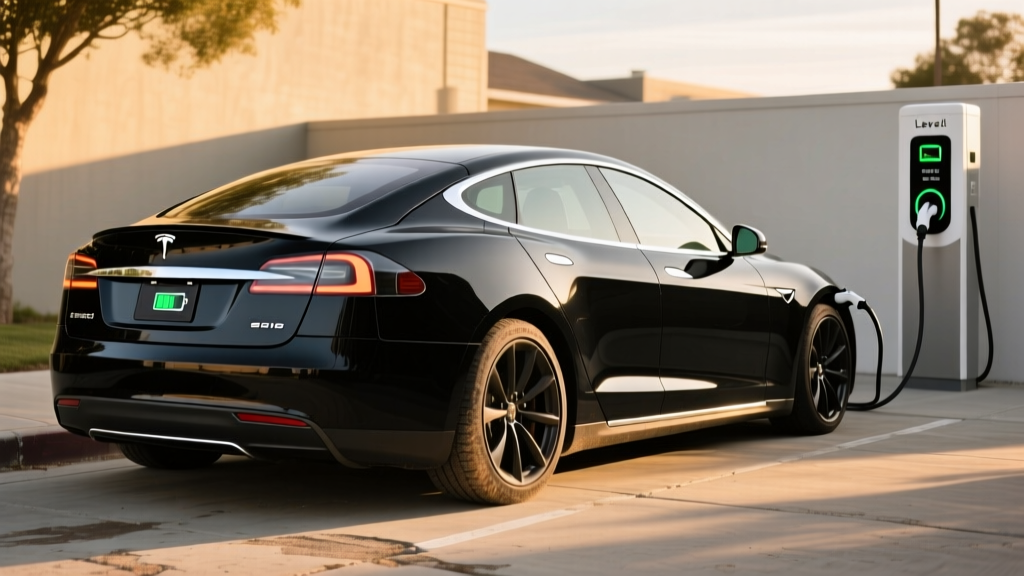
While home charging is the gold standard for cost and convenience, Hong Kong's dense urban environment means many residents live in apartments without dedicated parking spots — let alone EV chargers. Public and semi-public charging infrastructure has expanded considerably, with several key players:
Major Public Charging Networks
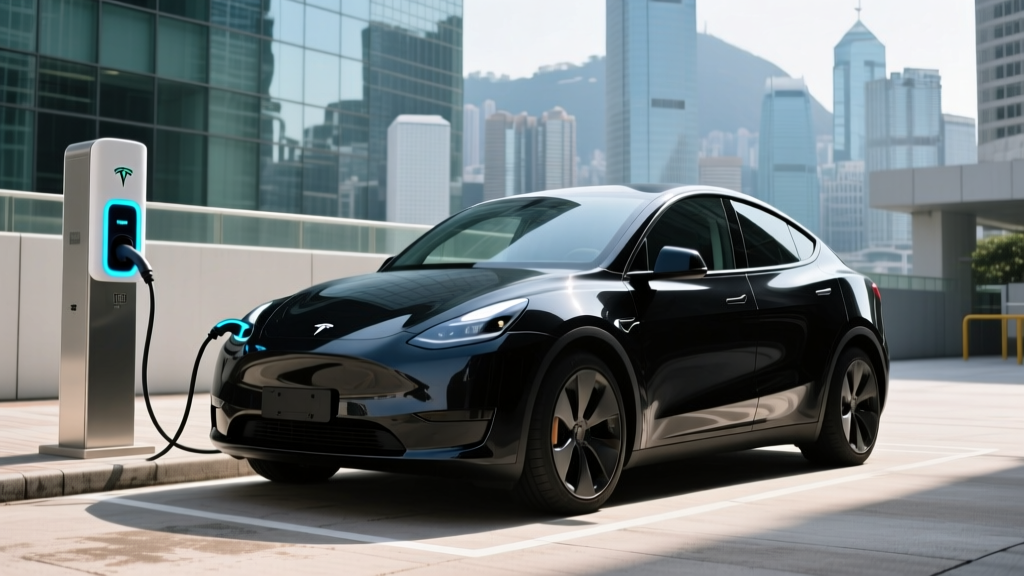
- Tesla Superchargers: Multiple locations across Hong Kong (Tsim Sha Tsui, Causeway Bay, Kwun Tong, Tsuen Wan, etc.). V3 Superchargers deliver up to 250 kW. Pricing in 2026 is approximately HKD $2.50–$3.50/kWh, varying by location and time of day.
- Shell Recharge: DC fast chargers at select Shell petrol stations. CCS2 connectors, up to 180 kW. Pricing around HKD $2.80–$3.20/kWh.
- Charge+ (by Hong Kong EV Power): Widely deployed AC and DC chargers in shopping malls and car parks. AC chargers often priced at HKD $1.60–$2.00/kWh; DC at HKD $2.50–$3.00/kWh.
- Government chargers: The Hong Kong EPD operates free and low-cost public chargers, though availability is limited and often occupied. Expansion is ongoing under the EV-charging at Existing Car Parks scheme.
Connector Standards
Hong Kong uses the Type 2 (Mennekes) connector for AC charging and CCS2 for DC fast charging — the European standard, not the North American NACS/CCS1. Tesla vehicles sold in Hong Kong come with CCS2/T2 ports natively, so no adapter is needed at most public chargers.
| Charging Method | Avg Cost/kWh (HKD) | Cost for 10–90% (~60 kWh) | Cost per 100 km |
|---|---|---|---|
| Home (upper tier CLP) | $1.40 | $84 | ~$18.70 |
| Tesla Supercharger | $3.00 | $180 | ~$40.00 |
| Third-party DCFC | $2.70 | $162 | ~$36.00 |
| Shopping mall AC (Charge+) | $1.80 | $108 | ~$24.00 |
How Much Does It Really Cost to Drive a Tesla in Hong Kong?
Let's build a concrete ownership cost picture. Assume a Model Y Long Range AWD driven 12,000 km per year (typical Hong Kong annual mileage), charged 70% at home and 30% at public DC fast chargers.
| Item | Calculation | Annual Cost (HKD) |
|---|---|---|
| Energy consumption | ~16 kWh/100 km (real-world HK mixed) | — |
| Total annual energy | 12,000 km × 16 kWh ÷ 100 | 1,920 kWh |
| Home charging (70%) | 1,344 kWh × $1.40 | $1,882 |
| Public DCFC (30%) | 576 kWh × $2.80 | $1,613 |
| Total Annual Charging | ~$3,495 |
Compare this to a comparable petrol SUV achieving 10 km/L at HKD $25/L: that's HKD $30,000/year in fuel alone. Even with Hong Kong's relatively high electricity tariffs, a Tesla owner saves roughly HKD $25,000–$26,500 per year on energy — a massive advantage that helps offset the vehicle's premium purchase price.
Other Ownership Costs to Consider
- Vehicle First Registration Tax (FRT): Hong Kong offers a significant EV tax concession. As of 2026, EVs benefit from a full FRT waiver up to HKD $300,000 (the "One-for-One Replacement Scheme" provides additional waiver if you scrap an old ICE vehicle). This makes Teslas dramatically cheaper to register than equivalent petrol cars.
- Annual license fee: Based on vehicle taxable value, but EVs receive preferential rates.
- Insurance: Tesla insurance premiums in Hong Kong are typically 15–30% higher than equivalent ICE vehicles due to repair cost concerns. Expect HKD $8,000–$15,000/year depending on model and driver profile.
- Tyres and maintenance: Minimal compared to ICE — no oil changes, fewer brake replacements (regen braking). Budget ~HKD $3,000–$5,000/year for tyres (EVs wear tyres faster due to torque and weight).
Home Charging Setup: What Hong Kong Apartment Owners Need to Know
Installing a home charger in Hong Kong presents unique challenges. Most residents live in multi-unit buildings managed by Owners' Corporations (OCs) or property management companies. Here's what's involved:
Step 1: Building Approval
You need permission from your building's OC or management to install an EV charger in your designated parking space. Many newer developments (post-2020) have pre-installed EV charging infrastructure or dedicated EV parking zones with charging-ready electrical capacity. Older buildings may require electrical upgrades.
Step 2: Electrical Assessment
A licensed electrical contractor must assess whether the building's main switchboard and your parking space's circuit can handle a 7 kW or 11 kW (single-phase or three-phase) charger. In Hong Kong, most residential parking spaces have access to single-phase 220V supply, supporting up to 7 kW AC charging — enough to fully charge a Model Y from 10% to 100% in roughly 10–11 hours.
Step 3: Equipment and Installation Cost
| Item | Cost Range (HKD) |
|---|---|
| Level 2 wallbox charger (7–11 kW, Type 2) | $4,000 – $8,000 |
| Electrical wiring and conduit (up to 30m run) | $5,000 – $15,000 |
| Building electrical assessment & certification | $2,000 – $5,000 |
| Smart meter (if separately metered) | $1,500 – $3,000 |
| Total Estimated Install | $12,500 – $31,000 |
At a 7 kW home charger, a Model Y Long Range gains approximately 45–50 km of range per hour of charging — more than enough for overnight top-ups after a typical Hong Kong commute of 20–40 km.
Battery Chemistry, Warranty, and Longevity in Hong Kong's Climate
Tesla's current Hong Kong lineup uses two battery chemistries:
| Attribute | LFP (Lithium Iron Phosphate) | NMC (Nickel Manganese Cobalt) |
|---|---|---|
| Models using it | Model 3 RWD, Model Y RWD | Model 3 LR, Model Y LR, Model S/X |
| Energy density | Lower (~160 Wh/kg cell-level) | Higher (~250 Wh/kg cell-level) |
| Cycle life | 3,000+ cycles (superior) | 1,500–2,000 cycles |
| Recommended daily charge | 100% (no degradation concern) | 80–90% (for longevity) |
| Cold-weather performance | Weaker (more range loss) | Better (but HK climate minimizes this) |
| Cobalt content | None | Contains cobalt |
For Hong Kong specifically, the LFP chemistry is arguably the better daily-driver choice. The subtropical climate means cold-weather range loss (LFP's main weakness) is negligible — winter lows in Hong Kong rarely drop below 10°C. And the ability to charge LFP to 100% daily without accelerated degradation means you get full usable range every morning.
Tesla's battery warranty: 8 years / 160,000 km (whichever comes first) for Long Range models, and 8 years / 192,000 km for RWD/LFP models, with a guaranteed minimum 70% capacity retention. In Hong Kong's moderate driving distances (average 12,000 km/year), the time limit will almost certainly be reached before the mileage limit.
Driver Assistance: Autopilot and FSD in Hong Kong
Tesla's Autopilot comes standard on all Hong Kong-market vehicles, providing adaptive cruise control, lane-keeping, and automatic emergency braking. Full Self-Driving (FSD) Capability is available as a paid add-on (approximately HKD $58,000 as a one-time purchase), but its functionality in Hong Kong is limited compared to North America.
Who Should Buy a Tesla in Hong Kong?
Choose a Tesla Model 3 RWD if:
- You commute 20–50 km daily within Kowloon or the New Territories
- You have home or workplace charging access
- You want the lowest entry price (~HKD $339,900) and don't need AWD
- LFP's 100% daily charging suits your routine
Choose a Tesla Model Y Long Range AWD if:
- You need family space (rear seats for child seats, 854L cargo with seats up)
- You take regular weekend trips to the New Territories or Lantau
- You want the maximum real-world range (~450–500 km) for flexibility
- Dual-motor AWD helps on steep inclines (e.g., Peak Road, Tai Mo Shan approaches)
Look at competitors (BYD Atto 3, Hyundai Ioniq 5, BMW iX3) if:
- You prefer a more traditional dealership and service experience
- You want a vehicle with physical buttons and conventional instrument clusters
- Insurance costs for Tesla are prohibitive in your profile
- You need CHAdeMO compatibility (increasingly rare but still present at some HK chargers)
Pros and Cons: Tesla Ownership in Hong Kong
✅ Pros
- Massive fuel savings: ~HKD $25,000+/year vs. petrol
- FRT tax waiver makes purchase price competitive
- Supercharger network expanding across HK
- OTA updates continuously improve the vehicle
- Excellent efficiency (14–16 kWh/100 km real-world)
- Strong resale value relative to other EVs
- Minimal routine maintenance costs
❌ Cons
- Upper-tier electricity tariffs raise home charging costs
- Insurance premiums 15–30% higher than ICE equivalents
- Apartment charging install can be complex and costly
- FSD functionality limited in HK road conditions
- Public chargers often occupied or out of service
- Service center capacity limited — wait times for repairs
- Panel repair costs high (aluminum body, integrated components)
Frequently Asked Questions
What is the cheapest way to charge a Tesla in Hong Kong?
Home charging during off-peak hours on a separately metered circuit is the cheapest option, averaging HKD $1.30–$1.50/kWh depending on your tariff tier. Some buildings with solar-assisted common-area power may offer even lower rates. Avoid relying solely on DC fast chargers, which cost 2–2.5× more per kWh.
Does Hong Kong's climate affect Tesla battery degradation?
Hong Kong's warm, humid climate is actually favorable for battery longevity compared to extreme-cold regions. Lithium-ion batteries degrade faster in sustained high heat, but Hong Kong's temperatures (rarely above 35°C) are within the comfortable operating range. Tesla's active thermal management further mitigates heat stress. Expect 8–12% degradation over 8 years with normal use — well within warranty thresholds.
Can I use Tesla Superchargers if I own a non-Tesla EV?
Tesla has begun opening select Supercharger locations to non-Tesla EVs in some markets, but as of 2026, Hong Kong Superchargers remain Tesla-exclusive. Non-Tesla EVs must use the growing network of CCS2 chargers from Charge+, Shell Recharge, and others.
How does the Hong Kong EV tax incentive work?
The Hong Kong government offers a First Registration Tax (FRT) waiver for EVs. As of 2026, pure EVs qualify for a 100% FRT waiver up to HKD $300,000 under the standard scheme. Under the "One-for-One Replacement Scheme," if you scrap a qualifying older ICE vehicle, the waiver cap extends to HKD $287,500 additional (total up to HKD $587,500). This makes a Tesla Model 3 RWD effectively far cheaper to register than a similarly priced petrol car. Check the Hong Kong EPD website for the latest scheme details and eligibility.
Is a Tesla worth it vs. a BYD or Hyundai EV in Hong Kong?
Tesla's advantages in Hong Kong include the Supercharger network, superior software/OTA capability, and strong resale values. BYD's Atto 3 and Seal offer competitive range at lower prices with strong local dealer support. Hyundai's Ioniq 5 provides 800V ultra-fast charging (10–80% in ~18 min at compatible chargers). The best choice depends on whether you prioritize charging infrastructure (Tesla), price (BYD), or charging speed (Hyundai). Test-drive all three and compare real insurance quotes before deciding.
What happens during a typhoon or flood — is my Tesla safe?
Tesla's battery pack is sealed and rated IP67, meaning it can withstand submersion in up to 1 meter of water for 30 minutes. However, driving through flooded streets is never recommended. During typhoon signals, follow standard Hong Kong safety guidance — park in a covered, elevated location if possible. Tesla's low center of gravity and sealed underbody provide better water resistance than most ICE vehicles, but water damage to interior or electronics is still possible and may not be covered under warranty.
Sources: Hong Kong CLP Power tariff schedules, HK Electric tariff schedules, Tesla Hong Kong official specifications, Hong Kong EPD EV Charging. Tariff figures are approximate and subject to regulatory adjustment.