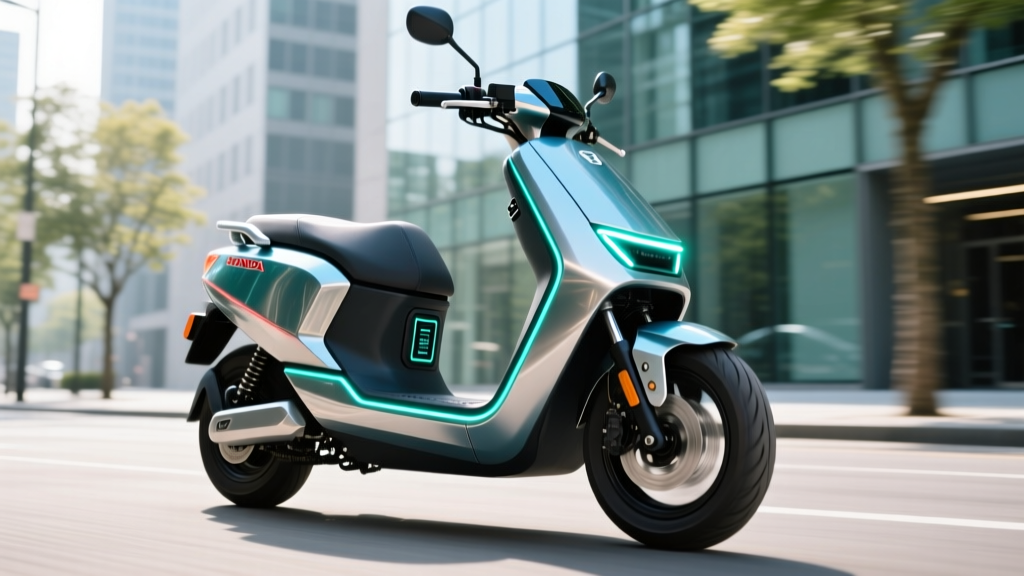
Quick Answer: As of 2026, Honda has not released a production "Honda Zoomer Electric" (also known as the Honda Ruckus Electric) for the US market. The gas-powered Honda Ruckus (Zoomer in some markets) remains a 49cc scooter. Honda has showcased electric scooter concepts and sells the EM1 e: electric scooter in select Asian and European markets, but no street-legal electric Zoomer is currently available for purchase in the United States. If you want a retro-styled electric two-wheeler today, you'll need to look at alternatives from NIU, Super73, or CSC Motorcycles — or wait for Honda's broader EV two-wheeler rollout.
The search for a "Honda Zoomer Electric" is one of the most persistent queries in the light-electric-vehicle space, and it's easy to see why. The gas-powered Honda Ruckus (sold as the Zoomer in Japan and parts of Asia) has a cult following for its rugged, minimalist, go-anywhere aesthetic. Combine that with growing interest in electric urban mobility, and you get thousands of monthly searches for an electric version that simply doesn't exist yet — at least not in the form most buyers imagine.
This guide cuts through the speculation. We'll cover what Honda has actually announced in the electric two-wheeler space, examine the closest real alternatives, break down the costs of owning an electric scooter versus a gas scooter like the Ruckus, and give you a practical framework for deciding what to buy right now.
What Honda Has Actually Announced for Electric Two-Wheelers
Honda has not been idle in electric mobility — but their production efforts have focused on markets outside the US. Here's what's real:
Honda EM1 e: This is Honda's current production electric scooter, available in Japan, parts of Europe, and select Asian markets. It features a swappable lithium-ion battery (Honda Mobile Power Pack e:), a top speed of approximately 28 mph (45 km/h), and a range of roughly 25 miles (41 km) per charge under WMTC testing conditions. It's classified as a moped-class vehicle — far smaller and less capable than what Ruckus/Zoomer fans envision.
Honda Mobile Power Pack e: Ecosystem: Honda is investing heavily in swappable battery infrastructure, partnering with other Japanese OEMs (Yamaha, Kawasaki, Suzuki) to standardize battery form factors. This is a significant long-term play, but the infrastructure is currently concentrated in Japan and India.
Concept Showings: Honda has displayed electric scooter concepts at the Tokyo Motor Show and EICMA, but none have carried the Zoomer/Ruckus nameplate or its distinctive rugged styling. Honda's official electrification roadmap emphasizes four-wheeled EVs for the US market, with electric two-wheelers targeted primarily at Asia.
The bottom line: There is no announced production timeline for a Honda Zoomer Electric or Honda Ruckus Electric for the US market. Any website or YouTube video claiming otherwise is either speculative or outdated.
Why the Electric Zoomer Doesn't Exist Yet (And What's Blocking It)
Several practical factors explain why Honda hasn't electrified the Ruckus/Zoomer for American buyers:
- Market size: The US scooter market is tiny compared to Asia. The Ruckus sells in low volumes — not enough to justify a dedicated EV platform retooling for US emissions and safety homologation.
- Speed and range expectations: US buyers expect a scooter capable of 40-55 mph and 60+ miles of range for practical commuting. Current Honda EM1 e: specs (28 mph, 25 miles) fall far short of what the Ruckus buyer demands.
- Regulatory complexity: Bringing a new electric two-wheeler to the US requires DOT/NHTSA compliance, EPA certification, and state-by-state titling — expensive for a niche product.
- Brand positioning: Honda is cautious about releasing an underperforming electric product that could damage the Ruckus nameplate's reputation for reliability and fun.
Closest Real Alternatives to a Honda Zoomer Electric in 2026
If you want the rugged, retro, utilitarian vibe of a Zoomer in electric form, here's what's actually available for US buyers right now:
| Model | Type | Top Speed | Range | Battery | Price (MSRP) |
|---|---|---|---|---|---|
| Honda Ruckus (gas, 2026) | 49cc scooter | ~40 mph | ~100 mi (1.0 gal tank) | N/A (gas) | ~$2,899 |
| NIU MQi+ Sport | Electric scooter | ~28 mph (moped class) | ~43 mi | 48V 26Ah lithium | ~$2,499 |
| NIU NQi GT | Electric scooter | ~43 mph | ~40-50 mi (dual battery) | 60V 35Ah x2 | ~$4,299 |
| Super73-S2 | E-bike (moped style) | ~28 mph (Class 2/3) | ~40-50 mi | 960Wh lithium | ~$3,495 |
| CSC City Slicker | Electric motorcycle | ~55 mph | ~50 mi (city) | 3.6 kWh lithium | ~$3,995 |
| Honda EM1 e: (non-US) | Electric scooter | ~28 mph | ~25 mi | Swappable 1.0 kWh | N/A in US |
Note: Range figures vary significantly based on rider weight, terrain, speed, and temperature. Cold weather can reduce lithium battery range by 20-30%.
None of these perfectly replicate the Honda Ruckus formula — a cheap, simple, rugged, slightly quirky scooter with Honda reliability. But the NIU NQi GT comes closest in spirit for urban commuting, while the CSC City Slicker offers the most usable speed and range for the price.
Electric Scooter vs. Gas Scooter: Real Cost Comparison
One of the most common questions from prospective buyers is whether switching to electric actually saves money. Here's a 5-year ownership breakdown comparing the gas Honda Ruckus with a comparable electric scooter like the NIU NQi GT, assuming 3,000 miles driven per year (typical urban commuter usage):
| Cost Category | Honda Ruckus (Gas) | NIU NQi GT (Electric) |
|---|---|---|
| Purchase Price | $2,899 | $4,299 |
| Fuel/Energy (5 yr, 15,000 mi total) | $1,350 (at $3.50/gal, 90 MPG) | $225 (at $0.15/kWh, 1.0 kWh/mi avg) |
| Maintenance (5 yr) | $800 (oil, belt, filters, tires) | $250 (tires, brake pads, minimal) |
| Insurance (5 yr avg) | $900 | $750 |
| Battery Replacement Reserve | $0 | $600 (estimated, year 4-5) |
| 5-Year Total Cost | $5,949 | $6,124 |
| Cost Per Mile | $0.40/mi | $0.41/mi |
The takeaway: electric scooters have a higher upfront cost but dramatically lower energy and maintenance expenses. Over five years, the costs roughly break even — and the electric option pulls ahead in year 6 and beyond, assuming the battery holds up or replacement costs stay reasonable.
Critical variable — home charging access: This math assumes you can charge at home using a standard 120V outlet. If you're apartment-dwelling with no charging access, your practical options shrink considerably. Public charging for scooters is virtually nonexistent in the US — unlike four-wheeled EVs, which have growing DC fast-charging networks.
Common Misconceptions About Electric Scooters
| Myth | Fact |
|---|---|
| "Electric scooters are maintenance-free" | Tires, brakes, suspension, and electrical connections still require service. Budget $50-75/year minimum. |
| "The battery will last forever" | Lithium-ion scooter batteries typically last 3-5 years or 500-800 full charge cycles before dropping to 70-80% capacity. Replacement costs $400-$800. |
| "I can charge anywhere" | Most electric scooters charge from a standard 120V wall outlet at 0.3-0.5 kW. A full charge takes 4-8 hours. There are no public fast-charging networks for scooters in the US. |
| "Range ratings are accurate" | Manufacturer range claims often assume a 155-lb rider on flat ground at 15 mph. Real-world range is typically 60-75% of the advertised figure, especially at higher speeds or in cold weather. |
| "It qualifies for the federal EV tax credit" | The IRS §30D credit applies to four-wheeled vehicles with at least four wheels and a GVWR under 14,000 lbs. Two-wheeled scooters and e-bikes do not qualify for the federal clean vehicle credit. |
| "A Honda electric scooter must be coming soon" | Honda has made no US-market announcement for an electric Ruckus/Zoomer. Their electric two-wheeler strategy focuses on Asian markets with swappable battery ecosystems. |
Real-World Ownership Considerations
Before buying any electric scooter — whether you're waiting for a Honda or going with an alternative today — weigh these practical factors:
Climate and Battery Performance
Lithium-ion batteries lose capacity in cold temperatures. If you commute in a city where winter temperatures regularly drop below 40°F, expect 20-30% range reduction. Below freezing, some scooters won't charge at all until the battery warms up. This is physics, not a defect — but it's a dealbreaker for year-round riders in northern climates.
Charging Logistics
Most electric scooters charge at 0.3-0.5 kW from a standard wall outlet. That means a 2 kWh battery takes 4-7 hours for a full charge. If you ride 20 miles round-trip daily and can charge overnight at home, this works fine. If you need to charge during the day at work or in a parking garage, you'll need to carry the charger (often 2-4 lbs) and find an accessible outlet — which is far from guaranteed.
Registration and Licensing
Rules vary by state. In many states, electric scooters under 30 mph and 750W are classified as mopeds or even bicycles, requiring no registration or license. Above those thresholds, you'll typically need a motorcycle endorsement, registration, and insurance. Check your state's DMV before purchasing — the NHTSA provides federal baseline classifications, but states add their own layers.
Theft and Security
Electric scooters are high-theft targets. Unlike a gas Ruckus that weighs 194 lbs, many electric scooters are lighter and easier to steal. Budget for a quality U-lock ($50-$80), a GPS tracker ($50-$150), and if possible, secure indoor parking.
Decision Framework: What Should You Actually Buy?
If you want a Honda-badged scooter today and don't need electric: Buy the gas Honda Ruckus (2026 MSRP ~$2,899). It's proven, simple, gets ~90 MPG, and has massive aftermarket support. The total cost of ownership over 5 years is competitive with electric alternatives.
If you want an electric scooter for urban commuting now: The NIU NQi GT ($4,299) offers the best balance of speed (43 mph), range (40-50 mi with dual battery), and dealer support in the US. It's the closest functional equivalent to what a Honda Zoomer Electric might be.
If you want the rugged Ruckus aesthetic in electric form: The Super73-S2 ($3,495) captures the chunky, minimalist vibe, though it's technically an e-bike, not a scooter. Range is 40-50 miles, and it's lighter and easier to park.
If you specifically want to wait for Honda: There is no announced timeline. Following Honda's global carbon neutrality announcements is the best way to stay informed, but don't hold your purchase decision hostage to a product that may be years away — or may never come to the US.
If you live in an apartment with no charging access: Stick with the gas Ruckus or look at swappable-battery options (currently limited in the US). Charging a scooter via an extension cord from a fourth-floor window is a fire hazard and likely violates your lease.
What a First-Time EV Scooter Buyer Should Know
If you've never owned an electric two-wheeler, here's the essential briefing:
- kW vs. kWh matters here too: Motor power is measured in watts or kW (typically 0.75-3 kW for scooters). Battery capacity is measured in kWh or Ah × V. A 3 kW motor with a 2 kWh battery will drain that battery in roughly 40 minutes at full power. Balance power and capacity for your commute.
- Charge daily, don't deep-cycle: Lithium-ion batteries last longest when kept between 20-80% state of charge. Plug in nightly rather than running to zero and recharging fully.
- Brakes and tires are your safety margin: Electric scooters are heavier than they look (battery weight). Disc brakes and quality tires matter more than on a gas scooter. Inspect them monthly.
- Water resistance varies wildly: Some scooters are IP65-rated (rain-safe), others have no official rating. Riding through standing water can destroy a controller or battery. Check the IP rating before buying.
- Dealer support is thin: Unlike Honda's massive dealer network, electric scooter brands often rely on online support and third-party repair shops. Research local service options before committing.
Frequently Asked Questions
Is there a Honda Ruckus Electric coming to the US?
No. As of 2026, Honda has not announced a production electric Ruckus or Zoomer for the US market. Honda's electric two-wheeler efforts (EM1 e:, swappable batteries) are focused on Asian and European markets.
Can I convert a gas Honda Ruckus to electric?
Aftermarket conversion kits exist ($1,500-$3,000 for parts), but they require significant fabrication skill, void any warranty, and may not be street-legal in your state. The result is typically heavier and less reliable than the original gas powertrain. For most buyers, a purpose-built electric scooter is a better path.
Do electric scooters qualify for any tax incentives?
The federal §30D clean vehicle credit does not apply to two-wheeled scooters. Some states and local utilities offer rebates for electric two-wheelers — check your state energy office or utility provider. California's CVRP program has occasionally included e-bike and e-scooter incentives, but availability varies by funding cycle.
How long do electric scooter batteries last?
Expect 3-5 years or 500-800 full charge cycles before significant degradation (below 80% original capacity). Storage conditions matter — avoid leaving the battery at 100% or 0% for extended periods, and store in a cool, dry place.
What's the cheapest way to get a Ruckus-style electric ride?
The CSC City Slicker at ~$3,995 offers 55 mph top speed and ~50 miles of range with a retro utilitarian aesthetic. For less, the Super73-S2 ($3,495) delivers the chunky look as an e-bike, though with lower top speed (28 mph in Class 2 mode).