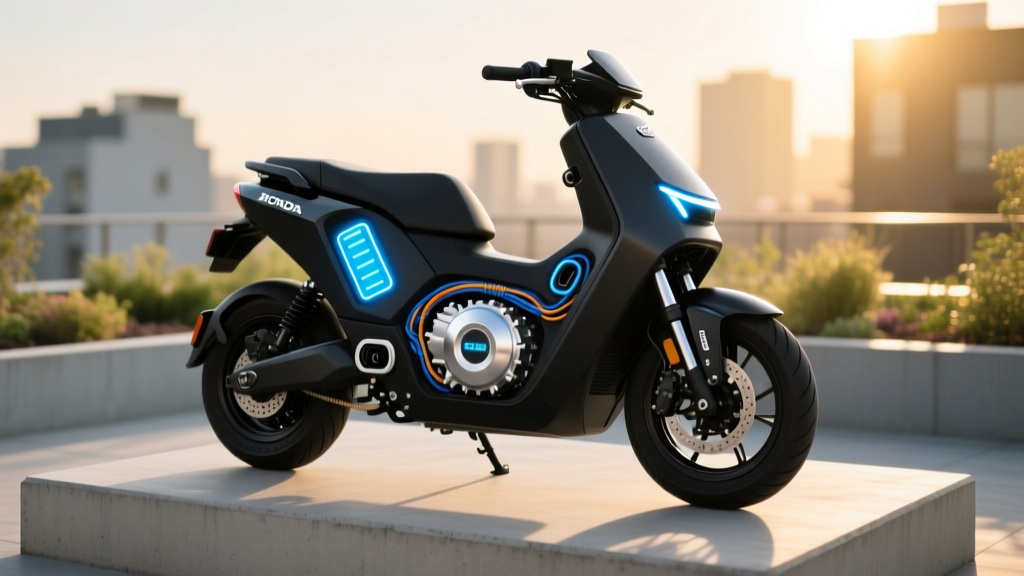
The Honda Zoomer (also known as the Ruckus in North America) has been a favorite among scooter enthusiasts for its rugged, bare-bones styling and reliable 49cc gas engine. But with rising fuel costs and growing interest in electrification, a Honda Zoomer electric conversion has become one of the most searched DIY projects in the micro-mobility space. Before you pull apart your Ruckus and order a hub motor, here's what you actually need to know.
Quick Answer: Is a Honda Zoomer Electric Conversion Worth It?
A Honda Zoomer electric conversion typically costs $1,800–$4,500 in parts and yields 25–50 miles of real-world range depending on battery size (1.5–3.5 kWh). It's a rewarding DIY project for mechanically inclined riders who want a silent, zero-tailpipe-emission commuter scooter. However, for riders who just want reliable electric mobility, a purpose-built electric scooter like the NIU NQi GT or a used Zero S motorcycle often delivers better range, warranty coverage, and safety features for similar or lower total cost. A conversion makes sense if you already own a Zoomer, enjoy wrenching, and want a custom build — not if you're chasing the cheapest cost-per-mile.
What a Honda Zoomer Electric Conversion Actually Involves
Converting a gas-powered Honda Zoomer to electric means removing the 49cc single-cylinder engine, CVT transmission, exhaust system, and fuel tank, then replacing them with three core components:
- Electric motor: Typically a 1,000W–3,000W brushless DC (BLDC) hub motor or mid-drive motor. Hub motors (mounted in the rear wheel) are simpler to install; mid-drive setups retain the belt or chain drive and offer better torque distribution.
- Battery pack: Most conversions use lithium iron phosphate (LiFePO4/LFP) or lithium nickel manganese cobalt (NMC) packs in the 48V–72V range, with capacities from 1.5 kWh to 3.5 kWh. LFP is heavier but offers longer cycle life (2,000+ cycles vs. ~800–1,200 for NMC) and superior thermal stability.
- Motor controller and wiring: A programmable controller (such as a Kelly or Sabvoton unit) manages power delivery, regenerative braking, and throttle response. You'll also need a DC-DC converter to run the scooter's 12V lighting and instruments.
Labor is almost entirely DIY. Professional conversion shops exist in some metro areas, but they typically charge $1,500–$3,000 on top of parts, pushing total cost toward $5,000–$7,500.
Cost Breakdown: Conversion vs. Buying New Electric
Numbers are the only way to make this decision honestly. Below is a side-by-side cost comparison of a Honda Zoomer electric conversion versus purchasing a comparable new electric scooter or electric motorcycle.
| Category | Zoomer EV Conversion (DIY) | Zoomer EV Conversion (Shop) | NIU NQi GT (New) | Zero S (Used, 2023–2024) |
|---|---|---|---|---|
| Vehicle / Donor Cost | $500–$1,500 (used) | $500–$1,500 | $3,599 (MSRP) | $8,000–$11,000 |
| Motor + Controller | $350–$800 | $350–$800 | Included | Included |
| Battery Pack | $600–$1,800 | $600–$1,800 | Included (3.0 kWh) | Included (14.4 kWh) |
| Wiring, Brackets, Misc. | $200–$400 | $200–$400 | — | — |
| Labor | $0 (DIY) | $1,500–$3,000 | — | — |
| Total Cost | $1,650–$4,500 | $3,150–$7,500 | $3,599 | $8,000–$11,000 |
| Real-World Range | 25–50 mi | 25–50 mi | ~40–52 mi | ~120–160 mi |
| Top Speed | 30–50 mph | 30–50 mph | 43 mph | 95+ mph |
| Warranty | None (DIY) | Shop-dependent | 2 yr / unlimited mi | Remaining factory |
Sources: NIU USA pricing (niusales.com), Zero Motorcycles used listings. Conversion cost ranges based on common builds documented on electric scooter conversion forums and parts suppliers like QS Motor and Kelly Controllers.
Electric Conversion vs. Gas Zoomer: Operating Costs
The strongest argument for converting is the fuel savings. A stock Honda Zoomer gets roughly 80–100 MPG with its 49cc engine. That's already efficient, but electricity is cheaper per mile in most US markets.
| Metric | Gas Zoomer (Stock 49cc) | Electric-Converted Zoomer |
|---|---|---|
| Fuel / Energy Cost | $3.40/gal (2026 avg, EIA) | $0.16/kWh (US avg, EIA) |
| Efficiency | ~90 MPG | ~35 Wh/mi (equiv. ~970 MPGe) |
| Cost Per Mile | $0.038/mi | $0.006/mi |
| Annual Fuel (5,000 mi/yr) | $189 | $28 |
| Oil Changes / Year | 2–3 ($30–$60 total) | None |
| Maintenance (Annual Avg.) | $100–$200 (belt, plugs, carb) | $20–$50 (brake pads, tires) |
| 5-Year Operating Cost | $1,445–$1,945 | $240–$390 |
At 5,000 miles per year, the electric conversion saves roughly $200–$300 annually in fuel and maintenance. Over five years, that's $1,000–$1,500 in savings — meaningful, but it takes 3–5 years to recoup even a modest $2,500 DIY conversion investment. The economics favor riders who commute daily and rack up higher mileage.
Range, Charging, and Battery Realities
Range is where most first-time conversion builders get a reality check. The Honda Zoomer's frame and under-seat area can physically fit a battery pack of roughly 1.5–3.5 kWh. Here's what that translates to in practice:
- 1.5 kWh pack (48V, ~30Ah): 20–30 miles real-world range at 25–30 mph. Expect 15–20 miles if riding at 40+ mph or in cold weather (below 40°F), as lithium cells lose 15–30% capacity in freezing temperatures.
- 2.5 kWh pack (60V, ~42Ah): 35–50 miles at mixed city speeds. This is the sweet spot for most commuters.
- 3.5 kWh pack (72V, ~48Ah): 50–70 miles, but requires custom battery box fabrication and adds 40–60 lbs, noticeably affecting handling.
Charging is done via a standard 120V household outlet using a dedicated lithium battery charger (typically 4A–8A output):
- 1.5 kWh pack: ~3–4 hours from empty to full on a 5A charger.
- 2.5 kWh pack: ~5–7 hours.
- 3.5 kWh pack: ~7–10 hours.
Unlike electric cars, there is no DC fast charging or Level 2 infrastructure for converted scooters. You're charging from a wall outlet, which is fine for overnight top-ups but means you can't "quick charge" mid-day. If you don't have access to a ground-level outlet at home or work — apartment dwellers take note — this is a serious constraint. Running an extension cord from a third-floor apartment is a fire hazard and violates most building codes.
Common Misconceptions About Zoomer EV Conversions
| Myth | Fact |
|---|---|
| "A conversion will save me thousands compared to buying new." | A shop-built conversion can cost $5,000–$7,500 — more than a new NIU NQi GT at $3,599. Only DIY builds under $2,500 are truly cheaper, and they come with no warranty. |
| "I'll get 100+ miles of range." | Not on a Zoomer frame. Physical battery space limits you to ~3.5 kWh max, yielding 50–70 miles in ideal conditions. Real-world riding at higher speeds and in wind cuts that by 20–30%. |
| "It'll be highway-legal and I can ride it on the freeway." | Most conversions top out at 30–50 mph. In many states, a scooter originally classified as a moped (under 50cc) remains speed-restricted by registration class regardless of powertrain swap. Check your state's DMV titling rules before building. |
| "Any lithium battery will work." | Battery chemistry matters. LFP (LiFePO4) cells are safer and last 2,000+ cycles but are heavier and bulkier. NMC packs are lighter and more energy-dense but carry higher thermal runaway risk and degrade faster. Always use a matched BMS (Battery Management System) rated for your pack's voltage and current. |
| "I'll qualify for a federal EV tax credit." | The IRS §30D Clean Vehicle Credit applies only to new qualified plug-in electric vehicles from eligible manufacturers, with MSRP, income, and battery-sourcing requirements. A DIY scooter conversion does not qualify. Some states or utilities offer small e-bike or e-scooter rebates — check your local programs. |
Real-World Ownership Considerations
Before starting a Honda Zoomer electric conversion, honestly assess your situation against these practical factors:
Home Charging Access
You need a dedicated 120V outlet in a garage, carport, or ground-floor area where the scooter can sit while charging. If you park on the street or in a multi-story garage with no outlet access, a conversion is impractical. Unlike electric cars that can use public Level 2 and DC fast charging networks (Electrify America, EVgo, ChargePoint), a converted scooter has no public charging option.
Climate and Seasonality
Lithium batteries lose 15–30% of their capacity in temperatures below 40°F. If you commute year-round in Minneapolis, Chicago, or Boston, expect your 40-mile summer range to drop to 25–30 miles in January. Charging lithium batteries below freezing also causes permanent cell damage unless your pack includes a heating pad or thermal management — adding cost and complexity.
Registration, Insurance, and Legality
Most states title the Honda Zoomer as a moped or motor-driven cycle based on its original 49cc engine. Swapping to electric doesn't automatically change its classification, but some states require inspection or re-titling when the powertrain changes. Insurance companies may decline to cover a modified vehicle, or they may classify it differently. Contact your insurer and state DMV before beginning the build.
Safety
A gas Zoomer was engineered around the weight distribution and power output of its 49cc engine. Adding a 2,000W motor and a 50-lb battery pack changes the center of gravity, braking demands, and frame stress. Upgrade your brakes (at minimum, install a front disc brake if your Zoomer has a drum), and ensure all battery connections are properly fused and insulated. Lithium battery fires from poorly built packs are rare but extremely difficult to extinguish.
Decision Framework: Should You Convert or Buy?
Choose a Honda Zoomer Electric Conversion If:
- You already own a Zoomer/Ruckus in good mechanical condition and want to extend its life.
- You have mechanical skills (wiring, basic fabrication, using a multimeter) and enjoy DIY projects.
- You have secure, ground-level home charging access with a dedicated 120V outlet.
- Your daily commute is under 25 miles each way, mostly on surface streets at under 40 mph.
- You value the customization and learning experience over warranty and resale value.
Choose a Purpose-Built Electric Scooter or Motorcycle If:
- You want a turnkey vehicle with a manufacturer warranty and dealer support.
- Your commute exceeds 30 miles or includes roads with 45+ mph speed limits.
- You need reliable range in cold weather without DIY thermal management solutions.
- You want to finance the purchase (lenders typically won't finance a DIY conversion).
- You care about resale value — purpose-built EVs have established depreciation curves; conversions do not.
Keep Your Gas Zoomer If:
- You ride infrequently (under 1,000 miles/year) — the fuel savings won't justify the conversion cost.
- You regularly ride on highways or at sustained speeds above 45 mph.
- You lack home charging access and can't install an outlet where you park.
- You live in a state where re-titling a powertrain-swapped moped is prohibitively complex.
What First-Time EV Buyers Should Know About Micro-Mobility
If the Zoomer conversion is your first foray into electric vehicles, understand that the micro-mobility EV space operates differently from electric cars:
- No standardized charging: Unlike electric cars with NACS, CCS, or CHAdeMO connectors, electric scooters and conversions use proprietary barrel connectors or Anderson plugs. There's no plug-and-play public charging network.
- kW vs. kWh still matters: Your motor's power rating is measured in kilowatts (kW) — a 2 kW motor delivers roughly 2.7 horsepower. Your battery's energy capacity is measured in kilowatt-hours (kWh) — a 2.5 kWh pack holds enough energy to run a 1 kW motor for 2.5 hours. Don't confuse the two.
- Battery replacement is a real future cost: Even high-quality LFP packs degrade over time. Expect 80% capacity retention after 1,500–2,000 charge cycles (roughly 5–8 years of daily use). A replacement 2.5 kWh LFP pack will cost $500–$1,000 in 2026.
- The §30D tax credit doesn't apply here: Federal EV incentives target four-wheeled vehicles from qualified manufacturers meeting battery sourcing and MSRP caps. Scooter conversions fall outside this framework entirely. Some municipalities (Denver, for example) offer e-bike and e-scooter rebates up to $300–$1,200 — research your local programs on afdc.energy.gov.
Frequently Asked Questions
How fast can a converted electric Honda Zoomer go?
Most builds with a 1,500W–2,000W hub motor reach 35–45 mph on flat ground. A 3,000W mid-drive setup can push 50+ mph, but the Zoomer's frame, suspension, and brakes weren't designed for those speeds. Riding above 40 mph on a scooter with drum brakes and 10-inch wheels demands caution and upgraded stopping power.
Is a Honda Zoomer electric conversion street-legal?
It depends on your state. The Zoomer was originally titled as a 49cc moped. In most states, the title classification doesn't change automatically with a powertrain swap, meaning you may still be limited to roads where mopeds are permitted. Some states require a DMV inspection after a conversion. Check with your state's DMV and your insurance provider before starting.
How long does the battery last before needing replacement?
An LFP (LiFePO4) pack typically retains 80% of its original capacity after 2,000 charge cycles. If you charge daily, that's roughly 5.5 years. An NMC pack may reach 80% capacity at 800–1,200 cycles (2–3.5 years of daily charging). Proper care — avoiding full discharges, keeping charge between 20–80% when possible, and never charging below freezing — extends lifespan significantly.
Can I charge my converted Zoomer at public EV charging stations?
No. Public Level 2 (J1772) and DC fast charging (NACS/CCS) stations are designed for electric cars and communicate via digital handshake protocols. A converted scooter charges from a standard 120V wall outlet using a standalone lithium battery charger. There's no adapter or workaround to use car charging infrastructure.
What's the cheapest way to do a Honda Zoomer electric conversion?
The lowest-cost path uses a 48V 1,000W rear hub motor kit ($200–$350), a 48V 20Ah LFP battery ($400–$600), and a basic controller ($50–$100), totaling roughly $650–$1,050 before brackets and wiring. However, this yields only 15–25 miles of range and 25–30 mph top speed. Budget builds often compromise on battery quality and BMS protection — a false economy if the pack fails or becomes a fire risk within a year.
Does a Zoomer electric conversion qualify for any tax credits or incentives?
The federal §30D Clean Vehicle Credit does not apply to DIY scooter conversions — it covers new qualified plug-in electric four-wheeled vehicles meeting specific MSRP, income, and battery-sourcing requirements. However, some cities and utilities offer point-of-sale rebates for e-bikes and electric scooters. Check the Alternative Fuels Data Center for state and local incentive databases.