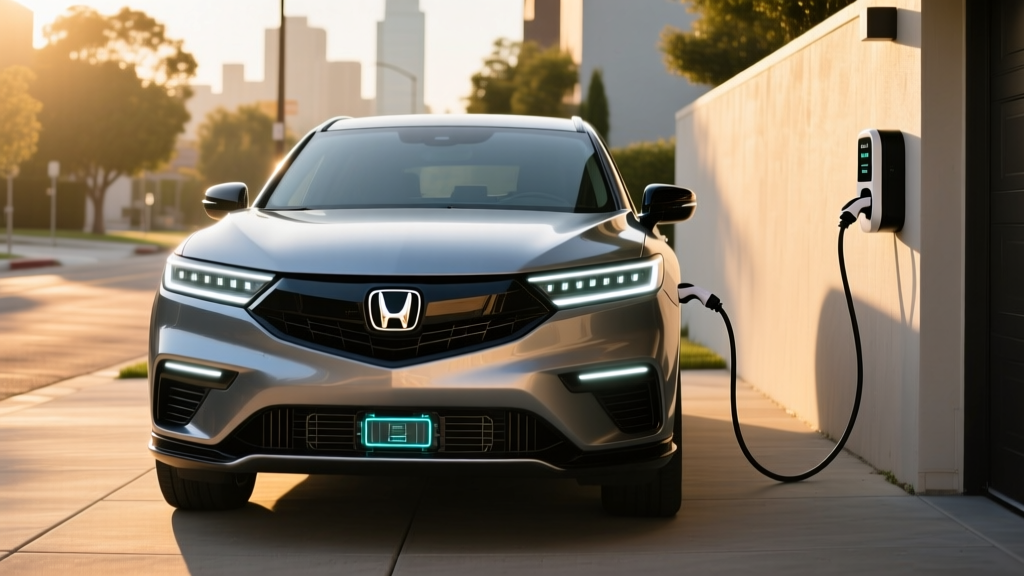
The Honda ZDX represents Honda's most ambitious electric vehicle to date — a midsize luxury SUV built on General Motors' Ultium platform through a strategic partnership between the two automakers. As a 2026 model, the ZDX slots into one of the most competitive segments in the EV market, going head-to-head with the Tesla Model Y, Hyundai Ioniq 5, Ford Mustang Mach-E, and its platform-mate, the Cadillac Lyriq. But does Honda's first ground-up EV deliver where it counts for real buyers? We break down the range, charging performance, pricing, and ownership picture with the exact numbers you need.
Quick Verdict: Who the Honda ZDX Is For
The 2026 Honda ZDX is best suited for families and commuters who want a premium-feeling electric SUV with strong range, spacious cargo, and Honda's reputation for reliability — without paying Cadillac or BMW prices. It's not the fastest-charging EV in its class, nor the most performance-oriented, but it offers a compelling balance of comfort, tech, and everyday usability. If you can charge at home and your daily driving stays under 200 miles, the ZDX is a strong contender. Road-trippers should pay close attention to the DC fast-charging curve, which we detail below.
Range, Efficiency, and Real-World Expectations
EPA Estimated Range: Up to 325 miles (RWD base) / 305 miles (AWD)
Real-World Highway Expectation: ~260–285 miles at 70-75 mph
Cold-Weather Impact (below 32°F): Expect 20–30% range reduction, bringing usable range to ~210–250 miles depending on conditions and preconditioning use.
The ZDX's range varies by trim and drivetrain. The rear-wheel-drive (RWD) base model achieves the highest EPA rating, while the dual-motor all-wheel-drive (AWD) variants sacrifice roughly 20 miles of range for added traction and power. These EPA figures are competitive within the midsize EV SUV segment, though they trail the longest-range Tesla Model Y configurations.
Efficiency is rated by the EPA at approximately 95–100 MPGe combined (roughly 33–35 kWh per 100 miles), which is respectable for a vehicle of this size and weight. Drivers who primarily commute in stop-and-go city traffic will see efficiency closer to the EPA combined number thanks to regenerative braking, while sustained highway driving at higher speeds pushes consumption toward 38–42 kWh/100mi.
| Trim | Drivetrain | EPA Range | MPGe (Combined) | kWh/100mi |
|---|---|---|---|---|
| EX (Base) | RWD | 325 mi | ~100 MPGe | ~34 |
| EX-L | RWD | 315 mi | ~98 MPGe | ~34 |
| EX-L AWD | AWD | 305 mi | ~96 MPGe | ~35 |
| Elite AWD | AWD (Performance) | 290 mi | ~93 MPGe | ~36 |
Battery Specs and Chemistry
The 2026 ZDX uses General Motors' Ultium battery platform with a usable capacity of approximately 102 kWh. The battery pack employs NMC (nickel-manganese-cobalt) chemistry, which offers high energy density — the reason the ZDX achieves over 300 miles of range in a midsize SUV form factor.
NMC chemistry provides more range per kilogram than LFP (lithium iron phosphate) alternatives, but it comes with trade-offs: NMC cells are more sensitive to sustained high states of charge and extreme temperatures. Honda recommends keeping the state of charge (SoC) between 20–80% for daily use to maximize long-term battery health, reserving 100% charges for road trips. The battery management system includes active liquid cooling and heating — critical for maintaining charge speed and longevity in both hot and cold climates.
Charging Speeds: DC Fast Charging and Home Level 2
Charging is where the ZDX's Ultium platform shows both strengths and limitations compared to the fastest-charging competitors.
| Charging Level | Power / Rate | Time / Speed | Connector |
|---|---|---|---|
| DC Fast Charge (Peak) | 190 kW (peak) | 10–80% in ~33 minutes | CCS (NACS adapter available) |
| DC Fast Charge (Sustained Avg) | ~130–140 kW avg (10-80%) | Adds ~180 mi in 30 min | CCS / NACS |
| Level 2 (Home/Public AC) | 11.5 kW (48A) | ~30 mi/hr; 0–100% in ~9.5 hrs | J1772 / NACS |
| Level 1 (120V Outlet) | ~1.4 kW (12A) | ~3.5 mi/hr | Standard NEMA 5-15 |
What this means in practice: The ZDX's 190 kW peak DC fast-charge rate is adequate but not class-leading. The Hyundai Ioniq 5 peaks at 240 kW on 800V architecture and completes a 10–80% session in roughly 18 minutes — about 15 minutes faster than the ZDX. The charge curve on the ZDX tapers noticeably above 60% SoC, which is typical of NMC chemistry on a 400V architecture. On a road trip, plan for 30–35 minute stops at 150+ kW chargers.
For home charging, the 11.5 kW Level 2 onboard charger is a strong point. With a 48-amp Level 2 wall connector on a 60-amp circuit, you'll add roughly 30 miles of range per hour — enough to fully replenish the battery overnight. Installation costs for a Level 2 home charger typically range from $500–$2,500 depending on panel capacity and wiring distance (a 200-amp panel upgrade can add $1,500–$3,000 if needed).
Preconditioning tip: Always use the ZDX's navigation-based battery preconditioning when routing to a DC fast charger. This warms the battery to optimal temperature before arrival, significantly improving charge speed — especially in cold weather where an un-preconditioned battery may peak at only 80–100 kW instead of 190 kW.
Performance and Drivetrain
The 2026 ZDX offers multiple powertrain configurations depending on trim:
| Trim | Horsepower | Torque | 0–60 mph | Drivetrain |
|---|---|---|---|---|
| EX / EX-L (RWD) | 340 hp | 325 lb-ft | ~6.2 sec | Rear-Wheel Drive |
| EX-L AWD | 355 hp | 355 lb-ft | ~5.5 sec | Dual-Motor AWD |
| Elite AWD (Performance) | 500 hp | 520 lb-ft | ~4.0 sec | Dual-Motor AWD |
The RWD models deliver more than adequate acceleration for daily driving and highway merging. The Elite AWD's 500 hp and 4.0-second 0–60 time is genuinely quick and puts it in performance territory with the Tesla Model Y Performance and Ford Mustang Mach-E GT. All trims feature one-pedal driving with adjustable regenerative braking levels, and the AWD models include a torque-vectoring rear axle for improved cornering dynamics.
Pricing, Trims, and Federal Tax Credit Eligibility
| Trim | Base MSRP | §30D Credit Eligibility | Effective Price (if eligible) |
|---|---|---|---|
| EX (RWD) | ~$58,950 | Up to $7,500 (pending sourcing compliance) | ~$51,450 |
| EX-L (RWD) | ~$61,500 | Up to $7,500 (pending sourcing compliance) | ~$54,000 |
| EX-L AWD | ~$64,500 | Up to $7,500 (pending sourcing compliance) | ~$57,000 |
| Elite AWD | ~$69,900 | Up to $7,500 (pending sourcing compliance) | ~$62,400 |
Important tax credit caveats: The federal IRS §30D clean vehicle credit offers up to $7,500, but eligibility for the ZDX depends on several factors that change frequently:
- MSRP Cap: SUVs must be priced at or below $80,000 — all ZDX trims qualify.
- Buyer Income Cap: Modified adjusted gross income must not exceed $150,000 (single), $225,000 (head of household), or $300,000 (joint filers).
- Battery Sourcing Requirements: The critical minerals and battery component requirements tighten annually. Because the ZDX uses GM's Ultium platform with North American battery assembly, it has historically qualified — but critical mineral sourcing rules must be verified at the time of purchase via the DOE/FuelEconomy.gov eligibility tool.
- Point-of-Sale Transfer: As of 2024+, eligible buyers can transfer the credit to the dealer at purchase, reducing the purchase price directly rather than waiting for a tax refund.
Always confirm current-year eligibility with a tax professional and the IRS before purchasing, as battery sourcing requirements and manufacturer compliance can shift.
Interior, Cargo, and Technology
The ZDX's cabin reflects its premium positioning. An 11.3-inch digital instrument cluster and an 11.3-inch touchscreen infotainment system (running Google built-in with Google Maps, Assistant, and Play Store) dominate the dashboard. Wireless Apple CarPlay and Android Auto are standard across all trims.
Cargo and Passenger Space:
- Rear legroom: ~38.7 inches (competitive with the Hyundai Ioniq 5 and Tesla Model Y)
- Cargo behind second row: ~28.5 cu ft
- Cargo with rear seats folded: ~63 cu ft
- Frunk (front trunk): Not available — the Ultium platform's front subframe packaging does not accommodate a frunk, which is a notable omission compared to the Ioniq 5 and F-150 Lightning.
Driver Assistance — Honda Sensing EV: The ZDX comes equipped with Honda's latest ADAS suite, including adaptive cruise control with low-speed follow, lane-keeping assist, blind-spot monitoring, and rear cross-traffic alert. This is an SAE Level 2 driver-assistance system — it does not drive the vehicle autonomously. The driver must keep hands on the wheel and eyes on the road at all times. Unlike GM's Super Cruise (available on the Cadillac Lyriq), the ZDX does not currently offer hands-free highway driving.
Warranty Coverage
| Coverage Type | Duration |
|---|---|
| Basic (Bumper-to-Bumper) | 3 years / 36,000 miles |
| Powertrain | 5 years / 60,000 miles |
| Battery & Electric Components | 8 years / 100,000 miles (capacity retention ≥70%) |
| Corrosion Perforation | 5 years / unlimited miles |
The 8-year/100,000-mile battery warranty is federally mandated for EVs and matches the industry standard. Honda guarantees the battery will retain at least 70% of its original capacity during the warranty period. Real-world Ultium platform data from GM vehicles suggests degradation is typically in the 5–10% range over the first 100,000 miles when proper charging habits are followed (avoiding frequent 100% charges and extreme heat exposure).
Pros, Cons, and Competitive Positioning
✅ Pros
- 325 miles EPA range (RWD) is class-competitive
- Spacious cabin with strong rear legroom
- Google built-in infotainment is responsive and useful
- Strong build quality and Honda dealer service network
- 11.5 kW Level 2 onboard charger is above average
- Elite AWD trim delivers genuine performance (4.0s 0–60)
❌ Cons
- DC fast charging (190 kW peak, ~33 min 10-80%) trails Hyundai/Kia 800V rivals
- No frunk — a missed opportunity in this segment
- No hands-free driving feature (unlike Cadillac Lyriq's Super Cruise option)
- Premium pricing — base MSRP near $59K before credits
- No CCS-to-NACS native port — relies on adapter for Tesla Supercharger access
- Heavy vehicle weight impacts tire wear and efficiency at speed
Is the Honda ZDX Worth It vs. the Competition?
Decision Framework
Choose the Honda ZDX if:
- You value Honda's reliability reputation and dealer network
- You primarily charge at home and need 300+ miles for occasional road trips
- You want a premium interior without paying BMW iX or Mercedes EQE SUV prices
- You prefer Google built-in infotainment over Tesla's closed ecosystem
Look elsewhere if:
- You road-trip frequently and need the fastest DC charging (consider Hyundai Ioniq 5 or Kia EV6 with 800V architecture)
- You want hands-free highway driving (Cadillac Lyriq with Super Cruise)
- Budget is tight and you need the lowest entry price (Tesla Model Y starts lower, especially after credits)
- You need a frunk for extra cargo flexibility
Frequently Asked Questions
What is the real-world range of the Honda ZDX?
The EPA rates the RWD ZDX at 325 miles, but real-world highway driving at 70-75 mph typically yields 260–285 miles. In cold weather (below 32°F), expect 20–30% range loss, reducing usable range to approximately 210–250 miles. City driving with regenerative braking gets you closer to the EPA number.
How fast does the Honda ZDX charge?
On a DC fast charger, the ZDX peaks at 190 kW and charges from 10–80% in approximately 33 minutes. At home on a Level 2 charger (11.5 kW / 48A), it adds about 30 miles of range per hour, fully charging overnight in roughly 9.5 hours. Level 1 (120V) trickle charging adds only ~3.5 miles per hour.
Does the Honda ZDX qualify for the federal EV tax credit?
The ZDX is potentially eligible for up to $7,500 under IRS §30D, provided the buyer meets income caps ($150K single / $300K joint), the vehicle MSRP is under $80,000 (all trims qualify), and battery sourcing requirements are met at the time of purchase. The Ultium platform's North American assembly has historically supported eligibility, but critical mineral rules change annually — always verify at IRS.gov and with a tax professional before purchasing.
Is the Honda ZDX worth buying over the Tesla Model Y or Hyundai Ioniq 5?
It depends on your priorities. The ZDX offers a more traditional luxury SUV experience with premium materials, quiet ride quality, and Honda's service network. The Model Y offers better Supercharger access and a lower starting price. The Ioniq 5 charges significantly faster (18 min 10-80%) on 800V architecture and starts at a lower MSRP. The ZDX wins on cabin comfort and brand trust for Honda loyalists but isn't the segment leader in charging speed or value.
Does the ZDX have a frunk?
No. The ZDX does not include a front trunk. The Ultium platform's front subframe and power electronics packaging leave no room for frunk storage. If front cargo space is important to you, consider the Hyundai Ioniq 5 or Rivian R1S.
Can the ZDX use Tesla Superchargers?
Yes, but through an adapter. The ZDX uses a CCS charge port natively. Honda offers a CCS-to-NACS adapter that enables access to Tesla's Supercharger network (V3 and V4 stalls). Ensure the adapter is included with your purchase or budget ~$200–$300 for one. Native NACS ports are expected on future Honda EVs.