Quick Answer: Is the Honda Super One Electric Worth Buying in 2026?
The Honda Super One electric is a compact EV targeting budget-conscious buyers with an estimated EPA range of 230–260 miles, a starting MSRP near $30,000, and DC fast charging peaking around 150 kW. It's best suited for urban commuters and suburban drivers who have access to home Level 2 charging. Compared to a similarly priced gas compact, the Super One saves roughly $1,200–$1,500 annually on fuel and maintenance, but buyers should verify federal tax credit eligibility under current IRS §30D rules before committing. Real-world highway range will likely fall 15–20% below the EPA sticker, and cold climates can reduce range further.
What Is the Honda Super One Electric?
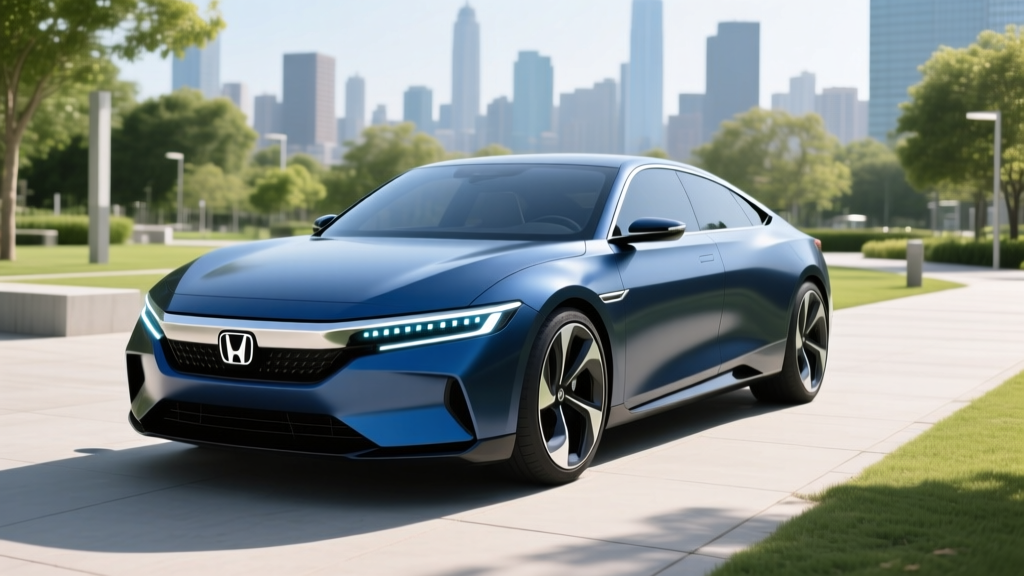
Honda's Super One electric represents the brand's push into the affordable compact EV segment for global markets, with particular attention to Asia-Pacific and potential North American availability. Positioned below the Prologue in Honda's EV lineup, the Super One is built on a dedicated EV platform designed to maximize interior space while keeping costs manageable. Honda has signaled that the Super One will feature a lithium iron phosphate (LFP) battery — a chemistry that trades some energy density for lower cost, longer cycle life, and reduced fire risk compared to nickel-manganese-cobalt (NMC) cells.
For context, Honda's earlier EV efforts (the Clarity EV and the limited-run Honda e) were either short-ranged or market-restricted. The Super One aims to correct those limitations with competitive range and modern charging speeds, targeting buyers who find the Tesla Model 3 or Hyundai Ioniq 6 slightly out of reach financially.
Range, Battery, and Charging Specs
Here's what we know about the Super One's electrified hardware based on Honda's announced specifications and platform details:
| Specification | Estimated Figure |
|---|---|
| Battery Capacity (usable) | ~50–55 kWh (LFP chemistry) |
| EPA Range (est.) | 230–260 miles |
| Real-World Highway Range | ~190–220 miles |
| Cold-Weather Range (20°F) | ~160–195 miles |
| Peak DC Fast Charge Rate | ~150 kW |
| 10–80% DC Charge Time | ~28–32 minutes |
| Level 2 (240V) Charge Rate | ~7.2–11 kW |
| Level 2 Full Charge Time | ~6–8 hours |
| Motor Output | ~150–180 hp |
| 0–60 mph (est.) | ~7.5–8.5 seconds |
| Drivetrain | Front-wheel drive |
Real-World Range Reality Check
The EPA sticker is a laboratory estimate. In practice, expect the Super One to deliver approximately 190–220 miles at sustained highway speeds (70–75 mph) in moderate temperatures. In winter conditions (below 30°F), LFP batteries experience greater cold-weather resistance than NMC cells, so plan for 160–195 miles of usable range. If your daily commute plus errands exceed 100 miles round-trip in winter, you'll want reliable home charging to avoid range stress.
Charging Curve Practicality
The 150 kW peak charge rate is competitive for this price class, but remember that peak rate only holds between roughly 10–40% state of charge. Above 60%, the charge curve tapers significantly — expect 50 kW or less past 80%. This is why manufacturers quote 10–80% times rather than 0–100%. For daily driving, charging to 80% is recommended for LFP battery longevity, though Honda may recommend periodic 100% charges for LFP cell balancing (check the owner's manual for specific guidance).
EV vs Gas: How Does the Super One Compare?
The Super One competes against both gas compacts (Honda Civic, Toyota Corolla) and other affordable EVs. Here's how the numbers stack up against a gas Civic and a hybrid Civic as comparison baselines:
| Metric | Honda Super One EV | Honda Civic Gas (2025) | Honda Civic Hybrid (2025) |
|---|---|---|---|
| Starting MSRP | ~$30,000 | ~$24,000 | ~$28,500 |
| Federal Tax Credit (potential) | Up to $7,500* | $0 | $0 |
| Effective Price After Credit | ~$22,500 | $24,000 | $28,500 |
| Energy/Fuel Cost Per Mile | ~$0.04–$0.06 | ~$0.12–$0.15 | ~$0.08–$0.10 |
| Annual Fuel/Energy (12k mi) | ~$480–$720 | ~$1,440–$1,800 | ~$960–$1,200 |
| Annual Maintenance | ~$300–$400 | ~$600–$800 | ~$550–$700 |
| EPA Efficiency | ~110–120 MPGe | ~35 MPG combined | ~49 MPG combined |
| 5-Year Fuel/Energy Savings vs Gas | Baseline | +$4,800–$5,400 more | +$2,400–$2,800 more |
* Federal tax credit eligibility depends on MSRP caps ($55,000 for sedans/compacts), buyer income limits ($150K single / $300K joint), and battery critical-mineral sourcing requirements. Always verify current eligibility on IRS.gov before purchase. Point-of-sale transfer is available at participating dealers.
Total Cost of Ownership: 5-Year Breakdown
Purchase price is only the beginning. Here's a realistic 5-year / 60,000-mile ownership cost comparison:
| Cost Category | Super One EV | Civic Gas | Civic Hybrid |
|---|---|---|---|
| Net Purchase (after credit) | $22,500 | $24,000 | $28,500 |
| Home Charger Install (Level 2) | $800–$2,000 | $0 | $0 |
| 5-Year Energy/Fuel | $2,400–$3,600 | $7,200–$9,000 | $4,800–$6,000 |
| 5-Year Maintenance | $1,500–$2,000 | $3,000–$4,000 | $2,750–$3,500 |
| 5-Year Insurance (avg) | $7,500–$9,000 | $6,000–$7,500 | $6,500–$8,000 |
| Estimated Depreciation (5yr) | $8,000–$11,000 | $7,000–$9,000 | $8,500–$10,500 |
| 5-Year Total Cost | $42,700–$50,100 | $47,200–$53,500 | $51,050–$56,500 |
Key takeaways from this breakdown:
- Insurance is typically 15–25% higher for EVs due to repair costs and battery replacement risk. Get quotes before buying.
- Home Level 2 installation adds $800–$2,000 upfront, but this is a one-time cost that pays for itself within 1–2 years through fuel savings.
- Depreciation uncertainty remains the biggest variable — EV resale values have been volatile, and LFP battery longevity data is still maturing.
- Maintenance savings are real: no oil changes, no spark plugs, reduced brake wear from regenerative braking, and fewer moving parts overall.
Real-World Ownership Considerations
Home Charging Access
The Super One's ownership experience hinges on home charging. With a Level 2 (240V) home charger, you'll wake up to a full battery every morning — roughly 230+ miles of range — which covers most daily needs without ever visiting a public charger. Installation costs vary widely:
- Best case (panel nearby, 200A service): $800–$1,200 for charger + electrician + permit
- Typical case: $1,200–$2,000
- Panel upgrade required: $2,500–$4,000+ if your home has older 100A service
Always get a quote from a licensed electrician before committing to the vehicle. If you live in an apartment or lack dedicated parking, public charging becomes your primary option — and that changes the cost equation significantly (DC fast charging costs $0.30–$0.50/kWh at public stations vs. $0.10–$0.18/kWh at home).
Climate and Driving Patterns
The Super One's LFP battery is more sensitive to cold temperatures than NMC chemistry. If you live in a region with sustained sub-freezing winters (Upper Midwest, Northeast, Mountain West), budget for 25–35% range loss in the coldest months. Preconditioning the battery while plugged in helps mitigate this, but it requires planning.
For warm-climate drivers (South, Southwest, coastal California), the Super One's range will track closely with EPA estimates year-round, and the LFP chemistry's thermal stability is an advantage.
Common Misconceptions — Myth vs. Fact
| Myth | Fact |
|---|---|
| "EV batteries need replacing every 5 years" | LFP batteries typically retain 80%+ capacity after 200,000+ miles. Honda's battery warranty is expected at 8 years / 100,000 miles minimum, per federal requirements. |
| "The Super One qualifies for the full $7,500 tax credit" | Credit eligibility depends on battery sourcing, critical minerals, buyer income, and MSRP caps. Many EVs qualify for partial credits ($3,750) or none at all depending on the tax year's sourcing rules. |
| "I'll save money no matter how I charge" | Exclusive DC fast charging at public stations ($0.35–$0.50/kWh) can cost as much per mile as a fuel-efficient hybrid. Home Level 2 charging is where the real savings live. |
| "230 miles of range isn't enough" | The average American drives 37 miles per day (FHWA data). 230 miles covers nearly a week of average driving. The real constraint is road trips — plan charging stops for drives over 180 miles. |
| "EVs are worse for the environment because of electricity generation" | Even on coal-heavy grids, EVs produce fewer lifetime emissions than gas cars. On cleaner grids (solar, wind, nuclear), the advantage is substantial. Grid mix continues improving annually. |
Federal Tax Credit: What You Actually Qualify For
The IRS §30D Clean Vehicle Credit has become increasingly complex. For the Super One to qualify, several conditions must align:
- MSRP cap: Vehicle must be priced under $55,000 (sedans/compacts) — the Super One clears this easily at ~$30,000 base.
- Buyer income cap: Adjusted gross income must not exceed $150,000 (single), $225,000 (head of household), or $300,000 (joint filing).
- Battery sourcing: At least a specified percentage of critical minerals must be sourced from the US or free-trade-agreement countries. This threshold increases annually and can reduce the credit from $7,500 to $3,750 or eliminate it entirely.
- Final assembly: Vehicle must be assembled in North America. If the Super One is imported from Asia, it may not qualify regardless of other factors.
- Point-of-sale transfer: You can transfer the credit to the dealer at purchase, reducing your out-of-pocket cost immediately rather than waiting for a tax refund.
Consult a tax professional and check fueleconomy.gov for the most current credit eligibility before purchasing.
Decision Framework: Is the Super One Right for You?
Choose the Honda Super One Electric If:
- You have access to home Level 2 charging (garage, driveway, or dedicated parking with outlet access)
- Your daily driving is under 80 miles round-trip, with occasional longer trips under 200 miles
- You live in a moderate or warm climate, or can accept reduced winter range
- You qualify for at least a partial federal tax credit (verify income and sourcing rules)
- You want lower running costs and can absorb a slightly higher insurance premium
- You prefer Honda's build quality and dealer network over newer EV-only brands
Consider a Hybrid (Civic Hybrid) Instead If:
- You lack reliable home or workplace charging access
- You regularly drive 300+ miles between stops in areas with sparse charging infrastructure
- You live in an extreme cold climate and need consistent year-round range
- You want to minimize upfront cost and avoid any charging logistics
- You drive fewer than 8,000 miles annually — the fuel savings won't offset the EV premium quickly enough
Look at a Competing EV (Ioniq 5, Model 3, Equinox EV) If:
- You need 300+ miles of EPA range for frequent road trips
- You want DC fast charging above 200 kW for shorter charging stops
- You need all-wheel drive for snow or performance
- You want access to the Tesla Supercharger network (NACS connector)
Frequently Asked Questions
When will the Honda Super One electric be available in the US?
Honda has announced the Super One for select global markets, with North American availability still being finalized. Check Honda's official press site for confirmed US launch timing. If the vehicle is assembled outside North America, it will not qualify for the §30D federal tax credit regardless of other specifications.
What is the difference between LFP and NMC batteries?
LFP (lithium iron phosphate) batteries offer longer cycle life, lower cost, better thermal safety, and no cobalt. The trade-off is lower energy density (meaning a heavier or larger pack for the same range) and greater cold-weather performance loss. NMC (nickel-manganese-cobalt) batteries pack more energy per pound and handle cold better, but cost more and have shorter cycle lives. For a budget compact EV like the Super One, LFP is a pragmatic choice.
How much will it cost to charge the Super One at home?
With an average US electricity rate of $0.16/kWh and a ~52 kWh battery, a full home charge costs approximately $8.30. At 240 miles of range per charge, that works out to roughly $0.035 per mile — about one-third the per-mile cost of a 35 MPG gas car at $3.50/gallon.
Does the Super One support DC fast charging on road trips?
Yes. The estimated 150 kW peak DC charge rate means a 10–80% top-up in roughly 28–32 minutes at a compatible station. Use apps like PlugShare or A Better Routeplanner to map charging stops on longer trips. Confirm the connector type (CCS or NACS) before purchase, as Honda's North American models are transitioning to NACS for Supercharger access.
Will the Super One's battery last?
LFP batteries are rated for 3,000–5,000+ full charge cycles before dropping to 80% capacity. At 250 miles per cycle, that translates to 750,000+ miles — far beyond the vehicle's likely service life. Honda's expected warranty of 8 years / 100,000 miles (with a capacity retention threshold, typically 70%) provides additional peace of mind.
Is the Honda Super One better than the Honda Prologue?
They serve different purposes. The Prologue is a midsize SUV with ~296 miles of range and a higher starting price (~$47,000). The Super One is a smaller, more affordable compact aimed at first-time EV buyers. If you need cargo space and family seating, the Prologue wins. If you want the lowest entry price and a commuter-friendly footprint, the Super One is the better fit.