The Short Answer on the Honda Super EV Concept
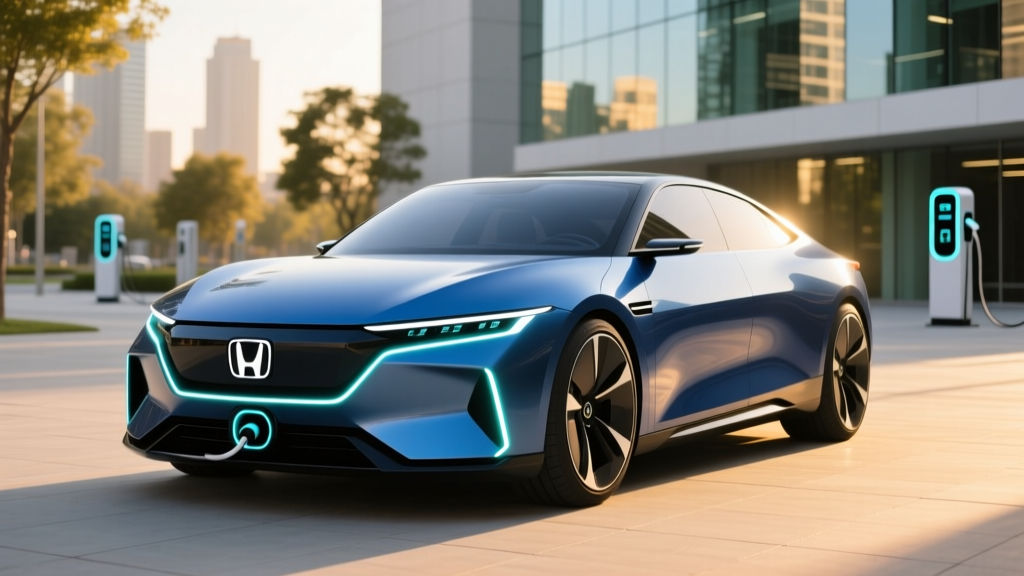
The Honda Super EV Concept is a preliminary design study showcasing Honda's future electric vehicle direction, featuring a low-slung sports sedan silhouette and Honda's next-generation EV architecture. As of 2026, Honda has not released production specifications, pricing, or an official on-sale date for this specific concept. Buyers considering Honda's EV lineup should look at the currently available Honda Prologue (EPA-estimated 296 miles range, starting at ~$47,400 MSRP) or the upcoming Honda 0 Series production models expected by 2026–2027. If you need an EV now, the Prologue or competing midsize electric sedans and SUVs are your realistic options; if you can wait 12–24 months, Honda's 0 Series lineup may deliver the design language previewed by the Super EV Concept.
What the Honda Super EV Concept Actually Is
Honda unveiled the Super EV Concept as a vision of its electrified future — a sleek, aerodynamic sedan that signals the design and engineering direction of the brand's Honda 0 Series electric vehicle lineup. Concepts like this are common in the auto industry: they preview styling cues, platform architecture, and technology ambitions, but they are not production-ready vehicles. Honda has confirmed that production models derived from the 0 Series — which shares design DNA with the Super EV Concept — will begin rolling out in global markets starting in 2026, with North American availability likely following shortly after.
What Honda has signaled about the platform underneath the Super EV Concept includes:
- A new dedicated EV architecture (not a shared platform with GM, unlike the Prologue)
- Thinner battery packs for a lower ride height and improved aerodynamics
- Advanced driver-assistance systems targeting higher SAE automation levels
- A focus on lightweight construction and reduced vehicle mass compared to current EVs
None of these details come with confirmed numbers yet. Any range, horsepower, battery capacity (kWh), or charging speed (kW) figures circulating online are speculative until Honda publishes production specs.
How Honda's Current EV Lineup Compares to Gas and Hybrid Alternatives
While the Super EV Concept remains in the preview stage, Honda's current electrified offerings give buyers real choices today. Here's how the available Honda Prologue stacks up against Honda's hybrid and gas options in practical terms:
| Metric | Prologue (BEV) | Accord Hybrid | Accord 1.5T Gas |
|---|---|---|---|
| Starting MSRP | ~$47,400 | ~$34,395 | ~$29,295 |
| EPA Range / MPG | 296 mi (EPA est.) | 51/44/48 MPG (city/hwy/combined) | 29/37/32 MPG |
| Fuel/Energy Cost per Year* | ~$550 (electricity) | ~$1,050 (gas) | ~$1,650 (gas) |
| Federal Tax Credit (§30D) | Up to $7,500 (eligibility varies) | $0 | $0 |
| Estimated 5-Year Fuel Savings vs. Gas | ~$5,500 | ~$3,000 | Baseline |
| Maintenance Cost (5-Year Est.) | ~$1,500 | ~$2,800 | ~$3,200 |
*Annual fuel/energy cost based on 15,000 miles/year, national average electricity rate of $0.16/kWh, and gas at $3.40/gallon. Your costs vary by local utility rates and driving habits. Source: fueleconomy.gov
The Prologue's higher sticker price is partially offset by the §30D federal tax credit (up to $7,500 at point of sale, subject to IRS income and battery-sourcing requirements), lower energy costs, and reduced maintenance. Over five years, the total cost gap between the Prologue and an Accord Hybrid narrows considerably — but the upfront premium is real, and the Prologue's range of 296 miles EPA (expect roughly 230–260 miles in real-world highway or cold-weather driving) is a genuine consideration for road-trip-heavy buyers.
Real Costs and Savings: What EV Ownership Actually Looks Like
If Honda's 0 Series production models follow the Super EV Concept's design philosophy, buyers should expect a premium-positioned electric sedan. Here's a realistic ownership cost framework based on current Honda EV and competitive midsize EV sedan pricing:
| Cost Category | Midsize EV Sedan (~$48,000 MSRP) | Midsize Gas Sedan (~$30,000 MSRP) |
|---|---|---|
| Purchase Price (after incentives) | $40,500 (est. after $7,500 credit) | $30,000 |
| Insurance (5 years) | $9,500 (EVs typically 15–25% higher) | $7,800 |
| Energy/Fuel (5 years, 75K miles) | $2,750 (home charging avg.) | $8,250 (32 MPG avg.) |
| Maintenance (5 years) | $1,500 | $3,200 |
| Depreciation (5 years) | $22,000 (est. 50% retained) | $13,500 (est. 55% retained) |
| Total 5-Year Cost | $76,250 | $62,750 |
Key takeaways from this breakdown:
- Energy savings are real — roughly $5,500 over five years with home charging at national-average rates. Public DC fast charging at $0.35–$0.50/kWh cuts into this advantage significantly.
- Insurance premiums are higher for EVs due to repair costs and battery replacement risk. Get a quote before committing.
- Depreciation remains the wildcard — EV resale values have been volatile, with some models losing 50%+ in the first three years. Honda's brand reputation may help here, but the market is still establishing norms.
- The §30D tax credit is not guaranteed — buyer income caps ($150K single / $300K joint), MSRP caps ($55K sedans / $80K SUVs), and battery sourcing requirements all affect eligibility. Check current rules at IRS.gov.
First-Time EV Buyer Considerations: What the Super EV Concept Era Means for You
If Honda's next-generation EVs follow the Super EV Concept's trajectory, here are the practical ownership realities you should plan for:
Home Charging Access Is Non-Negotiable for Most Owners
Over 80% of EV charging happens at home. Without Level 2 home charging (a 240V outlet or hardwired station delivering 7–11.5 kW), EV ownership becomes significantly less convenient. A Level 2 home installation typically costs:
- Equipment: $350–$700 for a quality Level 2 charger (e.g., ChargePoint Home Flex, Emporia Level 2)
- Electrician labor: $500–$2,000 depending on panel proximity and conduit runs
- Panel upgrade (if needed): $1,500–$3,500 if your home has a 100-amp panel that needs upgrading to 200 amps
- Permit/inspection: $50–$300 depending on jurisdiction
If you rent, live in a condo without charging infrastructure, or rely exclusively on street parking, EV ownership is possible but requires planning around public charging networks. Honda's future models are expected to support NACS (Tesla Supercharger) access, which significantly expands the available fast-charging network.
Cold Weather Cuts Range — Plan Accordingly
Every EV loses range in cold temperatures. At 20°F, expect a 20–35% reduction from EPA-estimated range due to battery chemistry limitations and cabin heating demands. A 300-mile EPA-rated Honda 0 Series sedan would realistically deliver 195–240 miles in deep winter conditions. Heat pumps (expected on Honda's next-gen platform) mitigate this loss but don't eliminate it.
DC Fast Charging: Peak kW Is Not Sustained kW
When Honda eventually publishes charging specs, pay attention to the 10–80% charge time, not just the peak kW number. A vehicle may peak at 200 kW but only sustain that rate between 10–40% state of charge, then taper to 80 kW, then 40 kW as it approaches 80%. The charge curve matters more than the headline number. Expect Honda's next-gen platform to target competitive 10–80% times in the 18–25 minute range based on industry trends, but confirm with production specs.
Common Misconceptions About Honda's EV Future
| Myth | Fact |
|---|---|
| "The Super EV Concept is available to order now." | It is a design study. No production version is on sale. Honda's 0 Series production models are expected starting 2026–2027. |
| "Honda EVs are just rebadged GM vehicles." | The Prologue uses GM's Ultium platform, but Honda's 0 Series (previewed by the Super EV Concept) will use Honda's own dedicated EV architecture. |
| "I'll get the full $7,500 tax credit automatically." | The §30D credit has income caps, MSRP caps, battery critical-mineral sourcing rules, and point-of-sale transfer options. Eligibility varies per buyer and per vehicle. Consult a tax professional. |
| "EVs need no maintenance at all." | EVs eliminate oil changes and exhaust maintenance, but tires wear faster (due to instant torque and vehicle weight), cabin air filters need replacement, brake fluid needs periodic service, and the 12V auxiliary battery still requires attention. |
| "The battery will need replacing in 5 years." | Modern EV batteries (both NMC and LFP chemistries) are designed for 150,000–200,000+ miles with 70–80% capacity retention. Honda's battery warranty is expected to cover at least 8 years/100,000 miles per federal requirements. |
Decision Framework: Should You Wait for Honda's Next-Gen EV or Buy Now?
Choose to buy now (Honda Prologue or competitor) if:
- You need a vehicle within the next 3–6 months
- Your daily commute is under 60 miles round-trip and you have home charging
- You want to lock in current §30D tax credit eligibility before rules potentially change
- You're comparing against the Tesla Model Y, Hyundai Ioniq 5, or Ford Mustang Mach-E and want a Honda badge
- You prefer a crossover/SUV body style (the Prologue is a midsize SUV)
Choose to wait for Honda 0 Series / Super EV-derived production models if:
- You specifically want a sedan with Honda's newest design language and dedicated EV platform
- You can defer your purchase 12–24 months
- You value potentially better range, lighter weight, and Honda-engineered (not GM-sourced) powertrain components
- You're willing to be an early adopter on a brand-new platform (first model-year risks apply)
- You want NACS native charging without adapters from day one
Frequently Asked Questions
Can I pre-order the Honda Super EV Concept?
No. The Super EV Concept is a design study, not a production vehicle. Honda has not opened reservations or pre-orders for any specific Super EV Concept production model. The closest current Honda EV you can purchase is the Prologue, available at Honda dealerships now.
What range will Honda's next-generation EVs offer?
Honda has not published official EPA range estimates for its 0 Series production models. Industry expectations based on competitive midsize EV sedans suggest a target of 300–350 miles EPA, but this is preliminary. Honda has emphasized efficiency and lightweight design in its 0 Series announcements, which could yield competitive real-world range. Always wait for official EPA certification before making purchase decisions based on range.
Will Honda's next EVs qualify for the federal tax credit?
Eligibility for the §30D Clean Vehicle Credit depends on multiple factors that may change between now and launch: the vehicle's MSRP (must be under $55,000 for sedans), battery component and critical mineral sourcing requirements, and the buyer's adjusted gross income. Honda has not yet confirmed which future models will meet these criteria. Check IRS.gov for current rules closer to the vehicle's launch date.
How does Honda's EV strategy differ from Toyota's or Hyundai's?
Honda is pursuing a dedicated EV platform (0 Series) after initially partnering with GM for the Prologue. Toyota has been slower to commit to BEVs, focusing heavily on hybrids and hydrogen, while Hyundai/Kia has aggressively launched dedicated EVs on its E-GMP platform (Ioniq 5, Ioniq 6, EV6, EV9) with strong 800V fast-charging capability. Honda's position sits between the two — later than Hyundai to dedicated EVs, but more committed than Toyota to a battery-electric future.
What charging connector will Honda's next-gen EVs use?
Honda has confirmed that future North American models will adopt the NACS (North American Charging Standard) connector, the same standard used by Tesla. This gives Honda EVs native access to the Tesla Supercharger network — currently the largest and most reliable DC fast-charging network in the U.S. — without requiring an adapter. The current Prologue uses CCS1 with a Supercharger adapter.