Quick Answer: Is There a Honda Ruckus Electric?
As of 2026, Honda does not sell a fully electric version of the Ruckus (also known as the Zoomer in some markets). The current Honda Ruckus remains a 49cc gas-powered scooter. However, the "ruckus electric" search reflects real buyer demand for a rugged, utility-style electric scooter. Alternatives like the NIU MQiGT, Super73, and CSC City Slicker fill that niche with 30–80 miles of range, 1,500–3,000W hub motors, and prices from $2,500 to $5,500. If you need a street-legal, highway-capable electric two-wheeler, options exist — but none carry the Honda Ruckus badge yet.
Why Buyers Are Searching for a Ruckus Electric
The Honda Ruckus has been a cult favorite since its 2003 debut: a bare-bones, steel-frame 49cc scooter with dual headlights, chunky tires, and an exposed tubular subframe that practically invites aftermarket customization. It gets roughly 80–100 MPG and costs around $2,800 new. For urban commuters, it's cheap, lightweight (about 194 lbs curb weight), and easy to park.
The appeal of an electric Ruckus is obvious: zero tailpipe emissions, near-silent operation, no oil changes, and "fueling" costs measured in pennies per charge. Honda has signaled electrification intent across its powersports lineup — the EM1 e: electric scooter launched in Japan and Europe — but a Ruckus-sized electric model for the US market remains unannounced as of early 2026.
That gap has created a market for electric scooters and mopeds that capture the Ruckus spirit: utilitarian, rugged, and practical. Let's look at what's available, what it costs, and whether an electric two-wheeler makes financial sense versus the gas Ruckus.
Real Electric Alternatives to the Honda Ruckus
Since a factory Honda Ruckus electric doesn't exist, here are the closest 2026 alternatives that match the Ruckus ethos — rugged, practical, and urban-ready:
| Model | Motor (W) | Battery (kWh) | Top Speed | Range (mi) | MSRP | Street Legal |
|---|---|---|---|---|---|---|
| NIU MQiGT Evo | 3,000 | 2.1 (dual battery) | 50 mph | 43–55 | $4,499 | Yes (Class III) |
| CSC City Slicker | 2,400 | 2.3 | 45 mph | 40–60 | $3,495 | Yes |
| Sunray Moped 2000W | 2,000 | 1.8 | 38 mph | 30–45 | $2,899 | Yes |
| Super73 RX (e-bike class) | 2,000 peak | 0.96 | 28 mph (Class 3) | 35–50 | $3,895 | Varies by state |
| Honda Ruckus (gas, baseline) | ~4 HP (49cc) | N/A | 35–40 mph | 150–200 (tank) | $2,899 | Yes |
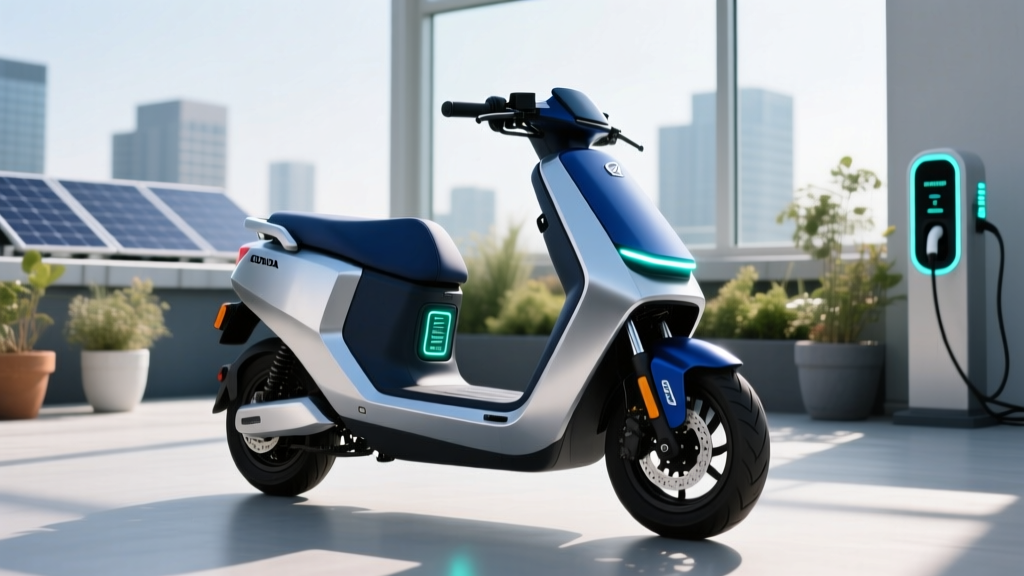
The NIU MQiGT Evo comes closest to the Ruckus in spirit: it's a step-through with rugged styling, removable dual batteries you can charge at any 120V outlet, and enough speed for 45 mph urban roads. The CSC City Slicker offers a more traditional moped form factor at a lower price. None match the Ruckus's 150+ mile range per tank — that remains the key gas advantage.
Cost Breakdown: Electric Scooter vs. Gas Ruckus
The upfront price of an electric scooter is typically $600–$1,600 higher than the gas Ruckus. But operating costs tell a different story over a typical 3-year, 9,000-mile ownership period (assuming 3,000 miles/year of urban commuting).
| Cost Category | Honda Ruckus (Gas) | NIU MQiGT Evo (Electric) |
|---|---|---|
| Purchase Price (MSRP) | $2,899 | $4,499 |
| Fuel/Energy (9,000 mi) | $390 (90 MPG, $3.90/gal) | $54 (0.04 kWh/mi, $0.15/kWh) |
| Oil Changes | $135 (5 changes @ $27) | $0 |
| Air Filter / Belt / Spark Plug | $120 | $0 |
| Brake Pads (1 replacement) | $45 | $45 |
| Insurance (avg 3 yr) | $900 | $750 |
| Registration / Licensing | $150 | $150 |
| Total 3-Year Cost | $4,639 | $5,498 |
At 9,000 miles over three years, the gas Ruckus still wins on total cost by roughly $860 — primarily because the electric scooter's higher purchase price isn't offset by fuel savings at low mileage. However, at higher annual mileage (5,000+ miles/year) or higher gas prices ($5+/gallon), the electric option breaks even by year four. The electric scooter also wins on convenience: no gas station trips, no warm-up, and you charge at home overnight for roughly 6 cents per "fill-up."
Federal tax credit note: The §30D Clean Vehicle Credit applies to four-wheeled EVs meeting specific battery-sourcing and MSRP caps per IRS guidelines. Two- and three-wheeled electric motorcycles/scooters previously qualified under a separate, now-expired credit (IRC §30D did not cover them in its current form). Some states and utilities offer rebates for electric two-wheelers — check your local energy provider and state DMV for current programs.
Real-World Ownership: What First-Time EV Scooter Buyers Should Know
Range Reality vs. Sticker Claims
Manufacturers often quote "up to 60 miles" of range under ideal conditions: flat terrain, 130-lb rider, 20 mph, warm weather. In real-world urban commuting with stoplights, hills, a 180-lb rider, and 35–45 mph speeds, expect 60–70% of that advertised figure. A scooter rated for 50 miles will realistically deliver 30–35 miles in mixed riding. This mirrors the same EPA-vs-real-world gap seen in full-size EVs — physics doesn't scale differently for smaller batteries.
Charging at Home vs. On the Go
Most electric scooters in this class charge from a standard 120V household outlet using an included charger. A full charge typically takes 4–7 hours depending on battery capacity (1.5–2.5 kWh). Unlike a full-size EV, you don't need a dedicated Level 2 circuit — but you do need access to an outlet near where you park. If you live in an apartment without ground-level outlet access, this is a genuine barrier. Some models (NIU, Gogoro) offer removable batteries you can carry inside to charge, which solves the apartment problem.
Cold-Weather Impact
Lithium-ion scooter batteries lose 20–35% of usable capacity below 40°F, just like EV car batteries. A scooter delivering 35 miles at 70°F may only give you 22–25 miles at 25°F. Unlike full-size EVs, most scooters lack active battery thermal management — there's no heat pump or preconditioning. If you commute in cold climates, plan your range around worst-case winter numbers, not summer highs.
Insurance, Registration, and Legal Classification
Street-legal electric scooters and mopeds typically require registration, a license plate, liability insurance, and a valid driver's license (sometimes a motorcycle endorsement, depending on state and top speed). The NHTSA classifies vehicles with a top speed over 30 mph as motorcycles for safety-standard purposes. Check your state DMV before purchasing — classification rules vary significantly. The NHTSA low-speed vehicle guidelines provide a federal baseline, but states set their own licensing requirements.
Common Misconceptions About Electric Scooters
| Myth | Fact |
|---|---|
| "Electric scooters are basically free to ride." | Energy costs ~$0.006/mile, but insurance, registration, and battery replacement ($300–$800 every 3–5 years) add real cost. |
| "You can't go far enough for a real commute." | Modern 2+ kWh scooters deliver 30–50 real-world miles — sufficient for 85% of US commutes under 16 miles each way (US Census commute data). |
| "They're as fast as gas scooters." | Most electric scooters in the $3,000–$5,000 range top out at 38–50 mph. The gas Ruckus does 35–40 mph but refuels in 60 seconds. |
| "No maintenance means no costs." | Tires, brakes, suspension, and controllers still need service. Battery degradation is the electric equivalent of engine wear. |
| "Any outlet will charge it fast enough." | Standard 120V charging at ~200W means 8–12 hours for larger packs. Plan charging around your schedule, not the other way around. |
Decision Framework: Should You Go Electric or Stick with Gas?
Choose an Electric Scooter If:
- Your round-trip commute is under 30 miles and mostly urban/suburban
- You have access to a 120V outlet where you park (garage, carport, or removable battery option)
- You ride primarily in mild-to-warm climates (above 40°F most of the year)
- You value silent operation, zero local emissions, and minimal routine maintenance
- You're willing to pay $600–$1,600 more upfront to save on fuel and maintenance over time
- You want to avoid gas station trips entirely
Stick with the Gas Honda Ruckus If:
- Your commute exceeds 40 miles round-trip or includes highway segments
- You live in an apartment or condo without convenient ground-level outlet access
- You ride in cold winters where range loss would make your commute unreliable
- You want the lowest possible upfront purchase price
- You value the massive aftermarket customization community the Ruckus supports
- You need 150+ mile range for weekend rides without planning charge stops
What a Future Honda Ruckus Electric Would Need to Succeed
If Honda does bring an electric Ruckus to the US market, it would need to hit specific benchmarks to justify the switch from the proven 49cc platform:
- Price at or below $3,500 — the gas Ruckus's affordability is central to its appeal
- Minimum 50 miles real-world range — enough for two days of typical commuting without charging
- Removable battery — essential for apartment dwellers and the most practical charging solution for a scooter this size
- Top speed of at least 40 mph — matching the current Ruckus for safety in mixed traffic
- Rugged steel-tube frame — the Ruckus's exposed chassis is its design identity, not just structure
- Charge time under 5 hours from a standard 120V outlet
Honda's EM1 e: (currently sold in Asia and Europe) offers a preview: it has a 1.7 kWh removable battery, 25-mile range, and roughly 28 mph top speed. Those specs work for short Japanese urban trips but would fall short for most US commuters. A US-market electric Ruckus would need significantly more battery capacity — likely 2.5–3.0 kWh — which adds weight and cost.
FAQ: Ruckus Electric and EV Scooter Questions
Will Honda release an electric Ruckus in the US?
Honda has not announced a US-market electric Ruckus as of early 2026. The company sells the EM1 e: electric scooter in Japan and Europe, but it has limited range and speed for US commuting needs. Honda's broader electrification strategy focuses on four-wheeled EVs (like the Prologue) and larger motorcycles first.
Can I convert a gas Honda Ruckus to electric?
Aftermarket EV conversion kits exist ($800–$2,500 for parts), but they require significant mechanical skill, void any factory warranty, and often result in a scooter that is heavier and less reliable than the original. Most conversions yield 15–30 miles of range. For most buyers, purchasing a purpose-built electric scooter is more practical and safer.
Do electric scooters qualify for the $7,500 federal EV tax credit?
No. The current §30D Clean Vehicle Credit applies only to four-wheeled vehicles meeting specific battery component and critical mineral sourcing requirements, MSRP caps ($55,000 cars, $80,000 SUVs/trucks), and buyer income limits. Two- and three-wheeled electric vehicles do not qualify under current IRS rules. Some state and utility rebate programs do cover electric two-wheelers — check your local offerings.
How long do electric scooter batteries last?
Most quality lithium-ion scooter batteries (NMC chemistry) retain 70–80% of original capacity after 500–800 full charge cycles, which translates to roughly 3–5 years of daily commuting use. Replacement batteries cost $300–$800 depending on capacity. Proper care — avoiding full discharges, not storing at 100% charge for extended periods, and keeping the battery above freezing when charging — extends lifespan.
Is an electric scooter cheaper than a gas scooter over 5 years?
At moderate mileage (3,000–5,000 miles/year), total 5-year costs are similar — the electric scooter's higher purchase price roughly offsets its lower fuel and maintenance costs. At higher mileage or higher gas prices, electric wins. The break-even point typically falls between years 3 and 5, depending on your local electricity rates and annual mileage.
What's the difference between kW and kWh on an electric scooter?
The motor's power rating (measured in watts or kW — kilowatts) determines acceleration and top speed. A 2,000W (2 kW) motor is more powerful than a 1,500W motor. The battery's energy capacity (measured in kWh — kilowatt-hours) determines range. A 2.0 kWh battery holds more energy than a 1.5 kWh battery. Think of kW as the size of the faucet and kWh as the size of the water tank.