The Short Answer: No Electric Honda Ruckus Exists Yet
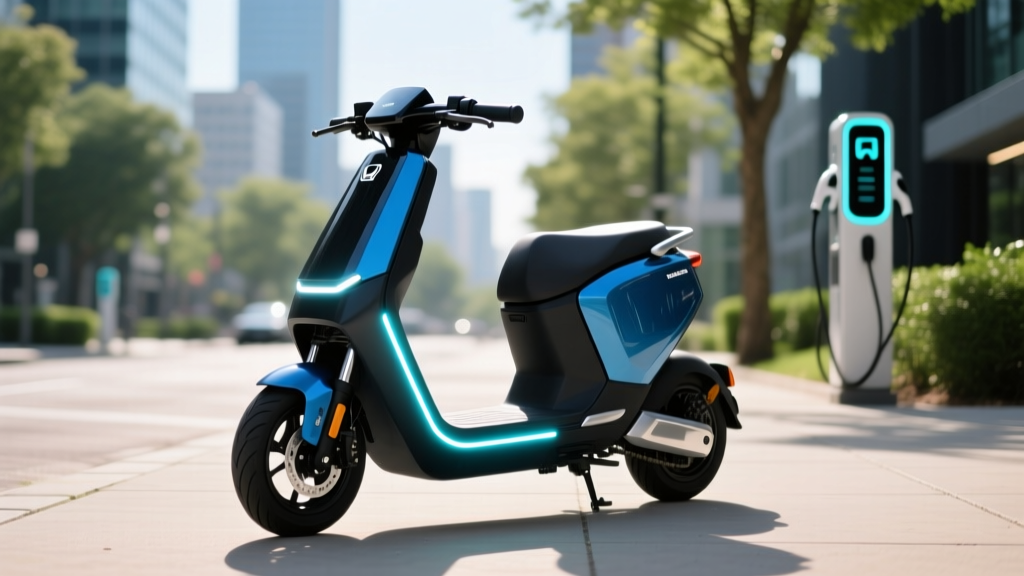
As of 2026, Honda does not sell an electric version of the Ruckus (also known as the Zoomer in some markets). The iconic 49cc gas scooter remains powered by a single-cylinder internal combustion engine. However, Honda has been expanding its electric two-wheeler lineup globally — including the Honda EM1 e: electric scooter and announced mid-size EV scooter concepts — signaling that an electric successor or Ruckus-inspired EV could arrive in coming years. If you're searching for a "Honda Ruckus electric" today, your real options are Honda's existing e-scooters, third-party electric conversions, or comparable electric scooters from rival brands.
Why Everyone Wants an Electric Honda Ruckus
The Honda Ruckus has been a cult favorite since its 2003 debut. Its rugged, utilitarian styling — exposed steel frame, dual headlights, fat tires, and bare-bones utility — appeals to commuters, tinkerers, and urban riders who want something tougher and more characterful than a typical 50cc scooter. The Ruckus gets roughly 80-100 MPG on its 49cc four-stroke engine, making it cheap to run, but it's limited to about 35-40 mph top speed and isn't freeway-legal in most states.
An electric Ruckus would theoretically improve on that formula: instant torque for quicker acceleration off the line, zero tailpipe emissions, dramatically lower per-mile fuel costs, and fewer moving parts to maintain. The question is whether Honda will actually build one — and what the realistic alternatives are right now.
Honda's Actual Electric Two-Wheeler Lineup (2026)
While the Ruckus remains gas-only, Honda has made significant moves in electric two-wheelers:
Honda EM1 e:
Honda's most concrete electric scooter offering is the EM1 e:, launched in select Asian and European markets. Key specifications include:
- Battery: Swappable lithium-ion pack, approximately 2.9 kWh usable capacity
- Range: ~25 miles (41 km) per charge under WMTC test conditions
- Top Speed: ~30 mph (48 km/h) — classified as a moped-class vehicle
- Motor: Hub-mounted electric motor, approximately 1.7 kW (2.3 hp) continuous / 4.2 kW peak
- Charging: Swappable battery can be charged via standard household outlet; approximately 5 hours for a full charge
- Weight: ~209 lbs (95 kg)
The EM1 e: targets short urban commutes and delivery use cases. It's a far cry from the Ruckus in terms of character and capability — more of a practical city runabout than a rugged, go-anywhere scooter. Availability in the US market remains unconfirmed as of 2026.
Honda's Swappable Battery Consortium
Honda is a founding member of the Swappable Batteries Motorcycle Consortium (SBMC), alongside Yamaha, KTM, and Piaggio. This group is working toward a standardized swappable battery format for light electric vehicles. If this standard gains traction, a future electric Ruckus-style scooter could use the same battery infrastructure — making ownership far more practical for riders who can't charge at home.
Electric Scooter Alternatives: How They Compare to the Gas Ruckus
If you want the Ruckus experience — rugged, simple, commuter-friendly — in an electric package, here's how the closest alternatives stack up against the current gas-powered Ruckus:
| Spec | Honda Ruckus (Gas, 2026) | NIU NQi GT (Electric) | Segway E300P (Electric) | CSC RX50 Retro (Gas, Ruckus Alternative) |
|---|---|---|---|---|
| Powertrain | 49cc 4-stroke gas | 3,000W Bosch hub motor | 4,800W mid-drive motor | 49cc 4-stroke gas |
| Power | ~4.5 hp | ~4 hp continuous | ~6.4 hp continuous | ~3.5 hp |
| Top Speed | ~38 mph | ~43 mph (unlocked) | ~53 mph | ~35 mph |
| Range / Tank | ~120 mi (1.6 gal tank) | ~43 mi (dual battery) | ~56 mi (dual battery) | ~100 mi (1.5 gal tank) |
| Fuel/Energy Cost per Mile | ~$0.03 (at $3.50/gal) | ~$0.01 (at $0.15/kWh) | ~$0.01 (at $0.15/kWh) | ~$0.04 (at $3.50/gal) |
| MSRP (approx.) | $2,899 | $3,599 | $3,999 | $1,699 |
| Freeway Legal? | No (49cc) | No (Class 2 e-bike/moped) | Varies by state | No (49cc) |
Note: Electric scooter range varies significantly with rider weight, terrain, temperature, and speed. Figures above reflect manufacturer estimates under ideal conditions. Expect 20-30% less range in cold weather or at sustained top speeds.
Real Costs: Gas Ruckus vs. Electric Scooter Ownership
One of the biggest draws of going electric is lower operating cost. But does it actually pencil out for a scooter you're only riding 20-30 miles a day? Let's break down a realistic 3-year ownership scenario based on 3,000 miles/year (a typical urban commuter pattern):
| Cost Category | Honda Ruckus (Gas) | Comparable Electric Scooter |
|---|---|---|
| Purchase Price | $2,899 | $3,600 (avg. mid-range) |
| Fuel / Electricity (3 yrs) | $270 (at 90 MPG, $3.50/gal) | $54 (at $0.15/kWh, 1.2 kWh/mi efficiency) |
| Maintenance (3 yrs) | $350 (oil changes, belt, spark plug, air filter) | $75 (brake pads, tire check) |
| Insurance (3 yrs) | $450 (avg. $150/yr) | $540 (avg. $180/yr — EV premiums often higher) |
| Battery Replacement Reserve | N/A | $400-800 (eventual replacement, 5-7 yr life) |
| 3-Year Total | $3,969 | $4,269 - $5,069 |
The takeaway: at scooter mileage levels, the fuel savings from going electric are real but modest — roughly $216 over three years. That doesn't offset the higher purchase price or eventual battery replacement cost unless you ride significantly more miles or electricity is far cheaper than gas in your area. The maintenance savings are meaningful but small in absolute terms. For a scooter, the EV value proposition is more about convenience (plug in at home, no gas station stops, no oil changes) than dramatic cost savings.
Charging Realities for Electric Scooters
One advantage electric scooters have over electric cars: most can charge from a standard 120V household outlet. You don't need a dedicated Level 2 charger or a $1,500 electrical panel upgrade.
What Charging Looks Like in Practice
- Level 1 (120V wall outlet): A typical 2-3 kWh scooter battery charges fully in 4-6 hours. This is sufficient for overnight charging for most commuters.
- Swappable batteries: Some models (like Honda's EM1 e: and NIU scooters) let you pull the battery out and charge it indoors — critical for apartment dwellers or riders without garage access.
- Public charging: Practically nonexistent for scooters. Unlike EVs with CCS or NACS connectors, scooters rely on proprietary chargers or removable batteries. Don't count on public infrastructure.
Cold Weather Impact
Lithium-ion scooter batteries lose 20-40% of usable range in temperatures below 40°F. A scooter rated for 40 miles of range might deliver only 25 miles on a cold January morning. Battery chemistry matters here: most scooter batteries use NMC (nickel manganese cobalt) cells, which offer higher energy density but are more temperature-sensitive than LFP (lithium iron phosphate). If you live in a cold climate, plan your commute around reduced winter range.
Common Misconceptions About an Electric Ruckus
| Myth | Fact |
|---|---|
| "Honda already sells an electric Ruckus in other countries." | Honda sells the EM1 e: in Asia and Europe, but it's a completely different scooter — smaller, slower, and styled like a conventional city runabout. It is not an electric Ruckus. |
| "I can buy an electric conversion kit for my Ruckus." | Aftermarket conversion kits exist (typically $800-$2,000 for motor, controller, and battery), but they void any remaining warranty, may not be street-legal in your state, and often reduce range to 15-25 miles. Quality varies wildly. |
| "Electric scooters are freeway-legal." | Nearly all electric scooters under 4 kW fall into moped or low-speed vehicle classifications. They are NOT freeway-legal in most US states. You'd need a 10+ kW electric motorcycle (like a Zero S or LiveWire) for highway use. |
| "An electric scooter will save me thousands vs. gas." | At typical scooter mileage (2,000-4,000 mi/yr), annual fuel savings are $60-$120. The purchase premium and eventual battery cost often erase those savings over 3-5 years. |
| "Electric scooters need zero maintenance." | Electric scooters eliminate oil changes and spark plugs, but still require brake service, tire replacement, suspension checks, and eventual battery replacement. Plan for $50-$150/year in maintenance. |
Federal and State Incentives: Do Electric Scooters Qualify?
Here's where the news gets disappointing for budget-conscious buyers. The federal §30D Clean Vehicle Credit — which offers up to $7,500 for qualifying electric cars and trucks — does not apply to electric scooters, mopeds, or low-speed vehicles. Per IRS guidelines, the credit applies to vehicles with at least four wheels and a gross vehicle weight rating under 14,000 lbs. Two-wheeled electric scooters are excluded.
Some states and local utilities offer rebates for electric two-wheelers — for example, certain California air quality programs have offered $500-$1,500 rebates for e-scooter purchases. Check your state's energy office or local air quality management district for current programs, but don't count on a federal tax credit to lower the price.
Decision Framework: Should You Wait, Convert, or Buy an Alternative?
If You Want an Electric Ruckus-Style Scooter Today
- Choose a rugged-styled electric scooter (NIU, Segway, or similar) if you want the closest current experience to a Ruckus with an electric powertrain. Budget $3,000-$4,500 and accept a 30-50 mile real-world range.
- Choose the gas Honda Ruckus if you prioritize low upfront cost ($2,899), proven reliability, 120+ mile range per tank, and don't mind occasional maintenance. The fuel cost difference at scooter mileage is negligible.
- Choose an aftermarket conversion only if you're mechanically skilled, accept the reliability and legality risks, and have a specific Ruckus frame you want to electrify. Budget $1,500-$3,000 total including donor scooter.
- Wait for Honda if you want a factory-backed electric scooter with the Ruckus's rugged character. Given Honda's SBMC involvement and EM1 e: launch, a larger electric scooter is plausible within 2-4 years — but nothing is announced or confirmed.
What a First-Time Electric Scooter Buyer Should Know
If you're considering any electric scooter — whether as a Ruckus alternative or a standalone purchase — keep these realities in mind:
- Range is always less than advertised. Manufacturer range figures assume a 155-lb rider on flat ground at moderate speed in 70°F weather. Add hills, cold, a heavier rider, or sustained top speed, and expect 20-40% less range.
- Battery replacement is your biggest long-term cost. Most scooter batteries last 500-1,000 charge cycles before degrading to 70-80% of original capacity. At daily charging, that's roughly 2-4 years of heavy use before you notice significant range loss. A replacement battery typically costs $400-$900.
- Registration and licensing vary by state. Some states classify electric scooters as mopeds (requiring a special endorsement), others as bicycles (no registration needed), and others as motor vehicles (requiring full registration and insurance). Check your state DMV before purchasing.
- Home charging access is essential. Unlike electric cars, which can use the growing public DC fast-charging network, electric scooters rely almost entirely on home or workplace charging. If you can't bring the scooter or its battery indoors to a standard outlet, ownership becomes impractical.
- Theft risk is higher. Electric scooters are lighter, easier to load into a truck, and often lack the anti-theft systems found on motorcycles. Budget for a heavy-duty lock ($50-$120), chain, and ideally GPS tracking.
Frequently Asked Questions
Will Honda ever make an electric Ruckus?
Honda has not announced an electric Ruckus specifically. However, the company is actively developing electric two-wheelers through the EM1 e: and its SBMC battery-swapping partnership. A larger, Ruckus-styled electric scooter is plausible but unconfirmed. Honda's motorcycle division has signaled a goal of 10+ electric motorcycle models globally by 2025-2030, suggesting more e-scooters are coming.
How much would an electric Honda Ruckus cost if it existed?
Based on Honda's EM1 e: pricing (approximately $3,000-$3,500 in markets where it's sold) and the current gas Ruckus MSRP of $2,899, a hypothetical electric Ruckus would likely price between $3,500 and $4,500, depending on battery size and features. This is consistent with the premium seen across the EV market, where electric versions typically cost 15-40% more than their gas equivalents.
Can I convert my gas Ruckus to electric?
Yes, aftermarket conversion kits exist — typically including a hub motor or mid-drive motor, motor controller, lithium battery pack, and throttle assembly. Costs range from $800 to $2,500 depending on components and battery capacity. However, conversions require mechanical skill, may not meet your state's road-legal requirements, void any Honda warranty, and often result in limited range (15-30 miles). Professional conversion services exist but add $500-$1,500 in labor.
What's the best electric scooter alternative to the Honda Ruckus?
For rugged styling and commuter practicality, the NIU NQi GT and Segway E300P are strong alternatives. The NIU offers dual swappable batteries, a Bosch motor, and ~43 miles of range for around $3,599. The Segway delivers more power and higher top speed (~53 mph) for about $3,999. Neither replicates the Ruckus's exact character, but both provide reliable electric commuter-scooter performance.
Do electric scooters qualify for the federal EV tax credit?
No. The IRS §30D Clean Vehicle Credit requires a vehicle to have at least four wheels. Two-wheeled electric scooters and motorcycles do not qualify for the $7,500 federal credit. Some states offer separate e-bike or e-scooter rebates — check your state energy office for current programs.