The Short Answer: What Is the Honda RSX EV?
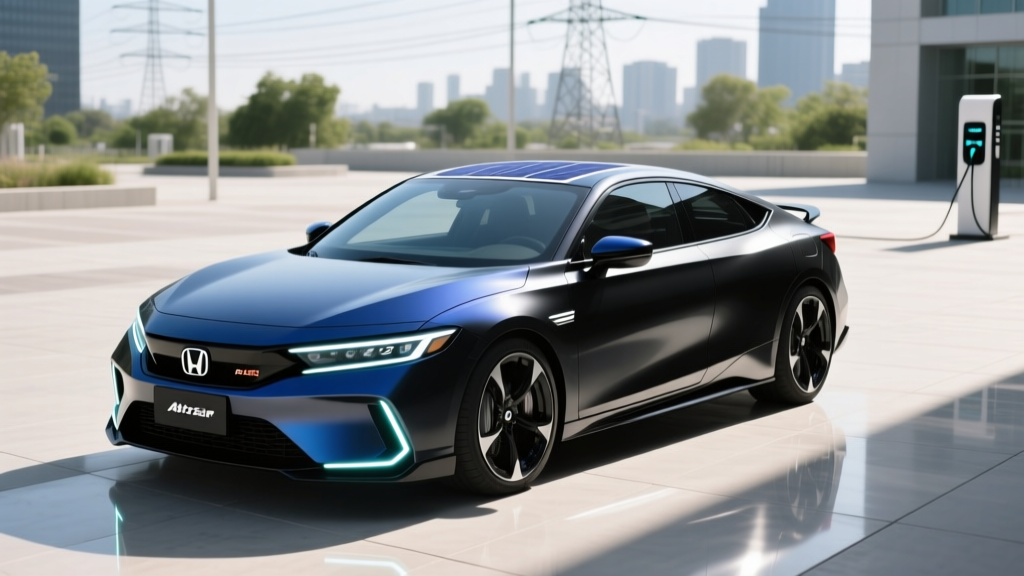
As of early 2026, Honda has not officially announced a production RSX EV. However, persistent trademark filings, spy shots of a compact electric coupe on Honda's e:Architecture platform, and industry reporting suggest an electrified RSX successor is in development — likely arriving as a 2027 or 2028 model-year vehicle. If it follows Honda's current EV trajectory (Prologue, e:Ny1), expect a targeted EPA range of 280–320 miles, a ~75–85 kWh battery, DC fast charging up to ~150–180 kW, and a starting MSRP in the $38,000–$45,000 range before incentives. Until Honda makes a formal reveal, all figures below are educated estimates based on platform data and competitive positioning.
Why the RSX EV Matters to Honda's Lineup
The original Acura RSX (2002–2006) was a compact sport coupe beloved for its high-revving K20 engine, precise shifter, and accessible performance. It occupied the same emotional space that the Civic Si and Integra do today — but with a sharper, more focused identity. Honda's decision to explore an RSX revival as an EV signals a strategic bet: that the compact electric sport coupe segment is underserved, and that buyers who grew up with the RSX are now in their 30s and 40s with purchasing power.
The competitive landscape an RSX EV would enter includes:
- Tesla Model 3 Performance — 341 mi EPA range, 0-60 in 2.9s, ~$52,990 MSRP
- Hyundai Ioniq 6 SE — 361 mi EPA range, 0-60 in 5.1s, ~$37,500 MSRP
- BMW i4 eDrive40 — 301 mi EPA range, 0-60 in 5.5s, ~$52,200 MSRP
- Polestar 2 Long Range — 320 mi EPA range, 0-60 in 5.9s, ~$49,900 MSRP
An RSX EV would need to undercut most of these on price while delivering competitive range and genuine sport-coupe dynamics to carve out a niche.
Estimated Specs: What Honda's Platform Tells Us
Honda's next-generation EV architecture — co-developed partly through the Sony Honda Mobility partnership (Afeela) and the e:Architecture used underpinning the Prologue and upcoming 0 Series models — gives us a strong basis for estimating RSX EV specifications.
| Specification | Estimated (RSX EV) | Basis |
|---|---|---|
| Battery Capacity | 75–85 kWh (usable) | Prologue uses 85 kWh; coupe likely slightly smaller pack for weight |
| Chemistry | NMC (nickel-manganese-cobalt) | Honda's current EV lineup uses NMC for energy density |
| EPA Range (est.) | 280–320 miles | Prologue achieves 296 mi with larger, heavier SUV body |
| Peak DC Charge Rate | 150–180 kW | Prologue peaks ~150 kW; newer 0 Series platform may improve |
| 10–80% DC Charge Time | ~28–35 minutes | Based on 150–180 kW peak with typical taper curve |
| Level 2 Charge Rate | ~11.5 kW (48A) | Industry standard for onboard charger |
| Drivetrain | RWD standard; AWD optional | Sport coupe positioning favors RWD; AWD for performance trim |
| 0–60 mph (est.) | 5.5–6.5s (base); ~4.5s (AWD perf.) | Competitive with Ioniq 6, below Model 3 Perf. |
| Horsepower (est.) | 220–250 hp (base); ~350 hp (AWD) | Single/dual motor configurations |
| Starting MSRP (est.) | $38,000–$45,000 | Must undercut Model 3 and i4 to compete |
| Battery Warranty | 8 years / 100,000 miles | Federal minimum; Honda matches or exceeds this |
Real-World Range Expectations
EPA estimate: 280–320 miles (projected)
Highway driving (70–80 mph): Expect ~220–260 miles. Aerodynamic efficiency helps coupes, but sustained high speeds still consume 15–20% more energy than combined-cycle EPA testing.
Cold weather (below 32°F): Expect 20–30% range reduction, bringing usable range to ~195–255 miles without preconditioning. A heat pump (likely standard) will mitigate this somewhat.
Charging curve reality: Peak 150–180 kW will sustain only from ~10–50% SoC. Above 80%, charging slows dramatically to protect the battery — plan for 35–45 minutes total if charging past 80% on road trips.
Cost Breakdown: RSX EV vs. Gas Sport Coupe
The most useful comparison for a potential RSX EV buyer is against the kind of car it spiritually replaces: a compact gas sport coupe like the Volkswagen GTI, Subaru WRX, or Honda Civic Type R. Here's how the numbers stack up over 5 years of ownership.
| Cost Factor | RSX EV (Estimated) | Gas Sport Coupe (e.g., VW GTI, ~$33,000) |
|---|---|---|
| Purchase Price | $42,000 (mid-trim est.) | $33,000 |
| Federal Tax Credit (§30D) | Up to $7,500 (if eligible — see rules below) | $0 |
| Effective Purchase Price | ~$34,500 | $33,000 |
| 5-Year Fuel/Energy Cost | ~$3,200 (home charging at $0.14/kWh avg.) | ~$9,500 (25 MPG avg., $3.50/gal., 12k mi/yr) |
| 5-Year Maintenance | ~$1,200 (tire rotations, cabin filter, fluid top-offs) | ~$4,500 (oil changes, brake pads, spark plugs, belts) |
| 5-Year Insurance (avg.) | ~$9,000 (EVs typically 15–25% more to insure) | ~$7,200 |
| 5-Year Total Cost | ~$47,900 | ~$54,200 |
The EV wins on operating costs — the $6,300 fuel savings and $3,300 maintenance savings over 5 years are substantial. However, the higher insurance premium (~$1,800 more over 5 years) and potentially higher upfront price (before incentives) narrow the gap. Your actual savings depend heavily on local electricity rates, driving mileage, and whether you qualify for the federal tax credit.
Tax Credit Eligibility: What You Need to Know
The IRS §30D Clean Vehicle Credit offers up to $7,500 for qualifying new EVs, but eligibility depends on several factors that change frequently. For 2026, the key requirements include:
- MSRP cap: Sedans and coupes must have an MSRP of $55,000 or less (SUVs/pickups: $80,000). An RSX EV at $38K–$45K would clear this easily.
- Buyer income limits: Modified adjusted gross income (MAGI) must not exceed $150,000 (single), $225,000 (head of household), or $300,000 (joint).
- Battery sourcing requirements: A percentage of critical minerals and battery components must be sourced from the U.S. or free-trade-agreement countries. These thresholds increase annually and are the most common disqualifier.
- Point-of-sale transfer: Since 2024, you can transfer the credit to the dealer at purchase, reducing your out-of-pocket cost immediately rather than waiting for tax filing.
- North American final assembly: The vehicle must be assembled in North America. Honda's U.S. and Canadian plants would likely qualify, but this depends on where the RSX EV is ultimately built.
Bottom line: An RSX EV in the $38K–$45K range would likely qualify for the full $7,500 credit if battery sourcing rules are met and your income falls under the caps. Always verify current eligibility at fueleconomy.gov and consult a tax professional before relying on the credit in your purchase decision.
EV vs. Gas vs. Hybrid: Which Powertrain Fits You?
If Honda does release an RSX EV, it may also offer a hybrid variant — Honda has been expanding its e:HEV hybrid system across the Civic and Accord lineups. Here's how the three options compare for a compact sport coupe buyer:
| Factor | RSX EV (Est.) | RSX Hybrid (if offered) | Gas Sport Coupe |
|---|---|---|---|
| Starting Price | $38,000–$45,000 | $30,000–$36,000 | $28,000–$35,000 |
| EPA Range / MPG | 280–320 mi | 45–52 MPG combined | 25–30 MPG combined |
| Fuel/Energy Cost (5 yr) | ~$3,200 | ~$4,800 | ~$9,500 |
| Maintenance (5 yr) | ~$1,200 | ~$3,000 | ~$4,500 |
| Home "Refueling" | Yes (Level 2 overnight) | N/A (gas station) | N/A (gas station) |
| Performance Feel | Instant torque, smooth, quiet | Good, with some engine drone under load | Engaging, mechanical, loud |
| Cold-Weather Impact | 20–30% range loss | Minimal MPG loss | Minimal MPG loss |
| Road Trip Convenience | Plan charging stops (25–35 min) | 5-minute gas stops, wide station network | 5-minute gas stops |
Common Misconceptions About Buying an EV Like the RSX
| Myth | Fact |
|---|---|
| "EV batteries need replacing every few years." | Modern NMC and LFP batteries are warrantied for 8 years/100,000 miles with a capacity retention threshold (typically 70% of original). Real-world degradation data shows most EVs retain 85–90% capacity after 5 years. |
| "I can't take road trips in an EV." | With 280+ miles of range and DC fast charging adding ~150–200 miles in 20 minutes, road trips are viable — but require planning. Apps like A Better Routeplanner and PlugShare make this straightforward. |
| "EVs are worse in the cold." | Range does drop 20–30% in sub-freezing temperatures. However, preconditioning (warming the battery while plugged in) recovers much of this loss, and EVs start instantly in cold weather — no cranking, no warm-up idle. |
| "Charging an EV is expensive." | At the U.S. average of $0.14/kWh and 3.5 miles/kWh efficiency, an EV costs roughly $0.04 per mile to fuel at home — versus $0.14/mile for a 25 MPG gas car at $3.50/gallon. Public DC fast charging is more expensive ($0.30–$0.50/kWh) but should be a minority of your charging. |
| "I need to install a $5,000 charger at home." | A quality Level 2 home charger (hardware) costs $400–$700. Professional installation typically runs $500–$2,000 depending on your electrical panel. Total: $900–$2,700 for most homes. A panel upgrade (to 200A) can add $1,500–$3,000 if needed. |
Real-World Ownership: What First-Time EV Buyers Must Consider
Home Charging Access Is the Make-or-Break Factor
The single biggest determinant of EV satisfaction is reliable home charging. If you can install a Level 2 charger (240V, 32–48A) in your garage or driveway, daily EV ownership is effortless — you wake up with a "full tank" every morning. If you live in an apartment without charging access, or rely entirely on public charging, the experience becomes significantly less convenient and more expensive.
Installation cost breakdown (typical Level 2 home setup):
- Level 2 charger hardware (ChargePoint, Emporia, Wallbox): $400–$700
- Electrician labor (run 240V/50A circuit, mount charger): $500–$1,500
- Permit and inspection: $50–$200
- Electrical panel upgrade (if needed, older homes): $1,500–$3,000
- Total: $950–$2,400 (without panel upgrade); $2,450–$5,400 (with panel upgrade)
Climate and Driving Patterns Matter
If you live in the Sun Belt and drive mostly in-city, an RSX EV's estimated 280–320 mile range will serve you well year-round. If you're in the Upper Midwest or Northeast, plan for winter range loss and ensure your daily commute plus errands fits within ~200 miles of real-world range on the coldest days.
For frequent road-trippers (more than 6–8 long trips per year), consider whether your routes have reliable DC fast-charging infrastructure. The Tesla Supercharger network (now opening to NACS-equipped non-Teslas) and Electrify America's CCS network are the two largest, but reliability varies by location. Check PlugShare for your most common routes before buying.
Insurance Costs Are Higher — Shop Early
EV insurance premiums run 15–25% higher than equivalent gas cars due to higher repair costs (specialized parts, battery protection requirements, and fewer qualified body shops). Get quotes from multiple insurers before purchasing — some companies (like Geico and Progressive) have narrowed the EV insurance gap more than others.
Decision Framework: Should You Wait for the RSX EV?
Choose to Wait for the RSX EV If:
- You want a compact electric sport coupe and aren't in a rush to buy (2027–2028 timeline)
- You value Honda's reputation for reliability and dealer network
- Your budget is $38,000–$48,000 and you want something sportier than a crossover EV
- You have home charging access and a daily commute under 80 miles round-trip
Choose a Competitor Now If:
- You need an EV within the next 6–12 months
- You want maximum range today: Hyundai Ioniq 6 SE (361 mi EPA, ~$37,500)
- You want maximum performance today: Tesla Model 3 Performance (341 mi, 2.9s 0-60, ~$52,990)
- You want premium positioning: BMW i4 or Polestar 2
- You don't have home charging and need the most mature public charging ecosystem (Tesla)
Choose a Hybrid Instead If:
- You can't install a home charger
- You regularly drive in extreme cold (below 10°F) and take long trips
- Your budget is under $35,000
- You want sport-coupe dynamics without range planning (Civic Si, Integra, GTI)
Frequently Asked Questions
Has Honda officially confirmed the RSX EV?
No. As of early 2026, Honda has not made an official announcement. The RSX EV remains speculative based on trademark activity, platform development, and industry reporting. Honda's "0 Series" EV concept lineup suggests sporty electric models are coming, but no production RSX has been confirmed.
Will the RSX EV be sold as an Acura or a Honda?
The original RSX was sold under the Acura brand in the U.S. An EV revival could go either way — Honda has been consolidating its EV branding strategy. If positioned as an affordable sport coupe ($38K–$45K), it may wear a Honda badge to compete directly with the Hyundai Ioniq 6 and Tesla Model 3. An Acura version would likely be priced higher with more premium features.
What platform will the RSX EV use?
Likely Honda's next-generation e:Architecture, which underpins the upcoming 0 Series EVs. This platform supports 800V electrical architecture (enabling faster charging), rear-wheel-drive and all-wheel-drive configurations, and battery packs from approximately 60 to 100 kWh. It represents a significant upgrade over the Ultium-based platform used in the current Honda Prologue.
Will it have a manual transmission or simulated gears?
Almost certainly not a physical manual — EVs don't use multi-speed transmissions. However, Honda has experimented with simulated gear shifts (similar to Hyundai's Ioniq 5 N) in concept vehicles. A sport-oriented RSX EV could feature selectable drive modes with simulated shift feel to engage driving enthusiasts.
How does the RSX EV compare to the Honda Prologue?
The Prologue is a mid-size SUV built on GM's Ultium platform with 296 miles of EPA range and a ~$47,400 starting price. An RSX EV would be smaller, lighter, more aerodynamic, and likely built on Honda's own e:Architecture — resulting in better efficiency, faster charging, and sportier handling at a potentially lower price point.
What should I do while waiting for the RSX EV?
Prepare your home for EV ownership: evaluate your electrical panel capacity (a licensed electrician can assess this for $100–$200), research Level 2 charger options, and check whether your utility offers off-peak EV charging rates or rebates for charger installation. This way, when the RSX EV (or any EV you choose) arrives, you're ready to charge from day one.