Quick Answer: Is There a Honda Ridgeline EV?
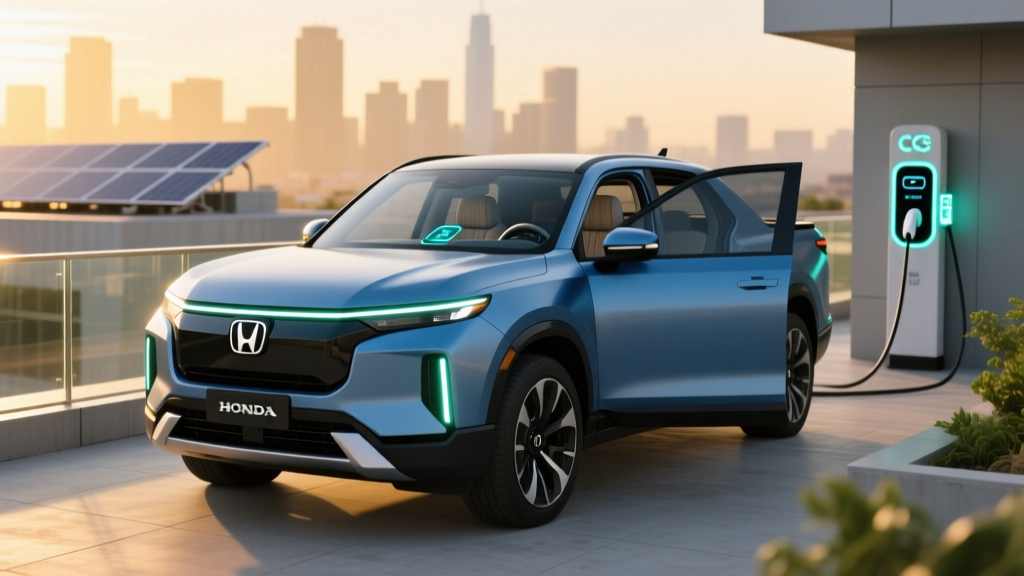
As of mid-2026, Honda has not yet released a production Honda Ridgeline EV. The company has confirmed that an electric pickup is part of its long-term electrification strategy, built on its new dedicated EV architecture, but no official specs, pricing, or on-sale date have been published. Industry reporting and Honda's own roadmap suggest a battery-electric Ridgeline successor could arrive for the 2027 or 2028 model year. Until Honda publishes official figures, every range, price, and charging number circulating online is estimated or speculative. This guide breaks down what's confirmed, what's likely based on Honda's current EV platform, and how a future Ridgeline EV would stack up against the gas Ridgeline and existing electric trucks.
What Honda Has Actually Confirmed About an Electric Pickup
Honda's electrification roadmap has evolved considerably. After initially partnering with General Motors on Ultium-based EVs (a collaboration that produced the short-lived Prologue and ZDX), Honda pivoted to developing its own dedicated EV platforms. The company has publicly stated it plans to launch a full lineup of battery-electric vehicles in North America, including a pickup truck segment entry.
Here is what is confirmed versus speculative:
- Confirmed: Honda has announced plans for a next-generation Ridgeline and has stated that future models will offer electrified powertrains.
- Confirmed: Honda is developing its own EV architecture (distinct from the GM Ultium platform used for the Prologue).
- Speculative: Exact battery capacity (kWh), EPA range, motor output, towing capacity, and MSRP for a Ridgeline EV.
- Speculative: Whether the next Ridgeline will be fully battery-electric (BEV), plug-in hybrid (PHEV), or offered with both options.
Honda's official corporate announcements reference mid-to-large EV models for the North American market, but the company has not used the "Ridgeline EV" nameplate in any production-confirmed capacity. Buyers searching for a Honda Ridgeline EV today will need to wait or consider alternatives.
Estimated Honda Ridgeline EV Specs (Based on Honda's Platform Trajectory)
While we wait for official numbers, we can make informed projections based on Honda's existing EV engineering (as seen in the Prologue and upcoming next-gen models) and competitive positioning against the Ford F-150 Lightning, Chevrolet Silverado EV, and Rivian R1T. The following table presents estimated ranges — not confirmed specs.
| Attribute | Estimated Range | Competitive Benchmark |
|---|---|---|
| Battery Capacity (usable) | ~85–100 kWh | F-150 Lightning: 98 kWh (Extended Range) |
| EPA Range | ~280–330 miles | F-150 Lightning ER: 320 mi EPA |
| Drivetrain | Dual-motor AWD (likely standard) | Ridgeline gas: AWD standard |
| Horsepower | ~350–450 HP | F-150 Lightning ER: 580 HP |
| 0–60 mph | ~5.0–6.5 seconds | F-150 Lightning: ~3.8 sec (ER) |
| Max DC Fast Charge Rate | ~150–200 kW (peak) | Silverado EV: ~200 kW peak |
| 10–80% DC Fast Charge | ~25–35 minutes | F-150 Lightning: ~41 min (150 kW) |
| Level 2 Home Charging | ~11.5–19.2 kW (est.) | Typical: 11.5 kW = ~25 mi/hr |
| Towing Capacity | ~5,000–7,500 lbs | Gas Ridgeline: 5,000 lbs |
| Estimated Base MSRP | $55,000–$65,000 | F-150 Lightning XLT: ~$54,995 |
Key caveat: These are analyst-informed projections, not Honda-published data. Actual battery chemistry (NMC vs. LFP), usable kWh, and charge-curve behavior will only be known when Honda releases official specifications.
Gas Ridgeline vs. a Future Ridgeline EV: Cost and Efficiency Comparison
The current gas Honda Ridgeline remains a popular midsize truck, praised for its unibody ride quality and standard AWD. For buyers weighing whether to wait for an EV version or buy the gas model now, here is a concrete comparison using the 2025/2026 Ridgeline's published specs.
| Metric | Gas Ridgeline (2025 AWD) | Estimated Ridgeline EV |
|---|---|---|
| EPA Fuel Economy / Efficiency | 18 city / 24 hwy / 21 combined MPG | ~75–85 MPGe (est.) |
| Annual Fuel/Energy Cost (15,000 mi) | ~$2,500 (at $3.50/gal) | ~$600–$900 (home charging at $0.14/kWh) |
| Annual Maintenance (est.) | ~$500–$700 | ~$200–$350 (no oil, fewer moving parts) |
| Base MSRP | ~$40,000 (Sport trim) | $55,000–$65,000 (est.) |
| Federal Tax Credit (§30D) | Not eligible | Potentially up to $7,500 (subject to sourcing & income rules) |
| 5-Year Total Fuel + Maintenance | ~$15,000–$17,500 | ~$4,000–$6,250 |
What this means: A Ridgeline EV would likely carry a $15,000–$25,000 higher upfront cost than the gas version, but could save $1,500–$2,000 per year in fuel and maintenance. The breakeven point lands around 7–10 years without incentives, or 5–7 years with the full $7,500 federal credit. Your actual savings depend heavily on local electricity rates, driving patterns, and whether you can charge at home.
Federal Tax Credit Eligibility: What a Ridgeline EV Buyer Needs to Know
The IRS §30D Clean Vehicle Credit can provide up to $7,500 for qualifying new EVs, but eligibility is far from automatic. Honda's current Prologue (built on GM's Ultium platform in Mexico) has had limited credit eligibility due to battery-sourcing requirements. A future Honda-built Ridgeline EV's credit status will depend on where Honda manufactures the battery cells and sources critical minerals.
- MSRP cap: Trucks, vans, and SUVs must have an MSRP at or below $80,000 to qualify.
- Buyer income cap: Adjusted gross income must not exceed $150,000 (single), $225,000 (head of household), or $300,000 (joint filing).
- Battery sourcing: The battery must meet critical-mineral and battery-component requirements that tighten annually — this is where many EVs lose partial or full credit eligibility.
- North American assembly: Final assembly must occur in North America.
- Point-of-sale transfer: As of 2024+, buyers can transfer the credit to the dealer for an immediate price reduction, rather than waiting to claim it on their tax return.
Always verify current-year rules at IRS.gov's clean vehicle credits page, as sourcing requirements and eligible model lists update regularly. Do not assume a Ridgeline EV will qualify until Honda confirms battery sourcing and the vehicle appears on the IRS eligible-vehicle list.
Real-World Ownership Considerations for an Electric Ridgeline
Buying an electric truck involves trade-offs that go beyond the spec sheet. Here is what prospective Ridgeline EV buyers should plan for:
Home Charging Access
The single biggest ownership factor. A Level 2 home charger (240V, 40–48 amps) delivering 9.6–11.5 kW will add roughly 25–30 miles of range per hour — enough to fully replenish a ~90 kWh battery overnight. Installation costs typically range from $500 to $2,500 depending on whether your electrical panel needs an upgrade (a 200-amp panel is usually required). If you live in an apartment or lack dedicated parking, public DC fast charging will be your primary option, which is more expensive per mile and less convenient.
Cold-Weather Range Loss
All EVs lose range in cold temperatures. Expect 20–35% range reduction at sustained temperatures below 20°F, depending on whether the vehicle has a heat pump for cabin heating. A Ridgeline EV with a projected 300-mile EPA range could realistically deliver 195–240 miles in harsh winter conditions. This matters for truck buyers who tow or haul in cold climates, as towing can independently cut range by 30–50%.
Towing and Payload Impact on Range
Electric trucks suffer significant range penalties under load. The Ford F-150 Lightning, for example, can lose up to 50% of its EPA range when towing near its maximum capacity. If Honda targets the gas Ridgeline's 5,000-pound tow rating, expect real-world towing range to drop to 140–180 miles from an estimated 300-mile EPA figure. For frequent towing, a PHEV variant (if offered) could be more practical.
Charging on Road Trips
Honda currently relies on third-party charging networks rather than a proprietary network like Tesla's Superchargers. Honda has committed to NACS (Tesla-style) connector adoption for future models, which would grant access to the Supercharger network — a significant reliability advantage. Verify the connector standard once Honda publishes official specs.
How the Ridgeline EV Would Compete: Electric Truck Landscape
If Honda brings a Ridgeline EV to market, it will enter a segment with established players. Here is how the competitive field looks for the 2026–2027 timeframe:
| Model | EPA Range | Battery (usable kWh) | Peak DC Charge kW | Base MSRP |
|---|---|---|---|---|
| Ford F-150 Lightning (Std. Range) | 240 mi | ~98 kWh | ~150 kW | ~$54,995 |
| Ford F-150 Lightning (Ext. Range) | 320 mi | ~131 kWh | ~150 kW | ~$69,995 |
| Chevrolet Silverado EV (4WT) | ~350 mi | ~200 kWh | ~200 kW | ~$39,900 (fleet) |
| Rivian R1T (Dual-Motor, Std.) | 270 mi | ~92 kWh | ~200 kW | ~$69,900 |
| Tesla Cybertruck (AWD) | 340 mi | ~123 kWh | ~250 kW | ~$79,990 |
| Honda Ridgeline EV (est.) | ~280–330 mi | ~85–100 kWh | ~150–200 kW | $55,000–$65,000 |
The Ridgeline has historically competed as a midsize truck, smaller than the F-150 and Silverado. If Honda maintains that positioning, the Ridgeline EV could undercut full-size electric trucks on price while offering a more car-like ride — a formula that has worked for the gas Ridgeline. However, the midsize electric truck segment is notably thin: the Rivian R1T is the closest analog but is priced as a premium product. A $55,000–$60,000 Ridgeline EV would fill a genuine gap.
Common Misconceptions About the Honda Ridgeline EV
| Myth | Fact |
|---|---|
| "The Honda Ridgeline EV is available to order now." | It is not. Honda has not opened orders or published official specs. Any site claiming otherwise is publishing speculation. |
| "It will definitely get the $7,500 tax credit." | Credit eligibility depends on battery sourcing, assembly location, MSRP, and buyer income. Honda's Prologue had partial eligibility — the Ridgeline EV's status is unknown until confirmed. |
| "Electric trucks can't tow." | They can tow, but range drops dramatically under load (30–50%). The question is whether the reduced range fits your use case. |
| "Honda is using GM's Ultium platform for the Ridgeline EV." | Honda has signaled a shift to its own EV architecture. The next-gen Ridgeline may use Honda's proprietary platform, not Ultium. |
| "I'll save money immediately vs. the gas Ridgeline." | Higher upfront cost means a multi-year breakeven. Savings depend on electricity rates, annual mileage, and tax credit eligibility. |
Decision Framework: Should You Wait or Buy Now?
Choose the Gas Ridgeline Now If:
- You need a truck within the next 6–12 months.
- You frequently tow over 3,000 lbs and cannot tolerate range uncertainty.
- You lack reliable home charging access.
- You drive in extreme cold regularly and need predictable range.
- Your budget is firmly under $45,000.
Wait for the Honda Ridgeline EV (or a Competitor) If:
- You have home Level 2 charging or can install it.
- Your daily driving is under 100 miles round-trip (the majority of truck owners).
- You want to eliminate fuel and oil-change costs.
- You're willing to pay a $15,000+ premium for lower operating costs and instant torque.
- You can wait until at least 2027–2028 for a potential release.
Consider an Existing Electric Truck If:
- You want an EV truck now and can't wait for Honda.
- The Ford F-150 Lightning (320-mile Extended Range) fits your budget and needs.
- You're open to the Rivian R1T for a premium midsize option.
Frequently Asked Questions
Has Honda officially announced the Ridgeline EV?
Honda has confirmed that a next-generation Ridgeline is in development and that its future lineup will include electrified vehicles. However, no official "Honda Ridgeline EV" has been unveiled with confirmed specs, pricing, or a release date as of mid-2026.
When will the Honda Ridgeline EV be available?
Based on Honda's product timeline and industry reporting, the earliest realistic arrival would be the 2027 or 2028 model year, meaning late 2026 or 2027 for first deliveries. This is an estimate, not a confirmed date.
Will the Ridgeline EV use NACS or CCS charging?
Honda has announced it will adopt the NACS (Tesla-style) connector for future EVs in North America. If the Ridgeline EV follows this plan, it would have native access to Tesla Superchargers. This has not been confirmed for this specific model.
How much will the Honda Ridgeline EV cost?
No official MSRP exists. Based on competitive positioning and Honda's pricing strategy, a reasonable estimate is $55,000–$65,000 for a base model, with higher trims potentially reaching $70,000+. For context, the current gas Ridgeline starts around $40,000.
Will it qualify for the $7,500 federal EV tax credit?
Unknown. Eligibility depends on battery-component sourcing, critical-mineral requirements, final assembly location, MSRP (must be ≤$80,000 for trucks), and buyer income. Honda's Prologue had limited credit eligibility. Check the IRS clean vehicle credits page once the vehicle is officially released.
Should I buy the gas Ridgeline now or wait?
If you need a truck now and tow frequently, the gas Ridgeline remains an excellent midsize option with standard AWD and a comfortable unibody ride. If you can wait 1–2 years, have home charging, and your daily driving is under 100 miles, an electric Ridgeline could offer significant fuel savings — but you'll pay more upfront.
What battery chemistry will the Ridgeline EV use?
Not confirmed. Honda could use NMC (nickel manganese cobalt) for higher energy density and range, or LFP (lithium iron phosphate) for lower cost and longer cycle life. The choice will affect range, charging behavior, and long-term degradation characteristics.