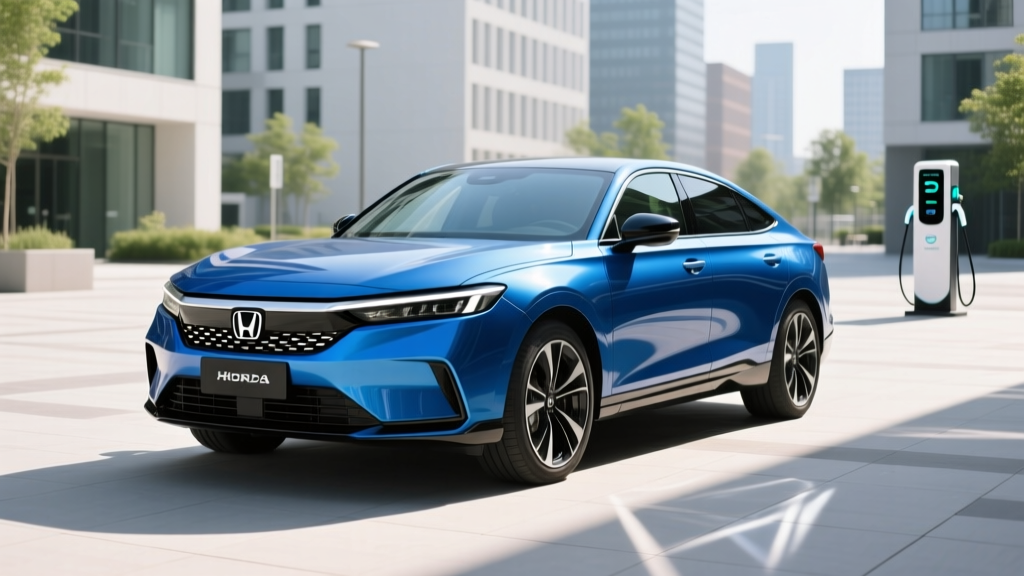
The Honda Prologue is Honda's first mass-market electric SUV built on General Motors' Ultium platform, and choosing the right Honda Prologue trim makes a meaningful difference in range, charging speed, and out-of-pocket cost. For 2026, Honda carries over the three-tier lineup introduced at launch — EX, Touring, and Elite — with minor packaging tweaks and continued eligibility for the full federal EV tax credit. This guide breaks down every trim with exact specs, real-world range expectations, and a clear framework for which one fits your driving life.
2026 Honda Prologue Trim Lineup at a Glance
Before we get into the weeds on range curves and charging speeds, here's the spec-table overview of all three trims. The Prologue shares its Ultium bones with the Chevrolet Blazer EV and Cadillac Lyriq, but Honda tunes it for a softer ride and a more conservative efficiency target.
| Spec | EX (FWD) | Touring (AWD) | Elite (AWD) |
|---|---|---|---|
| Base MSRP | $47,400 | $53,400 | $57,900 |
| Drivetrain | Front-Wheel Drive | Dual-Motor AWD | Dual-Motor AWD |
| Horsepower | 212 hp | 288 hp | 288 hp |
| 0–60 mph | ~7.8 sec | ~5.9 sec | ~5.9 sec |
| Battery (usable) | 85 kWh | 85 kWh | 85 kWh |
| Chemistry | NMC (nickel manganese cobalt) | NMC | NMC |
| EPA Range | 296 mi | 281 mi | 273 mi |
| MPGe (combined) | 95 MPGe | 91 MPGe | 89 MPGe |
| kWh/100 mi | 35 | 37 | 38 |
| Max DC Fast Charge | 150 kW | 150 kW | 150 kW |
| Level 2 Home Charge | 11.5 kW (~31 mi/hr) | 11.5 kW (~31 mi/hr) | 11.5 kW (~31 mi/hr) |
| Cargo (rear seats up) | 25.2 cu ft | 25.2 cu ft | 25.2 cu ft |
| Cargo (seats folded) | 57.7 cu ft | 57.7 cu ft | 57.7 cu ft |
| Rear Legroom | 38.6 in | 38.6 in | 38.6 in |
| Battery Warranty | 8 yr / 100,000 mi | 8 yr / 100,000 mi | 8 yr / 100,000 mi |
Source: fueleconomy.gov and Honda Newsroom. Prices exclude $1,395 destination.
Real-World Range: What the EPA Sticker Doesn't Tell You
FWD EX: EPA 296 mi → Expect ~250–265 mi highway (70–75 mph), ~220–235 mi in cold weather (below 32°F).
AWD Touring: EPA 281 mi → Expect ~240–255 mi highway, ~210–225 mi cold.
AWD Elite: EPA 273 mi → Expect ~230–245 mi highway, ~200–215 mi cold.
The Elite's larger 21-inch wheels and heavier curb weight (~4,900 lb) explain its lower efficiency vs. the EX's 20-inch setup.
The Prologue's 85 kWh usable NMC battery is shared across all trims, so range differences come down to drivetrain losses, wheel size, and weight. The front-wheel-drive EX is the efficiency champion of the lineup. Its single motor and smaller wheels give it a 23-mile EPA advantage over the Elite.
In real-world highway testing, the Prologue — like most midsize electric SUVs — falls short of its EPA sticker. Sustained 70–75 mph driving pushes consumption to roughly 38–42 kWh/100 mi depending on temperature and elevation. Cold weather compounds this: NMC chemistry loses roughly 15–25% of usable range below freezing because the battery must divert energy to thermal management and cabin heating. The Prologue does include a heat pump (standard on all trims for 2026), which mitigates some of that loss compared to resistive heating, but physics is physics.
For a daily commute under 60 miles round-trip with home charging, even the Elite's real-world range is more than adequate. Road-trippers should plan charging stops assuming ~230–250 miles of usable range to keep a safety buffer.
Charging Speed: DC Fast and Home Level 2
Charging performance is where the Prologue's Ultium architecture shows its age relative to 800V competitors like the Hyundai Ioniq 5 and Kia EV6. All Prologue trims max out at 150 kW on DC fast charging via the CCS1 connector (a NACS adapter is available for Supercharger access).
| Charging Level | Power / Rate | Time / Range Added |
|---|---|---|
| Level 1 (120V household) | ~1.4 kW | ~4 mi/hr — overnight trickle only |
| Level 2 (240V, 48A home) | 11.5 kW | ~31 mi/hr; full 0–100% in ~9 hours |
| DC Fast Charge (peak) | 150 kW | 10–80% in ~32 minutes |
| DC Fast Charge (sustained avg.) | ~110–120 kW | Average over a 10–80% session |
The 10–80% time of roughly 32 minutes is competitive with other 400V-class SUVs but trails the Ioniq 5's 18-minute 10–80% sprint on 350 kW chargers. The Prologue's charge curve is fairly flat between 10% and 55% SoC, then tapers noticeably above 70%. If you're road-tripping, plan to charge to 80% and go — the final 20% can add another 25+ minutes.
For home charging, Honda includes a dual-level charge cord (Level 1 and Level 2 capable) with every Prologue. On a properly installed 240V/48A NEMA 14-50 or hardwired Level 2 station, you'll recover about 31 miles of range per hour, easily replenishing a day's driving overnight. Budget $500–$1,500 for a quality Level 2 home charger (ChargePoint Home Flex, Emporia V2) plus $500–$2,000 for electrician installation depending on panel capacity and run length.
Performance and Drivetrain: FWD vs. AWD
The EX trim's single front motor produces 212 hp and 236 lb-ft of torque — adequate for merging and city driving, with a 0–60 mph time around 7.8 seconds. It's not quick by EV standards, but it's smooth and linear, which matters more in daily traffic.
Step up to the Touring or Elite and the dual-motor AWD system bumps output to 288 hp and 333 lb-ft, dropping the 0–60 time to approximately 5.9 seconds. The extra traction is valuable in rain and snow, and the torque delivery makes highway passing effortless. The trade-off is 15–23 miles of EPA range and roughly $6,000–$10,500 in additional cost.
Ride quality is a Prologue strength across all trims. Honda's tuning prioritizes comfort over sportiness, with well-damped suspension that absorbs rough pavement without floatiness. Steering is light and predictable — this is a family cruiser, not a canyon carver. The Prologue is not rated for towing in 2026, which eliminates it for buyers who need to pull a trailer or boat.
Pricing, Tax Credit, and Total Cost by Trim
Here's where trim selection has the biggest financial impact. The 2026 Honda Prologue qualifies for the IRS §30D federal EV tax credit, but eligibility depends on your income, the vehicle's MSRP, and battery-component/critical-mineral sourcing requirements that tighten annually.
- ✅ Vehicle MSRP must be ≤ $80,000 for SUVs (all Prologue trims qualify)
- ✅ Buyer AGI: ≤ $150,000 single / ≤ $300,000 married filing jointly
- ⚠️ Battery components must be manufactured or assembled in North America (threshold increases yearly — verify current-year percentage on IRS.gov)
- ⚠️ Critical minerals must be sourced from the U.S. or FTA partners (threshold increases yearly)
- ✅ Credit can be transferred to the dealer at point of sale as an instant rebate
The Prologue is built on GM's Ultium platform in Spring Hill, Tennessee, which helps with the North American assembly requirement. However, critical-mineral sourcing rules are complex — confirm eligibility with your dealer and IRS.gov before purchasing. Consult a tax professional for your specific situation.
| Trim | Base MSRP | Est. §30D Credit | Effective Price* |
|---|---|---|---|
| EX (FWD) | $47,400 | Up to $7,500 | ~$39,900 |
| Touring (AWD) | $53,400 | Up to $7,500 | ~$45,900 |
| Elite (AWD) | $57,900 | Up to $7,500 | ~$50,400 |
*Effective price assumes full $7,500 credit eligibility. Does not include destination ($1,395), state/local incentives, dealer fees, or taxes. Verify current-year credit rules before purchase.
At roughly $39,900 after the federal credit, the EX trim is one of the most affordable midsize electric SUVs on the market. The Touring adds AWD, leather, and a premium audio system for $6,000 more — a reasonable upgrade for four-season climates. The Elite's panoramic roof, 21-inch wheels, and heads-up display push it into luxury territory, but the range penalty and price make it harder to justify on value alone.
Interior, Tech, and Daily Livability
The Prologue's cabin is a pleasant surprise for a first-gen Honda EV. A standard 11.3-inch touchscreen runs Google Built-in (Google Maps, Google Assistant, Play Store), which is one of the best infotainment ecosystems available in any EV. Wireless Apple CarPlay and Android Auto are standard across all trims.
The Honda Sensing suite of driver-assistance features is standard and includes adaptive cruise control with stop-and-go, lane-keeping assist, blind-spot monitoring, and rear cross-traffic alert. This is a Level 2 driver-assist system under SAE classification — it does not drive the car for you and requires continuous driver attention. It's competent on highways but not class-leading compared to GM's Super Cruise or Ford's BlueCruise.
Passenger space is generous: 38.6 inches of rear legroom puts the Prologue ahead of the Toyota bZ4X and competitive with the Hyundai Ioniq 5. Cargo capacity is 25.2 cubic feet behind the second row and 57.7 cu ft with seats folded — enough for a week of family luggage but smaller than the Blazer EV's 30.5 cu ft. There is no front trunk (frunk), a missed opportunity given the Ultium platform's packaging flexibility.
Notable drawbacks include the lack of one-pedal driving with a true hold-to-stop mode (the Prologue's regen slows the car but doesn't bring it to a complete stop without brake pedal input), and the absence of a frunk. Road noise is also more noticeable than in the Ioniq 5 or Model Y, especially with the Elite's 21-inch tires.
Honda Prologue Trim Verdict: Which One Should You Buy?
✅ Pros
- Full $7,500 §30D tax credit eligibility (verify yearly)
- Comfortable ride quality across all trims
- Google Built-in infotainment is excellent
- Generous rear legroom (38.6 in)
- Heat pump standard on all trims for 2026
- Competitive pricing after credit, especially EX
❌ Cons
- 150 kW DC peak is below class leaders (200–350 kW)
- No frunk despite Ultium platform capability
- No true one-pedal driving with complete stop
- Elite trim's 21" wheels cut range and raise tire cost
- Not rated for towing
- Road noise above average for the class
Choose the EX (FWD) if: You want the best range (296 mi EPA), lowest price (~$39,900 after credit), and primarily drive in mild climates or cities. Ideal for commuters with home charging.
Choose the Touring (AWD) if: You need all-wheel drive for snow/rain, want leather seats and premium audio, and can accept a 15-mile range drop. Best all-rounder for four-season families.
Choose the Elite (AWD) if: You prioritize luxury features (panoramic roof, HUD, ventilated seats) over maximum range and value. Best for buyers cross-shopping the Cadillac Lyriq who want Honda reliability.
Frequently Asked Questions
What is the real-world range of the Honda Prologue?
Expect roughly 250–265 miles on the highway in the FWD EX (EPA 296 mi), 240–255 mi in the AWD Touring, and 230–245 mi in the Elite. Cold weather (below 32°F) reduces these figures by 15–25%. The heat pump standard on 2026 models helps mitigate winter losses compared to resistive-only heating systems.
How fast does the Prologue charge at home and on the road?
On a 240V Level 2 home charger, the Prologue charges at 11.5 kW, adding about 31 miles of range per hour (full charge in ~9 hours). On DC fast chargers, it peaks at 150 kW with a 10–80% time of roughly 32 minutes. Sustained average power during a typical session is around 110–120 kW due to charge-curve taper above 70% SoC.
Does the 2026 Honda Prologue qualify for the $7,500 federal tax credit?
The Prologue is expected to qualify for up to $7,500 under IRS §30D, thanks to its Tennessee assembly and GM Ultium battery sourcing. However, eligibility depends on your income (≤$300k married filing jointly), the vehicle MSRP (≤$80k for SUVs), and current-year battery component/critical mineral thresholds. Always verify on IRS.gov and consult a tax professional before purchasing.
Is the Honda Prologue worth buying vs. the Hyundai Ioniq 5 or Tesla Model Y?
The Prologue wins on comfort, Google infotainment, and dealer-service accessibility. The Ioniq 5 wins on charging speed (800V architecture, 10–80% in ~18 min) and efficiency. The Model Y wins on Supercharger network access, cargo space, and software features. If you value a traditional dealership experience, a comfortable ride, and a strong tax-credit position, the Prologue EX at ~$39,900 is a compelling value.
What is the Honda Prologue's battery warranty?
Honda covers the Prologue's high-voltage battery for 8 years or 100,000 miles (whichever comes first), with a capacity-retention threshold typically set at 70% of original capacity. The basic vehicle warranty is 3 years/36,000 miles, and the powertrain warranty is 5 years/60,000 miles.