Quick Verdict: The Prologue's Tax-Credit Advantage
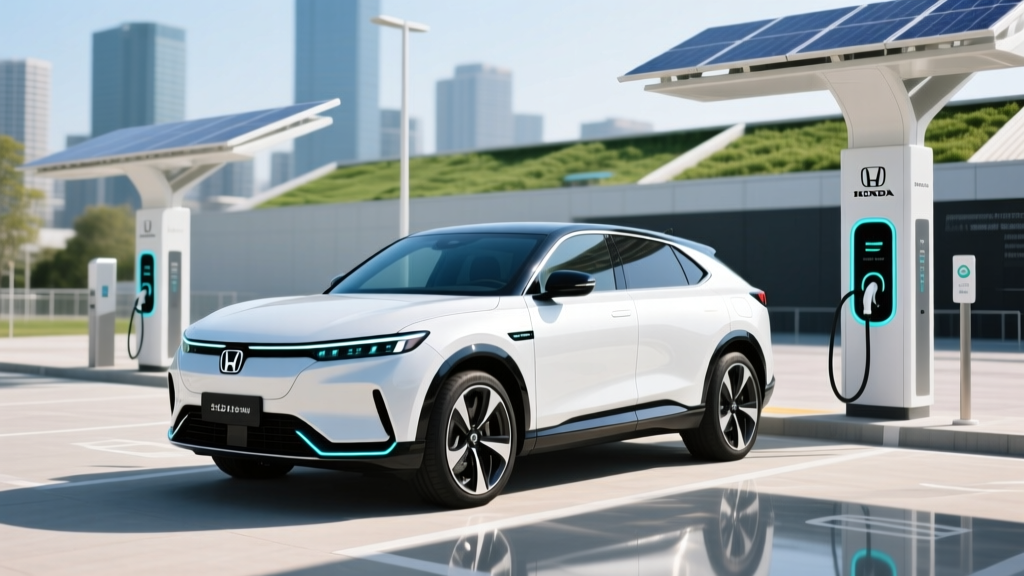
The 2026 Honda Prologue occupies a rare position in the midsize electric SUV segment: it's one of the few non-Tesla crossovers that can deliver the full $7,500 federal EV tax credit at the point of sale — provided you meet IRS income requirements and the vehicle's battery-sourcing credentials hold through the current tax year. Built on General Motors' Ultium platform and assembled in Tennessee, the Prologue leverages domestic manufacturing to clear the critical-mineral and battery-component hurdles that disqualify many rivals under IRS §30D rules.
But tax-credit eligibility is only part of the purchase equation. The Prologue delivers competitive range, respectable DC fast-charging, and Honda's reputation for cabin practicality — alongside infotainment quirks and a charging curve that tapers noticeably above 80% State of Charge (SoC). Here's the full data-driven breakdown.
2026 Honda Prologue Specs at a Glance
| Spec | EX (FWD) | Touring (AWD) |
|---|---|---|
| EPA Range | 296 miles | 283 miles |
| Battery (usable) | 85 kWh (NMC) | 85 kWh (NMC) |
| Horsepower | 212 hp | 288 hp |
| 0-60 mph | ~7.8 sec | ~6.2 sec |
| Drivetrain | FWD (single motor) | AWD (dual motor) |
| Max DC Fast Charge | 150 kW | 150 kW |
| 10-80% DCFC Time | ~33 min | ~33 min |
| Level 2 Home Rate | 11.5 kW (~30 mi/hr) | 11.5 kW (~30 mi/hr) |
| MPGe (combined) | 99 MPGe | 95 MPGe |
| Base MSRP | $47,400 | $57,900 |
| Battery Warranty | 8 years / 100,000 miles | |
Real-World Range: What the EPA Number Doesn't Tell You
FWD EX: EPA 296 mi — expect ~265-280 mi mixed driving, ~235-250 mi sustained highway at 70+ mph, ~210-230 mi in sub-freezing winter conditions.
AWD Touring: EPA 283 mi — expect ~250-265 mi mixed, ~220-240 mi highway, ~200-215 mi in cold weather.
The Prologue's 85 kWh usable battery (NMC chemistry, supplied by the Ultium Cells joint venture) provides a solid energy buffer. According to fueleconomy.gov, the FWD EX achieves 99 MPGe combined (34 kWh/100 mi), while the AWD Touring drops to 95 MPGe (35 kWh/100 mi).
In practice, the Prologue's boxy SUV profile creates more aerodynamic drag than sleeker crossovers like the Hyundai Ioniq 5, which hurts highway efficiency disproportionately. At 75 mph on a flat interstate in 70°F weather, plan for roughly 3.0-3.2 miles per kWh in the FWD model — yielding around 255-270 miles before you need to find a charger. Drop the ambient temperature to 30°F and the battery's internal resistance rises while cabin heating draws additional energy; expect a 15-25% range reduction depending on trip length and preconditioning habits.
The Prologue does include a heat pump on all trims, which mitigates cold-weather losses compared to resistive-only heating systems. Preconditioning the battery while plugged in before departure also preserves range by warming the pack using grid power rather than battery energy.
Charging Speed: DC Fast and Home Level 2
| Charging Level | Power / Rate | Connector | Practical Speed |
|---|---|---|---|
| Level 1 (120V) | ~1.4 kW | J1772 / NACS | ~4 miles per hour |
| Level 2 (240V, 48A) | 11.5 kW | J1772 / NACS | ~30 miles per hour |
| DC Fast Charge | Peak 150 kW | CCS1 / NACS | 10-80% in ~33 min |
The Prologue's 150 kW peak DC fast-charging rate is adequate but no longer class-leading. Competitors like the Hyundai Ioniq 5 (peak 240 kW on 800V architecture) and the Kia EV6 (also 800V) can complete a 10-80% session in roughly 18 minutes — nearly half the time.
The Prologue's charge curve is the more important detail for road-trippers. The SUV sustains close to its 150 kW peak only between roughly 15-40% SoC. From 40-65%, the rate drops to approximately 100-115 kW. Above 80%, charging slows dramatically to protect battery health — often below 40 kW — which is why Honda (and virtually every automaker) quotes 10-80% times rather than 10-100%. If you need to charge past 80% on a road trip, budget an additional 20-25 minutes for that final 20%.
For home charging, the onboard 11.5 kW AC charger fills the 85 kWh battery from empty in roughly 8-9 hours on a 240V/48A Level 2 circuit. This is a strong overnight charging solution: plug in at 10 PM, wake up to a full battery by 6 AM. A licensed electrician will typically install a 60A dedicated circuit (to support the continuous 48A draw) — expect $500-$1,500 for installation if your electrical panel has capacity, or $2,000-$4,000+ if a panel upgrade to 200A service is needed.
For 2026, the Prologue ships with a NACS (Tesla-style) charge port in North America, granting direct access to Tesla Supercharger stations via native plug. Honda also includes a NACS-to-CCS adapter in the box for legacy Electrify America and other CCS-only networks.
Honda Prologue Tax Credit: Do You Qualify?
This is the question driving most Prologue searches, and the answer depends on a matrix of vehicle-sourcing rules and buyer-income limits under IRS §30D. Here's the current framework:
- Vehicle MSRP cap: SUVs/vans/pickups must be ≤ $80,000 — Prologue qualifies (highest trim ~$58K)
- Buyer income cap (modified AGI): $150,000 single / $225,000 head of household / $300,000 joint — must be under threshold in either the delivery year or prior year
- North American final assembly: Prologue assembled in Spring Hill, Tennessee — qualifies
- Battery critical-mineral sourcing: Must meet escalating percentage thresholds from qualifying FTA countries — check current IRS approved-vehicle list at time of purchase, as supply chains shift
- Battery component manufacturing: Must meet escalating percentage thresholds for North American manufacture/assembly — Ultium Cells batteries are produced in TN/OH — generally qualifies
- Point-of-sale transfer: You can transfer the credit to the dealer at purchase for an immediate price reduction, or claim it on your federal tax return (Form 8936)
- One credit per VIN, one vehicle per taxpayer per year
| Trim | MSRP | After $7,500 Credit | Effective Monthly (60-mo, 5%) |
|---|---|---|---|
| EX FWD | $47,400 | $39,900 | ~$753/mo |
| Touring AWD | $57,900 | $50,400 | ~$951/mo |
Critical caveat: Battery-sourcing requirements tighten annually under the Inflation Reduction Act. A vehicle that qualifies in January may face mid-year supply-chain changes that affect eligibility. Always verify the Prologue's current status on the DOE's qualified vehicle list at the time of purchase. Additionally, consult a tax professional to confirm your personal income eligibility — this article does not constitute tax advice.
Performance, Interior, and Technology
The AWD Touring's dual-motor setup produces 288 hp and 333 lb-ft of torque, delivering a 6.2-second 0-60 mph time that feels brisk for a family crossover. The FWD EX, at 212 hp, is adequate for commuting and highway merging but won't win drag races. Both versions benefit from the Ultium platform's low center of gravity, lending composed handling through corners with minimal body roll.
Inside, the Prologue borrows heavily from GM's parts bin — which is both a strength and a weakness. The 11.3-inch infotainment touchscreen runs Google Built-In (Google Maps, Google Assistant, Play Store apps), which is responsive and familiar. However, Honda loyalists may notice the absence of some brand-specific UX refinements. Wireless Apple CarPlay and Android Auto are standard.
The Honda Sensing suite includes adaptive cruise control, lane-keeping assist, blind-spot monitoring, and rear cross-traffic alert. This is SAE Level 2 driver assistance — it does not drive the car for you and requires continuous hands-on-wheel engagement and visual attention.
Cargo space: 25.2 cu ft behind the second row, expanding to 57.7 cu ft with rear seats folded. Rear legroom measures 38.6 inches — competitive with the Toyota bZ4X and slightly ahead of the Subaru Solterra. There is no front trunk (frunk); the Ultium platform's under-hood packaging is occupied by power electronics.
Pros, Cons, and Who Should Buy
- Full $7,500 federal tax credit eligibility (verify at purchase)
- Spacious cabin with strong cargo volume
- Heat pump standard — better cold-weather efficiency
- NACS native port — direct Supercharger access
- Competitive 85 kWh battery with 8-yr/100K-mi warranty
- Honda dealer network for service familiarity
- 150 kW peak DCFC trails segment leaders (Ioniq 5, EV6 at 240 kW)
- GM-sourced infotainment lacks Honda-specific refinement
- No frunk for additional storage
- Base price still above $47K before credit
- AWD range drops to 283 mi EPA
- Charge curve tapers significantly above 65% SoC
- Daily commuters with home Level 2 charging who want a practical, credit-eligible family SUV
- Honda-loyal buyers transitioning to electric who value dealer-network support
- Two-adult households earning under §30D income caps who can capture the full $7,500 point-of-sale reduction
- Frequent road-trippers who need the fastest possible DC charging (consider Ioniq 5 or EV6)
- Three-row families needing more than five seats (consider the Kia EV9)
- Buyers above income caps who won't benefit from the tax credit and may find better value elsewhere at this price point
Frequently Asked Questions
What is the real-world range of the Honda Prologue?
The FWD EX is EPA-rated at 296 miles, but expect approximately 265-280 miles in mixed real-world driving, 235-250 miles on sustained highway trips, and 210-230 miles in freezing temperatures. The AWD Touring rates at 283 miles EPA with proportionally lower real-world figures.
How fast does the Honda Prologue charge?
On a DC fast charger, the Prologue peaks at 150 kW and charges from 10-80% in approximately 33 minutes. At home on a 240V Level 2 charger (11.5 kW), a full charge takes about 8-9 hours, adding roughly 30 miles of range per hour of charging.
How much does the Honda Prologue cost after tax credits?
The FWD EX starts at $47,400 MSRP and drops to approximately $39,900 after the full $7,500 federal credit. The AWD Touring starts at $57,900 and falls to roughly $50,400. Eligibility requires meeting IRS income caps, and the vehicle must remain on the DOE's qualified list at time of purchase.
Is the Honda Prologue worth buying vs. competitors?
The Prologue's strongest competitive advantage is its reliable federal tax-credit eligibility combined with Honda's dealer footprint. Against the Hyundai Ioniq 5 (faster charging, more futuristic interior), Toyota bZ4X (lower starting price, less range), and Ford Mustang Mach-E (sportier handling, credit eligibility varies), the Prologue wins on tax-credit certainty and cabin space. It loses on charging speed and infotainment polish.
Does the Honda Prologue qualify for the federal EV tax credit?
As of the current tax year, the Prologue qualifies for the full $7,500 under §30D based on its Tennessee assembly and Ultium Cells battery sourcing. However, critical-mineral and component thresholds tighten annually. Always verify eligibility on fueleconomy.gov and consult a tax professional before purchase.
What is the Honda Prologue's battery warranty?
Honda covers the high-voltage battery and electric powertrain for 8 years or 100,000 miles, whichever comes first. The warranty guarantees the battery will retain a minimum capacity threshold (typically 60-70% of original capacity, per Honda's terms) during the coverage period.