Honda Prologue Reliability: What the Data Actually Shows
The Honda Prologue entered the US market as Honda's first mass-volume battery electric vehicle, built on General Motors' Ultium platform through a cross-company partnership. For buyers researching Honda Prologue reliability, the story is one of proven platform architecture meeting Honda's long-standing reputation for build quality — but with important caveats around first-generation EV ownership, software maturity, and real-world efficiency that spec sheets alone don't reveal.
This review covers the Prologue's powertrain durability outlook, battery longevity expectations, real-world range versus EPA estimates, charging performance, and total cost of ownership. We'll also examine whether it qualifies for the federal EV tax credit under current IRS §30D rules and how it stacks up against direct competitors like the Hyundai Ioniq 5, Chevrolet Blazer EV, and Ford Mustang Mach-E.
Spec Sheet: Honda Prologue at a Glance
| Specification | FWD (EX / Touring) | AWD (Elite) |
|---|---|---|
| EPA Range | 308 miles (EX FWD) | 281 miles (Elite AWD) |
| Battery (usable) | 85 kWh, NMC lithium-ion (Ultium) | |
| Max DC Fast Charge | 150 kW peak | |
| 10–80% DC Charge Time | ~35 minutes | |
| Level 2 Home Charging | 11.5 kW onboard (~31 mi/hr) | |
| Horsepower | 212 hp (FWD) | 288 hp (AWD dual-motor) |
| 0–60 mph | ~7.8 sec (FWD) | ~6.2 sec (AWD) |
| MPGe (combined) | 95 MPGe | 87 MPGe |
| Efficiency | ~35 kWh/100 mi | ~39 kWh/100 mi |
| Cargo (rear seats up) | 25.2 cu ft | |
| Cargo (rear seats folded) | 57.7 cu ft | |
| Rear Legroom | 39.5 in | |
| Base MSRP (2025 MY) | $47,400 (EX FWD) | |
| Battery/Powertrain Warranty | 8 years / 100,000 miles | |
| Vehicle Warranty | 3 years / 36,000 miles | |
Sources: EPA fueleconomy.gov, Honda Prologue official specs.
Real-World Range vs. EPA: What to Actually Expect
Real-World Highway (70 mph, moderate temps): ~255–275 miles (FWD), ~230–250 miles (AWD)
Cold-Weather (below 32°F, highway): ~210–240 miles (FWD), ~190–220 miles (AWD)
City / Mixed Commute: Closer to EPA or slightly above, thanks to regen braking
The Prologue's 85 kWh NMC battery delivers competitive EPA figures, but the Ultium platform's efficiency in this midsize SUV application trails segment leaders. The Hyundai Ioniq 5 RWD achieves 318 EPA miles from a smaller 77.4 kWh pack, illustrating that the Prologue's heavier curb weight and less aerodynamic profile consume more energy per mile.
In practical terms, highway driving at sustained speeds above 70 mph reduces range by roughly 10–15% from the EPA combined estimate. Cold weather compounds this: NMC chemistry loses 15–30% range in freezing temperatures, depending on cabin heating demands. The Prologue uses a resistive PTC heater rather than a heat pump, which draws more from the battery in winter — a meaningful reliability consideration for cold-climate owners who'll see deeper discharge cycles and more frequent charging stops.
For reliability purposes, the good news is that Honda and GM have engineered substantial buffer into the Ultium pack. Usable capacity sits at approximately 85 kWh from a gross capacity closer to 102 kWh, meaning the battery management system (BMS) protects the cells from extreme states of charge that accelerate degradation.
Charging Performance: DC Fast and Home Level 2
| Charging Level | Power / Rate | Miles Added | Time |
|---|---|---|---|
| Level 1 (120V household) | ~1.4 kW | ~3–4 mi/hr | ~28 hrs (10–80%) |
| Level 2 (240V, 48A home) | 11.5 kW | ~31 mi/hr | ~7 hrs (10–80%) |
| DC Fast Charge (peak) | 150 kW | ~190 mi in 30 min | ~35 min (10–80%) |
The Prologue's 150 kW peak DC fast-charge rate is adequate but not class-leading. Competitors like the Ioniq 5 and Kia EV6, built on 800V architectures, sustain 230+ kW peaks and complete 10–80% charges in roughly 18 minutes. The Prologue's 400V Ultium platform charges at a more moderate curve: it pulls close to 150 kW between roughly 10–40% state of charge, then tapers progressively through the 50–80% range.
This charge-curve taper matters for road-trip planning. On a 400-mile drive, you'll likely need two charging stops, each lasting 30–40 minutes if you stay within the 10–80% sweet spot. Pushing past 80% at a DC fast charger slows dramatically — expect 80–100% to add another 20–25 minutes. For reliability-conscious owners, regularly fast-charging to 100% also accelerates long-term battery wear, so the practical recommendation is to charge to 80% on road trips and reserve 100% fills for overnight Level 2 sessions before long drives.
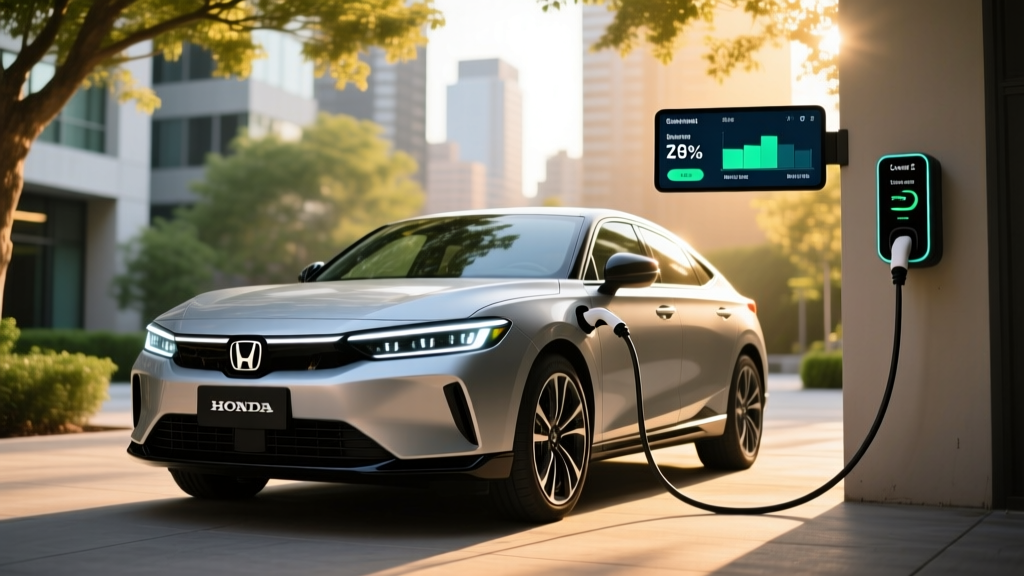
At home, the 11.5 kW onboard charger is a strong point. A 48-amp Level 2 wall connector on a 240V/60A circuit replenishes the pack in about 7 hours, which suits overnight charging well. Installation typically costs $800–$2,000 depending on your panel capacity and run distance — budget for a potential 200-amp panel upgrade ($1,500–$3,000) if your home has older electrical service.
Reliability Outlook: Platform, Battery, and Build Quality
Assessing Honda Prologue reliability requires separating three factors: the Ultium platform's track record, Honda's assembly quality, and first-year model risk.
Ultium Platform Maturity: The Prologue shares its BEV3 architecture with the Chevrolet Blazer EV, Cadillac Lyriq, and GMC Hummer EV. Early Ultium vehicles (2023–2024 model years) experienced software-related issues — infotainment glitches, phantom battery drain, and intermittent charging handshake failures — rather than fundamental battery or motor defects. GM issued multiple over-the-air (OTA) updates through 2024–2025 to address these. By the 2025 model year, most reported issues had been resolved, and the Prologue benefits from these platform-level fixes.
Battery Degradation: NMC chemistry in the Ultium pack is expected to retain approximately 90–95% of original capacity after 100,000 miles under normal use (mix of Level 2 home charging with occasional DC fast charging). The 8-year/100,000-mile battery warranty covers defects and capacity loss below 70% of original — a standard threshold across the industry. Honda's warranty is administered through Honda dealers, which provides a more familiar service experience than GM-brand Ultium vehicles.
Build Quality: The Prologue is assembled at GM's Spring Hill, Tennessee plant alongside the Lyriq. Honda's involvement focused on design, tuning, and interior specifications rather than manufacturing. Early owner reports indicate solid panel fit and interior material quality consistent with Honda's expectations, though some owners note that certain interior plastics feel less premium than the Prologue's $47,000+ starting price suggests.
First-Generation Risk: This is Honda's first dedicated EV, and first-generation models across any automaker carry elevated risk for unforeseen issues. The mitigating factor is that the powertrain is GM's, not Honda's first attempt — so the electric drivetrain itself has more cumulative production experience than the badge suggests.
Pricing, Trims, and Federal Tax Credit Eligibility
| Trim | MSRP | Drivetrain | Est. After §30D Credit* |
|---|---|---|---|
| EX | $47,400 | FWD | ~$39,900 |
| Touring | $52,400 | FWD or AWD | ~$44,900 |
| Elite | $57,400 | AWD | ~$49,900 |
*Federal tax credit estimates assume buyer eligibility. Actual credit depends on current-year IRS §30D rules.
The Prologue's eligibility for the $7,500 federal EV tax credit under IRS §30D depends on several requirements that shift periodically:
- MSRP Cap: The Prologue qualifies as an SUV under IRS vehicle classifications, which carries an $80,000 MSRP cap (vs. $55,000 for sedans). All current trims fall well under this limit.
- Buyer Income Cap: Modified adjusted gross income must not exceed $150,000 (single), $225,000 (head of household), or $300,000 (joint filers).
- Battery Sourcing: Critical minerals and battery components must meet phased-in domestic-content and free-trade-agreement thresholds. Because the Prologue uses a GM Ultium battery manufactured in the US, it has generally qualified for the full $7,500 — but buyers must verify current-year sourcing compliance on the IRS qualified vehicles list before purchasing.
- Point-of-Sale Transfer: As of 2024, buyers can transfer the credit to the dealer at purchase, reducing the purchase price directly rather than waiting for a tax refund. This effectively lowers the Prologue's out-of-pocket cost at signing.
Always confirm eligibility at IRS.gov's qualified vehicle list before finalizing a purchase, as sourcing rules are updated periodically and can change a vehicle's eligibility mid-year.
Tech, Interior, and Driver Assistance
The Prologue's cabin features a Google Built-in infotainment system on an 11.3-inch touchscreen, wireless Apple CarPlay and Android Auto, and a 11-inch digital instrument cluster. The system supports OTA updates, and Honda has committed to ongoing feature improvements.
The Honda Sensing suite includes adaptive cruise control with low-speed follow, lane-keeping assist, blind-spot monitoring, and rear cross-traffic braking. This is SAE Level 2 driver assistance — meaning the driver must remain fully attentive with hands on the wheel. It is not autonomous driving. The system is competent for highway commuting but doesn't match the hands-free capability of GM's Super Cruise or Ford's BlueCruise on mapped highways.
Notable interior dimensions make the Prologue practical for families: 39.5 inches of rear legroom accommodates adults comfortably, and the 25.2 cu ft cargo area (57.7 cu ft with seats folded) handles strollers, groceries, and luggage for a family of four. However, there is no front trunk (frunk), which limits bonus storage that competitors like the Ford Mustang Mach-E provide.
Pros and Cons
Pros
- Spacious cabin with strong rear legroom and cargo volume
- Comfortable ride quality tuned for daily commuting
- Honda dealer network for service and warranty work
- Competitive EPA range in FWD configuration (308 mi)
- 11.5 kW Level 2 onboard charger for fast home replenishment
- Qualifies for $7,500 federal tax credit (verify current eligibility)
- 8-year / 100,000-mile battery warranty
Cons
- 150 kW peak DC charge rate trails 800V competitors (Ioniq 5, EV6)
- No heat pump — cold-weather range loss is significant
- Higher kWh/100mi consumption than efficiency leaders
- No frunk for additional cargo
- First-generation EV with potential for software-related issues
- Pricey at upper trims vs. similarly equipped rivals
- Hands-free driving assist not available (Level 2 only)
Who Should Buy the Honda Prologue?
The Prologue fits a specific buyer profile: the Honda-loyal household transitioning from a CR-V or Passport to electric who values dealer familiarity, cabin comfort, and adequate range over segment-leading efficiency or charging speed.
Choose the Prologue if:
- You charge primarily at home and rarely road-trip more than 250 miles between stops
- You want a Honda-badged EV serviced at your existing dealer relationship
- Passenger space and ride comfort rank above performance or charging speed
- You qualify for the full $7,500 federal tax credit, bringing the EX trim near $40,000
Look elsewhere if:
- You road-trip frequently and need the fastest DC charging (consider Ioniq 5 or EV6)
- You live in a cold climate and need maximum winter range (consider vehicles with heat pumps)
- You want hands-free highway driving (consider vehicles with Super Cruise or BlueCruise)
- Price sensitivity is paramount (the Chevrolet Equus EV or base Blazer EV offer Ultium at lower MSRPs)
Frequently Asked Questions
What is the real-world range of the Honda Prologue?
The EPA rates the FWD Prologue EX at 308 miles and the AWD Elite at 281 miles. In real-world highway driving at 70 mph, expect roughly 255–275 miles (FWD) or 230–250 miles (AWD). In freezing temperatures, range drops further to approximately 210–240 miles (FWD) due to the lack of a heat pump and NMC chemistry's cold sensitivity.
How fast does the Honda Prologue charge?
On a DC fast charger, the Prologue peaks at 150 kW and charges from 10–80% in approximately 35 minutes. At home on a 240V Level 2 charger (48 amps), the 11.5 kW onboard charger adds about 31 miles of range per hour, fully replenishing the battery in roughly 7 hours. Level 1 (120V) trickle charging adds only 3–4 miles per hour.
How much does the Honda Prologue cost after tax credits?
The base EX FWD starts at $47,400 MSRP. If you qualify for the full $7,500 federal tax credit under IRS §30D (income caps, MSRP caps, and battery sourcing rules apply), the effective price drops to approximately $39,900. The top Elite AWD at $57,400 would cost roughly $49,900 after the credit. Verify current eligibility on IRS.gov before purchasing.
Is the Honda Prologue worth buying vs. competitors?
The Prologue competes against the Hyundai Ioniq 5 (better efficiency and faster charging), Chevrolet Blazer EV (same Ultium platform, lower price), and Ford Mustang Mach-E (sportier driving dynamics). The Prologue's advantages are Honda's dealer network, comfortable ride, and spacious interior. If charging speed and efficiency are priorities, the Ioniq 5 is stronger. If price is the deciding factor, the Blazer EV offers similar hardware for less.
Does the Honda Prologue qualify for the federal EV tax credit?
Yes, the Prologue has generally qualified for the full $7,500 federal tax credit under IRS §30D, as its MSRP falls under the $80,000 SUV cap and its GM Ultium battery is US-manufactured. However, eligibility depends on current-year battery sourcing requirements, buyer income limits ($150K single / $300K joint), and the IRS qualified vehicle list, which updates periodically. Confirm before purchasing.
Is the Honda Prologue reliable long-term?
Long-term data is limited since the Prologue launched for the 2024 model year. The Ultium platform has been in production across GM vehicles since 2022, and early software issues have been largely addressed through OTA updates. The 8-year/100,000-mile battery warranty provides protection against significant degradation. Honda's involvement is primarily in design and dealer experience, while GM handles powertrain manufacturing — so reliability tracks closer to GM's EV record than Honda's historical ICE reputation.