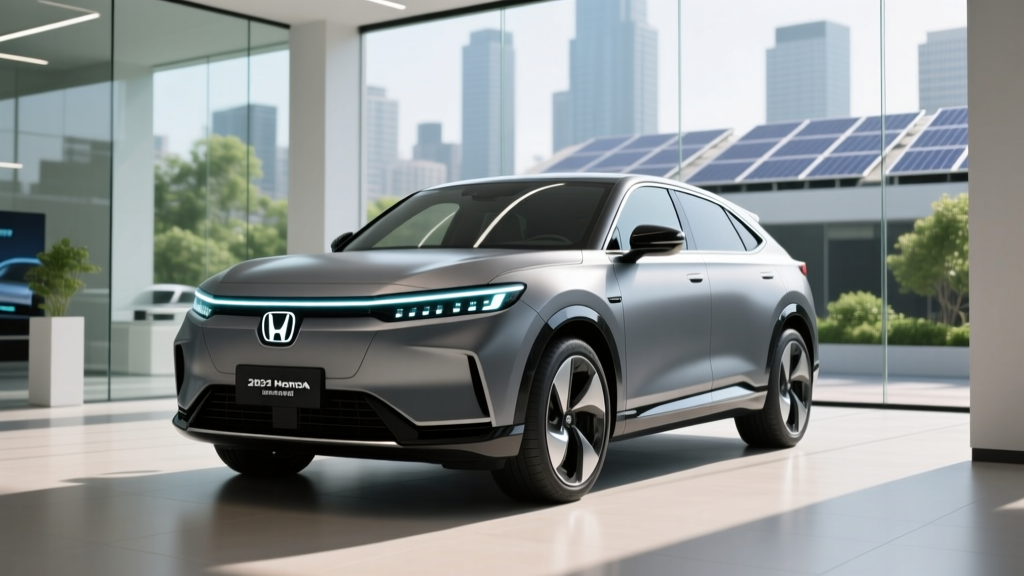
If you've been asking when did the Honda Prologue come out, you're not alone. Honda's first mass-market battery-electric vehicle arrived at U.S. dealerships in March 2024 as a 2024 model-year vehicle, following a lengthy preview period that began with a concept reveal in early 2022. Now well into its second model year on sale, the Prologue has established itself as a midsize electric SUV built on General Motors' Ultium platform — the same architecture underpinning the Chevrolet Blazer EV and Cadillac Lyriq.
This review covers everything current and prospective buyers need to know about the Prologue in 2026: real-world range, charging performance, pricing after federal incentives, and how it stacks up against rivals like the Hyundai Ioniq 5, Ford Mustang Mach-E, and Volkswagen ID.4.
Honda Prologue Launch Timeline and Platform Background
Honda's path to the Prologue was unconventional. Rather than developing a dedicated EV platform in-house, Honda partnered with General Motors to use the Ultium BEV3 platform. This decision gave Honda access to GM's battery technology, electric drive units, and existing supply chain — accelerating the Prologue's development but also meaning the vehicle shares significant DNA with the Chevrolet Blazer EV.
Key milestones:
- January 2022: Honda unveils Prologue concept and confirms GM Ultium partnership
- October 2023: Production-spec 2024 Prologue revealed with full specs and pricing
- March 2024: First customer deliveries begin at U.S. dealers
- Late 2024: 2025 model year updates arrive with minor pricing adjustments
- 2026: Prologue continues with expanded trim availability and updated infotainment
Looking ahead, Honda has confirmed that future EVs will use its own in-house e-Architecture, but the Prologue remains firmly on Ultium through at least the 2027 model year.
Specs at a Glance: Range, Battery, and Performance
| Specification | FWD (EX/Touring) | AWD (EX/Touring/Elite) |
|---|---|---|
| EPA Range | 296 miles | 281 miles (Touring/Elite) |
| Battery Capacity | 85 kWh usable (NMC lithium-ion) | |
| Horsepower | 212 hp | 288 hp |
| Torque | 236 lb-ft | 333 lb-ft |
| 0-60 mph | ~7.8 seconds | ~5.8 seconds |
| Drivetrain | Single-motor FWD | Dual-motor AWD |
| MPGe (Combined) | 99 MPGe | 95 MPGe |
| Efficiency | 34 kWh/100 mi | 35 kWh/100 mi |
| Towing Capacity | 1,500 lbs | |
The Prologue uses an NMC (nickel manganese cobalt) battery pack — the standard chemistry across GM's Ultium lineup. Unlike LFP packs found in some Tesla and Ford models, NMC offers higher energy density but requires more careful state-of-charge management for long-term longevity. Honda recommends daily charging to 80-90% for routine use and reserving 100% charges for road trips.
The EPA rates the FWD Prologue at 296 miles and AWD at 281 miles. In mixed highway driving at 70-75 mph, expect roughly 250-270 miles from the FWD model and 240-255 miles from AWD. In cold weather (below 30°F), plan for a 15-25% range reduction, bringing real-world winter range down to approximately 210-230 miles for AWD models. The Prologue lacks a heat pump, relying instead on resistive cabin heating, which draws more energy from the pack in winter conditions.
Charging Performance: DC Fast Charging and Home Level 2
Charging speed is often the deciding factor for EV buyers, and the Prologue delivers competitive — though not class-leading — performance on GM's Ultium architecture.
| Charging Level | Power / Rate | Time / Range Added |
|---|---|---|
| Level 1 (120V household) | ~1.4 kW | ~3-4 miles per hour |
| Level 2 (240V home/public) | 11.5 kW (48A) | ~32 miles per hour; 0-100% in ~9.5 hours |
| DC Fast Charge (peak) | 155 kW max | 10-80% in ~32 minutes |
| DC Fast Charge (10 min add) | — | ~65 miles in 10 minutes (at peak) |
The Prologue's 155 kW peak DC fast-charge rate is respectable but trails competitors like the Hyundai Ioniq 5 (which peaks above 230 kW on 800V architecture). On a 350 kW Electrify America or EVgo station, the Prologue will sustain close to its peak rate through about 50% state of charge before tapering. The charge curve from 80-100% slows considerably — adding that final 20% can take nearly as long as the 10-80% session. For road trips, plan stops around the 10-80% window to minimize time at the charger.
For home charging, the Prologue's onboard charger accepts up to 11.5 kW on a 48-amp Level 2 circuit, which requires a 60-amp dedicated breaker. A full overnight charge from empty is easily achievable, and most daily drivers will replenish their commute in under two hours on Level 2.
The Prologue uses the NACS (North American Charging Standard) connector on 2025+ models, giving native access to Tesla Supercharger stations. Earlier 2024 models shipped with CCS1 but are eligible for a NACS adapter. Honda also provides access to the Electrify America network through the HondaLink app.
Pricing, Trims, and Federal Tax Credit Eligibility
The Prologue's pricing positions it squarely in the mainstream midsize EV SUV segment. Here's the current MSRP breakdown:
| Trim | Drivetrain | MSRP (incl. destination) | Est. After §30D Credit* |
|---|---|---|---|
| EX | FWD | $48,795 | ~$41,295 |
| EX | AWD | $51,795 | ~$44,295 |
| Touring | FWD | $53,495 | ~$45,995 |
| Touring | AWD | $55,495 | ~$47,995 |
| Elite | AWD | $59,295 | ~$51,795 |
*Federal tax credit estimates assume full eligibility. See checklist below.
- MSRP cap: SUVs must be at or below $80,000 — all Prologue trims qualify ✓
- Buyer income cap: AGI must not exceed $150,000 (single), $225,000 (head of household), or $300,000 (joint filers)
- Battery sourcing: Critical minerals and battery components must meet phased-in percentages per IRS requirements — confirm current eligibility on IRS.gov as sourcing rules tighten annually
- Point-of-sale transfer: Eligible buyers can apply the credit as an immediate rebate at the dealership rather than waiting for tax filing
- Assembly: Prologue is assembled in Ramos Arizpe, Mexico — which may affect eligibility under certain interpretation of domestic assembly requirements; verify on fueleconomy.gov
Important: Tax credit rules change frequently. Consult a tax professional and verify on IRS.gov before purchasing.
Interior Space, Cargo, and Daily Practicality
The Prologue's midsize dimensions translate to generous interior volume that competes well with two-row SUV rivals:
- Cargo volume (rear seats up): 25.2 cu ft
- Cargo volume (rear seats folded): 57.7 cu ft
- Front legroom: 41.4 inches
- Rear legroom: 38.6 inches
- Front headroom: 40.0 inches
- Rear headroom: 39.6 inches
These numbers put the Prologue ahead of the Hyundai Ioniq 5 in cargo capacity (27.2 cu ft behind the rear row, but less overall length) and competitive with the Ford Mustang Mach-E. The flat floor — a benefit of the Ultium skateboard platform — makes the rear seat notably comfortable for three-across seating on shorter trips.
However, the Prologue lacks a front trunk (frunk), which is a missed opportunity for additional sealed storage that competitors like the Mach-E and Rivian R2 offer. The absence is a direct result of the Ultium platform's front-end packaging, which houses the HVAC and power electronics where a frunk would sit.
Technology, Driver Assistance, and Safety
The Prologue features an 11.3-inch touchscreen running Google Built-In (Google Maps, Google Assistant, and Play Store apps) alongside an 11-inch digital instrument cluster. Wireless Apple CarPlay and Android Auto are standard across all trims. The Touring and Elite trims add a head-up display and a Bose premium audio system.
On the driver-assistance front, Honda equips every Prologue with the Honda Sensing suite:
- Adaptive cruise control with low-speed follow
- Lane keeping assist and road departure mitigation
- Collision mitigation braking
- Traffic sign recognition
- Blind spot monitoring with rear cross-traffic alert
Honda Sensing is a Level 2 driver-assistance system per NHTSA and SAE classifications. This means the driver must remain fully engaged — hands on or near the wheel, eyes on the road — at all times. It is not self-driving. Unlike GM's Super Cruise (available on the Chevrolet Blazer EV), Honda does not currently offer hands-free highway driving on the Prologue.
Safety ratings have been strong: the Prologue earned a 5-Star Overall rating from NHTSA and was named an IIHS Top Safety Pick+ in its debut year, with Good ratings across all crashworthiness categories.
Pros, Cons, and How It Compares
Pros
- Comfortable, quiet ride quality — among the best in class
- Generous rear-seat legroom (38.6 in)
- Google Built-In infotainment is responsive and familiar
- NACS connector on 2025+ models unlocks Supercharger network
- Strong safety ratings (NHTSA 5-star, IIHS TSP+)
- Eligible for up to $7,500 federal credit (verify sourcing rules)
Cons
- No frunk — less total storage than some rivals
- No heat pump — higher winter energy consumption
- DC fast-charge peak of 155 kW trails Ioniq 5 and Ioniq 6
- No hands-free driving option (no Super Cruise equivalent)
- Mexican assembly may complicate §30D credit eligibility for some buyers
- AWD Elite trim pushes near $60,000 before incentives
Prologue vs. Key Competitors
Against the Hyundai Ioniq 5, the Prologue trades faster DC charging and 800V architecture for a quieter cabin and more rear-seat room. The Ford Mustang Mach-E offers sportier handling and a frunk but has a firmer ride. The Volkswagen ID.4 undercuts on price but falls behind on technology polish and acceleration. For buyers prioritizing comfort and space over charging speed, the Prologue holds its ground.
Warranty and Long-Term Ownership
Honda backs the Prologue with its standard new-vehicle warranty plus an EV-specific battery guarantee:
- New vehicle: 3 years / 36,000 miles
- Powertrain: 5 years / 60,000 miles
- Battery pack: 8 years / 100,000 miles (capacity retention above 70%)
- Corrosion: 5 years / unlimited miles
The 8-year/100,000-mile battery warranty is industry standard and matches what GM, Ford, Hyundai, and Volkswagen offer. Honda's 70% capacity retention threshold is also typical. For NMC chemistry, most owners report degradation curves that plateau after the first 20,000-30,000 miles, with projections showing 85-90% capacity retention at 100,000 miles under normal charging habits.
Who Should Buy the Honda Prologue?
The Prologue is the right EV if:
- You want a comfortable, quiet two-row SUV for commuting and family duties
- Home Level 2 charging is available and most trips stay within ~200 miles
- You value Honda's dealer network and brand familiarity
- Rear-seat passenger comfort is a priority over sporty driving dynamics
Look elsewhere if:
- You frequently road-trip 400+ miles and need the fastest DC charging available
- You need a frunk or maximum cargo versatility
- Hands-free highway driving (Level 2+) is a must-have feature
- You live in a very cold climate where a heat pump would meaningfully extend winter range
Frequently Asked Questions
When did the Honda Prologue first come out?
The Honda Prologue went on sale at U.S. dealerships in March 2024 as a 2024 model-year vehicle. It was Honda's first mass-market battery-electric SUV, developed in partnership with General Motors using the Ultium BEV3 platform.
What is the real-world range of the Honda Prologue?
The EPA rates the FWD Prologue at 296 miles and AWD at 281 miles. In real-world highway driving, expect approximately 250-270 miles (FWD) or 240-255 miles (AWD). Cold weather below 30°F can reduce range by 15-25%, bringing winter range to roughly 210-230 miles for AWD trims.
Does the Honda Prologue qualify for the $7,500 federal tax credit?
The Prologue may qualify for up to $7,500 under IRS §30D, but eligibility depends on battery critical-mineral sourcing, buyer income caps, and current IRS guidance. Because the Prologue is assembled in Mexico, some buyers should verify eligibility on fueleconomy.gov and IRS.gov before purchasing. The credit can be transferred at the point of sale as an immediate rebate.
How fast does the Honda Prologue charge?
On DC fast charging, the Prologue peaks at 155 kW, achieving a 10-80% charge in approximately 32 minutes. At home on a 240V Level 2 charger (48A), it charges at up to 11.5 kW, adding about 32 miles of range per hour and reaching a full charge overnight in roughly 9.5 hours.
Is the Honda Prologue worth buying over the Hyundai Ioniq 5 or Ford Mach-E?
The Prologue excels in ride comfort, cabin quietness, and rear-seat space, making it ideal for families and commuters. The Ioniq 5 charges faster (230+ kW peak) and the Mach-E offers sportier dynamics plus a frunk. If charging speed and driving engagement are secondary to comfort and practicality, the Prologue is a strong choice. If you road-trip frequently and value fast DC stops, the Ioniq 5 has an edge.
Does the Prologue have a heat pump?
No. The Honda Prologue uses resistive (PTC) cabin heating rather than a heat pump. This means cold-weather energy consumption is higher than in EVs equipped with heat pumps, such as the Hyundai Ioniq 5 and Tesla Model Y. In sub-freezing conditions, expect a more pronounced range reduction compared to heat-pump-equipped competitors.