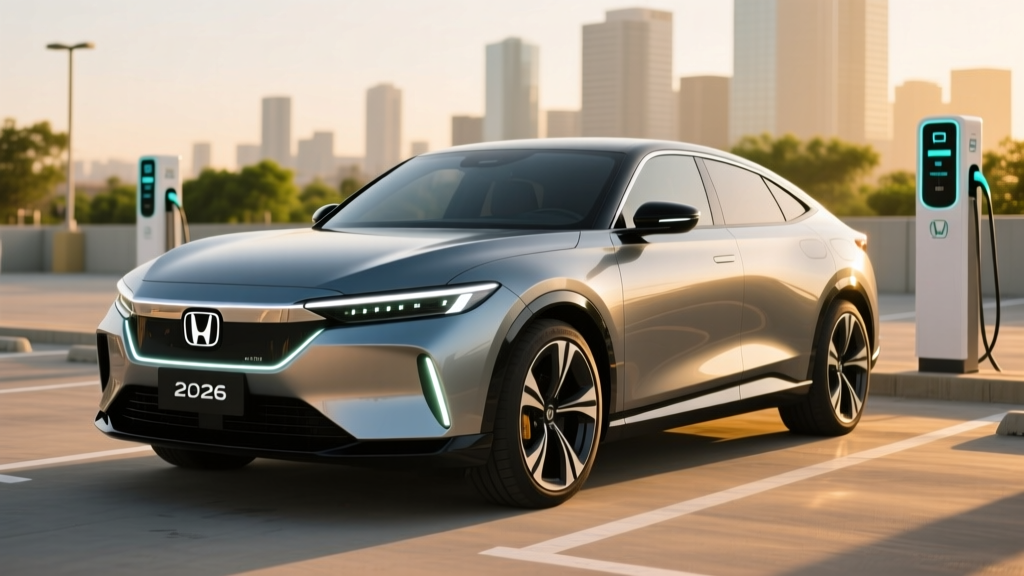
The Honda Prologue entered the market as Honda's first mass-production electric SUV, built on General Motors' Ultium platform through a cross-company partnership. For 2026, the Prologue continues to target mainstream buyers who want a familiar nameplate with electric propulsion — but does it deliver enough range, charging speed, and value to compete in an increasingly crowded midsize EV SUV segment? We break down every 2026 Honda Prologue offer, from trim pricing and federal tax credit eligibility to real-world range expectations and DC fast-charging reality.
What the 2026 Honda Prologue Brings to the Table
Honda positioned the Prologue as a no-nonsense family EV: two-row midsize crossover, comfortable ride, straightforward infotainment, and enough range for most daily driving plus occasional road trips. It shares its bones — the GM Ultium BEV3 platform — with the Chevrolet Blazer EV and Cadillac Lyriq, but Honda tuned the suspension, steering, and interior for a different buyer. The result is a composed, quiet cruiser that prioritizes comfort over sportiness.
For 2026, Honda carries over the three-trim structure (EX, Touring, Elite) with minor pricing adjustments and continued eligibility for the full federal EV tax credit, which remains a significant purchase incentive for qualifying buyers.
Range, Battery, and Real-World Efficiency
The Prologue's energy storage comes from an 85 kWh usable Ultium battery pack using NMC (nickel-manganese-cobalt) lithium-ion chemistry. This chemistry favors energy density — enabling competitive range in a manageable package — over the extreme cycle life of LFP cells found in some rivals.
| Trim / Drivetrain | EPA Range | MPGe (City/Hwy/Combined) | kWh/100 mi |
|---|---|---|---|
| EX (FWD) | 296 miles | 114 / 94 / 104 | 32 |
| Touring (FWD) | 296 miles | 114 / 94 / 104 | 32 |
| Touring (AWD) | 281 miles | 108 / 90 / 100 | 34 |
| Elite (AWD, standard) | 273 miles | 106 / 88 / 98 | 35 |
The EPA 296-mile figure (FWD trims) is achievable in mixed suburban driving at moderate temperatures. In sustained highway travel at 70-75 mph, expect approximately 250–265 miles before needing a charge. In cold weather (below 30°F), range can drop 15–25% depending on cabin heat usage and whether the Prologue's heat pump (standard on all trims) is managing thermal load efficiently. AWD trims lose roughly 15–23 miles of EPA range versus their FWD counterparts — a modest penalty for all-weather traction.
The Prologue's efficiency of 32–35 kWh/100 mi is competitive for the segment, though it trails the Hyundai Ioniq 5 (around 30 kWh/100 mi) and the Tesla Model Y (28–30 kWh/100 mi). For context, at a national average electricity rate of $0.16/kWh, charging the FWD Prologue from empty to full at home costs roughly $13.60 — equivalent to about $4.70 per gallon of gasoline.
Charging Speed: DC Fast Charge and Home Level 2
Charging capability is where the Prologue shows its Ultium-platform strengths — and one notable limitation.
| Charging Level | Power / Rate | Time / Rate |
|---|---|---|
| Level 1 (120V household) | ~1.4 kW | ~3–4 miles of range per hour |
| Level 2 (240V, home/public) | 11.5 kW (48A) | ~34 miles of range per hour; 0–100% in ~9 hours |
| DC Fast Charge (peak) | 155 kW max | 10–80% in approximately 32 minutes |
The 155 kW peak DC fast-charge rate is the Prologue's most debated spec. While competitors like the Hyundai Ioniq 5 and Kia EV6 accept up to 240 kW (with 800V architecture enabling 10–80% in ~18 minutes), the Prologue's 400V Ultium system tops out lower. In practice, the charge curve holds near peak through roughly 40% State of Charge before tapering — meaning the 10–80% session takes about 32 minutes at a capable 150+ kW station. That's adequate for highway rest stops but noticeably slower than the segment leaders.
Home Level 2 charging at 11.5 kW is strong, adding a full charge overnight on a standard 48-amp hardwired wallbox. Honda includes two years of complimentary public charging through a partnership with EVgo (500 kWh credit) for new Prologue buyers — a tangible ownership perk.
Performance and Drivetrain
The Prologue is tuned for relaxed, confident driving rather than sport-sedan acceleration:
- FWD models: Single front motor, 212 horsepower, 236 lb-ft torque. 0–60 mph in approximately 7.8 seconds.
- AWD models (Touring, Elite): Dual-motor setup, 288 horsepower, 333 lb-ft torque. 0–60 mph in approximately 5.9 seconds.
The AWD powertrain provides confident passing power and sure-footed traction in rain and light snow. Ride quality is a highlight — the Prologue absorbs highway imperfections with the composure of a larger, more expensive vehicle. Steering is light and precise, though it lacks the feedback enthusiasts seek. Regenerative braking includes adjustable levels via steering-wheel paddles, but the Prologue does not offer true one-pedal driving to a complete stop — a feature many EV buyers now expect.
Pricing, Trims, and Federal Tax Credit Eligibility
| Trim | Drivetrain | Base MSRP | Est. Price After §30D Credit* |
|---|---|---|---|
| EX | FWD | $47,400 | $39,900 |
| Touring | FWD | $50,400 | $42,900 |
| Touring | AWD | $52,400 | $44,900 |
| Elite | AWD | $57,900 | $50,400 |
*Estimated price assumes full $7,500 federal tax credit under IRS §30D. Eligibility depends on buyer income, vehicle MSRP caps, and battery component/critical mineral sourcing requirements. Point-of-sale transfer is available through participating dealers, reducing the purchase price at delivery.
The Prologue qualifies for the full $7,500 federal EV tax credit as of early 2026, thanks to Honda's compliance with North American battery assembly and critical-mineral sourcing thresholds. However, buyers must meet IRS §30D requirements:
- Income caps: Modified AGI ≤ $150,000 (single), $225,000 (head of household), $300,000 (married filing jointly)
- MSRP cap: SUVs/vans/pickups must have MSRP ≤ $80,000 — all Prologue trims qualify
- Battery sourcing: Minimum percentages of critical minerals and battery components must be sourced from the U.S. or FTA partners (the Prologue currently meets these thresholds)
- Point-of-sale transfer: Buyers can elect to transfer the credit to the dealer, reducing the purchase price at delivery rather than waiting for a tax refund
Always verify current-year eligibility with a tax professional and the official IRS guidance, as sourcing requirements tighten annually.
Interior, Cargo Space, and Technology
The Prologue's cabin is where Honda's design philosophy shines — and where the GM platform partnership shows its seams. Honda designed the interior independently, resulting in a space that feels distinctly Honda: clean lines, physical climate controls, high-quality materials on upper trims, and excellent visibility.
Passenger and cargo dimensions:
- Front legroom: 41.4 inches
- Rear legroom: 38.6 inches
- Cargo (behind rear seats): 25.2 cubic feet
- Cargo (rear seats folded): 57.7 cubic feet
- No front trunk (frunk): The Ultium platform does not include one
The 11-inch touchscreen infotainment system runs Google built-in (Google Maps, Google Assistant, Play Store) on upper trims, with wireless Apple CarPlay and Android Auto across the lineup. A 11.0-inch digital driver display is standard. The Elite trim adds a head-up display, heated and ventilated front seats, heated rear seats, a panoramic moonroof, and a 12-speaker Bose audio system.
Driver assistance comes via Honda Sensing, a Level 2 (SAE) suite including adaptive cruise control with low-speed follow, lane-keeping assist, traffic-sign recognition, and blind-spot monitoring. Honda does not currently offer hands-free highway driving — competitors like Ford's BlueCruise and GM's Super Cruise provide that capability in this price range. The driver must remain engaged with hands on the wheel at all times.
Warranty and Long-Term Ownership
Honda backs the Prologue with competitive warranty coverage:
- Limited vehicle warranty: 3 years / 36,000 miles
- Powertrain warranty: 5 years / 60,000 miles
- Battery warranty: 8 years / 100,000 miles (capacity retention guaranteed above 70% of original capacity)
- Roadside assistance: 3 years / 36,000 miles
The 8-year/100,000-mile battery warranty is the federal minimum standard and matches most competitors. The 70% capacity-retention threshold means Honda will repair or replace the battery if degradation exceeds 30% within the warranty period — typical for NMC chemistry under normal use patterns. Based on Ultium-platform data from GM siblings, owners can expect approximately 8–12% degradation over the first 100,000 miles, well within the warranty buffer.
How the Prologue Stacks Up Against Key Competitors
The midsize electric SUV segment is fiercely competitive. Here's how the Prologue compares to its most direct rivals on the specs that matter most:
| Spec | Honda Prologue (FWD) | Hyundai Ioniq 5 (RWD LR) | Tesla Model Y (LR RWD) | Ford Mustang Mach-E (ER RWD) |
|---|---|---|---|---|
| EPA Range | 296 mi | 303 mi | 320 mi | 320 mi |
| Battery (usable) | 85 kWh (NMC) | 77.4 kWh (NMC) | 75 kWh (NMC) | 91 kWh (NMC) |
| Peak DC Charge | 155 kW | 240 kW | 250 kW | 150 kW |
| 10–80% Time | ~32 min | ~18 min | ~22 min | ~36 min |
| 0–60 mph | 7.8 sec | 7.0 sec | 6.5 sec | 6.1 sec |
| Base MSRP | $47,400 | $44,950 | $44,990 | $42,995 |
| Cargo (rear seats up) | 25.2 cu ft | 27.2 cu ft | 30.2 cu ft | 29.7 cu ft |
| Federal Tax Credit | $7,500 | $7,500 | $7,500 | $7,500 |
The Prologue trails in charging speed and cargo volume but competes on ride comfort, interior quality, and the strength of Honda's dealer network — a factor many first-time EV buyers value highly. According to fueleconomy.gov, the Prologue's combined MPGe of 104 (FWD) sits between the Ioniq 5's 114 MPGe and the Mach-E's 101 MPGe combined.
- Choose the Prologue if: You prioritize ride comfort and interior refinement over maximum charging speed, you trust Honda's brand and dealer network for service, you want a proven platform (Ultium) with competitive range, and you qualify for the full $7,500 tax credit.
- Consider alternatives if: You road-trip frequently and need the fastest DC charging (Ioniq 5 or Model Y), you need maximum cargo space (Model Y or Mach-E), you want hands-free highway driving (Ford with BlueCruise or GM vehicles with Super Cruise), or you prefer LFP battery chemistry for maximum cycle life.
Pros and Cons at a Glance
- Comfortable, quiet ride quality that exceeds many rivals
- Qualifies for full $7,500 federal tax credit (as of early 2026)
- Competitive 296-mile EPA range (FWD)
- Strong Level 2 home charging at 11.5 kW
- Physical climate controls and intuitive Honda interior design
- Standard heat pump for cold-weather efficiency
- Honda dealer network for service accessibility
- DC fast-charge speed (155 kW peak) trails Ioniq 5, Model Y, and EV6
- No front trunk (frunk)
- Cargo volume (25.2 cu ft) smaller than most competitors
- No one-pedal driving to a full stop
- No hands-free highway driving assist available
- Higher starting price than some rivals before tax credit
- Infotainment shows GM-platform quirks beneath Honda's skin
Frequently Asked Questions
What is the real-world range of the Honda Prologue?
The EPA rates the FWD Prologue at 296 miles. In real-world highway driving at 70+ mph, expect approximately 250–265 miles. In cold weather below 30°F, range can drop to 220–250 miles depending on cabin heating and driving style. AWD trims see a 15–23 mile reduction from EPA figures across all conditions.
How fast does the Prologue charge at home and on the road?
At home on a 240V Level 2 charger (48 amps), the Prologue accepts 11.5 kW and adds roughly 34 miles of range per hour — a full charge takes about 9 hours. On DC fast chargers, it peaks at 155 kW and charges from 10–80% in approximately 32 minutes. That's adequate but slower than the 18–22 minute sessions possible with the Ioniq 5 or Model Y.
Does the Honda Prologue qualify for the $7,500 federal EV tax credit?
Yes — as of early 2026, all Prologue trims qualify for the full $7,500 federal tax credit under IRS §30D. However, buyer eligibility depends on income caps ($300,000 joint / $150,000 single), and the credit can be transferred to the dealer at point of sale to reduce the purchase price directly. Always verify current rules on irs.gov and consult a tax professional.
How much does the Prologue cost after tax credits?
After applying the full $7,500 credit, the FWD EX starts at an effective $39,900, the FWD Touring drops to $42,900, and the AWD Elite comes to $50,400. These are compelling prices for a midsize electric SUV with nearly 300 miles of range — but eligibility is not universal. State and local incentives may stack on top; check your jurisdiction's programs separately.
Is the Honda Prologue worth buying over the Hyundai Ioniq 5 or Tesla Model Y?
It depends on your priorities. The Prologue wins on ride comfort, interior refinement, and Honda dealer accessibility. The Ioniq 5 wins on DC charging speed (240 kW vs. 155 kW) and interior space flexibility. The Model Y wins on cargo volume (30.2 cu ft), Supercharger network access, and software features. If you charge primarily at home and prioritize comfort over road-trip charging speed, the Prologue is a strong choice. If you drive long distances frequently, the Ioniq 5's faster charging is a meaningful advantage.
What is the Prologue's battery warranty, and how long will the battery last?
Honda covers the battery for 8 years or 100,000 miles, guaranteeing at least 70% capacity retention. NMC chemistry in the Ultium platform has shown approximately 8–12% degradation over 100,000 miles in sibling GM vehicles — well within the warranty threshold. With proper care (avoiding sustained 100% SoC storage, using DC fast charging judiciously), the battery should provide reliable service well beyond the warranty period.
Does the Prologue have a frunk or one-pedal driving?
No to both. The Ultium platform packaging does not include a front trunk, and while the Prologue offers adjustable regenerative braking via steering-wheel paddles, it does not bring the vehicle to a complete stop in its strongest regen mode — you still need the brake pedal at low speeds. These are notable omissions for buyers coming from Tesla or Hyundai/Kia EVs.