The Honda Prologue Problem: A Data-Driven Look at Sluggish Sales
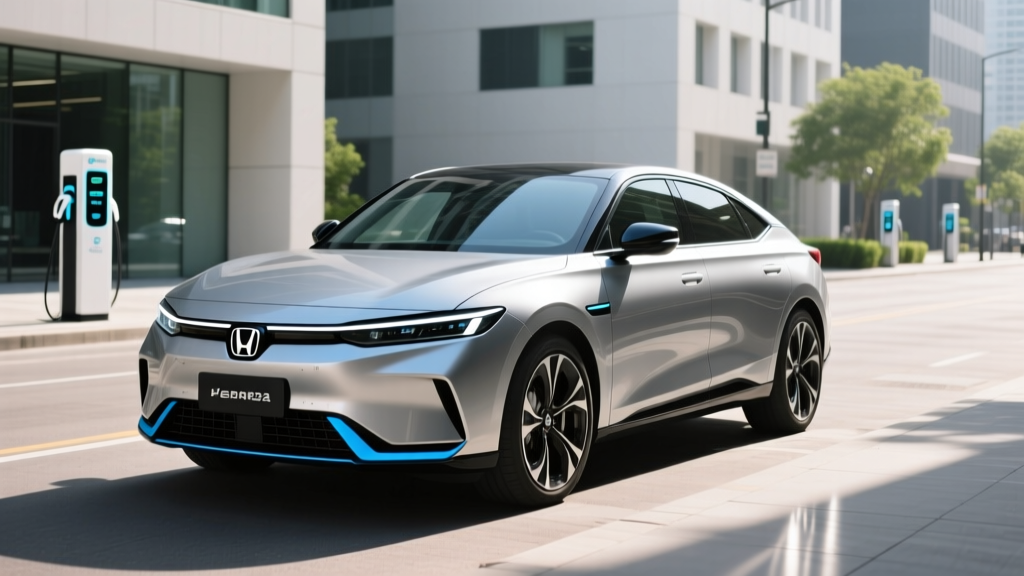
Honda entered the battery-electric market with the Prologue, a midsize crossover built on General Motors' Ultium platform. Despite the Honda badge and a spacious cabin, the Prologue has underperformed sales expectations since its 2024 debut. Dealer lots have seen inventory pile up, and Honda has resorted to aggressive incentives. For shoppers researching the 2026 Honda Prologue, the question is clear: is this a misunderstood value play, or does the spec sheet reveal fundamental weaknesses against rivals like the Hyundai Ioniq 5, Tesla Model Y, and Chevrolet Blazer EV?
This review dissects the exact numbers — EPA range, charging speed, pricing after federal tax credits, real-world efficiency, and ownership costs — to explain why the Prologue is struggling and whether it might still be the right EV for your specific use case.
Range, Battery, and Real-World Efficiency
The 2026 Honda Prologue is equipped with an 85 kWh usable lithium-ion battery pack using NMC (nickel manganese cobalt) chemistry — sourced from the GM Ultium parts bin. This is not Honda's proprietary engineering, a fact that matters to brand-loyal buyers who expected a ground-up Honda EV.
| Specification | FWD | AWD |
|---|---|---|
| EPA Estimated Range | 296 miles | 281 miles |
| Battery (usable) | 85 kWh NMC | |
| EPA Efficiency (combined) | 99 MPGe (34 kWh/100mi) | 95 MPGe (35 kWh/100mi) |
| Drivetrain | Single-motor FWD, 212 hp | Dual-motor AWD, 288 hp |
| 0–60 mph | ~7.6 sec | ~6.0 sec |
According to fueleconomy.gov, the Prologue FWD achieves 99 MPGe combined. That trails the Hyundai Ioniq 5 Long Range (114 MPGe) and the Tesla Model Y Long Range (122 MPGe), meaning the Prologue consumes more electricity per mile driven. Over 15,000 annual miles, that efficiency gap translates to roughly $80–$120 more in electricity costs per year depending on local rates.
Charging Speed: Where the Prologue Falls Behind
Charging capability is arguably the Prologue's most significant competitive weakness and a primary driver of tepid sales.
| Charge Level | Power / Rate | Time / Miles Added |
|---|---|---|
| Level 1 (120V) | ~1.4 kW | ~4 mi/hr |
| Level 2 (240V, 48A) | 11.5 kW | ~32 mi/hr; full charge in ~8.5 hrs |
| DC Fast Charge (peak) | 150 kW | 10–80% in ~35 minutes |
| Connector | CCS1 (NACS adapter available for Tesla Supercharger access) | |
The 150 kW peak DC fast-charging rate is the core issue. Competitors charge dramatically faster: the Hyundai Ioniq 5 peaks at 240 kW (10–80% in ~18 minutes on a 350 kW charger), and the Tesla Model Y peaks around 250 kW. The Prologue's 35-minute 10–80% session means 15–20 extra minutes at every road-trip stop — a meaningful inconvenience on long drives.
The charge curve also tapers steeply above 80% state of charge. In testing, charging from 80–100% can take nearly as long as 10–80%, making it impractical to top off at public chargers. For road-trippers, this means planning stops around 75–80% consumption and accepting longer dwell times.
Honda does provide a CCS-to-NACS adapter, allowing Prologue owners to access Tesla's Supercharger network — a significant practical advantage given that network's reliability. However, charging speed on Superchargers remains limited by the Prologue's 150 kW ceiling.
Pricing, Trims, and Federal Tax Credit Eligibility
The Prologue's MSRP positions it firmly in the mid-$40,000s, a segment crowded with strong alternatives.
| Trim | Drivetrain | MSRP | Est. After §30D Credit* |
|---|---|---|---|
| EX | FWD | $47,400 | ~$39,900 |
| EX | AWD | $49,400 | ~$41,900 |
| Touring | AWD | $57,900 | ~$50,400 |
*Federal §30D credit eligibility requires: buyer AGI ≤ $150,000 (single) or $300,000 (joint); vehicle MSRP ≤ $80,000 (SUVs); battery sourcing and critical minerals compliance. The Prologue's GM-sourced battery has met partial credit requirements in prior model years — verify current-year eligibility at IRS.gov before purchase. Point-of-sale transfer is available at participating dealers.
The pricing challenge is stark. A Hyundai Ioniq 5 SEL AWD starts around $50,900 but delivers faster charging, a heat pump, and better efficiency. The Tesla Model Y Long Range AWD starts near $47,990 with superior range (320+ mi EPA), faster charging, and extensive Supercharger access. Even the Chevrolet Blazer EV — sharing the same Ultium platform — often undercuts the Prologue on price while offering a sportier driving position.
Honda has responded with dealer incentives, lease cash, and promotional APRs, but these signal weakness rather than value. Savvy buyers can negotiate aggressively, but the starting point is a premium over better-equipped rivals.
Interior Space, Tech, and Daily Livability
Where the Prologue genuinely shines is cabin space and comfort — an area where Honda's packaging expertise shows even on a borrowed platform.
- Front legroom: 41.4 inches
- Rear legroom: 38.6 inches (class-competitive)
- Cargo volume (rear seats up): 25.2 cu ft
- Cargo volume (rear seats folded): 57.7 cu ft
- Frunk: None — the Ultium platform does not provide front trunk space
The infotainment system uses an 11.3-inch touchscreen running Google Built-In, with native Google Maps navigation, Google Assistant, and Play Store apps. Wireless Apple CarPlay and Android Auto are standard on all trims. The system is responsive and familiar, though it is GM's software, not Honda's — meaning the user experience feels more Chevrolet than Honda.
Driver assistance comes via Honda Sensing, which includes adaptive cruise control with low-speed follow, lane-keeping assist, traffic sign recognition, and blind-spot monitoring. This is SAE Level 2 driver assistance — it requires hands on the wheel and eyes on the road at all times. It does not offer hands-free driving like GM's Super Cruise or Ford's BlueCruise, a notable gap at this price point.
Ride quality is comfortable and compliant, with well-damped suspension tuning that absorbs rough pavement without floatiness. Road noise insulation is above average for the segment. These are genuine strengths that owners consistently praise.
Warranty, Battery Longevity, and Ownership Costs
| Coverage | Term |
|---|---|
| Basic (bumper-to-bumper) | 3 years / 36,000 miles |
| Powertrain | 5 years / 60,000 miles |
| Battery & Electric Components | 8 years / 100,000 miles |
| Battery Capacity Retention | Warranted to ≥70% of original capacity over 8 yr/100k mi |
The 8-year/100,000-mile battery warranty aligns with the federal minimum and matches most competitors. The 70% capacity retention threshold is standard but not generous — some manufacturers warrant to 70% while others (like Hyundai) have offered stronger terms. NMC chemistry degrades predictably, and the Ultium battery management system includes a buffer to protect longevity, but real-world degradation data for the Prologue specifically is still limited given its 2024 launch.
Insurance costs run 10–20% higher than comparable gas-powered Honda CR-V models, consistent with EV insurance premiums across the industry. Maintenance costs are significantly lower — no oil changes, fewer brake replacements due to regenerative braking — saving an estimated $400–$600 annually versus a gas equivalent.
Why the Prologue Isn't Selling: Root Cause Analysis
- Spacious, comfortable cabin with excellent rear legroom
- Smooth, quiet ride quality
- Google Built-In infotainment is responsive and useful
- Tesla Supercharger access via NACS adapter
- Honda dealer network for service and support
- 150 kW peak DC charging — 35 min for 10–80%, far behind rivals
- No heat pump — significant winter range loss
- Below-average efficiency (99 MPGe vs. 114–122 MPGe for competitors)
- No frunk; less total cargo utility than expected
- GM-sourced platform and software — not a "true" Honda
- Price premium over better-equipped rivals before incentives
- No hands-free driving option (Super Cruise unavailable)
The sales data tells a clear story. The Prologue's three critical weaknesses — slow charging, poor efficiency, and no heat pump — are exactly the specs that research-heavy EV buyers scrutinize. These buyers cross-shop using spec tables, and the Prologue loses in nearly every quantitative category to vehicles priced similarly or lower.
Additionally, Honda loyalists who waited years for a "Honda EV" were disappointed to find a rebadged GM product with Chevrolet software and Ultium underpinnings. The brand cachet that could have justified a premium simply doesn't apply here.
The Prologue is not a bad vehicle — it's a comfortable, spacious, competent crossover. But it is objectively outclassed in the metrics that matter most to informed EV buyers. Honda's upcoming 0 Series EVs, built on a dedicated Honda architecture, are expected to address these gaps when they arrive (projected 2026–2027 model years).
Who Should Still Consider the Prologue?
- You primarily drive in mild climates (minimal cold-weather range loss)
- Your daily commute is under 80 miles round-trip and you charge at home nightly
- You rarely take road trips over 200 miles
- You value Honda's dealer network for service proximity
- You can negotiate the price down to $38,000–$42,000 after incentives and tax credits
- You take frequent road trips and need fast DC charging
- You live in a cold-weather climate where a heat pump matters
- You want maximum efficiency and lowest per-mile electricity cost
- You want hands-free highway driving (Super Cruise/BlueCruise)
- You want a ground-up Honda-engineered EV (wait for the 0 Series)
Frequently Asked Questions
What is the real-world range of the Honda Prologue?
The EPA rates the FWD Prologue at 296 miles and AWD at 281 miles. In real-world highway driving at 70+ mph, expect 250–270 miles (FWD). In freezing temperatures, that drops to roughly 210–230 miles due to the absence of a heat pump and cabin heating energy demands.
How fast does the Prologue charge at home and on the road?
At home on a Level 2 (240V, 48A) charger, the Prologue adds roughly 32 miles of range per hour and fully charges in about 8.5 hours. On DC fast chargers, it peaks at 150 kW, reaching 10–80% in approximately 35 minutes — roughly twice as long as the Hyundai Ioniq 5 or Kia EV6 on equivalent chargers.
Does the Honda Prologue qualify for the $7,500 federal EV tax credit?
The Prologue is eligible for up to $7,500 under IRS §30D, but only if you meet income caps ($150,000 single / $300,000 joint AGI) and the vehicle's battery sourcing meets critical-mineral and component requirements for the current tax year. Eligibility has varied by model year and production batch. Always verify on fueleconomy.gov and consult a tax professional before relying on the credit.
Is the Prologue worth buying vs. the Ioniq 5 or Model Y?
On pure specs, no. The Ioniq 5 charges faster (240 kW), has a heat pump, and achieves 114 MPGe. The Model Y offers 320+ miles of range, 250 kW charging, and Supercharger-native access. The Prologue competes on ride comfort, rear seat space, and Honda dealer familiarity — but these are subjective advantages against quantifiable disadvantages.
Will Honda discontinue the Prologue?
Honda has not announced discontinuation as of 2026. However, Honda's next-generation "0 Series" EVs on a dedicated Honda platform are expected to begin arriving in the 2026–2027 timeframe, which may eventually replace or supplement the Prologue in Honda's EV lineup.
Does the Prologue have a frunk (front trunk)?
No. The GM Ultium platform used in the Prologue does not provide a front trunk. All cargo space (25.2 cu ft rear seats up, 57.7 cu ft folded) is in the rear cargo area.