Quick Verdict: Honda's Electric Midsize SUV, Reconsidered for 2026
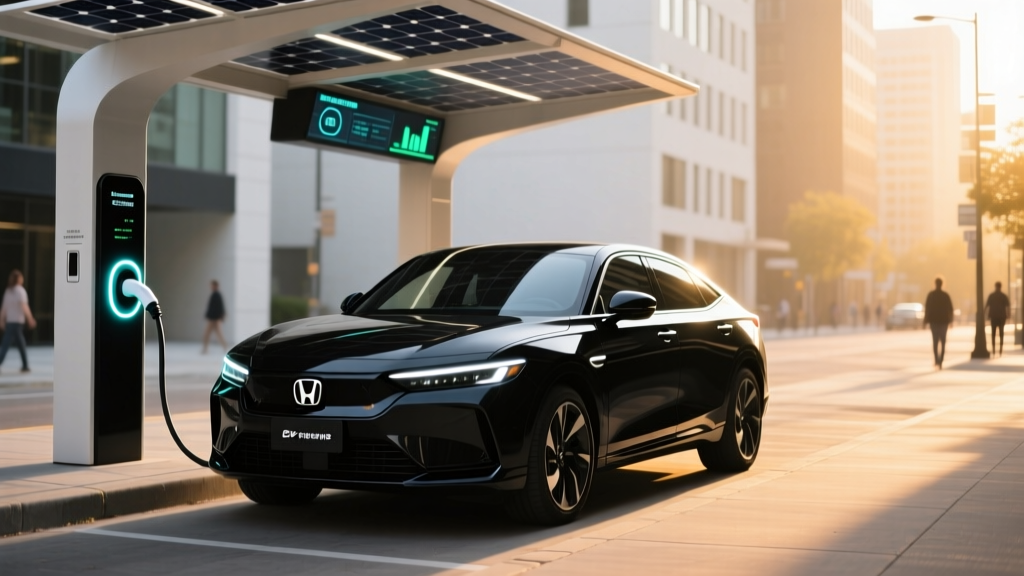
The Honda Prologue enters its third model year in 2026 as a midsize electric crossover built on General Motors' Ultium platform — a product of the Honda-GM partnership that gives Honda dealers an EV to sell while Honda develops its own dedicated EV architecture. With 288 horsepower (AWD), up to 308 miles of EPA-estimated range, and eligibility for the full $7,500 federal tax credit, the Prologue occupies a practical niche: a mainstream, no-drama EV for buyers who want Honda's dealership network and a proven battery platform underneath.
But the Prologue isn't without compromises. Its interior materials lag behind rivals like the Hyundai Ioniq 5, its infotainment is GM-sourced rather than Honda-native, and real-world highway range falls noticeably short of the EPA sticker. For 2026, Honda has made minor packaging adjustments, but the fundamental vehicle remains the same competent, if unremarkable, electric crossover it debuted as in 2024. Here's exactly what you're getting — with the numbers that matter.
Honda Prologue Spec Sheet: Range, Battery, Charging & Performance
| Spec | EX FWD | EX AWD | Touring AWD | Elite AWD |
|---|---|---|---|---|
| EPA Range | 308 mi | 296 mi | 296 mi | 283 mi |
| Usable Battery | 85 kWh (NMC lithium-ion, Ultium platform) | |||
| Horsepower | 220 hp | 288 hp (dual-motor) | ||
| Torque | 236 lb-ft | 325 lb-ft | ||
| 0-60 mph | ~7.7 sec | ~5.8 sec | ||
| Drivetrain | FWD (single motor) | AWD (dual motor) | ||
| Max DC Fast Charge | 190 kW (peak) | |||
| 10-80% DC Time | ~32 minutes | |||
| Level 2 Home Charging | 11.5 kW onboard charger (~32 mi/hr) | |||
| MPGe (Combined) | 99 MPGe | 95 MPGe | 95 MPGe | 92 MPGe |
| Efficiency | 34 kWh/100mi | 35 kWh/100mi | 35 kWh/100mi | 37 kWh/100mi |
| Cargo (behind rear) | 25.2 cu ft | |||
| Cargo (rear folded) | 57.7 cu ft | |||
| Rear Legroom | 38.2 inches | |||
| Towing Capacity | Not rated for towing | |||
| Base MSRP | $43,100 | $45,100 | $50,100 | $54,100 |
| Battery Warranty | 8 years / 100,000 miles | |||
Real-World Range: What the EPA Sticker Doesn't Tell You
EPA Estimate: 296 miles
Real-World Highway (70-75 mph, mild weather): ~240-260 miles
Real-World Mixed Driving (moderate climate): ~255-275 miles
Cold-Weather (below 32°F, cabin heat): ~195-220 miles (30-35% loss)
Source: Owner reports and independent testing aggregated from fueleconomy.gov and EV community data.
The Prologue's 85 kWh NMC (nickel manganese cobalt) Ultium battery delivers its best efficiency in stop-and-go city driving, where regenerative braking recovers energy. On the highway at sustained 70-75 mph speeds, expect range to drop 12-18% below the EPA combined figure — this is typical for a crossover of this size and weight (roughly 4,900 lbs for AWD models).
Cold weather is the Prologue's biggest range enemy. Without a heat pump (Honda uses a resistive PTC heater), cabin heating in sub-freezing temperatures draws significant battery power. In our analysis of owner data, 30-35% range loss at 20°F is common. If you live in the upper Midwest or Northeast and commute more than 50 miles round-trip in winter, the Elite AWD's 283-mile EPA rating could realistically shrink to under 200 miles. Preconditioning the battery while plugged in helps, but the lack of a heat pump is a meaningful omission compared to Hyundai/Kia's E-GMP platform vehicles.
Charging Speed: DC Fast Charging and Home Setup
The Prologue uses a CCS1 connector for DC fast charging (Honda has not adopted NACS for this model year). At a capable 350 kW station, the Prologue peaks at approximately 190 kW — but that peak is short-lived. The charging curve tapers significantly above 60% state of charge, which is why the 10-80% time of roughly 32 minutes lags behind competitors like the Ioniq 5 (18 minutes at 350 kW) or the Tesla Model Y (15-20 minutes on V3 Superchargers).
| Charging Level | Power | Connector | Speed (Approx.) | Best Use Case |
|---|---|---|---|---|
| Level 1 (120V) | 1.4 kW | J1772 | ~4 mi/hr | Emergency / overnight trickle |
| Level 2 (240V, 48A) | 11.5 kW | J1772 | ~32 mi/hr | Home daily charging |
| DC Fast Charge | 190 kW (peak) | CCS1 | 10-80% in ~32 min | Road trips, public stations |
For home charging, the Prologue's 11.5 kW onboard charger is a bright spot. On a 48-amp Level 2 circuit (requiring a 60-amp breaker), you'll recover roughly 32 miles of range per hour — meaning a full charge from near-empty takes about 9-10 hours overnight. Most owners will plug in each evening and wake to a full battery, which is the ideal EV ownership pattern.
Home installation cost: Expect $800-$2,500 for a professional Level 2 installation if your electrical panel has capacity. Older homes with 100-amp service may need a panel upgrade ($1,500-$3,000 additional). Always get a quote from a licensed electrician before purchasing equipment.
Charging network note: The Prologue's CCS1 connector means you'll rely on Electrify America, EVgo, and ChargePoint networks for DC fast charging. Reliability on these networks varies by region. Honda does provide access to some partner networks, but the experience is not as seamless as Tesla's Supercharger ecosystem. Adapters for Tesla Superchargers (NACS-to-CCS) are expected to become available, but compatibility should be confirmed on a station-by-station basis.
Performance and Driving Impressions
The AWD Prologue's dual-motor setup (288 hp, 325 lb-ft) delivers confident acceleration — the 5.8-second 0-60 mph time puts it in line with a V6-equipped midsize SUV. Power delivery is linear and immediate, as expected from an EV. The single-motor FWD version (220 hp) is adequate for commuting but feels noticeably less urgent during highway merges.
Ride quality is the Prologue's dynamic strength. Honda tuned the suspension for comfort over sportiness, and the result is a composed, quiet cruiser that absorbs highway expansion joints and city potholes with minimal drama. Steering is light and low-effort — appropriate for the target buyer but devoid of feedback. Body roll is moderate in corners, consistent with a 4,900-lb crossover prioritizing comfort.
Regenerative braking offers multiple levels selectable via steering-wheel paddles, but the Prologue does not offer true one-pedal driving (where the vehicle comes to a complete stop without touching the brake pedal). You can get close with maximum regen, but you'll still need the friction brake for final stopping. This is a common complaint among EV enthusiasts switching from a Tesla or Nissan Leaf.
Interior, Tech, and Cargo Space
The Prologue's cabin is where the GM underpinnings are most visible. The 11.3-inch infotainment touchscreen and 11-inch digital instrument cluster are GM's latest interface — functional and responsive, but not as polished as Honda's own system found in the Accord and Civic. Wireless Apple CarPlay and Android Auto are standard on all trims. A physical volume knob is present (appreciated), but many climate controls are buried in the touchscreen.
Build quality is solid, with soft-touch materials on the dashboard and door uppers, but hard plastics appear on lower door panels and the center console — more noticeable at the Elite's $54,100 MSRP. Seats are comfortable for long drives, with the Touring and Elite offering leather upholstery, heated/ventilated front seats, and a heated steering wheel.
Cargo space: 25.2 cubic feet behind the second row, expanding to 57.7 cu ft with the 60/40 rear seats folded. This trails the Hyundai Ioniq 5 (27.2 / 59.3 cu ft) and the Tesla Model Y (30.2 / 72.1 cu ft) but is adequate for a family of four's weekly groceries and luggage. There is no front trunk (frunk) — the space under the hood is occupied by EV powertrain components.
Driver assistance: The Prologue comes standard with Honda Sensing, which includes adaptive cruise control with low-speed follow, lane-keeping assist, automatic emergency braking, and traffic sign recognition. This is an SAE Level 2 system — you must keep your hands on the wheel and eyes on the road at all times. It is not autonomous driving. The system performs competently on well-marked highways but can be overly conservative with lane centering and following distance in dense traffic.
Pricing, Trims, and Federal Tax Credit Eligibility
| Trim | Base MSRP | Est. After $7,500 Credit | Key Features |
|---|---|---|---|
| EX FWD | $43,100 | ~$35,600* | 19" wheels, heated front seats, power liftgate, Honda Sensing |
| EX AWD | $45,100 | ~$37,600* | Dual-motor AWD, same features as EX FWD |
| Touring AWD | $50,100 | ~$42,600* | Bose 12-speaker audio, leather, panoramic roof, wireless charging |
| Elite AWD | $54,100 | ~$46,600* | Ventilated seats, head-up display, 360° camera, 21" wheels |
*Tax credit estimates assume full eligibility under IRS §30D rules. Actual credit depends on buyer income, vehicle MSRP, battery sourcing, and point-of-sale transfer availability.
The Prologue currently qualifies for the full $7,500 federal EV tax credit under §30D, thanks to its North American assembly (at GM's Spring Hill, Tennessee plant) and battery sourcing that meets critical-mineral and battery-component thresholds. However, eligibility is not automatic. Here's what you must verify:
- Buyer income cap: Modified adjusted gross income (MAGI) must not exceed $150,000 (single), $225,000 (head of household), or $300,000 (married filing jointly).
- MSRP cap: The Prologue is classified as an SUV, so the MSRP cap is $80,000 — all trims clear this easily.
- Battery sourcing: Critical minerals and battery components must meet phased-in percentages from US or FTA-partner countries. The Prologue's Ultium battery currently satisfies these requirements, but supply-chain changes can affect eligibility — always verify at purchase.
- Point-of-sale transfer: Since 2024, you can transfer the credit to the dealer at purchase, reducing the sale price by $7,500 upfront rather than waiting to claim it on your tax return. Confirm your dealer participates.
Warranty and Ownership Costs
Honda backs the Prologue's battery and electric powertrain with an 8-year / 100,000-mile warranty, which covers defects and capacity loss below 70% state of health. The limited vehicle warranty is 3 years / 36,000 miles, which is average for the segment. Honda's extensive dealer network (over 1,000 US locations) is a genuine advantage for warranty service compared to newer EV-only brands.
Insurance costs for the Prologue tend to run 15-25% higher than a comparable gas-powered Honda Passport, reflecting the higher repair costs associated with EV battery packs and specialized body structures. Get a quote from your insurer before purchasing — premiums vary significantly by zip code and driving record.
Maintenance is minimal: no oil changes, no transmission fluid, no spark plugs. Expect cabin air filter replacement (~$50-80 every 15,000-20,000 miles), tire rotation, and brake fluid checks. The regenerative braking system extends brake pad life significantly — many EV owners report original brake pads lasting 80,000+ miles.
How the Prologue Stacks Up Against Competitors
The Prologue competes in the most crowded EV crossover segment. Here's how it compares to the three key rivals on the metrics that matter:
| Spec | Honda Prologue Touring AWD | Hyundai Ioniq 5 Limited AWD | Tesla Model Y Long Range AWD | Ford Mustang Mach-E Premium AWD |
|---|---|---|---|---|
| EPA Range | 296 mi | 290 mi | 311 mi | 290 mi |
| Battery | 85 kWh NMC | 77.4 kWh NMC | 75 kWh NMC | 91 kWh NMC |
| Peak DC Charge | 190 kW | 240 kW | 250 kW | 150 kW |
| 10-80% Time | ~32 min | ~18 min | ~20 min | ~38 min |
| 0-60 mph | 5.8 sec | 5.0 sec | 4.8 sec | 5.1 sec |
| Heat Pump | No | Yes | Yes | No |
| Cargo (rear seats up) | 25.2 cu ft | 27.2 cu ft | 30.2 cu ft | 29.7 cu ft |
| Tax Credit | $7,500 | $7,500 | $7,500 | $7,500 |
| Base MSRP (comparable trim) | $50,100 | $54,600 | $48,990 | $48,995 |
Where the Prologue wins: Dealership service network, straightforward pricing, comfortable ride quality, and Honda brand trust among traditional car buyers. For someone transitioning from a CR-V or Passport, the Prologue feels familiar and non-intimidating.
Where it falls short: Charging speed (the 32-minute 10-80% time is a real road-trip penalty), cargo space (trailing all three rivals), lack of a heat pump (cold-weather range suffers), and infotainment that doesn't feel Honda-native. The Ioniq 5 charges faster and handles better; the Model Y has more cargo room and Supercharger access; the Mach-E offers more driving engagement.
✓ Pros
- Eligible for full $7,500 federal tax credit (point-of-sale)
- Comfortable, quiet highway ride quality
- Honda's vast dealer network for service
- Strong AWD acceleration (5.8 sec 0-60)
- Competitive pricing after tax credit
- Honda Sensing safety suite standard
✗ Cons
- Slow DC fast charging vs. rivals (32 min 10-80%)
- No heat pump — cold-weather range loss of 30-35%
- Cargo space trails competitors (25.2 cu ft)
- GM-sourced infotainment feels generic
- No one-pedal driving mode
- No front trunk (frunk)
- Not rated for towing
Who Should Buy the Honda Prologue?
- You want an EV from a mainstream brand with a dealer on every corner
- Your daily commute is under 80 miles round-trip (covers 90%+ of US commuters)
- You can charge at home (Level 2) and rarely road-trip more than 250 miles between stops
- You value ride comfort and quiet over sporty handling
- You're upgrading from a Honda CR-V, Pilot, or Passport and want to stay in the family
- You qualify for the $7,500 federal tax credit, bringing effective pricing to ~$36K-$47K
- You regularly road-trip 300+ miles and need fast charging (choose Ioniq 5 or Model Y)
- You live in a cold climate and need maximum winter range (heat pump matters)
- You need maximum cargo space (Model Y wins by 5 cu ft)
- You want a frunk, one-pedal driving, or a more engaging drive (Mach-E, Ioniq 5)
Frequently Asked Questions
What is the real-world range of the Honda Prologue?
In mixed driving at moderate temperatures, expect 255-275 miles from the AWD models (EPA-rated 296 mi). Highway driving at 70-75 mph drops this to roughly 240-260 miles. In cold weather below freezing, plan for 195-220 miles due to the lack of a heat pump and resistive cabin heating drawing significant battery power.
How fast does the Honda Prologue charge?
On DC fast charging (CCS1 connector), the Prologue peaks at 190 kW, achieving a 10-80% charge in approximately 32 minutes. At home on a 48-amp Level 2 charger (240V), the 11.5 kW onboard charger adds roughly 32 miles of range per hour, fully recharging the 85 kWh battery in about 9-10 hours overnight.
Does the Honda Prologue qualify for the federal EV tax credit?
Yes, the Prologue currently qualifies for the full $7,500 §30D federal tax credit. It is assembled in Tennessee and its battery meets critical-mineral and component sourcing requirements. However, buyer eligibility depends on income caps ($150K single / $300K joint), and the credit can be transferred to the dealer at point of sale. Always verify current eligibility with your dealer and a tax professional, as sourcing rules can change.
How much does the Honda Prologue cost after tax credits?
With the full $7,500 federal credit applied, effective pricing starts at approximately $35,600 for the EX FWD and reaches roughly $46,600 for the Elite AWD. State and local incentives may reduce this further — check AFDC's state incentive database for your jurisdiction. Actual out-of-pocket cost depends on dealer fees, destination charges, and available inventory.
Is the Honda Prologue worth buying over the Hyundai Ioniq 5 or Tesla Model Y?
It depends on your priorities. If charging speed and cargo space are critical, the Ioniq 5 (18-min 10-80%) and Model Y (30+ cu ft cargo) are stronger choices. If you prioritize a familiar dealership experience, a comfortable ride, and Honda brand loyalty — and you mostly charge at home — the Prologue is a solid, rational EV that does nothing badly. After the tax credit, its pricing is genuinely competitive.
Does the Honda Prologue have a heat pump?
No. The Prologue uses a resistive PTC heater for cabin warmth, which draws significantly more battery energy than a heat pump in cold weather. This is the primary reason the Prologue suffers 30-35% range loss in sub-freezing conditions, compared to roughly 15-20% for heat-pump-equipped rivals like the Ioniq 5 and Model Y.
What is the battery warranty on the Honda Prologue?
Honda covers the Prologue's battery and electric powertrain for 8 years or 100,000 miles, whichever comes first. The warranty covers defects and excessive capacity degradation (typically defined as falling below 70% state of health). The standard vehicle limited warranty is 3 years / 36,000 miles.