Quick Verdict: Yes, the Honda Prologue Is Exclusively Electric
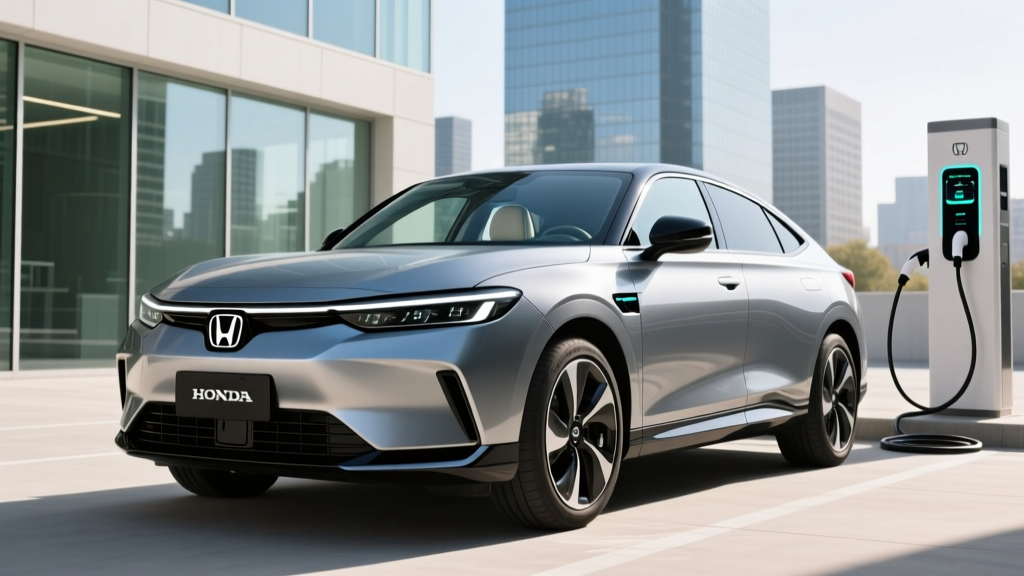
The short answer to "is the Honda Prologue only electric?" is yes. The Prologue is Honda's first mass-market battery-electric vehicle (BEV) for North America, and it comes with no gasoline engine, no hybrid variant, and no plug-in hybrid option. It is a pure electric SUV built on General Motors' Ultium platform through a Honda-GM partnership, meaning it shares its bones with the Chevrolet Blazer EV and Cadillac Lyriq but wears Honda's design language, tuning, and interior philosophy.
For 2026, the Prologue positions itself as a mainstream midsize electric crossover aimed squarely at families transitioning from vehicles like the CR-V or Passport. It offers competitive range, solid DC fast-charging speeds, and Honda's reputation for practicality. But does it hold up against entrenched rivals like the Hyundai Ioniq 5, Ford Mustang Mach-E, and Tesla Model Y? This review breaks down every spec that matters.
Range, Battery, and Efficiency: What the EPA Says vs. Reality
The 2026 Honda Prologue is equipped with an 85 kWh usable lithium-ion battery pack using GM's Ultium NMC (nickel-manganese-cobalt) pouch-cell chemistry. This is not an LFP battery, meaning you get higher energy density and better cold-weather performance than LFP, but Honda recommends capping daily charges at 80-90% to preserve long-term health — only charging to 100% before long trips.
| Spec | Value |
|---|---|
| Battery Capacity (Usable) | 85 kWh |
| Battery Chemistry | NMC (Ultium pouch cells) |
| EPA Range (FWD EX) | 296 miles |
| EPA Range (AWD EX/EX-L) | 281 miles |
| EPA Range (Elite AWD) | 273 miles |
| Efficiency (FWD, Combined) | 99 MPGe / 34 kWh/100 mi |
| Efficiency (AWD, Combined) | 95 MPGe / 35 kWh/100 mi |
Efficiency at 34 kWh/100 miles (FWD) is respectable for a midsize SUV, though it trails the Hyundai Ioniq 5's ~30 kWh/100 mi. That gap matters on road trips: over 1,000 miles of driving, the Prologue will consume roughly 40 more kWh than the Ioniq 5, translating to one extra charging stop or longer dwell times.
Charging Speed: DC Fast Charge and Home Level 2
Charging speed is often the make-or-break factor for EV ownership satisfaction, and the Prologue delivers competent but not class-leading numbers.
| Charging Level | Power / Rate | Speed |
|---|---|---|
| Level 1 (120V household) | ~1.4 kW | ~4 miles per hour |
| Level 2 (240V home, 48A) | 11.5 kW | ~34 miles per hour / 0-100% in ~9 hrs |
| DC Fast Charge (peak) | 150 kW | 10-80% in ~34 minutes |
| DC Fast Charge (sustained avg.) | ~110 kW | 20-80% in ~28 minutes |
The 150 kW peak DC fast-charge rate is the headline figure, but real-world charging curves tell a more nuanced story. The Prologue hits peak rate between roughly 10-35% state of charge, then tapers progressively. By 60% SoC, you're seeing about 100-110 kW; above 80%, it drops sharply to under 50 kW to protect the battery. This is standard NMC behavior, but it means a 10-80% session averages closer to 110 kW than 150 kW.
On a 350 kW Electrify America or EVgo stall, the Prologue won't bottleneck the charger — it'll simply draw what it can. On a road trip from, say, Chicago to Denver, expect 30-40 minute stops every 220-240 miles of highway driving. That's livable, but rivals like the Ioniq 5 (240 kW peak, 10-80% in 18 min) and the Kia EV6 make noticeably shorter stops.
For home charging, the Prologue's onboard charger accepts up to 11.5 kW on Level 2 (48 amps). With a properly installed 60-amp dedicated circuit and a quality Level 2 EVSE (like a ChargePoint Home Flex or Emporia Level 2), you'll recover a full battery overnight in about 9 hours. Honda includes a dual-voltage portable charging cord with the vehicle that handles both 120V and 240V (with the appropriate NEMA 14-50 adapter), which is a practical touch for new EV owners.
Performance and Drivetrain
The Prologue is not a performance EV, and Honda doesn't pretend otherwise. It's tuned for comfort, composure, and family-friendly predictability.
| Trim / Drivetrain | Horsepower | Torque | 0-60 mph | Drivetrain |
|---|---|---|---|---|
| EX (FWD) | 213 hp | 236 lb-ft | ~7.8 sec | Single-motor FWD |
| EX / EX-L (AWD) | 288 hp | 332 lb-ft | ~6.2 sec | Dual-motor AWD |
| Elite (AWD) | 288 hp | 332 lb-ft | ~6.2 sec | Dual-motor AWD |
The single-motor FWD variant provides adequate acceleration for merging and city driving, but the dual-motor AWD setup is the one most buyers will want — especially in snow-belt states. The 288 hp and 332 lb-ft of torque deliver confident highway passing and a 0-60 time around 6.2 seconds, which is brisk but not thrilling by EV standards (the Mustang Mach-E GT hits 60 in ~3.5 seconds, for context).
Ride quality is a genuine strength. Honda's suspension tuning absorbs highway expansion joints and potholes with a maturity that feels more premium than the Prologue's price suggests. Steering is light and precise, if not particularly communicative. Regenerative braking is adjustable via paddle shifters behind the wheel, allowing everything from light coasting regen to strong one-pedal-style deceleration — though it doesn't quite come to a full stop without touching the brake pedal, so true one-pedal driving is not fully realized.
Interior, Cargo, and Technology
Honda's cabin design prioritizes ergonomics and space, and the Prologue follows that tradition. The interior uses a mix of soft-touch materials and harder plastics — honestly executed if not luxurious. The 11.3-inch touchscreen (standard on all trims) runs Google Built-in, which includes Google Maps navigation, Google Assistant, and access to the Play Store for apps. Wireless Apple CarPlay and Android Auto are standard.
The digital instrument cluster is an 11-inch configurable display. Physical buttons for climate controls and volume are retained — a welcome choice for drivers fatigued by touchscreen-only interfaces.
| Dimension | Measurement |
|---|---|
| Front Legroom | 41.0 inches |
| Rear Legroom | 38.2 inches |
| Cargo (Behind Rear Seats) | 25.2 cu ft |
| Cargo (Seats Folded) | 57.7 cu ft |
| Front Trunk (Frunk) | None |
Cargo volume is competitive but not class-leading. The Hyundai Ioniq 5 offers 27.2 cu ft behind the rear row, and the Tesla Model Y provides significantly more at 30.2 cu ft (plus a frunk). The Prologue's lack of a front trunk is a missed opportunity — the Ultium platform can accommodate one, but Honda chose to use that space for HVAC components. For families hauling strollers, groceries, and sports gear, 25.2 cu ft is workable but requires more Tetris than some rivals demand.
On the driver-assistance front, the Honda Sensing suite is standard across all trims, including adaptive cruise control with low-speed follow, lane-keeping assist, traffic sign recognition, and automatic emergency braking. This is a SAE Level 2 system — it assists with steering and speed but requires the driver to remain fully engaged at all times. It is not autonomous driving. The system works well on highways but can be overly cautious with lane-centering corrections in construction zones.
Pricing, Trims, and Federal Tax Credit Eligibility
The 2026 Honda Prologue is offered in three trim levels. Pricing reflects Honda's positioning as a mainstream, not luxury, brand.
| Trim | MSRP (incl. destination) | Est. After §30D Credit* |
|---|---|---|
| EX (FWD) | $48,795 | ~$41,295 |
| EX (AWD) | $51,795 | ~$44,295 |
| EX-L (AWD) | $54,795 | ~$47,295 |
| Elite (AWD) | $59,295 | ~$51,795 |
*Tax credit estimates assume full $7,500 eligibility under IRS §30D. Actual eligibility depends on multiple factors — see checklist below.
- MSRP Cap: SUVs must have an MSRP at or below $80,000 (all Prologue trims qualify).
- Buyer Income Cap: Modified AGI must not exceed $150,000 (single), $225,000 (head of household), or $300,000 (joint filers).
- Battery Sourcing: A percentage of critical minerals and battery components must be sourced from the U.S. or free-trade-agreement countries. The Prologue's Ultium battery (assembled in the U.S. with globally sourced minerals) has qualified for the full $7,500 in prior model years, but check the IRS eligible vehicles list for your specific purchase date, as sourcing rules tighten annually.
- Point-of-Sale Transfer: As of 2024, you can transfer the credit to the dealer at purchase, reducing your out-of-pocket cost immediately rather than waiting for tax filing.
Honda also periodically offers lease incentives on the Prologue that can stack with or exceed the federal credit. Leasing bypasses some §30D sourcing restrictions through the commercial clean vehicle credit (§45W) that flows to the lessor, who may pass savings to the lessee. Always compare lease vs. buy math before signing.
Pros, Cons, and Who Should Buy the Prologue
- Comfortable, composed ride quality that punches above its price
- Spacious rear seat with 38.2 inches of legroom
- Physical climate controls and intuitive Google Built-in infotainment
- Standard Honda Sensing ADAS suite across all trims
- Eligible for full $7,500 federal tax credit (verify per IRS)
- Honda dealer network for service and warranty support
- Heat pump standard for better cold-weather efficiency
- 150 kW peak DC charging trails rivals (Ioniq 5: 240 kW, EV6: 240 kW)
- No front trunk (frunk) — lost cargo utility
- 25.2 cu ft cargo behind rear seats is below segment average
- Regen braking doesn't enable full one-pedal driving to a stop
- Efficiency (34 kWh/100 mi) lags lighter competitors
- No NACS port standard (CCS1 with adapter access to Tesla Superchargers)
Who the Prologue suits best: This EV is ideal for suburban families and daily commuters who prioritize ride comfort, back-seat space, and Honda's brand trust over cutting-edge charging speed or sporty dynamics. If your routine involves a 40-80 mile round-trip commute with home charging, the Prologue's 280+ mile range means charging only 2-3 times per week. It also works well for road-trippers willing to plan 30-40 minute charging stops every 3-4 hours. It is less suited for drivers who need maximum cargo volume, the fastest possible DC charging, or one-pedal driving purists.
Warranty Coverage
Honda backs the Prologue with competitive warranty terms that align with industry standards for electric vehicles:
- Battery & Drive Unit: 8 years / 100,000 miles (whichever comes first), covering defects and capacity loss below approximately 70% of original capacity
- Limited Vehicle Warranty: 3 years / 36,000 miles bumper-to-bumper
- Powertrain Warranty: 5 years / 60,000 miles
- Corrosion Perforation: 5 years / unlimited miles
- Roadside Assistance: 3 years / 36,000 miles
The 8-year/100,000-mile battery warranty is standard for the segment and matches what Hyundai, Kia, Ford, and GM offer. Honda's warranty language typically guarantees replacement or repair if the battery falls below a defined capacity threshold — generally around 60-70% State of Health — during the warranty period. For context, fueleconomy.gov data and owner reports from the GM Ultium platform suggest typical degradation of 8-12% over the first 100,000 miles, meaning most owners should remain well within warranty coverage.
Frequently Asked Questions
Is there a hybrid or gas version of the Honda Prologue?
No. The Honda Prologue is exclusively a battery-electric vehicle. There is no hybrid, plug-in hybrid, or gasoline variant. If you want a Honda SUV with a gas engine, you'd look at the CR-V, CR-V Hybrid, Passport, or Pilot instead.
What is the real-world highway range of the Honda Prologue?
On the highway at 70-75 mph in moderate temperatures (60-75°F), the FWD Prologue delivers approximately 245-265 miles before needing to charge. The AWD models deliver roughly 235-250 miles under the same conditions. In freezing weather, subtract another 15-20% from those figures.
Can the Honda Prologue use Tesla Superchargers?
Yes, with an adapter. The Prologue ships with a CCS1 port. Honda has provided access to Tesla's Supercharger network via a CCS-to-NACS adapter (included or available depending on model year and trim). This significantly expands the available fast-charging network, particularly in rural areas where Superchargers often outnumber Electrify America or EVgo stations.
How long does it take to charge the Prologue at home?
On a 240V Level 2 home charger at 48 amps (11.5 kW), a full 0-100% charge takes approximately 9 hours. Most owners who plug in nightly with 30-50% remaining will reach full charge in 4-5 hours. On a standard 120V outlet, expect roughly 4 miles of range per hour of charging — suitable only for emergency top-ups or very low-mileage drivers.
Does the Honda Prologue qualify for the $7,500 federal tax credit?
The Prologue has qualified for the full $7,500 federal tax credit under IRS §30D rules, provided you meet income caps ($300,000 joint / $150,000 single), the vehicle MSRP is under $80,000 (all trims qualify), and the battery sourcing requirements are met at the time of purchase. Because sourcing rules tighten periodically, always verify current eligibility on the IRS qualified vehicles list before purchasing.
How does the Prologue compare to the Hyundai Ioniq 5?
The Ioniq 5 charges significantly faster (240 kW peak vs. 150 kW), is more efficient (~30 vs. 34 kWh/100 mi), and offers a frunk. The Prologue counters with a more comfortable ride, a more traditional SUV seating position, and Honda's dealer network. If fast charging and road-trip efficiency are top priorities, the Ioniq 5 wins. If ride quality and brand familiarity matter more, the Prologue is compelling.
The Honda Prologue answers the question of whether Honda can deliver a credible, practical electric SUV — and the answer is yes. It won't win spec-sheet wars against the fastest-charging or longest-range rivals, but it offers a comfortable, well-equipped, and family-friendly EV that plays to Honda's strengths: reliability reputation, ergonomic design, and a massive service network. For buyers asking "is the Honda Prologue only electric?" — it is, and for the daily-commuting family it's designed for, that's more than enough.