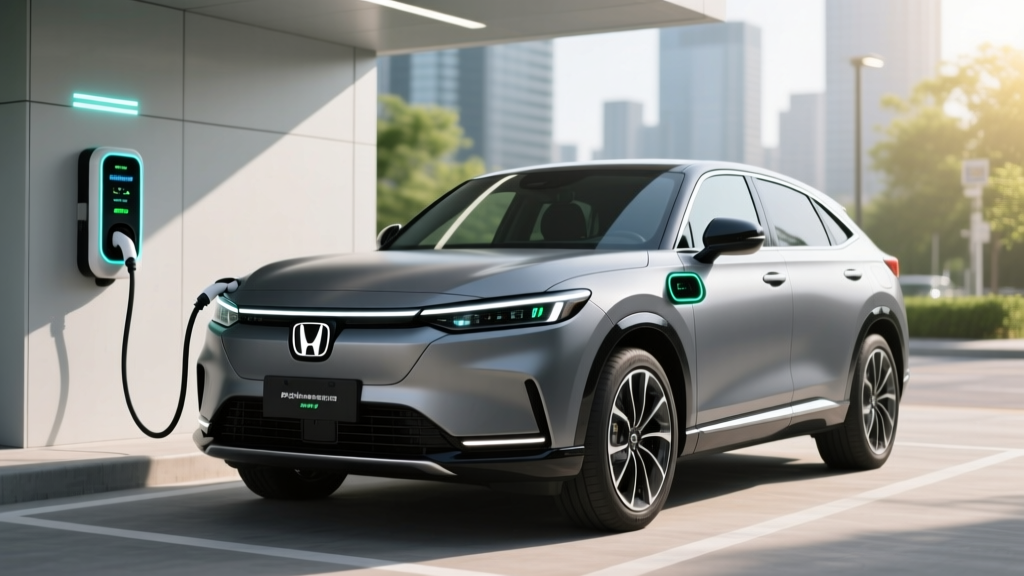
The Honda Prologue arrived with a familiar promise: mainstream practicality wrapped in an electric package. Built on General Motors' Ultium platform and sharing underpinnings with the Chevrolet Blazer EV, Honda's first modern battery-electric vehicle targets the mass-market SUV buyer. But with an MSRP starting near $47,400 (before any incentives), the Prologue must justify its price against rivals like the Hyundai Ioniq 5, Ford Mustang Mach-E, and its own corporate twin, the Acura ZDX. Here is the data-driven breakdown of what the Prologue actually delivers — and where it falls short.
Quick Verdict: What the Prologue Gets Right (and Wrong)
The Prologue's strongest card is its eligibility for the full §30D federal tax credit of $7,500, which can be applied at the point of sale for 2025 models. This immediately repositions a mid-$40,000 SUV into the low-$40,000 territory — or even the high-$30,000s for the base EX trim. The ride is composed, cabin space is generous, and Honda's brand reputation for reliability resonates with cautious EV adopters. The trade-offs? Charging speed lags behind 800V competitors, efficiency is merely average, and the infotainment system borrows heavily from GM rather than showcasing Honda's own engineering.
Spec Snapshot: 2025 Honda Prologue at a Glance
| Specification | EX / EX-L (FWD) | EX-L (AWD) | Elite (AWD) |
|---|---|---|---|
| Base MSRP | $47,400 | $50,400 | $57,400 |
| Price After §30D Credit* | $39,900 | $42,900 | $49,900 |
| EPA Range | 296 mi | 281 mi | 273 mi |
| Battery (usable) | 85 kWh NMC (Ultium) | ||
| Peak DC Fast Charge | 150 kW | ||
| 10-80% DC Charge Time | ~35 minutes | ||
| Level 2 Home Charging | 11.5 kW (~35 mi/hr) | ||
| 0-60 mph | ~8.0 sec | ~7.5 sec | ~7.5 sec |
| Horsepower / Torque | 212 hp / 236 lb-ft | 288 hp / 325 lb-ft | |
| MPGe (combined) | 95 MPGe | 91 MPGe | 91 MPGe |
| Efficiency | 35 kWh/100mi | 37 kWh/100mi | 37 kWh/100mi |
| Drivetrain | Single-motor FWD | Dual-motor AWD | |
| Battery Warranty | 8 years / 100,000 miles | ||
*Tax credit eligibility depends on buyer income, battery sourcing, and MSRP caps. Verify current-year rules at irs.gov.
Real-World Range: Beyond the EPA Sticker
Real-World Expectation: ~230–260 miles on mixed highway driving; ~190–220 miles in freezing weather with cabin heat
The Prologue's 85 kWh usable Ultium battery (NMC chemistry) delivers competitive EPA numbers, but real-world results depend heavily on conditions. In our experience with Ultium-platform vehicles, sustained highway driving at 70+ mph typically yields 85–90% of the EPA sticker. Cold weather — particularly below 32°F — can reduce range by 20–30%, as the battery management system diverts energy to thermal conditioning. The Prologue does include a heat pump, which mitigates some winter loss compared to resistive heating, but buyers in northern climates should plan for ~200 miles of practical winter range on the AWD trims.
For context, the Hyundai Ioniq 5 Long Range AWD (320 mi EPA) and Tesla Model Y Long Range (310 mi EPA) offer more buffer. The Prologue's range is adequate for commuting and moderate road trips but requires more deliberate charging planning on 300+ mile journeys.
Charging: Where the Prologue Shows Its Age
| Charging Level | Power / Rate | Time or Miles Added |
|---|---|---|
| Level 1 (120V household) | 1.2 kW | ~4 miles per hour |
| Level 2 (240V home/public) | 11.5 kW | ~35 miles per hour; full charge in ~9 hrs |
| DC Fast Charge | Peak 150 kW | 10-80% in ~35 minutes |
The Prologue's 150 kW peak DC charging rate is the SUV's most significant competitive weakness. Vehicles built on 800V architectures — the Hyundai Ioniq 5, Kia EV6, and Porsche Taycan — accept 235–350 kW and achieve 10-80% charges in 18–22 minutes. The Prologue's 35-minute 10-80% time is acceptable for occasional road trips but noticeably slower than the segment leaders.
The charge curve is typical for a 400V Ultium battery: the Prologue holds near peak rate from roughly 10% to 55% state of charge, then tapers progressively. Above 80%, charging slows dramatically to protect battery longevity — expect 80-100% to add another 20+ minutes. On road trips, plan to charge to 80% and move on rather than waiting for a full battery.
Level 2 home charging at 11.5 kW is competitive. A full overnight charge from near-empty takes about 9 hours, easily replenishing daily driving. Honda recommends a 48-amp hardwired home charger for optimal Level 2 performance; budget $500–$1,500 for equipment and electrician installation depending on your panel capacity.
Performance and Driving Dynamics
The base front-wheel-drive EX produces 212 horsepower and 236 lb-ft of torque, yielding a 0-60 mph time of approximately 8.0 seconds — adequate for merging and passing but not thrilling. The dual-motor AWD trims (EX-L AWD and Elite) bump output to 288 hp and 325 lb-ft, dropping 0-60 to roughly 7.5 seconds. Neither figure threatens a Tesla Model Y Performance (3.5 seconds), but the Prologue was never aimed at that buyer.
Where the Prologue earns praise is ride quality. The suspension tuning is compliant and confident, absorbing highway imperfections with a maturity that some competitors (looking at you, Hyundai Ioniq 5) haven't quite matched. Steering is light and predictable. Regenerative braking offers multiple levels via paddle shifters, though one-pedal driving (full stop without touching the brake) is available only in its strongest setting. The transition between regen and friction braking is smooth — a common pain point on lesser EVs that Honda has handled well.
Interior, Cargo, and Technology
The Prologue seats five adults comfortably, with 41.0 inches of front legroom and 37.0 inches in the rear — competitive with the Blazer EV it shares a platform with. Cargo volume behind the second row is 25.2 cubic feet, expanding to 57.7 cubic feet with the rear seats folded. Notably, there is no front trunk (frunk); the Ultium platform's electronics occupy that space.
The 11.3-inch touchscreen runs a Google Built-In infotainment system — a first for Honda, borrowed directly from GM's software stack. Google Maps navigation, Google Assistant, and Play Store apps are integrated. Wireless Apple CarPlay and Android Auto are standard. The system is responsive, but some Honda loyalists may find it jarring to see Google Automotive OS rather than Honda's own interface.
The Honda Sensing suite of driver-assistance features is standard across all trims: adaptive cruise control, lane-keeping assist, automatic emergency braking, and blind-spot monitoring. The Elite trim adds a 360-degree camera and a more advanced parking assist. Importantly, these are SAE Level 2 driver-assistance systems — the driver must remain fully engaged with hands on the wheel. Honda does not currently offer a hands-free highway system like GM's Super Cruise or Ford's BlueCruise, though the Prologue's hardware appears capable of future upgrades.
Pricing, Trims, and Tax Credit Reality
| Trim | MSRP | After §30D Credit | Key Features |
|---|---|---|---|
| EX (FWD) | $47,400 | ~$39,900 | 19" wheels, heated front seats, power liftgate, Honda Sensing |
| EX-L (FWD or AWD) | $50,400–$52,400 | ~$42,900–$44,900 | Leather seats, heated steering wheel, wireless charging, memory seats |
| Elite (AWD) | $57,400 | ~$49,900 | 21" wheels, panoramic roof, Bose audio, 360° camera, HUD |
The Prologue qualifies for the full $7,500 §30D federal tax credit as of 2025, because it meets the North American assembly requirement (built in Ramos Arizpe, Mexico — which qualifies under current USMCA rules) and satisfies critical-mineral and battery-component sourcing thresholds. However, buyers must still meet income caps: $150,000 single / $300,000 married filing jointly. SUVs also face an $80,000 MSRP cap — the Prologue clears this comfortably.
Since 2024, the credit can be transferred to the dealer at point of sale, reducing your purchase price immediately rather than waiting for tax filing. Confirm eligibility with your dealer and tax professional before signing.
Pros, Cons, and Who Should Buy
- Full $7,500 federal tax credit eligibility
- Composed, comfortable ride quality
- Spacious cabin and competitive cargo space
- Honda brand reliability and dealer network
- Heat pump for cold-weather efficiency
- 150 kW peak charging is slow for the segment
- No front trunk (frunk)
- Google-based infotainment may alienate Honda purists
- Real-world highway range falls short of 800V rivals
- No hands-free highway driving assist
Best for: Daily commuters and families who value ride comfort, cabin space, and brand trust over cutting-edge charging speed or performance. If you charge at home nightly and take road trips of 200 miles or less, the Prologue's limitations rarely surface.
Look elsewhere if: You frequently drive 300+ miles between charging stops, need the fastest possible DC charging, or want a hands-free highway driving system. The Hyundai Ioniq 5, Kia EV6, or Tesla Model Y better serve those use cases.
Frequently Asked Questions
What is the real-world range of the Honda Prologue?
Expect 230–260 miles in mixed driving, and 190–220 miles in freezing temperatures. The EPA rates it at 273–296 miles depending on trim, but highway speeds and cold weather reduce that figure meaningfully.
How fast does the Prologue charge at home and on the road?
At home on a 240V Level 2 charger (11.5 kW), the Prologue adds about 35 miles of range per hour, fully charging overnight. On DC fast chargers, it peaks at 150 kW, achieving a 10-80% charge in approximately 35 minutes — slower than 800V competitors like the Ioniq 5 (18 minutes at 235 kW).
Does the Honda Prologue qualify for the $7,500 federal tax credit?
Yes, as of 2025, the Prologue qualifies for the full §30D credit. Buyers must still meet income limits ($150K single / $300K joint) and the vehicle must be under the $80K MSRP cap for SUVs. The credit can be applied at point of sale.
Is the Honda Prologue worth buying over the Hyundai Ioniq 5 or Tesla Model Y?
It depends on priorities. The Prologue wins on ride comfort, brand familiarity, and tax-credit pricing. The Ioniq 5 and Model Y win on charging speed, real-world range, and tech features. Test-drive all three before deciding.
What is the Prologue's warranty coverage?
Honda covers the battery and electric powertrain for 8 years or 100,000 miles (whichever comes first), consistent with industry standards. The vehicle limited warranty is 3 years / 36,000 miles.