Quick Verdict: The Prologue's Efficiency Story
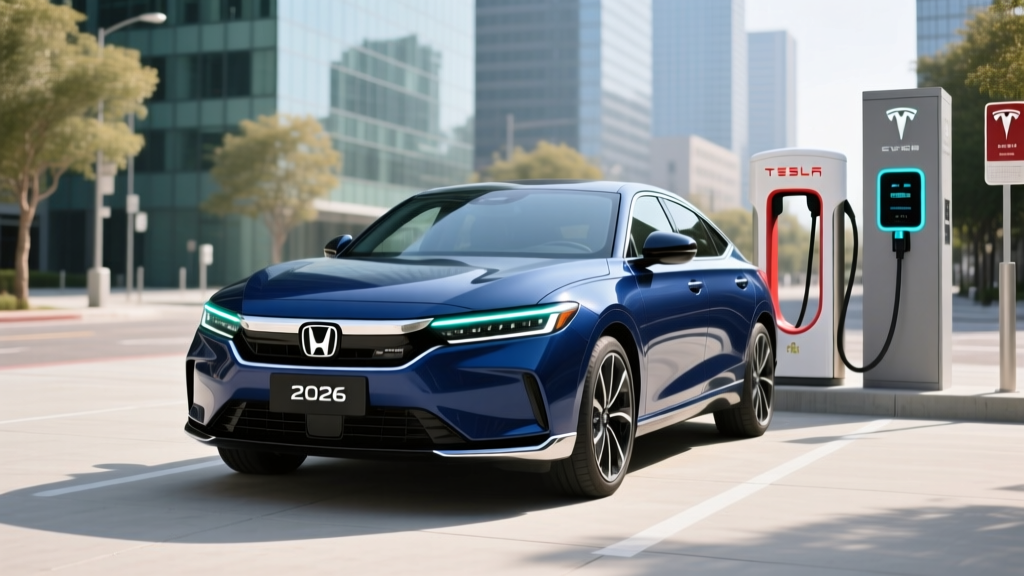
Searches for the Honda Prologue MPG are common, but as a battery-electric vehicle, the Prologue doesn't burn a drop of gasoline. The correct metric is MPGe (miles per gallon equivalent), and for the 2026 model year, Honda's Ultium-based SUV delivers a competitive but unremarkable efficiency profile. The front-wheel-drive EX and Touring trims earn an EPA-estimated 100 MPGe combined (99 city / 101 highway), while the dual-motor Elite AWD drops to 92 MPGe combined (90 city / 94 highway). In energy terms, that translates to roughly 34 kWh per 100 miles for FWD and 37 kWh per 100 miles for AWD — putting the Prologue in the middle of the midsize electric SUV pack, behind efficiency leaders like the Hyundai Ioniq 5 (114 MPGe combined) but on par with the Chevrolet Blazer EV on which it shares a platform.
The Prologue's appeal isn't efficiency dominance — it's packaging, ride comfort, and a strong federal tax credit story. Here's everything you need to know before signing the paperwork.
Range, Efficiency & Real-World Expectations
- FWD (EX/Touring): EPA 296 miles — expect ~250–270 mi highway, ~210–230 mi in freezing temps
- AWD (Elite): EPA 281 miles — expect ~235–255 mi highway, ~195–220 mi in freezing temps
Real-world range depends heavily on speed, temperature, and terrain. At a sustained 75 mph in 40°F weather, plan for roughly 185–200 usable miles before needing a charger.
The 2026 Prologue carries an 85 kWh usable battery (approximately 102 kWh gross) using NMC (nickel manganese cobalt) lithium-ion chemistry supplied by the Ultium Cells joint venture. NMC offers higher energy density than LFP, which helps Honda package a large battery without excessive weight — but it also means Honda recommends limiting daily charging to 80–90% for long-term health, reserving 100% sessions for road trips.
| Trim | Drivetrain | EPA Range | MPGe Combined | kWh/100 mi | Battery (Usable) |
|---|---|---|---|---|---|
| EX | FWD | 296 mi | 100 | 34 | 85 kWh NMC |
| Touring | FWD | 296 mi | 100 | 34 | 85 kWh NMC |
| Elite | AWD (Dual-Motor) | 281 mi | 92 | 37 | 85 kWh NMC |
For context on efficiency: the EPA's MPGe figure equates 33.7 kWh of electricity to one gallon of gasoline. A Prologue FWD at 100 MPGe means it uses about 33.7 kWh to travel 100 miles. If your electricity rate is $0.14/kWh, that's roughly $4.72 per 100 miles, or $0.047 per mile — versus about $0.13/mi in a comparable 28-MPG gas SUV at $3.60/gallon. Over 15,000 annual miles, home charging saves approximately $1,250 per year compared to gasoline.
Charging: DC Fast, Level 2 & Home Setup
The Prologue supports a peak DC fast-charge rate of 155 kW via its standard CCS1 connector (2026 models ship with CCS; Honda has confirmed NACS adapter availability through dealerships). On a 350 kW-capable Electrify America or EVgo station, the Prologue will accept its peak rate up to approximately 40% state of charge, then taper progressively. The 10–80% session takes approximately 35 minutes in moderate temperatures with battery preconditioning active.
| Level | Power / Voltage | Miles Added per Hour | Full Session Time | Best Use Case |
|---|---|---|---|---|
| Level 1 (120V) | ~1.4 kW | ~4 mi/hr | ~72 hours (0–100%) | Emergency top-up only |
| Level 2 (240V, 48A) | 11.5 kW | ~34 mi/hr | ~8.5 hours (0–100%) | Daily home charging |
| DC Fast (CCS) | Peak 155 kW | ~170 mi/hr (peak) | ~35 min (10–80%) | Road trips |
Home charging reality: The onboard charger accepts up to 11.5 kW on Level 2, which is adequate but not class-leading — the Ioniq 5 accepts 10.9 kW and the Tesla Model Y accepts 11.5 kW, so the Prologue is competitive here. A full Level 2 home installation with a 48-amp hardwired charger (such as the ChargePoint Home Flex or Emporia Level 2) typically costs $800–$2,200 depending on panel proximity and whether your home needs a 200-amp service upgrade. Factor in a 30% federal residential clean energy credit on the charger equipment and installation (up to $1,000 back) to offset that cost.
Preconditioning matters: The Prologue's navigation-integrated preconditioning warms the battery before you arrive at a DC fast charger. Without it, cold-soak charging sessions can add 10–15 minutes to your 10–80% time. Always enter a fast-charger destination into the built-in navigation before arriving.
Performance & Drivetrain
The FWD Prologue produces 213 horsepower and 236 lb-ft of torque from a single front-mounted motor. The Elite AWD adds a rear motor for a combined 288 hp and 333 lb-ft. Neither variant is a performance SUV — the FWD runs 0–60 mph in approximately 7.8 seconds, while the AWD Elite hits it in 6.0 seconds. Acceleration is linear and confident for highway merging, but the Prologue prioritizes ride comfort over sportiness.
Regenerative braking offers multiple modes selectable via steering-wheel paddles, including a near-one-pedal-driving mode at maximum regen. It's not quite a full stop without touching the brake pedal, but it handles 85% of deceleration in city driving. The brake pedal feel is progressive and avoids the grabby regen-blending common in some competitors.
| Spec | FWD (EX/Touring) | AWD (Elite) |
|---|---|---|
| Horsepower | 213 hp | 288 hp |
| Torque | 236 lb-ft | 333 lb-ft |
| 0–60 mph | ~7.8 sec | ~6.0 sec |
| Towing Capacity | 1,500 lbs | 1,500 lbs |
| Curb Weight | ~4,930 lbs | ~5,170 lbs |
Towing note: At 1,500 pounds max, the Prologue handles light-duty utility — a small utility trailer or a pair of dirt bikes — but it is not a towing SUV. Towing at max capacity will cut real-world range by roughly 30–40%.
Interior, Cargo & Technology
The Prologue seats five with generous dimensions: 41.4 inches of front legroom and 37.8 inches of rear legroom, making it comfortable for adults in both rows. Cargo volume measures 28.5 cubic feet behind the rear seats and 57.7 cubic feet with the 60/40 rear seats folded flat. There is no front trunk (frunk) — the Ultium platform packaging uses that space for HVAC and power electronics.
The infotainment system runs on an 11.3-inch touchscreen (Touring and Elite) or a 9-inch unit (EX), both supporting wireless Apple CarPlay and Android Auto. The Elite adds a heads-up display, a 12-speaker Bose audio system, and a digital rearview mirror. Google Built-in navigation with integrated charging routing is standard on Touring and Elite trims.
Honda Sensing ADAS: The Prologue includes Honda's full driver-assistance suite: adaptive cruise control with low-speed follow, lane-keeping assist, blind-spot monitoring, and rear cross-traffic alert. This is an SAE Level 2 system — it assists with steering and speed but requires continuous driver attention and hands-on-wheel input. It is not a hands-free system like GM's Super Cruise or Ford's BlueCruise. On highway drives, the lane-centering is competent but occasionally hunts in faded lane markings. Drivers expecting Tesla Autopilot-level assertiveness should recalibrate expectations.
Pricing, Tax Credits & Ownership Cost
| Trim | Base MSRP | §30D Credit Eligibility | Effective Price* |
|---|---|---|---|
| EX (FWD) | $43,100 | Up to $7,500 | ~$35,600 |
| Touring (FWD) | $47,100 | Up to $7,500 | ~$39,600 |
| Elite (AWD) | $52,100 | Up to $7,500 | ~$44,600 |
*Effective price assumes full $7,500 credit eligibility. Actual credit depends on buyer income, tax liability, and battery-sourcing compliance. Point-of-sale transfer available at participating dealers.
The Prologue's eligibility for the IRS §30D federal tax credit is one of its strongest selling points. Assembled in the United States (at GM's Spring Hill, Tennessee plant) with an Ultium battery, the Prologue has consistently qualified for the full $7,500 credit. However, eligibility is subject to several conditions:
- MSRP cap: Must be under $80,000 (all Prologue trims qualify)
- Buyer income cap: AGI must not exceed $150,000 (single), $225,000 (head of household), or $300,000 (joint filers)
- Battery sourcing: Critical minerals and battery components must meet escalating domestic-content thresholds per IRS rules — Honda's Ultium Cells JV sourcing has satisfied these requirements through 2026, but always verify at purchase
- Point-of-sale transfer: Buyers can apply the credit as an immediate price reduction at participating dealerships rather than waiting for a tax refund
For a complete breakdown of current credit rules, consult the IRS qualified vehicles list before purchasing, as eligibility can change with supply-chain shifts.
5-year ownership cost estimate: With the $7,500 credit applied, home charging at $0.14/kWh, Honda's included 2 years of complimentary Electrify America charging (1,000 kWh), and typical insurance premiums (~$2,100/year for the Touring), the Prologue FWD Touring costs approximately $42,000–$46,000 over five years including depreciation, energy, insurance, and maintenance — competitive with the Hyundai Ioniq 5 and slightly below the Tesla Model Y when the credit is factored in.
Warranty & Battery Longevity
Honda backs the Prologue with:
- Battery & drive unit: 8 years / 100,000 miles (capacity retention threshold: 70% of original capacity)
- New vehicle limited: 3 years / 36,000 miles
- Powertrain: 5 years / 60,000 miles
NMC batteries typically lose 10–15% of capacity over 100,000 miles with normal use patterns. Honda's 70% warranty threshold is industry-standard but less generous than Hyundai's 70% at 10 years/100,000 miles. To maximize longevity, avoid frequent 100% charges and minimize repeated DC fast-charging in extreme heat without preconditioning. A full battery replacement outside warranty is estimated at $12,000–$18,000 based on current Ultium pricing, though most owners will never need one within typical ownership periods.
Pros, Cons & Who Should Buy
- Full $7,500 federal tax credit eligibility brings effective price under $36K for base trim
- Comfortable ride quality and quiet cabin at highway speeds
- Generous rear legroom and straightforward infotainment
- Honda Sensing ADAS included standard across all trims
- Strong dealer network for service and warranty support
- 155 kW peak DC charging is slower than Ioniq 5 (240 kW) and Model Y (250 kW)
- No front trunk (frunk) — lost cargo utility
- MPGe trails efficiency leaders in the midsize EV SUV segment
- No hands-free highway driving feature (only lane-centering assist)
- AWD Elite trim pushes past $52K before options
- You value Honda's brand trust and dealer network over cutting-edge EV tech
- You qualify for the full $7,500 federal credit and want a sub-$36K electric SUV
- You prioritize ride comfort and cabin quietness over sporty handling
- Your daily commute is under 80 miles and you can charge at home overnight
- You take frequent 300+ mile road trips and need the fastest possible DC charging (consider Ioniq 5 or EV6)
- You want hands-free highway driving (consider Ford Mustang Mach-E with BlueCruise or GM vehicles with Super Cruise)
- You need maximum cargo space or a frunk for gear (consider Tesla Model Y or Rivian R1S)
Frequently Asked Questions
What is the real-world range of the Honda Prologue?
The EPA rates the FWD Prologue at 296 miles and the AWD Elite at 281 miles. In real-world mixed driving at moderate temperatures, expect 250–270 miles (FWD) and 235–255 miles (AWD). Highway driving at 75+ mph and cold weather below 32°F will reduce range by 15–30%.
How fast does the Honda Prologue charge?
On a DC fast charger, the Prologue peaks at 155 kW and charges from 10–80% in approximately 35 minutes with preconditioning. At home on a 48-amp Level 2 charger (11.5 kW), a full charge takes about 8.5 hours, adding roughly 34 miles of range per hour.
How much does the Prologue cost after tax credits?
With the full $7,500 federal tax credit applied, the base EX starts at an effective price of approximately $35,600, the Touring at $39,600, and the Elite AWD at $44,600. Eligibility depends on buyer income, tax liability, and battery-sourcing compliance under IRS §30D rules.
Is the Honda Prologue worth buying vs. competitors?
The Prologue is a strong value play with the tax credit, offering Honda reliability and a comfortable ride. However, the Hyundai Ioniq 5 charges faster (240 kW), the Tesla Model Y has more cargo space and access to the Supercharger network natively, and the Ford Mustang Mach-E offers BlueCruise hands-free driving. If Honda brand loyalty and dealer proximity matter to you, it's an excellent choice; if you prioritize EV-specific tech, shop the competition too.
Does the Honda Prologue qualify for the federal EV tax credit?
Yes — as of 2026, the Prologue qualifies for the full $7,500 §30D federal tax credit, subject to buyer income caps ($150K single / $300K joint), MSRP limits (under $80K), and battery-sourcing requirements. The credit can be transferred to the dealer at point of sale for an immediate price reduction. Always verify current eligibility on the IRS qualified vehicles list before purchase.
What is the Honda Prologue's MPGe?
The FWD Prologue earns an EPA-estimated 100 MPGe combined (99 city / 101 highway), while the AWD Elite rates at 92 MPGe combined (90 city / 94 highway). This translates to 34 and 37 kWh per 100 miles, respectively.