Where Is the Honda Prologue Made? The Quick Answer
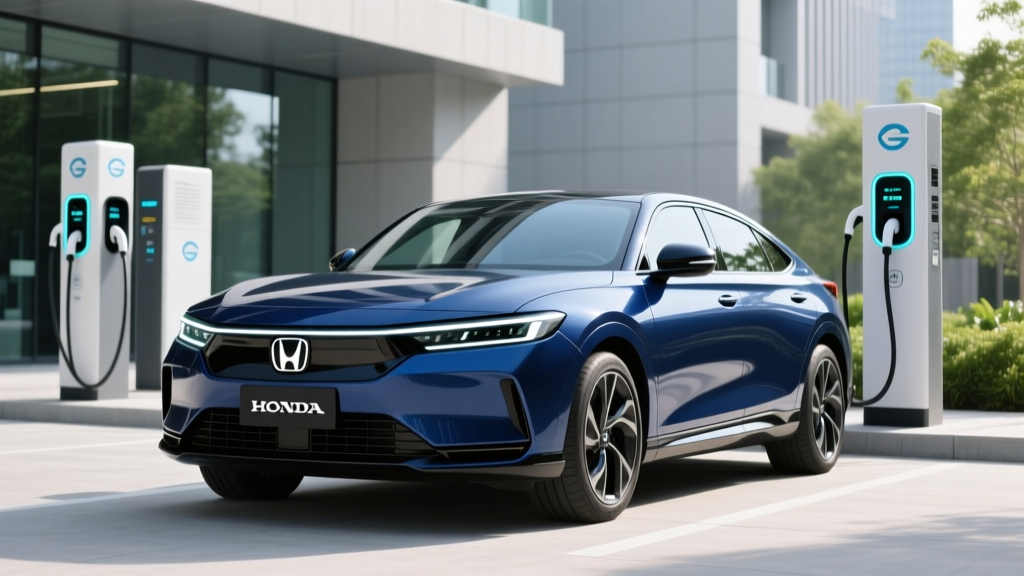
The Honda Prologue is manufactured at General Motors' Spring Hill Assembly plant in Spring Hill, Tennessee. Honda partnered with GM to co-develop the Prologue on GM's Ultium battery platform, meaning this Honda-badged electric SUV shares its underpinnings with the Chevrolet Blazer EV and Cadillac Lyriq. Production began in early 2024, and the vehicle carries a VIN prefix of "3" — confirming its U.S. domestic assembly.
This manufacturing arrangement matters for more than logistics. Because the Prologue is assembled in the United States with North American battery sourcing, it qualifies for the full $7,500 federal EV tax credit under IRS §30D rules, provided the buyer meets income requirements. It's a Honda that qualifies for incentives that many imported EVs cannot claim.
Honda Prologue Spec Sheet: Range, Battery, and Performance
| Specification | FWD (EX / Touring) | AWD (Elite) |
|---|---|---|
| EPA Range | 296 miles | 281 miles |
| Battery Capacity | 85 kWh usable (NMC lithium-ion, Ultium platform) | |
| Horsepower | 212 hp | 288 hp |
| Torque | 236 lb-ft | 333 lb-ft |
| 0–60 mph | ~7.8 seconds | ~6.2 seconds |
| Drivetrain | Single-motor FWD | Dual-motor AWD |
| MPGe (Combined) | 99 MPGe | 93 MPGe |
| Efficiency | 34 kWh/100 mi | 36 kWh/100 mi |
| Max DC Fast Charge | 150 kW peak | |
| 10–80% DC Charge Time | ~35 minutes | |
| Level 2 Home Charging | 11.5 kW (~30 mi/hr) | |
| Cargo Volume (rear seats up) | 25.2 cu ft | |
| Cargo Volume (rear seats folded) | 57.7 cu ft | |
| Rear Legroom | 38.6 inches | |
| Base MSRP (2025) | $47,400 (EX FWD) | |
| Battery Warranty | 8 years / 100,000 miles | |
Real-World Range vs. EPA Estimates
Real-World Expectation: 240–270 miles on highway trips at 70+ mph; expect 20–30% range loss in sub-freezing winter conditions.
The Prologue's 85 kWh Ultium battery delivers competitive EPA numbers, but real-world driving tells a more nuanced story. In mixed suburban and city driving at moderate speeds, the FWD model can approach or even match its 296-mile sticker. Highway driving above 70 mph increases aerodynamic drag substantially, pushing consumption closer to 38–40 kWh/100 mi and dropping effective range to roughly 240–260 miles.
Cold weather compounds this. Without a heat pump — the Prologue uses a conventional resistive HVAC system — winter cabin heating draws directly from the traction battery. Owners in northern climates should budget for 20–30% range reduction when temperatures drop below 32°F. That means a 296-mile FWD Prologue might deliver 200–230 miles of usable range on a cold January commute. Preconditioning the cabin while plugged in at home mitigates some of this loss.
Compared to the Hyundai Ioniq 5 (303 miles EPA, heat pump equipped) or the Tesla Model Y (310+ miles), the Prologue's efficiency is a half-step behind, but it remains firmly in the mainstream midsize EV range bracket.
Charging Speed: DC Fast Charging and Home Level 2
| Charging Level | Power (kW) | Speed (mi/hr added) | Notes |
|---|---|---|---|
| Level 1 (120V outlet) | ~1.4 kW | ~3–4 mi/hr | Emergency/trickle only |
| Level 2 (240V home) | 11.5 kW | ~30 mi/hr | Full charge in ~8 hours |
| DC Fast Charge (peak) | 150 kW | ~250+ mi/hr (at peak) | 10–80% in ~35 min |
The Prologue's 150 kW peak DC fast-charge rate is adequate but not class-leading. Competitors like the Ioniq 5 and Kia EV6, built on 800-volt architectures, sustain 230–250 kW peaks and hit 10–80% in roughly 18 minutes. The Prologue's 400-volt Ultium platform means 35 minutes for the same 10–80% session.
The charge curve also tapers noticeably above 80% state of charge. Honda recommends charging to 80% for daily use to preserve long-term battery health, and the taper from 80–100% can add 25–30 minutes to a session. On road trips, plan your stops around 10–80% sessions and you'll spend roughly 35 minutes at a 150+ kW charger — enough time for a meal break.
Home Level 2 charging at 11.5 kW is solid. A full overnight charge from near-empty takes about 8 hours, which is practical for most owners. You'll need a 48-amp hardwired Level 2 station (or a 40-amp circuit on a NEMA 14-50 outlet) to take full advantage. Installation typically runs $500–$1,500 depending on your electrical panel's capacity and the run distance from panel to garage.
2025 Pricing, Trims, and Federal Tax Credit Eligibility
| Trim | Drivetrain | MSRP | After $7,500 Credit |
|---|---|---|---|
| EX | FWD | $47,400 | $39,900 |
| Touring | FWD | $51,400 | $43,900 |
| Elite | AWD | $57,400 | $49,900 |
The Prologue's U.S. assembly in Spring Hill, Tennessee, and its North American battery cell sourcing are what unlock the full $7,500 federal tax credit under current IRS §30D rules. As of 2025, buyers can also elect to transfer the credit to the dealer at the point of sale, reducing the purchase price directly rather than waiting to claim it on a tax return.
Eligibility is not automatic. Buyers must meet these requirements:
- Income caps: Modified AGI ≤ $150,000 (single), $225,000 (head of household), or $300,000 (joint filers)
- MSRP cap: The Prologue's MSRP falls well under the $80,000 SUV limit
- Battery sourcing: The Ultium cells meet critical-mineral and battery-component requirements for the full $7,500
Always confirm eligibility with a tax professional and check the latest fueleconomy.gov listings, as sourcing rules can shift with supply chain changes.
Tech, Interior, and Daily Livability
The Prologue's cabin reflects Honda's practical ethos layered over GM's Ultium EV architecture. An 11.3-inch touchscreen runs Google Built-In (Google Maps, Google Assistant, Play Store apps), which is responsive and familiar but requires a Google account for full functionality — a potential friction point for privacy-conscious buyers. Apple CarPlay and Android Auto are wireless.
Honda Sensing, the brand's ADAS suite, is standard across all trims and includes adaptive cruise control, lane-keeping assist, blind-spot monitoring, and rear cross-traffic braking. This is a Level 2 driver-assist system — it requires continuous driver attention and hands-on-wheel supervision. It is not autonomous driving.
Passenger space is generous. The flat EV floor delivers 38.6 inches of rear legroom, which exceeds the Model Y and rivals the Ioniq 5. Cargo volume at 25.2 cu ft behind the second row is competitive, expanding to 57.7 cu ft with seats folded. There is no front trunk (frunk) — the Ultium platform's electronics packaging occupies that space.
Notable drawbacks: the Prologue lacks a heat pump (impacting cold-weather efficiency), the regenerative braking feel is less aggressive than some EV competitors (one-pedal driving is available but not as strong as a Tesla or Hyundai), and the absence of a frunk is a missed opportunity for the segment.
Who Should Buy the Honda Prologue?
The Prologue fits a specific buyer profile well:
- Honda loyalists going electric: If you trust the brand, want a dealer network you know, and prefer a non-Tesla EV, the Prologue delivers a familiar ownership experience with EV economics.
- Families needing space: The rear seat and cargo area handle car seats, strollers, and road-trip luggage without compromise.
- Commuters with home charging: If you charge overnight at Level 2, the 296-mile range covers most daily driving with a wide margin.
- Tax-credit maximizers: The full $7,500 credit brings the EX trim under $40,000 — strong value for a midsize electric SUV.
It's less ideal for frequent long-distance road trippers who prioritize the fastest possible charging (look to Hyundai/Kia's 800V platforms) or buyers in extreme cold climates who would benefit from a heat pump.
Pros and Cons at a Glance
- Full $7,500 federal tax credit eligibility (U.S. built)
- Spacious rear seat and cargo area
- Competitive 296-mile EPA range (FWD)
- Google Built-In infotainment with wireless CarPlay/Android Auto
- Honda Sensing ADAS standard on all trims
- 8-year/100,000-mile battery warranty
- No heat pump — cold-weather range suffers
- 150 kW peak charging is slower than 800V rivals
- No front trunk (frunk)
- Google Built-In may deter privacy-focused users
- Regen braking feel is mild compared to one-pedal benchmarks
- Elite AWD trim pushes past $57K before incentives
Frequently Asked Questions
Where exactly is the Honda Prologue manufactured?
The Prologue is assembled at GM's Spring Hill Assembly plant in Spring Hill, Tennessee, USA. It shares the Ultium platform with the Chevrolet Blazer EV, which is also produced there.
Does the Honda Prologue qualify for the $7,500 federal EV tax credit?
Yes, as of 2025 the Prologue qualifies for the full $7,500 credit under IRS §30D, thanks to its U.S. assembly and North American battery sourcing. Buyers must still meet income caps ($150K single / $300K joint) and the credit can be transferred to the dealer at point of sale.
What is the real-world range of the Honda Prologue?
Expect 240–270 miles on highway trips and near-EPA numbers in city driving for the FWD model. In sub-freezing winter conditions, range can drop to 200–230 miles due to the lack of a heat pump and battery chemistry behavior in cold temperatures.
How does the Prologue compare to the Hyundai Ioniq 5 or Tesla Model Y?
The Ioniq 5 charges significantly faster (800V architecture, ~18 min 10–80%) and includes a heat pump. The Model Y offers greater range and access to the Supercharger network. The Prologue's advantages are its Honda brand familiarity, U.S. manufacturing story, and strong tax-credit eligibility that brings the effective price below both competitors in many configurations.
Is the Honda Prologue a good EV for road trips?
It's capable but not the fastest-charging option. With 296 miles of range and 150 kW peak charging, you'll plan ~35-minute stops every 200–250 miles. If road-trip charging speed is your top priority, the Ioniq 5 or EV6 will save you 15+ minutes per stop.