The Short Answer: Yes — But Honda Tuned the Package
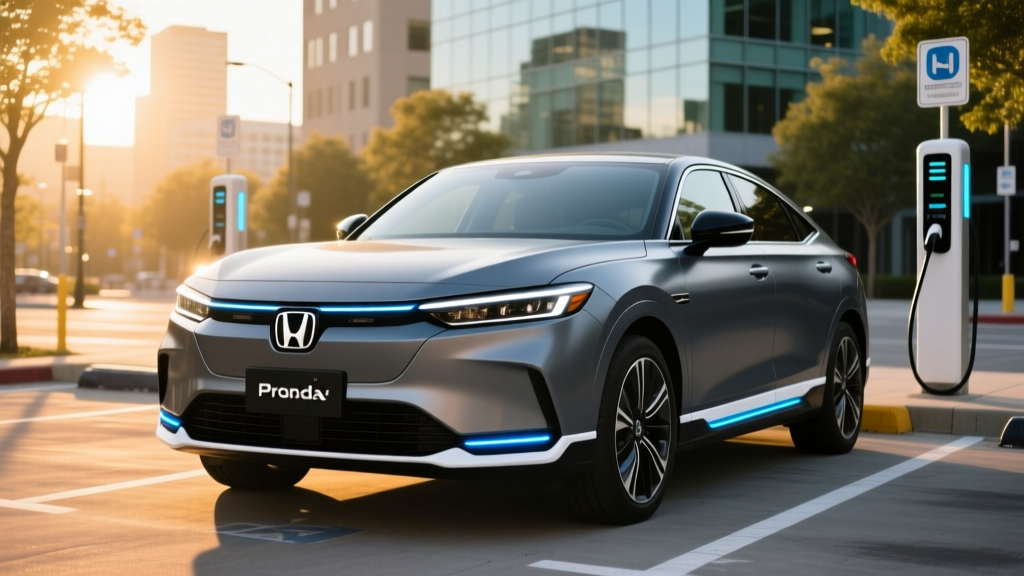
If you've been researching midsize electric SUVs, you've probably asked: is the Honda Prologue made by GM? The answer is a nuanced yes. The Prologue rides on General Motors' BEV3 (Ultium) platform and uses GM-built Ultium battery modules and drive units. But Honda engineered the suspension tuning, interior design, infotainment software, and Honda Sensing driver-assist calibration. Think of it as GM hardware wrapped in a Honda-tuned package — and for 2026, that distinction matters more than you'd expect.
This review covers the 2026 Honda Prologue with updated EPA figures, current pricing, and the latest IRS §30D tax-credit eligibility rules so you can decide whether this cross-brand EV earns a spot in your driveway.
Full Specifications at a Glance
| Spec | EX (FWD) | Touring (AWD) | Elite (AWD) |
|---|---|---|---|
| EPA Range | 308 mi | 294 mi | 283 mi |
| Battery (usable) | 85 kWh — NMC (nickel manganese cobalt) Ultium | ||
| Horsepower | 212 hp | 288 hp | |
| Torque | 236 lb-ft | 333 lb-ft | |
| 0-60 mph | ~7.5 sec | ~5.8 sec | |
| Drivetrain | FWD (single motor) | AWD (dual motor) | |
| Max DC Fast Charge | 190 kW peak (CCS/NACS adapter) | ||
| 10-80% DCFC Time | ~32 minutes (preconditioned) | ||
| Level 2 Home Charge | 11.5 kW onboard (~31 mi/hr) | ||
| Efficiency (combined) | 99 MPGe | 95 MPGe | 92 MPGe |
| Cargo (rear seats up) | 25.2 cu ft | ||
| Cargo (rear seats folded) | 57.7 cu ft | ||
| Rear Legroom | 38.6 in | ||
| Towing Capacity | — | 1,500 lb | |
| Battery Warranty | 8 years / 100,000 miles | ||
| Base MSRP | $48,795 | $54,795 | $59,295 |
Platform Origins: What GM Builds and What Honda Designs
The Honda-GM EV partnership, announced in 2020, was designed to let Honda bring a competitive EV to market quickly by leveraging GM's Ultium architecture. Here's how the division of labor actually works on the Prologue:
- GM supplies: BEV3 skateboard platform, Ultium NMC battery modules (85 kWh usable), front and rear drive units, high-voltage power electronics, and the underlying electrical architecture.
- Honda supplies: Exterior and interior design, suspension geometry and damper tuning, electric power steering calibration, Honda Sensing ADAS suite, Google Built-In infotainment integration, seat design, and all cabin materials.
The result is a vehicle that shares its bones with the Chevrolet Blazer EV and Cadillac Lyriq but drives and feels distinctly like a Honda. The steering weight, ride compliance over broken pavement, and cabin ergonomics all reflect Honda's engineering input. For buyers who wondered whether the Prologue is simply a rebadged Blazer EV — it isn't. The tuning differences are meaningful, though the core powertrain is shared.
Worth noting: Honda's next-generation EVs (expected 2027+) will use Honda's own e:Architecture platform, making the Prologue a transitional — but well-executed — product of this partnership era.
Range, Efficiency & Real-World Expectations
EPA Estimated: 308 miles (EX FWD) / 294 miles (Touring AWD) / 283 miles (Elite AWD)
Real-World Expectation: Plan for 250–275 miles on highway-heavy trips at 70+ mph. In cold weather (below 30°F), expect a 15–25% reduction, dropping effective range to roughly 215–240 miles for AWD trims. City driving with regenerative braking can match or slightly exceed the EPA sticker.
The 85 kWh usable NMC battery is competitive for this segment, but the Prologue's 4,100+ lb curb weight (AWD trims) and relatively boxy SUV profile work against highway efficiency. On fueleconomy.gov, the EX FWD posts 99 MPGe combined, which translates to roughly 34 kWh/100 mi — adequate but not class-leading. The Hyundai Ioniq 5, for comparison, achieves around 114 MPGe combined on a smaller battery.
For daily commuting under 80 miles round-trip, the Prologue's range is more than sufficient with nightly Level 2 top-ups. For road trips, plan charging stops every 200–220 miles to keep a comfortable buffer and stay in the fastest portion of the charge curve.
Charging Speed: DC Fast, Level 2 & Home Setup
The Prologue's 190 kW peak DC fast-charge rate is a strong point — it matches or exceeds several rivals in this price bracket. However, peak rate and sustained rate are different things. Here's the real picture:
| Charging Level | Power | Speed / Time | Connector |
|---|---|---|---|
| Level 1 (120V household) | ~1.4 kW | ~4 mi/hr | J1772 / NACS adapter |
| Level 2 (240V home) | 11.5 kW | ~31 mi/hr (full charge ~9 hrs) | J1772 / NACS adapter |
| DC Fast Charge | 190 kW peak | 10-80% in ~32 min | CCS (NACS via adapter) |
Charging curve reality: The Prologue holds near its 190 kW peak from roughly 10–35% state of charge, then tapers progressively. From 50–80%, expect an average closer to 90–110 kW. This taper is normal for NMC chemistry and thermal management strategy, but it means the 10-80% time of ~32 minutes is achievable primarily when you arrive with a preconditioned battery at a low SoC.
Honda provides a NACS (Tesla-style) charge port adapter for access to Tesla Supercharger stations — critical for road-trip charging coverage. Home Level 2 charging at 11.5 kW requires a 48-amp hardwired wall connector on a 60-amp circuit. Expect home installation costs of $800–$2,000 depending on panel proximity and local permit requirements, plus $400–$700 for a quality Level 2 unit.
Driving Impressions, Tech & Interior
The dual-motor AWD Prologue delivers 288 hp and 333 lb-ft of torque, good for a 0-60 mph sprint of approximately 5.8 seconds. That's quick for a family SUV, and the instant torque delivery makes highway merging effortless. The single-motor FWD EX at 212 hp is adequate for commuting but feels leisurely when loaded with passengers and cargo.
Ride quality is where Honda's tuning shines. The Prologue absorbs potholes and expansion joints with a composure that feels more refined than the Chevrolet Blazer EV. Steering is weighted appropriately — not numb, not overly sporty — and the turning radius is manageable for suburban parking lots.
Infotainment: An 11.3-inch touchscreen runs Google Built-In, meaning Google Maps, Google Assistant, and the Play Store are native. Wireless Apple CarPlay and Android Auto are standard on all trims. The system is responsive, and the physical volume knob is a welcome touch.
Honda Sensing (ADAS): The Prologue includes adaptive cruise control with stop-and-go, lane-centering assist, lane-keeping assist, forward collision warning with automatic emergency braking, and blind-spot monitoring. This is an SAE Level 2 driver-assist system — you must keep your hands on the wheel and eyes on the road at all times. It is not autonomous driving. The system works well on highways but doesn't match the hands-free capability of GM's own Super Cruise or Ford's BlueCruise.
Cabin & Cargo: The Prologue seats five comfortably, with 38.6 inches of rear legroom that beats many competitors. Cargo space is 25.2 cu ft behind the rear seats and 57.7 cu ft with them folded — slightly less than the Ioniq 5 or Kia EV6, which offer hatchback versatility. There is no front trunk (frunk); the hood area houses HVAC and power-electronics components.
Pricing, Trims & Federal Tax Credit Eligibility
| Trim | Base MSRP | Est. Federal Credit* | Effective Price |
|---|---|---|---|
| EX (FWD) | $48,795 | Up to $7,500 | ~$41,295 |
| Touring (AWD) | $54,795 | Up to $7,500 | ~$47,295 |
| Elite (AWD) | $59,295 | Up to $7,500 | ~$51,795 |
*Federal tax credit (IRS §30D) eligibility is not guaranteed for every buyer. The Prologue qualifies for up to $7,500 under current rules, but you must meet all of the following:
- MSRP cap: SUVs must have an MSRP at or below $80,000. All Prologue trims clear this.
- Income cap: Adjusted gross income must not exceed $150,000 (single), $225,000 (head of household), or $300,000 (joint). Check your prior-year or current-year AGI.
- Battery sourcing: A portion of critical minerals and battery components must meet North American sourcing thresholds. GM's Ultium supply chain has been progressively compliant, but exact eligibility can shift. Verify current status at IRS.gov's qualified vehicle list before purchasing.
- Point-of-sale transfer: You can elect to transfer the credit to the dealer at purchase, reducing your out-of-pocket cost immediately rather than waiting to claim it on your tax return.
Consult a tax professional for your specific situation. Credit rules are subject to change, and state-level incentives may stack on top — check your state energy office for local programs.
Pros, Cons & Who Should Buy the Prologue
✅ Pros
- 308-mi EPA range (FWD) is strong for the segment
- 190 kW DC fast charging — competitive with Ioniq 5 and EV6
- Honda-tuned ride quality and steering feel
- Spacious rear seat (38.6 in legroom)
- Google Built-In infotainment is fast and intuitive
- NACS adapter included for Tesla Supercharger access
- Full $7,500 credit eligibility (subject to IRS rules)
❌ Cons
- No front trunk (frunk) — lost cargo utility
- Cargo volume trails hatchback rivals (57.7 cu ft max)
- MPGe efficiency is mid-pack, not class-leading
- No hands-free driving assist (unlike Super Cruise/BlueCruise)
- AWD towing limited to 1,500 lb
- MSRP is higher than some rivals before incentives
- Transitional platform — Honda's own EVs coming 2027+
Best for: Honda-loyal families who want a comfortable, well-built electric SUV for commuting and weekend trips, value ride comfort over sporty dynamics, and have reliable home Level 2 charging access. The FWD EX at ~$41,295 after the federal credit is the value pick.
Consider alternatives if: You need maximum cargo versatility (look at the Ioniq 5 or EV6), want hands-free highway driving (Blazer EV with Super Cruise), or need 3,500+ lb towing (Rivian R2 or Ford F-150 Lightning).
Frequently Asked Questions
Is the Honda Prologue made by GM?
Partially. The Prologue uses GM's BEV3 Ultium platform, battery modules, and drive units, but Honda designed the body, interior, suspension tuning, infotainment, and driver-assist systems. It's a collaboration, not a rebadge.
What is the real-world range of the Honda Prologue?
The EPA rates the FWD EX at 308 miles and AWD trims at 283–294 miles. In real-world highway driving at 70+ mph, expect 250–275 miles. Cold weather (below 30°F) can reduce range by 15–25%, so plan for 215–240 miles in winter conditions on AWD models.
How fast does the Prologue charge at home and on the road?
At home on a 240V Level 2 charger (11.5 kW), you'll add roughly 31 miles of range per hour, or a full charge in about 9 hours. On DC fast chargers, it peaks at 190 kW and charges from 10–80% in approximately 32 minutes with a preconditioned battery.
Does the Honda Prologue qualify for the $7,500 federal tax credit?
Yes, all trims are currently eligible for up to $7,500 under IRS §30D, provided you meet income caps ($150K single / $300K joint) and the battery sourcing requirements are met at time of purchase. Verify on the IRS qualified vehicles list before buying.
Is the Honda Prologue worth buying over the Chevy Blazer EV or Hyundai Ioniq 5?
The Prologue wins on ride comfort and Honda brand loyalty. The Blazer EV shares the same platform but offers Super Cruise hands-free driving. The Ioniq 5 is more efficient (114 MPGe vs 99 MPGe), charges faster on 800V architecture, and has a frunk — but its ride is firmer. Test-drive all three; the Prologue's comfort advantage is tangible.
What's the warranty coverage on the Prologue's battery?
Honda covers the Ultium battery pack and electric drive components for 8 years or 100,000 miles, whichever comes first. This is the federal minimum standard and matches most competitors. The battery is expected to retain at least 70% of original capacity over that period, though NMC chemistry typically degrades 10–15% over 8 years under normal use.