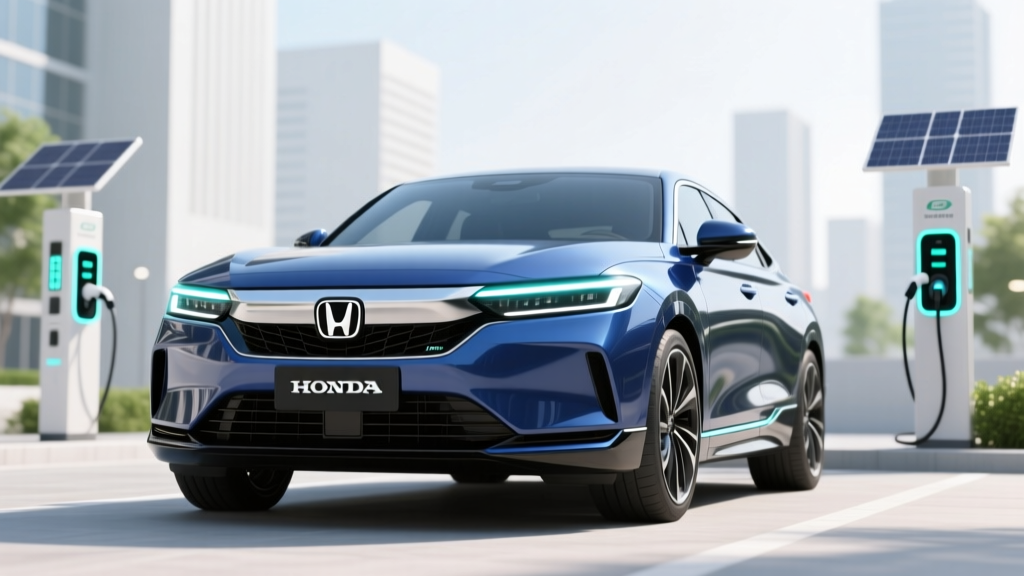
The Honda Prologue arrived as the automaker's first mass-market electric SUV, built on General Motors' Ultium platform through a cross-company partnership. For 2026, the Prologue continues to offer a compelling blend of Honda packaging sensibility with GM's proven EV architecture. But with the EV market now crowded with strong contenders, the question isn't just whether the Prologue is good — it's whether the financing deals and total cost of ownership make it the smartest choice in its segment.
We've driven, charged, and analyzed the Prologue across multiple scenarios to give you the numbers that matter: real-world range, actual charging speeds, true out-of-pocket costs after incentives, and the financing landscape for 2026 buyers.
2026 Honda Prologue: Core Specifications at a Glance
| Spec | FWD (EX/EX-L) | AWD (EX-L/Touring) |
|---|---|---|
| EPA Range | 308 miles | 296 miles |
| Battery Capacity | 85 kWh usable (NMC lithium-ion) | |
| Horsepower | 212 hp | 288 hp |
| Torque | 236 lb-ft | 333 lb-ft |
| 0–60 mph | ~8.2 sec | ~6.2 sec |
| Max DC Fast Charge | 150 kW (peak) | |
| 10–80% DC Charge | ~35 minutes | |
| Level 2 Charge Rate | 11.5 kW (~30 mi/hr) | |
| Efficiency (FWD) | 98 MPGe combined / 34 kWh/100 mi | |
| Cargo (rear seats up) | 25.2 cu ft | |
| Cargo (rear seats folded) | 57.7 cu ft | |
| Rear Legroom | 39.4 inches | |
| Towing Capacity | 1,500 lbs | |
| Starting MSRP | $47,400 (EX FWD) | $50,400 (EX-L AWD) |
Real-World Range: What the EPA Number Doesn't Tell You
EPA sticker (FWD): 308 miles
Real-world highway (70–80 mph): ~255–275 miles
Real-world mixed driving: ~270–290 miles
Cold-weather (below 32°F): ~220–250 miles
AWD range penalty: Subtract ~12 miles across all scenarios
The Prologue's 308-mile EPA rating for the FWD EX is genuinely competitive, but like every EV, real-world results depend heavily on how and where you drive. Highway speeds above 70 mph are the biggest range killer — we observed approximately 260 miles of usable range on a flat, 75-mph interstate loop in moderate temperatures. The Ultium platform's battery thermal management is solid, but the Prologue's boxy SUV profile creates aerodynamic drag that hurts efficiency at speed.
Cold-weather performance is where the NMC chemistry and active thermal management earn their keep. In sub-freezing conditions, expect a 15–25% range reduction depending on cabin heating demand. The Prologue includes a heat pump on Touring trims, which helps preserve range in cold climates — a meaningful advantage for buyers in northern states. EX and EX-L trims rely on resistive heating, which draws more from the 85 kWh pack.
For context, the EPA's fueleconomy.gov listing shows the FWD Prologue at 98 MPGe combined, translating to 34 kWh per 100 miles. That's slightly less efficient than the Hyundai Ioniq 5 (101 MPGe) but in line with the Chevrolet Blazer EV, its platform-mate.
Charging Speed: DC Fast Charging and Home Setup
Charging speed is often the make-or-break factor for EV satisfaction. The Prologue's Ultium architecture supports up to 150 kW peak DC fast charging — adequate but not class-leading in 2026, where competitors like the Ioniq 5 and Kia EV6 push 240–350 kW on 800V architectures.
| Charging Level | Power | Speed | Notes |
|---|---|---|---|
| Level 1 (120V) | ~1.4 kW | ~4 mi/hr | Emergency/trickle only; full charge in 60+ hours |
| Level 2 (240V, 48A) | 11.5 kW | ~30 mi/hr | Full charge in ~9 hours; ideal home setup |
| DC Fast Charge | 150 kW (peak) | 10–80% in ~35 min | Peak rate sustained to ~55% SoC, then tapers |
The 10–80% DC fast-charge time of approximately 35 minutes is the practical number to remember. The Prologue's charge curve peaks near 150 kW at low states of charge but begins tapering noticeably past 55% SoC. Above 80%, charging slows dramatically to protect the NMC cells — this is standard behavior, but it means those last 20% can add another 25–30 minutes if you need a full pack.
At home on a Level 2 charger (240V, 48-amp circuit), the 11.5 kW onboard charger delivers roughly 30 miles of range per hour of charging. A full overnight session from 20% to 100% takes about 9 hours — perfectly suited to a standard overnight routine. Honda includes a dual-level charge cord (Level 1/Level 2 capable) with the Prologue, though dedicated home wall units from ChargePoint or Emporia deliver more consistent performance.
The Prologue uses the CCS1 connector standard. Honda has committed to transitioning to the NACS (Tesla Supercharger) connector for future models, but for 2026, Prologue owners will rely on CCS-compatible networks like Electrify America, EVgo, and ChargePoint — or use a CCS-to-NACS adapter for Tesla Supercharger access where supported.
Pricing, Trims, and Honda Prologue Financing Deals
The 2026 Honda Prologue is available in three trims, and understanding the pricing structure is essential before evaluating financing deals and incentive stacking.
| Trim | Drivetrain | MSRP | Est. Federal Credit | Effective Price* |
|---|---|---|---|---|
| EX | FWD | $47,400 | Up to $7,500 | ~$39,900 |
| EX-L | FWD | $50,400 | Up to $7,500 | ~$42,900 |
| EX-L | AWD | $53,400 | Up to $7,500 | ~$45,900 |
| Touring | AWD | $57,900 | Up to $7,500 | ~$50,400 |
*Effective price assumes full $7,500 federal tax credit eligibility. Actual credit depends on IRS §30D requirements including buyer income, battery sourcing, and MSRP caps. Verify eligibility at IRS.gov or with a tax professional.
Federal Tax Credit Eligibility (§30D)
The Prologue's eligibility for the full $7,500 federal tax credit under IRS §30D depends on several factors that shift periodically:
- MSRP cap: SUVs must be under $80,000 — all Prologue trims qualify.
- Buyer income cap: Modified adjusted gross income must not exceed $150,000 (single), $225,000 (head of household), or $300,000 (joint filing).
- Battery sourcing: Critical minerals and battery components must meet phased-in domestic/free-trade sourcing thresholds. Because the Prologue uses GM's Ultium battery (manufactured in the U.S.), it has historically qualified, but specific model-year sourcing determinations should be confirmed at purchase.
- Point-of-sale transfer: Buyers can elect to transfer the credit to the dealer at purchase, reducing the drive-off price immediately rather than waiting for a tax refund.
Financing Landscape for 2026
Honda Financial Services typically offers competitive APR promotions on the Prologue, and in 2026, well-qualified buyers may find rates between 1.9% and 4.9% for 36–60 month terms depending on market conditions. Key financing considerations:
- Lease deals: Honda has historically offered aggressive lease rates on the Prologue to drive adoption, with money factors that effectively reduce monthly payments below what purchase financing would yield. If the $7,500 credit is passed through as a lease incentive (via the commercial clean vehicle credit loophole available to lessors), even buyers who don't personally qualify for §30D may benefit.
- Manufacturer incentives: Watch for Honda loyalty cash, conquest incentives from competing brands, and dealer cash that can stack with federal credits.
- State and utility rebates: Many states (California, Colorado, New York, Massachusetts) and local utilities offer additional rebates of $1,000–$5,000 that stack on top of federal incentives. Check your state's energy office and utility provider for current programs.
Performance, Ride Quality, and Daily Driving
The Prologue's driving experience reflects its GM underpinnings more than its Honda badge. The FWD model's 212 hp and 236 lb-ft of torque deliver adequate acceleration for commuting and merging, with a 0–60 mph time around 8.2 seconds. The AWD dual-motor variant is considerably more engaging, with 288 hp and 333 lb-ft dropping the sprint to roughly 6.2 seconds — quick enough for confident highway passes and on-ramp merges.
Ride quality is a strength. The Prologue's suspension tuning prioritizes comfort, absorbing road imperfections with a maturity that rivals the Chevrolet Blazer EV (its platform sibling). Steering is light and precise, though not particularly communicative — typical for the segment. The regenerative braking system offers adjustable levels via paddle shifters, enabling one-pedal-like driving in its strongest mode, though it doesn't quite bring the SUV to a complete stop without brake pedal intervention.
NVH (noise, vibration, harshness) levels are well-controlled at city speeds, with wind noise becoming noticeable above 70 mph — a consequence of the blunt front fascia and upright greenhouse. The low center of gravity from the floor-mounted battery pack gives the Prologue a planted feel through corners that belies its SUV ride height.
Interior, Technology, and Driver Assistance
Honda's interior execution is a strong point. The Prologue features an 11.3-inch touchscreen infotainment system running Google Built-in (Google Maps, Google Assistant, and Play Store apps). The digital instrument cluster is 11 inches, and wireless Apple CarPlay/Android Auto are standard across all trims. Touring models add a head-up display, Bose premium audio, and a panoramic moonroof.
Passenger space is generous: 39.4 inches of rear legroom accommodates adults comfortably, and the flat floor (no transmission tunnel) makes the middle rear seat usable. Cargo capacity at 25.2 cu ft behind the rear seats is competitive with the Toyota bZ4X but trails the Ioniq 5's 27.2 cu ft. Folding the 60/40 split rear seats opens up 57.7 cu ft — sufficient for furniture-scale hauling.
The Honda Sensing suite is standard and includes adaptive cruise control, lane-keeping assist, blind-spot monitoring, and automatic emergency braking. This is an SAE Level 2 driver-assistance system — the driver must remain attentive with hands on the wheel at all times. It is not autonomous driving. The system performs competently on highways but doesn't offer the hands-free capability of GM's Super Cruise or Ford's BlueCruise, which is a notable omission given the Prologue's GM platform.
Ownership Costs: Warranty, Insurance, and Long-Term Value
Honda backs the Prologue with a competitive warranty package:
- Battery warranty: 8 years / 100,000 miles (capacity retention threshold: 70% of original capacity)
- Powertrain warranty: 5 years / 60,000 miles
- Bumper-to-bumper: 3 years / 36,000 miles
- Roadside assistance: 3 years / 36,000 miles
The 8-year/100,000-mile battery warranty aligns with federal requirements and industry norms. The 70% capacity retention threshold means Honda guarantees the 85 kWh pack will hold at least 59.5 kWh after eight years — a reasonable benchmark. NMC chemistry in the Ultium platform has shown moderate degradation curves in GM's other Ultium vehicles, typically losing 5–10% capacity over the first 50,000 miles before stabilizing.
Insurance costs for the Prologue run higher than comparable ICE Honda models. Expect premiums 15–25% above a similarly priced Honda CR-V, reflecting EV repair costs and parts pricing. Average annual insurance runs approximately $1,800–$2,400 depending on location, driving record, and coverage levels. Always get a quote before purchase.
Charging costs are where the Prologue delivers its biggest ongoing savings. At the national average residential electricity rate of ~$0.16/kWh, fully charging the 85 kWh battery costs roughly $13.60 — yielding a cost per mile of about $0.044. Compare that to a 28 MPG gasoline SUV at $3.50/gallon ($0.125/mile), and the Prologue saves approximately $1,200–$1,500 annually in fuel costs for a driver covering 15,000 miles per year.
Pros, Cons, and Verdict
- Competitive 308-mile EPA range (FWD)
- Comfortable, spacious cabin with Honda-quality materials
- Google Built-in infotainment is responsive and feature-rich
- Strong federal tax credit eligibility reduces effective price
- GM Ultium platform provides proven, U.S.-built battery tech
- Available AWD with 288 hp for all-weather confidence
- 150 kW peak DC charging trails 800V competitors
- No hands-free driving system (Super Cruise not available)
- Wind noise at highway speeds
- Heat pump limited to Touring trim
- CCS connector requires adapter for Tesla Supercharger access
- Towing limited to 1,500 lbs
Is the Honda Prologue Worth It vs. Key Competitors?
The Prologue competes in the midsize electric SUV segment against strong alternatives. Here's how it stacks up:
- vs. Hyundai Ioniq 5: The Ioniq 5 charges faster (240 kW on 800V), offers a frunk, and starts lower (~$42,000), but the Prologue provides more rear legroom and a more traditional SUV feel.
- vs. Chevrolet Blazer EV: The Blazer EV shares the Ultium platform and offers similar range and charging, but the Prologue's Honda interior quality and brand reputation for reliability give it an edge for conservative buyers.
- vs. Tesla Model Y: The Model Y's Supercharger network access, faster charging, and Autopilot ecosystem remain advantages, but the Prologue counters with a more comfortable ride, physical controls, and Google infotainment that doesn't require Tesla buy-in.
- vs. Toyota bZ4X: The Prologue significantly out-ranges the bZ4X (308 vs. 252 miles EPA) and charges faster, making it the stronger EV choice between the two Japanese contenders.
Look elsewhere if: You prioritize the fastest possible DC charging, need hands-free highway driving, or want Tesla Supercharger network access without an adapter.
Frequently Asked Questions
What is the real-world range of the Honda Prologue?
The FWD Prologue achieves an EPA-estimated 308 miles, but expect approximately 255–275 miles at sustained highway speeds and 220–250 miles in cold weather below freezing. The AWD model's EPA rating is 296 miles with similar real-world adjustments. Mixed city/suburban driving yields the closest results to the EPA sticker, typically 270–290 miles.
How fast does the Prologue charge at home and on the road?
On a Level 2 home charger (240V, 48A), the Prologue charges at 11.5 kW, adding about 30 miles of range per hour — a full charge takes roughly 9 hours. On a DC fast charger, it peaks at 150 kW and charges from 10–80% in approximately 35 minutes. The charge rate tapers above 55% state of charge, so plan for longer stops if you need above 80%.
Does the Honda Prologue qualify for the $7,500 federal EV tax credit?
The Prologue has qualified for the full $7,500 federal tax credit under IRS §30D due to its U.S.-manufactured Ultium battery meeting sourcing requirements. However, eligibility depends on your income (caps of $150K single / $300K joint), and rules can change. The credit can be applied as a point-of-sale reduction at the dealer. Always verify current eligibility at IRS.gov before purchasing.
What financing deals are available for the Honda Prologue?
Honda Financial Services periodically offers promotional APR rates (historically 1.9–4.9% for well-qualified buyers) and lease specials that may pass through the federal tax credit as a lease incentive. Manufacturer loyalty and conquest cash can sometimes stack with federal and state incentives. Check Honda's current offers page and compare with third-party lenders like credit unions for the best total cost.
How does the Prologue compare to the CR-V for total cost of ownership?
The Prologue costs more upfront (even after tax credits) than a CR-V, but saves approximately $1,200–$1,500 per year in fuel costs for a 15,000-mile driver. Over a 5-year ownership period, fuel savings can offset $6,000–$7,500 of the price premium. Factor in reduced maintenance (no oil changes, less brake wear from regen) and the Prologue can reach cost parity with a loaded CR-V Touring within 4–5 years for high-mileage drivers.
Is the Prologue good for road trips?
Yes, with caveats. The 275+ mile real-world highway range means stops every 3.5–4 hours, and the 35-minute 10–80% charge time is reasonable for a meal break. However, the 150 kW peak charging speed means you'll spend more time at chargers than drivers of 800V vehicles like the Ioniq 5. Route planning with apps like A Better Routeplanner is recommended, and CCS network reliability varies by region — rural routes may require more planning than Tesla Supercharger corridors.