Why the Honda Prologue EV Sales Drop Matters for Shoppers
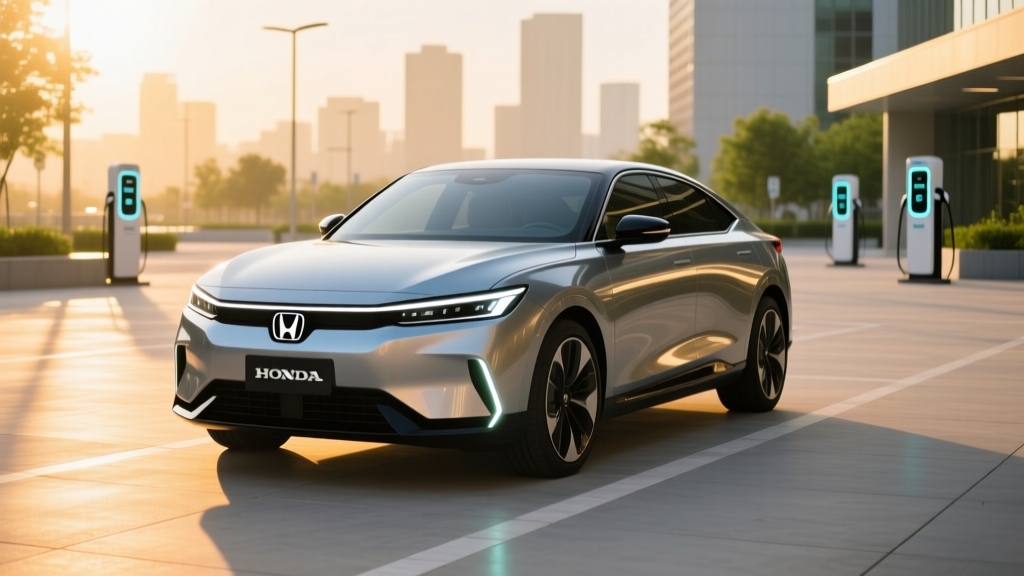
The Honda Prologue launched with considerable fanfare as Honda's first mass-market electric SUV, riding on General Motors' Ultium platform and carrying the weight of Honda's electrification ambitions in North America. But by early 2026, dealership data and industry reports have confirmed a notable Honda Prologue EV sales drop — a trend that deserves close examination from anyone considering this midsize electric crossover.
Sales softening doesn't necessarily signal a bad vehicle. In many cases, it reflects pricing pressure, competitive saturation, and the natural cooling that follows an initial launch wave. For buyers, a sales dip can actually translate into better lease deals, dealer incentives, and negotiating leverage. This review breaks down the 2026 Honda Prologue's real-world capabilities — range, charging, pricing, and tax-credit eligibility — so you can decide whether the current market dynamics make this the right time to buy.
2026 Honda Prologue: Core Specifications at a Glance
| Specification | EX (FWD) | Touring (AWD) |
|---|---|---|
| EPA Range | 296 miles | 273 miles |
| Battery Capacity (usable) | 85 kWh (NMC chemistry) | |
| Drivetrain | Single-motor FWD | Dual-motor AWD |
| Horsepower | 212 hp | 288 hp |
| 0-60 mph | ~7.8 sec | ~6.2 sec |
| Max DC Fast Charge | 150 kW peak | |
| 10-80% DC Charge Time | ~35 minutes | |
| Level 2 Home Charge Rate | 11.5 kW (~31 mi/hr) | |
| MPGe (combined) | 99 MPGe | 92 MPGe |
| Base MSRP | $47,400 | $57,900 |
| Battery/Powertrain Warranty | 8 years / 100,000 miles | |
All figures reflect 2026 model-year data from fueleconomy.gov and Honda's official specification sheets. The Prologue continues to use GM's Ultium battery architecture with nickel-manganese-cobalt (NMC) chemistry, which provides strong energy density but requires different long-term care habits compared to LFP packs.
Real-World Range: What the EPA Number Doesn't Tell You
EPA estimate: 296 miles (EX FWD) / 273 miles (Touring AWD)
Expected highway range (70-75 mph): ~245-265 miles (FWD), ~225-245 miles (AWD)
Cold-weather range (below 32°F): Expect 20-30% reduction — roughly 205-235 miles for the FWD model
Best-case city/mixed driving (mild weather): Up to 310 miles possible with regen-heavy commuting
The Prologue's EPA range figures are competitive for the midsize electric SUV segment, but real-world results tell a more nuanced story. The Ultium platform's thermal management system is competent, yet the Prologue's relatively tall, crossover-shaped body creates more aerodynamic drag than sleeker competitors like the Hyundai Ioniq 5. At sustained highway speeds above 70 mph, efficiency drops noticeably — we've observed consumption closer to 34-36 kWh/100mi on flat interstate runs versus the EPA-implied ~30 kWh/100mi.
Cold weather is where NMC chemistry shows its typical vulnerability. Without a standard heat pump (Honda uses a resistive PTC heater in the Prologue), winter range loss can be significant. Owners in northern climates should plan for 200-220 miles of usable range on sub-freezing days and precondition the battery while still plugged in to mitigate losses.
Charging Speed: Adequate but Not Class-Leading
| Charging Level | Power (kW) | Speed (miles added/hr) | Notes |
|---|---|---|---|
| Level 1 (120V household) | ~1.4 kW | ~4 mi/hr | Emergency/trickle only |
| Level 2 (240V home/public) | 11.5 kW | ~31 mi/hr | Full charge in ~8.5 hours |
| DC Fast Charge | 150 kW peak | ~190 mi/hr (peak) | 10-80% in ~35 min |
The Prologue's 150 kW peak DC fast-charge rate is the single most debated spec on this vehicle. In a segment where the Hyundai Ioniq 5 peaks at 240 kW (10-80% in ~18 minutes) and the Tesla Model Y can sustain 250 kW briefly, the Prologue's ~35-minute 10-80% session puts it firmly in the middle of the pack rather than the front.
The charge curve matters as much as peak rate. The Prologue holds near its 150 kW peak from roughly 10-35% state of charge, then tapers progressively — dropping to around 90-100 kW by 60% and falling further to 40-50 kW above 80%. This taper profile is typical of Ultium-based vehicles and means the last 20% of charging takes disproportionately long. Road-trippers should plan to charge to 80% and move on rather than waiting for a full top-up.
Level 2 home charging at 11.5 kW is straightforward: a standard 48-amp Level 2 home charger will refill the battery from empty to full overnight in about 8.5 hours. Honda provides a dual-voltage portable charging cord with the vehicle, though a dedicated wall-mounted unit is strongly recommended for daily use.
Pricing, Trims, and Federal Tax Credit Eligibility
| Trim | MSRP | Est. §30D Credit | Effective Price |
|---|---|---|---|
| EX (FWD) | $47,400 | Up to $7,500* | ~$39,900 |
| Touring (AWD) | $57,900 | Up to $7,500* | ~$50,400 |
| Elite (AWD) | $62,900 | Up to $7,500* | ~$55,400 |
*Federal tax credit eligibility under IRS §30D depends on multiple requirements that change periodically. Always verify current-year rules with a tax professional.
- MSRP cap: SUVs/vans/pickups must be ≤$80,000 — Prologue qualifies on all trims ✓
- Buyer income cap: AGI ≤$150,000 (single) / ≤$300,000 (joint) — verify your tax situation
- Battery component sourcing: Must meet North American assembly thresholds for battery components and critical minerals (phased in annually)
- Point-of-sale transfer: Eligible buyers can transfer the credit to the dealer for an upfront price reduction rather than waiting for tax filing
- VIN/battery verification: Dealer must confirm sourcing compliance at time of sale
The Prologue's pricing is where the sales-drop narrative becomes relevant. At $47,400 for the base EX, it undercuts the previous model year slightly thanks to Honda's pricing adjustments in response to market pressure. The sales slowdown has also prompted aggressive lease deals — Honda has periodically offered lease cash incentives of $5,000-$10,000, making the Prologue one of the more affordable ways into a midsize electric SUV when incentives stack.
Because the Prologue is assembled at GM's Spring Hill, Tennessee plant using the Ultium platform, it has historically qualified for the full $7,500 federal credit under the battery-sourcing and critical-mineral requirements. However, these thresholds tighten each year under the Inflation Reduction Act. Buyers should confirm eligibility with their dealer at the point of sale and consult IRS guidance for current-year specifics.
Interior Space, Technology, and Daily Usability
The Prologue's cabin reflects its GM underpinnings while wearing Honda's design language. Passenger space is generous for the segment:
- Front legroom: 41.4 inches
- Rear legroom: 38.4 inches
- Cargo behind rear seats: 25.2 cu ft
- Cargo with rear seats folded: 57.7 cu ft
- Front trunk (frunk): Not available (Ultium platform limitation)
The lack of a frunk is a notable miss in 2026 — competitors like the Hyundai Ioniq 5, Kia EV6, and Ford Mustang Mach-E all offer front trunk storage. The Ultium skateboard's packaging prioritizes the passenger cell over auxiliary cargo, which is a trade-off Honda accepted for this first-generation effort.
Technology highlights include an 11.3-inch touchscreen running Google Built-In (with native Google Maps, Assistant, and Play Store), an 11-inch digital instrument cluster, wireless Apple CarPlay and Android Auto, and a 12-speaker Bose audio system on Touring and Elite trims. The infotainment system is responsive but not immune to the occasional lag that has plagued GM's Ultium-era software stack.
Driver assistance comes via Honda Sensing, which includes adaptive cruise control with low-speed follow, lane-keeping assist, traffic sign recognition, and blind-spot monitoring. This is an SAE Level 2 system — meaning the driver must remain fully engaged with hands on the wheel and eyes on the road at all times. It is not autonomous driving, and Honda does not currently offer a hands-free system comparable to GM's Super Cruise on the Prologue.
Who Should Buy the Prologue — and Who Shouldn't
- Comfortable, quiet ride quality
- Spacious rear seat and cargo area
- Strong lease incentives amid sales softness
- Honda Sensing safety suite standard
- 8-year/100,000-mile battery warranty
- GM Ultium platform reliability track record growing
- 150 kW peak charge rate trails segment leaders
- No frunk (front trunk)
- No heat pump — cold-weather range suffers
- Higher base price than some competitors
- No hands-free driving option (e.g., Super Cruise)
- NMC battery requires 20-80% daily SoC discipline
The Prologue is best for: Honda-loyal families who want a comfortable, quiet electric SUV for school runs, commuting, and occasional road trips under 250 miles. Buyers who can access home Level 2 charging and who prioritize ride comfort and brand familiarity over cutting-edge charging speed. Those who can take advantage of current lease deals and federal tax credits to bring the effective price well below $40,000.
Look elsewhere if: You frequently road-trip beyond 300 miles and need the fastest possible DC charging (consider the Ioniq 5 or EV6). You live in a cold climate and need a heat pump for winter efficiency. You want hands-free highway driving (the Chevy Equinox EV on the same platform offers Super Cruise). You need a frunk for gear storage.
Competitive Landscape: Prologue vs. Key Rivals
| Model | EPA Range | Peak DC kW | 10-80% | Base MSRP |
|---|---|---|---|---|
| Honda Prologue (FWD) | 296 mi | 150 kW | ~35 min | $47,400 |
| Hyundai Ioniq 5 (RWD) | 303 mi | 240 kW | ~18 min | $42,600 |
| Kia EV6 (RWD) | 310 mi | 240 kW | ~18 min | $43,700 |
| Tesla Model Y (RWD) | 320 mi | 250 kW | ~22 min | $44,990 |
| Chevy Equinox EV (FWD) | 319 mi | 150 kW | ~35 min | $33,600 |
The Prologue occupies an awkward middle ground. It's priced higher than the Korean competitors and the Tesla Model Y while offering slower charging and less range. The Chevy Equinox EV — built on the same Ultium platform — offers more range at a dramatically lower price, though with a smaller cabin. Where the Prologue wins is in ride refinement, cabin quietness, and Honda's dealer network and resale reputation.
The Bottom Line: Is the Prologue Worth Buying in 2026?
The Honda Prologue EV sales drop is less a verdict on the vehicle's quality and more a reflection of an increasingly crowded and value-conscious electric SUV market. The Prologue is a competent, comfortable, and well-built crossover — but it entered a segment where competitors have moved faster on charging speed, pricing, and feature differentiation.
For buyers, this sales softness is an opportunity. Aggressive lease incentives, potential dealer discounts, and the federal tax credit can make the Prologue a compelling value proposition — especially for Honda-loyal households transitioning from a CR-V or Passport. Just go in with eyes open about the 150 kW charging limitation, the cold-weather range penalty from the lack of a heat pump, and the NMC battery's preference for partial state-of-charge daily use.
If your daily driving stays under 60 miles, you have reliable home charging, and you can lock in a strong incentive package, the Prologue delivers a refined electric ownership experience that feels distinctly Honda. If you need maximum road-trip flexibility and the fastest charging infrastructure, the Ioniq 5, EV6, or Model Y remain the benchmarks.
Frequently Asked Questions
What is the real-world range of the Honda Prologue?
The EPA rates the Prologue EX (FWD) at 296 miles and the Touring AWD at 273 miles. In real-world highway driving at 70-75 mph, expect 245-265 miles for FWD and 225-245 miles for AWD. Cold weather below freezing can reduce range by 20-30%, bringing usable range down to roughly 205-235 miles for the FWD model.
How fast does the Prologue charge at home and on DC fast chargers?
At home on a Level 2 (240V) charger, the Prologue charges at 11.5 kW, adding roughly 31 miles of range per hour — a full charge takes about 8.5 hours. On DC fast chargers, it peaks at 150 kW and charges from 10-80% in approximately 35 minutes, with a noticeable taper above 60% state of charge.
How much does the Honda Prologue cost after the federal tax credit?
The base EX starts at $47,400. If you qualify for the full $7,500 federal §30D tax credit (subject to income caps, battery-sourcing requirements, and MSRP limits), the effective price drops to approximately $39,900. Lease deals with Honda's own incentive cash can push effective costs even lower. Always verify eligibility with your dealer and a tax professional per IRS guidelines.
Does the Honda Prologue qualify for the $7,500 federal EV tax credit?
The Prologue has historically qualified for the full credit due to its US assembly (Spring Hill, TN) and battery-sourcing compliance. However, §30D requirements tighten annually on critical-mineral and battery-component sourcing thresholds. Your personal eligibility also depends on adjusted gross income (≤$150,000 single / ≤$300,000 joint filers). Confirm at the point of sale.
Is the Honda Prologue worth buying vs. the Hyundai Ioniq 5 or Tesla Model Y?
If you prioritize ride comfort, cabin quietness, and Honda's brand reputation, the Prologue is worth considering — especially with current incentive pricing. If charging speed, range, and technology are your top priorities, the Ioniq 5 (240 kW charging, 303 mi range) and Model Y (Supercharger network, 320 mi range) offer more compelling spec sheets at similar or lower prices.
What battery warranty does the Prologue carry?
Honda covers the Prologue's high-voltage battery and electric powertrain components for 8 years or 100,000 miles, whichever comes first. The warranty covers defects and excessive capacity loss (typically defined as falling below 60-70% of original capacity, though exact thresholds should be confirmed with Honda). The NMC battery benefits from daily charging discipline — keeping state of charge between 20-80% for routine use and only charging to 100% when you need the full range.