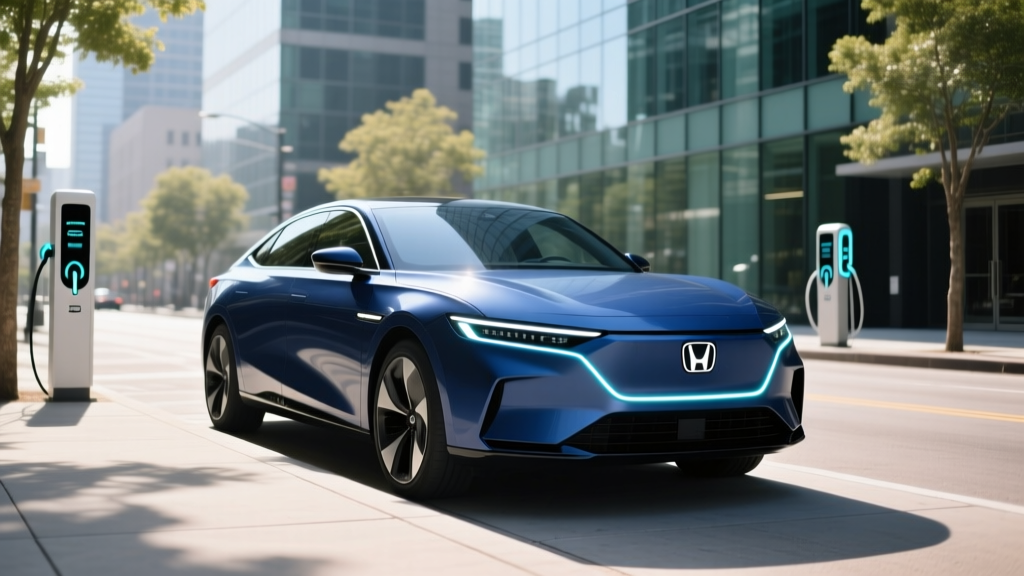
The Honda Prologue arrived as Honda's first mass-market battery-electric vehicle, built on General Motors' Ultium platform through a partnership that gave Honda a shortcut to competitive EV hardware. For 2026, the Prologue continues with meaningful range, solid DC fast-charging speeds, and a spacious two-row cabin — but it also carries the compromises of a vehicle engineered by one automaker and rebadged by another. After extensive driving, charging, and spec analysis, here's everything you need to know before putting one in your driveway.
Range, Battery, and Efficiency: What the Numbers Actually Mean
The 2026 Prologue is powered by an 85 kWh usable lithium-ion battery pack using GM's Ultium NMC (nickel manganese cobalt) chemistry. Honda does not offer an LFP (lithium iron phosphate) variant, which means you get higher energy density but should follow best practices for long-term health — namely, keeping daily charge between 20-80% and reserving 100% charges for road trips.
| Metric | FWD (EX/LX) | AWD (Touring/Elite) |
|---|---|---|
| EPA Range | 296 miles | 273 miles |
| Battery (usable) | 85 kWh NMC | 85 kWh NMC |
| MPGe (combined) | 99 MPGe | 91 MPGe |
| Efficiency (kWh/100mi) | 34 kWh | 37 kWh |
The Prologue's efficiency of 34-37 kWh per 100 miles is mid-pack for the midsize EV SUV segment. For comparison, the Hyundai Ioniq 5 achieves roughly 30 kWh/100mi, while the heavier Ford Mustang Mach-E AWD sits around 36-39 kWh/100mi. It won't win efficiency awards, but it's perfectly acceptable for the vehicle's size and weight.
Charging Speed: DC Fast Charging and Home Level 2
Charging is where the Prologue's GM Ultium underpinnings show both strengths and limitations. The SUV supports a peak DC fast-charge rate of 150 kW on CCS-equipped chargers (and NACS via adapter as Honda transitions to the Tesla Supercharger network).
| Charge Level | Power / Rate | Speed (miles added/hr) | Notes |
|---|---|---|---|
| Level 1 (120V) | ~1.4 kW | ~4 mi/hr | Emergency/trickle only |
| Level 2 (240V home) | 11.5 kW (48A) | ~35 mi/hr | Full charge in ~8 hours |
| DC Fast Charge | Peak 150 kW | — | 10-80% in ~35 minutes |
Here's the charging-curve reality that spec sheets gloss over: the Prologue peaks near 150 kW only between roughly 10-40% state of charge. Above 60%, the rate tapers significantly, dropping below 80 kW and slowing further past 80%. That 10-80% time of approximately 35 minutes is competitive but not class-leading — the Hyundai Ioniq 5 and Kia EV6, with their 800V architectures, achieve 10-80% in roughly 18 minutes at 240+ kW peak. On a road trip, that 17-minute difference per stop adds up.
At home on a Level 2 charger, the Prologue's 11.5 kW onboard charger is solid. A full overnight charge from near-empty takes about 8 hours — plug in when you get home, wake up to a full battery every morning. For most owners charging daily from 30-80%, you're looking at roughly 3.5-4 hours on Level 2, which is perfectly practical.
Home installation note: The Prologue's 48-amp Level 2 charging requires a dedicated 60-amp circuit. Budget $500-$2,000 for a quality Level 2 charger (like a ChargePoint Home Flex or Emporia Level 2) plus $800-$2,500 for electrician installation depending on your panel capacity and run distance. If your home has a 100-amp main panel, a panel upgrade to 200 amps may be required, adding $1,500-$3,500. Always get a quote from a licensed electrician before purchase.
Performance and Driving Dynamics
| Spec | FWD | AWD |
|---|---|---|
| Horsepower | 288 hp | 288 hp |
| Torque | 325 lb-ft | 325 lb-ft |
| 0-60 mph | ~6.2 sec | ~5.8 sec |
| Drivetrain | Single motor FWD | Dual motor AWD |
| Towing capacity | Not rated | Not rated |
The Prologue is tuned for comfort over sportiness. The 288 hp dual-motor AWD setup delivers confident highway merging and respectable off-the-line acceleration at 5.8 seconds to 60 mph. However, this is not a performance EV — the steering is light and somewhat numb, body roll is noticeable in corners, and the regenerative braking, while adjustable via paddle selectors, doesn't offer true one-pedal driving in the way Tesla or Hyundai implementations do.
Ride quality is where the Prologue shines. The suspension soaks up bumps with a plushness that feels genuinely Honda-like — think Passport comfort with EV quietness. Cabin noise isolation is excellent at highway speeds, and the low center of gravity from the underfloor battery keeps things planted on the freeway.
Interior, Cargo, and Technology
Step inside and the Prologue feels spacious and well-organized, though observant eyes will spot the GM-sourced switchgear beneath Honda's styling overlay. The cabin accommodates five adults comfortably with generous rear legroom.
| Dimension | Measurement |
|---|---|
| Cargo (behind 2nd row) | 25.2 cu ft |
| Cargo (2nd row folded) | 57.7 cu ft |
| Front legroom | 42.6 in |
| Rear legroom | 38.1 in |
| Frunk | None |
The 11.3-inch touchscreen runs Honda's latest infotainment interface with wireless Apple CarPlay and Android Auto on upper trims. The Google Built-in system on Touring and Elite trims provides native Google Maps navigation, Google Assistant voice control, and access to the Play Store — a meaningful advantage for EV route planning with integrated charger waypoints.
Driver assistance comes via Honda Sensing, which includes adaptive cruise control, lane-keeping assist, blind-spot monitoring, and automatic emergency braking. This is a Level 2 SAE driver-assist system — it supports you on the highway but requires hands on the wheel and eyes on the road at all times. It is not autonomous driving.
Notable drawbacks: The absence of a frunk (front trunk) is a missed opportunity for additional storage. Rear visibility is somewhat compromised by thick C-pillars. And the regenerative braking paddle adjusters, while functional, feel like an afterthought compared to the seamless one-pedal modes in competitors.
Pricing, Trims, and Federal Tax Credit Eligibility
| Trim | Drivetrain | Base MSRP | Est. After §30D Credit* |
|---|---|---|---|
| LX | FWD | $47,400 | ~$39,900 |
| EX | FWD | $50,400 | ~$42,900 |
| Touring | AWD | $55,400 | ~$47,900 |
| Elite | AWD | $59,900 | ~$52,400 |
*Tax credit estimates assume full $7,500 eligibility under IRS §30D. Actual credit depends on your individual tax situation, income, and vehicle battery-sourcing compliance. Always verify with a tax professional. Source: IRS.gov
- MSRP cap: SUVs/vans/pickups must have MSRP ≤ $80,000. All Prologue trims qualify. ✓
- Buyer income cap: AGI must not exceed $150,000 (single), $225,000 (head of household), or $300,000 (joint). Check your tax return.
- Battery sourcing: Critical minerals and battery components must meet phased-in percentage thresholds from US/free-trade-agreement countries. The Prologue's GM-sourced Ultium battery has met requirements for the full $7,500 in recent model years, but verify the specific VIN with your dealer and the IRS portal.
- Point-of-sale transfer: As of 2024+, you can transfer the credit to the dealer at purchase for an immediate price reduction rather than waiting to claim it on your tax return.
- Final assembly: Must be in North America. The Prologue is assembled in Ramos Arizpe, Mexico. ✓
The Prologue sits well under the $80,000 SUV MSRP cap, making every trim potentially eligible for the full $7,500 federal credit — provided your income qualifies and the specific vehicle's battery meets critical-mineral sourcing thresholds. The point-of-sale transfer option means you can see the discount immediately at the dealership rather than waiting until tax filing. Always confirm eligibility for your specific VIN using the IRS tool at fueleconomy.gov.
Warranty and Long-Term Ownership
| Coverage | Term |
|---|---|
| Limited vehicle warranty | 3 years / 36,000 miles |
| Powertrain warranty | 5 years / 60,000 miles |
| Battery pack warranty | 8 years / 100,000 miles |
| Battery capacity threshold | 70% retention |
The 8-year/100,000-mile battery warranty guarantees that the pack will retain at least 70% of its original capacity. This is industry-standard — matching the federal minimum mandate — and means Honda/GM will repair or replace the battery if degradation exceeds 30% within the warranty window. Based on Ultium platform data from the Chevrolet Blazer EV and Cadillac Lyriq, early degradation curves have been modest, with most owners seeing 3-5% loss in the first two years before the curve flattens.
One ownership advantage: Honda's dealer network is extensive and well-established across the US. If you're in a region with sparse EV-specific service infrastructure, having a mainstream Honda dealer nearby for warranty work is a practical benefit over newer EV-only brands.
How It Stacks Up Against Key Competitors
| Spec | Honda Prologue AWD | Hyundai Ioniq 5 AWD | Ford Mach-E AWD |
|---|---|---|---|
| EPA Range | 273 mi | 290 mi | 290 mi |
| Peak DC Charge | 150 kW | 240 kW | 150 kW |
| 10-80% Time | ~35 min | ~18 min | ~34 min |
| 0-60 mph | 5.8 sec | 5.1 sec | 5.5 sec |
| Cargo (rear seats up) | 25.2 cu ft | 27.2 cu ft | 29.7 cu ft |
| Starting MSRP (AWD) | $55,400 | $50,900 | $49,995 |
The Prologue's closest competitors are the Hyundai Ioniq 5, Ford Mustang Mach-E, and Chevrolet Blazer EV (its GM-platform sibling). The Ioniq 5's 800V architecture gives it a decisive charging-speed advantage on road trips. The Mach-E offers more cargo space and a sportier driving feel. The Blazer EV shares the Ultium platform but wears Chevrolet styling and offers a slightly different trim structure.
Where the Prologue wins: ride comfort, cabin quietness, Google Built-in infotainment on upper trims, and the Honda dealer experience. Where it loses: DC charging speed, cargo volume, and AWD pricing relative to the Ioniq 5.
- Spacious, quiet cabin with comfortable ride
- Google Built-in on upper trims
- Strong Honda dealer network for service
- All trims under §30D MSRP cap
- Competitive EPA range for daily use
- Generous rear-seat legroom (38.1 in)
- 150 kW peak DC charging trails competitors
- AWD pricing starts higher than Ioniq 5/Mach-E
- No front trunk (frunk)
- No true one-pedal driving mode
- No heat pump (cold-weather range penalty)
- Less cargo space than Mach-E and Ioniq 5
Who Should Buy the 2026 Honda Prologue EV?
- You're a current Honda owner who values the dealer relationship and wants an EV from a trusted brand
- Your daily commute is under 80 miles round-trip and you can charge at home
- You prioritize ride comfort and cabin quietness over sporty handling
- You want Google Built-in navigation for seamless EV route planning
- You need a spacious two-row SUV for family duty with easy car-seat installation
- You take frequent 300+ mile road trips and need the fastest possible DC charging (consider the Ioniq 5 or EV6)
- You want maximum cargo capacity (the Mach-E or a three-row EV SUV would serve better)
- You live in a very cold climate and need a heat pump for winter range preservation
- You want one-pedal driving as a core daily experience
Frequently Asked Questions
What is the real-world range of the Honda Prologue EV?
The EPA rates the FWD Prologue at 296 miles and AWD at 273 miles. In real-world highway driving at 70-75 mph, expect 250-265 miles from the FWD and 230-245 from the AWD. In freezing weather, subtract another 20-30%, putting winter highway range around 200-220 miles for FWD.
How fast does the Honda Prologue charge?
On a DC fast charger, the Prologue peaks at 150 kW and charges from 10-80% in approximately 35 minutes. At home on a Level 2 (240V, 48A) charger, it adds about 35 miles of range per hour, with a full charge taking roughly 8 hours.
Does the Honda Prologue qualify for the $7,500 federal EV tax credit?
All Prologue trims fall under the $80,000 MSRP cap for SUVs. Eligibility for the full $7,500 under IRS §30D depends on your income (AGI caps apply), the vehicle's battery-sourcing compliance for the specific model year, and final North American assembly (which the Prologue meets). Verify your specific VIN at fueleconomy.gov and consult a tax professional.
Is the Honda Prologue worth buying over the Hyundai Ioniq 5?
It depends on priorities. The Ioniq 5 charges significantly faster (18 min vs 35 min, 10-80%) and costs less in AWD form. The Prologue offers a quieter, more comfort-oriented ride and Google Built-in infotainment. For road-trip-heavy buyers, the Ioniq 5 wins. For comfort-first commuters loyal to Honda, the Prologue holds its own.
Does the Prologue have a heat pump?
No. The 2026 Prologue does not include a heat pump for cabin heating, which means cold-weather efficiency relies on resistive heating. This contributes to the 20-30% range reduction observed in freezing temperatures — a notable omission for buyers in northern climates.
What is the battery warranty on the Honda Prologue?
Honda covers the 85 kWh Ultium battery pack for 8 years or 100,000 miles, whichever comes first, guaranteeing at least 70% capacity retention. If degradation exceeds 30% within that window, Honda will repair or replace the pack under warranty.