The Short Answer: Is a Honda EV Worth It in 2026?
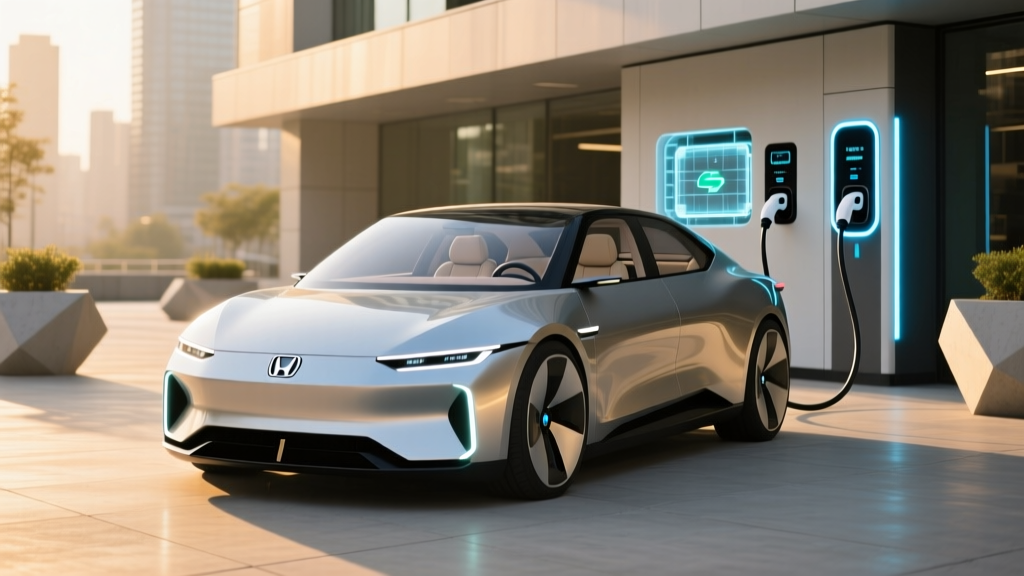
Honda's only current all-electric vehicle is the Prologue SUV, a midsize two-row crossover built on GM's Ultium platform. The 2026 Prologue starts at $48,795 (EX trim, FWD), offers an EPA-estimated 296 miles of range (FWD), and qualifies for up to $7,500 in federal tax credits via point-of-sale transfer — bringing the effective price to roughly $41,295 before state incentives. It charges at up to 150 kW DC (10–80% in ~30 minutes) and delivers 288 hp / 333 lb-ft in dual-motor AWD trims. Compared to a gas Honda CR-V, the Prologue costs more upfront but saves $1,200–$1,800 per year on fuel for a typical driver, with near-zero drivetrain maintenance. If you have home Level 2 charging access and drive under 300 miles daily, it's a strong Honda-family EV. If you need three rows, frequent remote road trips, or lack reliable charging, Honda's hybrid lineup (CR-V Hybrid, Accord Hybrid) remains the pragmatic choice.
2026 Honda Prologue: Complete Specs at a Glance
The Prologue is Honda's sole battery-electric offering for the 2026 model year. Honda and Acura's next-generation in-house EVs (built on a new dedicated Honda platform) are announced for 2027 and beyond but are not yet available. Here's what you can actually buy today:
| Specification | EX FWD | Touring AWD | Elite AWD |
|---|---|---|---|
| Base MSRP | $48,795 | $53,095 | $59,295 |
| EPA Range | 296 mi | 281 mi | 273 mi |
| Battery (usable) | 85 kWh, NMC lithium-ion (Ultium) | ||
| Motor / Drivetrain | Single motor FWD | Dual motor AWD | |
| Horsepower | 212 hp | 288 hp | |
| Torque | 236 lb-ft | 333 lb-ft | |
| 0–60 mph | ~7.8 sec | ~6.2 sec | |
| Max DC Fast Charge | 150 kW (CCS1 connector) | ||
| 10–80% DCFC Time | ~30 min | ||
| Level 2 Charge Rate | 11.5 kW (est. 7–8 hr full charge) | ||
| MPGe (combined) | 107 MPGe | 100 MPGe | 96 MPGe |
| Cargo Volume | 25.2 cu ft (rear up) / 57.7 cu ft (folded) | ||
| Battery Warranty | 8 yr / 100,000 mi (≥60% capacity retention) | ||
| Vehicle Warranty | 3 yr / 36,000 mi bumper-to-bumper; 5 yr / 60,000 mi powertrain | ||
Real-World Range vs. EPA Sticker
The EPA 296-mile figure (FWD) assumes mixed driving at moderate temperatures. In real-world conditions, expect:
- Highway cruising (70–75 mph): ~230–250 miles before needing a charge
- Cold weather (below 32°F): ~200–220 miles (NMC batteries lose 15–25% in freezing temps)
- City / suburban mixed: ~270–290 miles — closest to the EPA sticker
Plan road trips around 200–220 miles of usable range to maintain a comfort buffer. The Prologue does not include a front trunk (frunk), and there is no heat pump on 2026 models — Honda uses a resistive PTC heater, which draws more energy in winter than a heat pump system would.
EV vs Gas: Prologue Compared to the CR-V
Most Honda shoppers cross-shop the Prologue against the CR-V, Honda's best-selling compact SUV. Here's how the numbers stack up for a driver covering 12,000 miles per year:
| Metric | 2026 Honda Prologue EX | 2026 Honda CR-V EX (Gas AWD) |
|---|---|---|
| MSRP | $48,795 | $36,695 |
| Fed. Tax Credit (est.) | Up to $7,500 (§30D) | None |
| Effective Price | ~$41,295 | $36,695 |
| EPA Combined Efficiency | 107 MPGe | 29 MPG |
| Annual Fuel/Energy Cost | ~$540 (electricity*) | ~$1,740 (gasoline**) |
| Annual Maintenance | ~$100–$200 | ~$400–$600 |
| 5-Year Fuel + Maint. Total | ~$3,200–$4,500 | ~$10,700–$14,700 |
| Estimated Insurance (annual) | ~$1,800–$2,200 | ~$1,400–$1,700 |
*Based on $0.15/kWh national average residential rate. Actual cost varies widely by utility and state. **Based on $3.40/gal regular unleaded. Source: fueleconomy.gov
The Prologue's higher MSRP is partly offset by the federal tax credit and dramatically lower running costs. Over five years, the Prologue saves roughly $6,000–$10,000 in fuel and maintenance compared to the gas CR-V. However, insurance premiums run 15–30% higher for EVs, and the Prologue's higher purchase price means higher financing costs if you don't pay cash.
The Real Cost of Owning a Honda Prologue
Let's break down five-year total cost of ownership (TCO) for the Prologue EX FWD vs. the CR-V EX AWD, assuming 12,000 miles/year, $0.15/kWh home charging, and $3.40/gal gas:
| Cost Category (5 Years) | Prologue EX FWD | CR-V EX AWD |
|---|---|---|
| Purchase Price (after credit) | $41,295 | $36,695 |
| Sales Tax (est. 7%) | $2,891 | $2,569 |
| Fuel / Electricity | $2,700 | $8,700 |
| Maintenance | $750 | $2,500 |
| Insurance | $10,000 | $7,750 |
| Depreciation (est.) | $18,500 | $14,000 |
| 5-Year TCO | ~$76,136 | ~$72,214 |
| Cost Per Mile | $1.27 | $1.20 |
The five-year TCO is close, with the Prologue slightly more expensive primarily due to steeper projected depreciation and higher insurance. The calculus shifts in the Prologue's favor if:
- You keep the vehicle beyond 5 years (cumulative fuel savings widen)
- Your electricity rate is below $0.12/kWh (common with time-of-use plans)
- Your state offers additional rebates (e.g., California's CVRP, Colorado's $5,000 credit)
- Gas prices rise above $4.00/gal in your area
Home Charging Setup Costs
The Prologue's 11.5 kW onboard charger requires a 48-amp Level 2 circuit (hardwired, 60-amp breaker) to charge at full speed. Budget for:
- Level 2 charger (hardware): $400–$700 (e.g., ChargePoint Home Flex, Emporia Vue)
- Electrician installation: $500–$2,000 depending on panel proximity
- Panel upgrade (if needed): $1,500–$3,500 for a 200-amp service upgrade
Total home charging setup: $900–$2,700 for most homes with adequate panel capacity. Homes needing a full panel upgrade can spend $3,500–$5,500 all-in. Honda includes a portable Level 1/2 charging cord with the Prologue that can plug into a standard 120V outlet (adding ~3–4 miles of range per hour) or a 240V NEMA 14-50 outlet for faster Level 2 charging at ~7.7 kW.
Federal Tax Credit: What Honda EV Buyers Must Know
The Prologue currently qualifies for the IRS §30D Clean Vehicle Credit of up to $7,500, but eligibility is not automatic. You must meet all of the following criteria:
§30D Eligibility Checklist for the 2026 Honda Prologue
- Vehicle MSRP cap: SUVs must be ≤$80,000 — all Prologue trims qualify ✓
- Buyer income cap (MAGI): ≤$150,000 single / ≤$225,000 head of household / ≤$300,000 joint
- Battery sourcing: Must meet critical-minerals and battery-component requirements set by the IRS for the applicable tax year — Honda sources Ultium batteries from the LG–GM Ultium Cells JV in the US, which currently satisfies these requirements ✓
- Point-of-sale transfer: You can apply the credit at the dealership as an immediate price reduction (dealer must be IRS-registered) or claim it on your tax return via Form 8936
- New vehicle only: Must be purchased new, not leased (leased vehicles fall under §45W commercial credit, which is a separate path)
Lease loophole note: If you lease a Prologue through Honda Financial Services, the lessor claims the §45W commercial credit and may pass savings to you as a lower monthly payment or capitalized-cost reduction. Confirm with your dealer whether the lease incentive reflects the $7,500 credit.
Tax credit rules are subject to legislative change. Always verify current eligibility on irs.gov or consult a tax professional before purchasing.
Charging the Prologue: What to Expect
The Prologue uses a CCS1 connector for DC fast charging and a J1772 inlet for Level 2 AC. It does not have a native NACS (Tesla) port, but Honda has confirmed future models will adopt NACS. For now, you'll need a CCS-to-NACS adapter to access Tesla Superchargers that support non-Tesla vehicles.
| Charging Level | Power (kW) | Miles Added Per Hour | Use Case |
|---|---|---|---|
| Level 1 (120V outlet) | ~1.4 kW | ~3–4 mi/hr | Emergency / overnight trickle |
| Level 2 (240V, 48A) | 11.5 kW | ~32–36 mi/hr | Home / workplace daily charging |
| DC Fast Charge | Up to 150 kW peak | ~150 mi in 10 min | Road trips; 10–80% in ~30 min |
Charging Curve Reality
The Prologue's 150 kW peak rate is not sustained across the full session. Like all EVs, charging speed tapers as the battery fills:
- 10–40% SoC: Near peak rate (~140–150 kW)
- 40–80% SoC: Gradually tapers to ~80–100 kW
- 80–100% SoC: Drops sharply below 40 kW — avoid DCFC past 80% on road trips
For daily driving, Level 2 home charging is ideal: plug in overnight, wake up to a full battery every morning. The Prologue's 85 kWh battery takes roughly 7–8 hours on a full-power Level 2 charger, fitting comfortably within an overnight window.
Myths vs. Facts: Common Honda EV Misconceptions
| Myth | Fact |
|---|---|
| "Honda doesn't make real EVs" | The Prologue is a fully electric SUV with 273–296 mi of EPA range, built on GM's proven Ultium platform alongside the Chevy Blazer EV and Cadillac Lyriq. |
| "EV batteries need replacing every few years" | Honda warrants the Prologue's battery for 8 years / 100,000 miles against dropping below 60% capacity. Industry data from Recurrent Auto shows most modern NMC packs retain 90%+ capacity at 100,000 miles. |
| "The Prologue can't handle winter" | AWD trims deliver 288 hp with torque-vectoring dual motors. Expect 15–25% range loss in freezing temps — real but manageable for most commutes. Preconditioning while plugged in recovers some efficiency. |
| "I'll save $10,000 a year on fuel" | Average annual savings are $1,000–$1,800 depending on local electricity and gas prices. The savings are real but not astronomical unless you drive high annual miles or pay premium gas prices. |
| "Public charging is unreliable everywhere" | Reliability varies by network. Electrify America and Tesla Superchargers average 90%+ uptime. Use PlugShare to check stations along your routes before trips. |
Decision Framework: Should You Buy the Honda Prologue?
Buy the Prologue If…
- You have home Level 2 charging (garage or driveway with 240V access)
- Your daily commute is under 100 miles round-trip
- You value Honda's brand, dealer network, and resale reputation
- You qualify for the $7,500 federal credit (income under caps)
- You want a quiet, smooth, two-row SUV for suburban and city driving
Choose a Honda Hybrid Instead If…
- You live in an apartment or lack reliable home charging access
- You regularly drive 400+ miles between stops (road-trip heavy lifestyle)
- You need three rows — the Prologue seats only five; the Pilot Hybrid seats seven
- Your budget is firmly under $40,000 — the CR-V Hybrid starts at ~$36,000 with 40 MPG combined
- You live in an extreme cold-weather climate and cannot charge at home
Wait for Honda's Next-Gen EVs If…
- You want a Honda-designed EV on Honda's own platform (announced for 2027+)
- You need NACS native charging for seamless Tesla Supercharger access
- You're hoping for a smaller, more affordable Honda EV (Civic-class or compact SUV)
First-Time EV Buyer Checklist
If the Prologue is your first EV, here's what to prepare before delivery day:
- Get a home charging assessment. Have a licensed electrician evaluate your panel capacity. A 200-amp panel with spare breaker slots can usually support a 48A Level 2 charger without upgrade.
- Check your utility's EV rate plan. Many utilities offer time-of-use (TOU) rates with off-peak electricity as low as $0.06–$0.08/kWh overnight — cutting your fuel cost in half vs. the national average.
- Download charging apps. Install PlugShare, Electrify America, and EVgo before your first road trip. Filter for CCS-compatible stations.
- Learn preconditioning. Set departure times in the Prologue's infotainment to warm the battery and cabin while plugged in — this preserves range in cold weather.
- Plan for insurance. Get quotes before purchasing. EV insurance premiums run higher due to repair costs. Shop at least three carriers; some (like Progressive and State Farm) have specific EV discounts.
- Verify tax credit eligibility. Confirm your MAGI is under the IRS caps and that the dealer is registered for point-of-sale credit transfer at irs.gov.
Frequently Asked Questions
Is the Honda Prologue just a rebadged Chevy Blazer EV?
They share GM's Ultium platform, battery pack, and powertrain components, but Honda designed its own exterior, interior, suspension tuning, and infotainment software. The driving experience and cabin materials differ meaningfully. Think of them as siblings, not clones — similar to how the Toyota GR86 and Subaru BRZ share a platform but feel distinct.
Can I use Tesla Superchargers with the Prologue?
Not natively. The Prologue has a CCS1 port, while Tesla Superchargers use NACS. Tesla has opened some Supercharger locations to non-Tesla EVs via a built-in CCS adapter at the stall, and third-party CCS-to-NACS adapters (like the Lectron or A2Z EV adapters) are available for ~$200–$350. Honda's next-generation EVs will include a native NACS port.
How long will the Prologue's battery last?
Honda warranties the battery for 8 years / 100,000 miles against dropping below 60% of original capacity. Based on degradation data from similar Ultium-based vehicles and broader NMC industry data, expect the pack to retain 85–92% of capacity at 100,000 miles under normal use. Battery replacement (if ever needed out of warranty) currently costs $12,000–$18,000 at a dealer, though prices are projected to decline as battery costs fall.
Does the Prologue qualify for the full $7,500 tax credit?
As of early 2026, the Prologue meets the §30D battery-component and critical-minerals sourcing requirements and falls under the $80,000 SUV MSRP cap. However, your personal eligibility depends on your modified adjusted gross income (MAGI). If your MAGI exceeds $150K (single) or $300K (joint), you won't qualify. Always verify on irs.gov and with your tax advisor.
What's the best Prologue trim for value?
The EX FWD at $48,795 delivers the longest range (296 mi EPA) and the lowest price, making it the best value play — especially after the $7,500 credit. The Touring AWD ($53,095) adds dual motors, all-wheel drive, and more features for buyers in snow-belt states. The Elite is well-equipped but pushes $60K, where it competes with larger, more premium EVs.
Will Honda release more EVs soon?
Yes. Honda has announced a series of next-generation EVs on its own dedicated platform, expected starting in 2027. These will include a compact SUV and likely a sedan, with native NACS charging and Honda-designed software. Until then, the Prologue remains Honda's only all-electric model. Honda's current hybrid lineup (CR-V Hybrid, Accord Hybrid, Civic Hybrid) fills the gap for buyers not ready to go fully electric.