Honda Prologue at a Glance: 2026 Specs That Shape Your Wallet
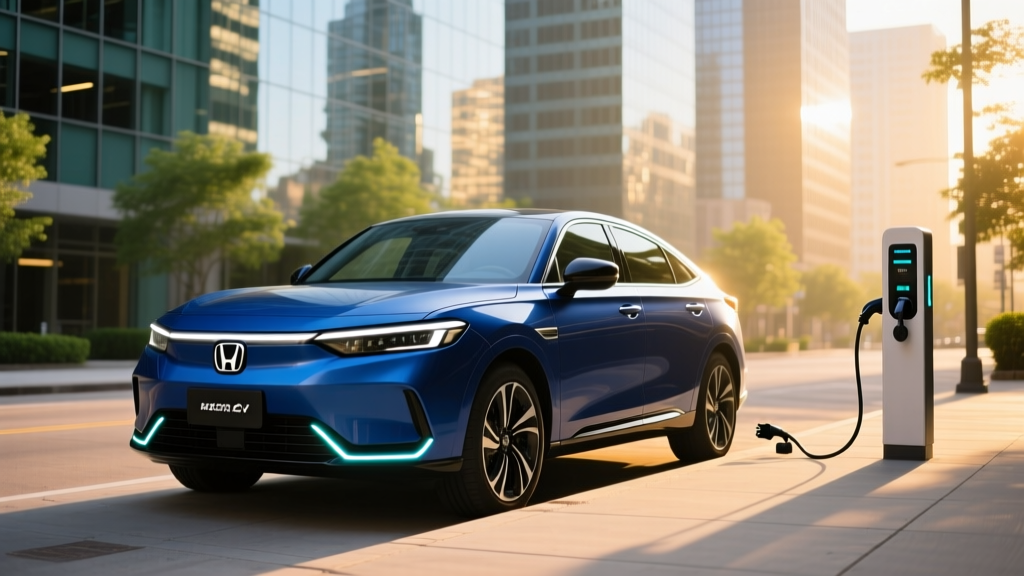
The 2026 Honda Prologue continues on General Motors' Ultium platform, sharing its bones with the Chevrolet Blazer EV and Cadillac Lyriq. Before we dissect incentives and ownership costs, here are the hard numbers that drive every financial calculation in this guide.
| Spec | FWD (EX/EX-L) | AWD (Touring/Elite) |
|---|---|---|
| EPA Range | 296 miles | 273–285 miles |
| Battery (usable) | 85 kWh, NMC lithium-ion | 85 kWh, NMC lithium-ion |
| Peak DC Fast Charge | 150 kW | 150 kW |
| 10–80% DC Charge Time | ~32 minutes | ~32 minutes |
| Level 2 Charge Rate | 11.5 kW (AC) | 11.5 kW (AC) |
| Horsepower | 213 hp | 288 hp |
| 0–60 mph | ~7.8 sec | ~6.0 sec |
| MPGe (combined) | 95 MPGe | 89 MPGe |
| Base MSRP (EX) | $47,400 | — |
| Touring AWD MSRP | — | $53,400 |
| Battery/Powertrain Warranty | 8 years / 100,000 miles | |
Federal Tax Credit: Does the Prologue Qualify Under §30D in 2026?
The Honda Prologue occupies a complicated position in the federal incentive landscape. Because it is manufactured in Mexico using GM's Ultium platform, its eligibility for the full IRS §30D Clean Vehicle Credit depends on battery component and critical mineral sourcing requirements that shift annually.
For the 2026 tax year, the credit structure remains at up to $7,500, split into two halves:
- $3,750 for meeting battery component manufacturing requirements (percentage threshold increases each year)
- $3,750 for meeting critical mineral sourcing requirements (separate, also escalating annually)
- ✅ MSRP under $80,000 (SUV cap) — Prologue qualifies at all trims
- ✅ Buyer AGI under $150,000 (single) / $225,000 (head of household) / $300,000 (joint)
- ⚠️ Battery component sourcing — verify current-year compliance on fueleconomy.gov before purchase
- ⚠️ Critical mineral sourcing — separate requirement, also verify on fueleconomy.gov
- ✅ Point-of-sale transfer available — dealer can apply credit at purchase, reducing out-of-pocket immediately
- ✅ No manufacturer cap (the old 200,000-vehicle phaseout was repealed)
Critical August 2026 note: The Prologue's North American assembly and GM battery sourcing have historically allowed it to qualify for at least the partial $3,750 credit, and in prior model years the full $7,500. However, critical mineral thresholds tightened again for 2026. Always confirm the exact credit amount for your specific VIN on the IRS's official credit lookup tool or fueleconomy.gov before signing paperwork. Dealers should provide this in writing.
If you take the point-of-sale transfer, the dealer reduces your purchase price by the credit amount and claims it from the IRS. This effectively functions as a down payment reduction — meaning you finance less and pay less interest over the life of a loan.
State, Local, and Utility Incentives: The Hidden Savings Layer
Federal credits get the headlines, but regional incentives can stack on top to dramatically lower your effective cost. These vary enormously by location and change frequently, so treat this as a framework rather than a guarantee.
- California (CVRP): Up to $7,000 rebate for income-qualified buyers, plus potential utility rebates of $500–$1,500 for home charger installation
- Colorado: State tax credit of up to $5,000 for EVs under $80,000 MSRP (stacks with federal)
- New York (Drive Clean Rebate): Point-of-sale rebate up to $2,000, applied at dealership
- Utility rebates (nationwide): Many utilities (PG&E, ConEdison, Xcel Energy, Duke Energy) offer $250–$1,000 rebates for Level 2 home charger purchase and installation
- HOV lane access: Available in CA, CO, FL, GA, MD, MN, NJ, NY, VA, and others — a non-cash benefit worth $500–$2,000/year in time savings for commuters
Check the AFDC State Laws and Incentives database for your specific ZIP code. Many incentives have income caps, application deadlines, or limited funding pools that exhaust mid-year.
5-Year Total Cost of Ownership: Prologue EV vs. Gas SUV Baseline
To model real ownership costs, we compare the 2026 Honda Prologue EX ($47,400 MSRP) against a comparably equipped 2026 Honda CR-V EX AWD (~$36,000 MSRP, 30 MPG combined). Both are midsize crossover SUVs in the Honda showroom. We assume 15,000 miles/year, a $7,500 federal credit applied to the Prologue, and national-average energy prices.
| Category | Honda Prologue EX (EV) | Honda CR-V EX AWD (Gas) |
|---|---|---|
| Purchase Price (MSRP) | $47,400 | $36,000 |
| Federal Tax Credit | –$7,500 | $0 |
| Effective Purchase Price | $39,900 | $36,000 |
| State/Local Incentives (avg.) | –$2,000 | $0 |
| Net Acquisition Cost | $37,900 | $36,000 |
| Fuel/Energy (5 yrs, 75K mi) | $5,850 (home + public) | $11,250 |
| Maintenance (5 yrs) | $1,800 | $3,750 |
| Insurance (5 yrs) | $9,750 | $7,500 |
| Estimated Depreciation (5 yr) | $18,500 | $13,000 |
| Total 5-Year Cost | $73,800 | $71,500 |
| Cost Per Mile (all-in) | $0.49 | $0.48 |
The verdict: At near-parity after incentives, the Prologue's lower fuel and maintenance costs are largely offset by higher insurance premiums and steeper depreciation. The breakeven point depends heavily on your local electricity rate, annual mileage, and whether you can charge at home (where $/kWh is lowest). Drivers covering 20,000+ miles/year or paying high gas prices will tilt the math in the Prologue's favor.
Charging vs. Gas: The Per-Mile Math
Here's where the Prologue earns its keep, assuming you charge primarily at home:
| Scenario | $/kWh or $/gal | Cost Per Mile |
|---|---|---|
| Prologue — Home Level 2 (national avg.) | $0.16/kWh | $0.051 |
| Prologue — Home Level 2 (CA/NE avg.) | $0.28/kWh | $0.089 |
| Prologue — DC Fast Charging (public) | $0.42/kWh | $0.134 |
| CR-V AWD — Regular Unleaded | $3.50/gal, 30 MPG | $0.117 |
At the national average residential rate of $0.16/kWh, the Prologue costs roughly 5.1 cents per mile to fuel — less than half the CR-V's 11.7 cents. Over 15,000 miles/year, that's a $990 annual fuel savings. However, if you rely exclusively on DC fast charging at $0.42/kWh, the Prologue actually costs more per mile than the gas CR-V. Home charging access is the single biggest variable in EV economics.
The Prologue consumes approximately 32 kWh/100 miles (FWD). Multiply that by your local $/kWh to get your personal per-mile cost.
Maintenance Savings: Where EVs Quietly Win
The Prologue's Ultium powertrain eliminates the most common service items on a gas vehicle. Here's what you won't be paying for over five years:
| Service Item | Prologue EV | Gas CR-V |
|---|---|---|
| Oil Changes (5) | $0 | $350–$500 |
| Transmission Fluid | $0 (single-speed) | $150–$250 |
| Engine Air Filter | $0 | $100–$150 |
| Spark Plugs | $0 | $200–$400 |
| Brake Pads (front) | $0–$200 (regen extends life 2–3×) | $300–$500 |
| Cabin Air Filter | $80–$120 | $80–$120 |
| Tire Rotation (5×) | $150–$250 | $150–$250 |
| Coolant Service | $100–$150 | $100–$150 |
| Total Estimated | $1,800 | $3,750 |
Regenerative braking is the unsung hero here. Because the motor handles most deceleration, friction brakes see far less use — many EV owners report original brake pads at 80,000+ miles. Honda recommends periodic brake fluid checks and caliper lubrication to prevent corrosion from disuse, but pad replacement is rare in the first five years.
The Prologue does carry one maintenance cost gas cars don't: EV-specific tire wear. The Prologue's 4,700+ lb curb weight and instant torque accelerate tire wear by roughly 15–20% compared to a gas CR-V. Budget for a tire replacement around year 4 if you drive aggressively.
Insurance Reality: The Cost EV Owners Don't Anticipate
EV insurance premiums run 15–30% higher than equivalent gas vehicles, and the Prologue is no exception. Based on national averages for a 35-year-old driver with a clean record:
- Prologue EX: ~$1,950/year ($163/month)
- CR-V EX AWD: ~$1,500/year ($125/month)
That's roughly $450 more per year, or $2,250 over five years. Why the premium?
- Higher repair costs: EV battery packs, power electronics, and specialized sensors (the Prologue includes Honda Sensing ADAS suite) are expensive to replace after a collision
- Specialized labor: Fewer body shops are certified for high-voltage system repairs, driving up labor rates
- Total-loss thresholds: Insurers are more likely to declare an EV a total loss if the battery pack is damaged, even in moderate collisions
- Vehicle value: The Prologue's higher MSRP means higher comprehensive and collision payouts
Shop quotes from EV-friendly insurers (Geico, Progressive, and Tesla Insurance competitor programs have become more competitive). Some insurers now offer specific EV discounts — ask about green-vehicle credits when bundling.
Depreciation and Resale Value: The Honest Picture
EV depreciation has been the industry's sore spot, and the Prologue enters a market still absorbing lessons from 2023–2024's steep EV resale declines. Here's what the data shows:
- Average EV 5-year depreciation: 45–55% (vs. 35–40% for gas crossovers)
- Prologue projected 5-year retention: ~55–60% of net acquisition cost (after incentives), meaning ~$18,500 in depreciation from the $37,900 net price
- CR-V projected 5-year retention: ~64% of MSRP, or ~$13,000 in depreciation from $36,000
Several factors work against the Prologue specifically:
- First-generation product: Honda's first dedicated EV lacks the multi-generational brand equity of the CR-V. Used buyers pay premiums for proven models.
- GM Ultium platform perception: Recalls and software issues on early Ultium vehicles (Chevy Bolt battery fires, Blazer EV launch delays) create residual uncertainty, even though the Prologue itself has not been subject to major recalls.
- Technology obsolescence: The Prologue's 150 kW peak charge rate and ~300-mile range, competitive in 2024, may feel dated by 2031 as 350 kW charging and 400+ mile ranges become standard.
- Tax credit pull-forward: When new buyers receive $7,500 off, used values must absorb that discount — a $39,900 effective new price sets a lower ceiling for resale.
The mitigating factor: Honda's brand loyalty and dealer network are among the strongest in the industry. As EV adoption normalizes and used-EV buyers become more comfortable with battery health reports, depreciation gaps should narrow. The 8-year/100,000-mile battery warranty also transfers to second owners, supporting resale.
Home Charging Setup: The Upfront Cost Most Guides Skip
To capture the lowest per-mile charging cost, you need a Level 2 home charger. The Prologue accepts up to 11.5 kW on Level 2 AC, adding roughly 35–40 miles of range per hour of charging — enough to fully replenish overnight.
Budget for the following installation costs:
| Item | Cost Range |
|---|---|
| Level 2 Charger (48A, hardwired) | $400–$750 |
| Electrician labor (240V, 60A circuit) | $600–$1,800 |
| Permit and inspection | $100–$300 |
| Electrical panel upgrade (if needed, 100A→200A) | $1,500–$3,500 |
| Total (no panel upgrade) | $1,100–$2,850 |
| Total (with panel upgrade) | $2,600–$6,350 |
Many utilities offer $250–$1,000 rebates that offset charger and installation costs. Check with your provider before hiring an electrician — some require pre-approval. If your home already has a 200-amp panel with spare breaker slots, expect to stay under $2,000 all-in.
Decision Framework: Is the Prologue the Right Financial Move for You?
Choose the Honda Prologue if:
- You qualify for the full $7,500 federal credit (verify VIN eligibility on fueleconomy.gov)
- You can install a Level 2 charger at home (capturing the $0.05/mile fuel cost)
- You drive 15,000+ miles/year (higher mileage = faster fuel savings payback)
- You live in a state with stacking incentives (CA, CO, NY, MA, etc.)
- You value Honda's dealer network for service and warranty support
- You want a midsize electric SUV without the Tesla brand association
Stick with a gas or hybrid CR-V if:
- You rent or lack home charging access (DC-only charging erases the fuel savings)
- Your AGI exceeds the §30D income caps ($150K single / $300K joint)
- You plan to sell within 3 years (depreciation will sting more on the EV)
- Your state offers no additional incentives
- You regularly tow or take long road trips in extreme cold (the Prologue's 2,000-lb tow rating and cold-weather range loss are real constraints)
Frequently Asked Questions
How much does it really cost to own a Honda Prologue over 5 years?
Based on our modeling with a $7,500 federal credit, 15,000 miles/year, and national-average electricity rates, the 5-year total cost of ownership is approximately $73,800 — roughly $2,300 more than a gas CR-V AWD. However, this gap narrows significantly with higher mileage, lower electricity rates, or additional state incentives. At 20,000 miles/year with cheap home charging, the Prologue can break even or come out ahead.
Do I qualify for the $7,500 federal tax credit on the Honda Prologue?
Qualification depends on three factors: (1) your adjusted gross income must be under $150,000 (single) or $300,000 (joint), (2) the Prologue's MSRP is under the $80,000 SUV cap at all trims, and (3) the vehicle must meet 2026 battery component and critical mineral sourcing thresholds. This third requirement changes annually and is VIN-specific. Always verify on fueleconomy.gov or ask your dealer for the IRS credit determination letter before purchase. The credit can be transferred to the dealer at point of sale, reducing your purchase price immediately.
How much do I save on fuel and maintenance vs. a gas SUV?
With home Level 2 charging at $0.16/kWh, the Prologue costs about 5.1 cents per mile to fuel versus 11.7 cents for a 30-MPG gas SUV — saving roughly $990/year at 15,000 miles. Maintenance savings add another $350–$500/year from eliminated oil changes, transmission service, and extended brake life. Combined, expect $1,300–$1,500 in annual operating savings versus a gas crossover, assuming home charging.
Are EVs more expensive to insure?
Yes, typically 15–30% more. The Prologue costs approximately $1,950/year to insure versus $1,500/year for a gas CR-V — a $450 annual premium. Higher repair costs for battery and sensor damage, specialized labor requirements, and the vehicle's higher MSRP all contribute. Shop multiple quotes and ask about EV-specific discounts.
How well does the Honda Prologue hold its value?
EVs depreciate faster than gas vehicles on average — roughly 45–55% over five years versus 35–40% for gas crossovers. The Prologue, as Honda's first dedicated EV on a GM platform, faces additional uncertainty from first-generation product risk and technology obsolescence. Expect roughly $18,500 in depreciation over 5 years from the incentive-adjusted purchase price. The 8-year/100,000-mile battery warranty (transferable) provides some resale support.
Can I use the Prologue's federal tax credit as a down payment?
Yes. Under the point-of-sale transfer provision of §30D, you can assign the credit to the dealership at purchase. The dealer reduces your purchase price by the credit amount (e.g., $7,500) and claims it from the IRS. This effectively works as a down payment, reducing the amount you finance. You must still meet income eligibility, and the credit will be reconciled on your tax return — if your actual tax liability is less than the credit transferred, you may owe the difference.
Source data: EPA range and efficiency figures from fueleconomy.gov; federal tax credit rules from IRS §30D guidance; Honda Prologue specifications from Honda's official vehicle pages. Incentive amounts and eligibility rules are current as of mid-2026 and subject to change. Consult a tax professional for personal credit eligibility.