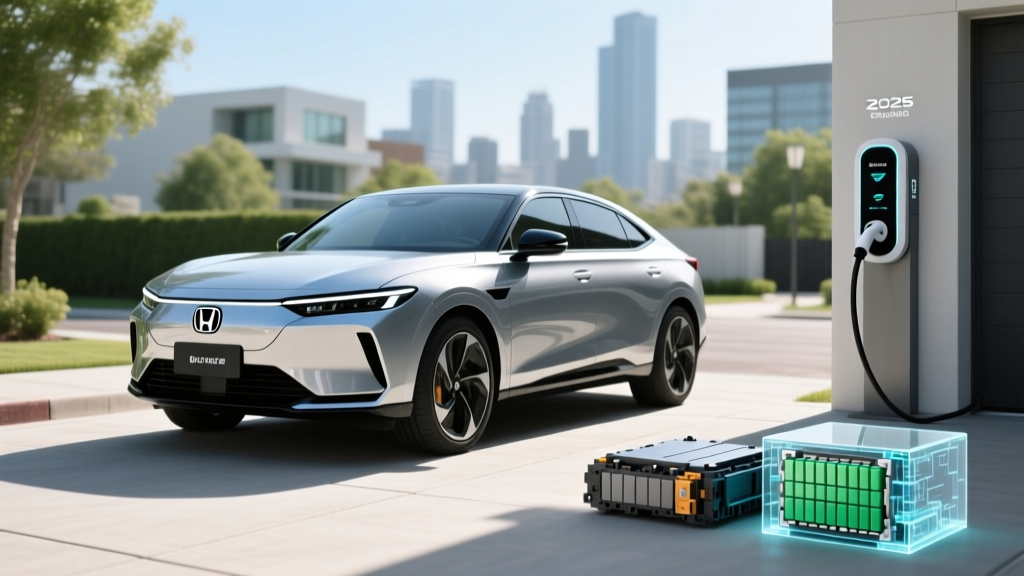
The 2026 Honda Prologue is the automaker's mainstream electric SUV, built on General Motors' Ultium platform and sharing its bones with the Chevy Blazer EV and Cadillac Lyriq. For buyers hunting a Honda Prologue EV discount, the math has shifted favorably: federal tax credits, dealer incentives, and aggressive lease deals can stack to cut the sticker price by $10,000 or more. But the Prologue isn't just a price play — it's a 300-mile, two-row family hauler with Honda's reputation for reliability. Here's the full breakdown of what it costs, what it delivers, and whether the discounts make it the best deal in the midsize EV SUV segment.
2026 Honda Prologue Pricing and Discount Stack
Honda prices the Prologue across three trims. The real story is how federal, state, and dealer incentives compress the final out-the-door number.
| Trim | Drivetrain | Base MSRP | Federal §30D Credit | Est. After Credit |
|---|---|---|---|---|
| EX | FWD | $47,400 | Up to $7,500 | ~$39,900 |
| Touring | AWD | $53,400 | Up to $7,500 | ~$45,900 |
| Elite | AWD | $57,900 | Up to $7,500 | ~$50,400 |
All Prologue trims fall well under the IRS §30D MSRP cap of $80,000 for SUVs. The federal tax credit can be applied at the point of sale as a down-payment reduction, meaning you don't need to wait until tax season to realize the savings. However, eligibility depends on your modified adjusted gross income (AGI): $150,000 for single filers, $225,000 for head of household, and $300,000 for joint filers. Battery component and critical-mineral sourcing requirements also apply — Honda has confirmed the Prologue meets these thresholds for the full $7,500 as of the 2026 model year, but always verify current eligibility at IRS.gov's qualified vehicles list.
Beyond the federal credit, Honda has been running seasonal dealer cash programs and lease bonuses. In recent quarters, Honda offered $1,000–$2,500 in dealer cash on top of federal incentives, and lease deals through Honda Financial have occasionally bundled the $7,500 credit into reduced monthly payments (since the leasing company claims the credit and passes it on). Stack these together and a Prologue EX can land in the mid-$30,000 range — territory that competes directly with much smaller EVs.
Range, Efficiency, and Real-World Expectations
EPA Estimated: 296 miles (EX FWD) / 281 miles (Touring & Elite AWD)
Real-World Highway (70 mph, 75°F): ~250–265 miles
Cold Weather (20°F, mixed driving): ~210–235 miles
City/Commuter Driving: Near EPA or slightly above — regen braking in stop-and-go recovers energy
The Prologue's 85 kWh usable lithium-ion battery (NMC chemistry) delivers competitive EPA numbers. The FWD EX hits 296 miles, while the dual-motor AWD trims drop to 281 miles due to the added weight and drivetrain losses of the rear motor. These are solid figures for the segment, matching or exceeding the Hyundai Ioniq 5 and trailing the Tesla Model Y Long Range by a modest margin.
Efficiency lands at approximately 99 MPGe combined (FWD) and 94 MPGe combined (AWD), which translates to roughly 34–36 kWh per 100 miles. That's respectable but not class-leading — the Ioniq 5 and Model Y extract more miles per kWh thanks to lighter platforms and more aggressive heat-pump strategies.
On a road trip at sustained highway speeds, plan for charging stops at the 230–250 mile mark in fair weather. In winter conditions, battery chemistry and cabin heating demands can reduce usable range by 20–30%. The Prologue includes a heat pump on all trims, which mitigates cold-weather losses compared to resistive heating, but physics still applies.
Charging Speed: DC Fast, Level 2, and Level 1
Charging performance is where Ultium-platform vehicles have drawn criticism, and the Prologue is adequate rather than exceptional. Here's the full charging profile:
| Charging Level | Power / Rate | Time / Speed | Connector |
|---|---|---|---|
| Level 1 (120V household) | ~1.4 kW | ~4 mi/hr added | J1772 / NACS |
| Level 2 (240V home) | 11.5 kW (48A) | ~32 mi/hr; full charge in ~9 hrs | J1772 / NACS |
| DC Fast Charge | Peak 150 kW | 10–80% in ~32 minutes | CCS1 (NACS adapter avail.) |
The 150 kW peak DC fast-charge rate is the Prologue's weakest competitive metric. Rivals like the Hyundai Ioniq 5 (peak 240 kW on 800V architecture) and the Tesla Model Y (peak ~250 kW) refill significantly faster, with 10–80% times in the 18–22 minute range. The Prologue's 32-minute 10–80% session is workable for road trips — you'll want a break anyway — but it means more time tethered to the charger on longer drives.
The charge curve also tapers noticeably above 80% state of charge (SoC), as is standard for NMC batteries to protect long-term cell health. Charging from 80–100% on DC can add another 20+ minutes, so plan to charge to 80% and go on road trips.
For daily ownership, Level 2 home charging at 11.5 kW is the sweet spot. A full overnight charge from near-empty takes roughly 9 hours — easily covered by an evening plug-in. Honda offers a home charging solution through a partnership that may include a Level 2 wall connector or a credit toward installation. Budget $500–$1,500 for a professional 240V/48A circuit installation depending on your panel capacity and run distance; older homes may need a $1,500–$3,000 panel upgrade to support a 48A charger alongside existing loads.
Starting with the 2025 model year, Honda began transitioning to the North American Charging Standard (NACS) port. The 2026 Prologue ships with NACS compatibility, granting direct access to Tesla's Supercharger network (17,000+ stalls in North America) without an adapter — a major practical advantage for road-trippers over CCS-only competitors.
Performance and Driving Dynamics
| Spec | EX (FWD) | Touring / Elite (AWD) |
|---|---|---|
| Horsepower | 212 hp | 288 hp |
| Torque | 236 lb-ft | 325 lb-ft |
| 0–60 mph | ~7.8 seconds | ~5.8 seconds |
| Drivetrain | Single front motor | Dual-motor AWD |
| Towing Capacity | 1,500 lbs | 4,000 lbs |
The FWD EX delivers adequate acceleration for commuting and suburban driving. The 212 hp single-motor setup isn't thrilling, but electric torque delivery makes it feel responsive around town. The AWD dual-motor trims transform the character: 288 hp and 325 lb-ft of torque drop the 0–60 time to a genuinely quick 5.8 seconds, and the all-wheel-drive traction inspires confidence in rain and light snow.
Ride quality is a Prologue strength. Honda tuned the suspension for comfort over sportiness, and the result is a compliant, quiet highway cruiser that absorbs pavement imperfections well. Steering is light and precise if not particularly engaging. This is a family SUV, not a performance machine, and the driving dynamics match that mission.
The AWD Prologue's 4,000-pound towing capacity is competitive for the segment — enough for a small boat, utility trailer, or a pair of dirt bikes. Just remember that towing cuts range dramatically; expect a 40–50% reduction at highway speeds with a loaded trailer.
Interior, Cargo, and Technology
The Prologue's cabin is spacious and practical, reflecting its midsize SUV mission. Passenger and cargo dimensions are generous:
- Front legroom: 41.4 inches
- Rear legroom: 38.3 inches
- Cargo behind rear seats: 25.2 cu ft
- Cargo with rear seats folded: 57.7 cu ft
- Front trunk (frunk): Not available — the Ultium platform does not include a frunk on the Prologue
The lack of a frunk is a notable omission compared to the Hyundai Ioniq 5 and Ford Mustang Mach-E, both of which offer front-trunk storage. The rear cargo area is well-shaped and includes a reversible cargo floor and under-floor storage.
Technology highlights include an 11.3-inch touchscreen with Google built-in (on Touring and Elite trims), wireless Apple CarPlay and Android Auto, a 11-inch digital instrument cluster, and available Bose premium audio. The infotainment system is responsive and logically laid out, a meaningful improvement over earlier Honda systems. Physical knobs for volume and tuning remain — a welcome choice for drivers who dislike touchscreen-only controls.
The Honda Sensing 360+ driver-assistance suite comes standard across all trims and includes adaptive cruise control, lane-keeping assist, blind-spot monitoring, rear cross-traffic braking, and a hands-on-wheel highway assist system. This is an SAE Level 2 system — it assists with steering and speed but requires continuous driver supervision. It does not enable hands-free or eyes-off driving like GM's Super Cruise (which the Prologue does not include, despite the Ultium platform sharing).
Warranty and Ownership Costs
Honda backs the Prologue with competitive warranty coverage:
- Limited vehicle warranty: 3 years / 36,000 miles
- Powertrain warranty: 5 years / 60,000 miles
- Battery warranty: 8 years / 100,000 miles (capacity retention above 70% of original)
- Roadside assistance: 3 years / 36,000 miles
The 8-year/100,000-mile battery warranty is the industry standard for mainstream EVs and aligns with the federal mandate for emissions-related components. Honda's 70% capacity-retention threshold is typical — if the battery degrades below that point within the warranty period, Honda will repair or replace it at no cost.
Long-term ownership costs favor the Prologue over gas-powered midsize SUVs. Electricity costs roughly $0.13–$0.16 per kWh nationally (varies widely by utility), meaning a full 85 kWh charge costs $11–$14 at home. That's equivalent to $2.50–$3.50 per gallon of gas for the same range. Over five years and 75,000 miles, fuel savings alone can reach $4,000–$6,000 compared to a 25 MPG gas SUV, depending on local electricity and gas prices.
Insurance premiums for the Prologue run 10–20% higher than a comparable gas CR-V, reflecting the higher repair costs associated with EV battery packs and aluminum body panels. Get quotes before purchasing — your mileage will vary by carrier and driving record.
Honda Prologue vs. Key Competitors
| Spec | Honda Prologue EX | Hyundai Ioniq 5 SEL | Tesla Model Y LR | Ford Mach-E Select |
|---|---|---|---|---|
| EPA Range | 296 mi | 303 mi | 320 mi | 250 mi |
| Battery (kWh) | 85 | 77.4 | 75 | 70 |
| Peak DC Charge | 150 kW | 240 kW | 250 kW | 150 kW |
| 10–80% Time | ~32 min | ~18 min | ~22 min | ~34 min |
| 0–60 mph | 7.8 sec | 7.4 sec | 5.0 sec | 6.3 sec |
| Base MSRP | $47,400 | $46,650 | $47,990 | $42,995 |
| Cargo (rear seats up) | 25.2 cu ft | 27.2 cu ft | 30.2 cu ft | 29.7 cu ft |
| Tax Credit (§30D) | Up to $7,500 | Up to $7,500 | Up to $7,500 | Up to $7,500 |
The Prologue's competitive position is clear: it offers strong range, a comfortable ride, and Honda brand loyalty, but it trails in charging speed and cargo capacity. The Ioniq 5 charges far faster (240 kW vs. 150 kW) and offers a frunk. The Model Y leads in range, performance, and Supercharger integration. The Mach-E undercuts on price and offers sportier handling.
Where the Prologue wins is the discount stack. Honda's dealer incentive programs and strong lease deals have consistently made the Prologue one of the most aggressively discounted EVs in the segment. If you can layer federal credit + dealer cash + a favorable lease rate, the effective price can undercut every competitor here.
Pros and Cons
- 296-mile EPA range (FWD) is competitive
- Comfortable, quiet ride quality
- Aggressive discount and lease stacking potential
- NACS port — native Supercharger access
- Honda Sensing 360+ standard on all trims
- 4,000-lb towing (AWD trims)
- Physical infotainment knobs retained
- 150 kW peak DC charging is slow for the class
- No frunk (front trunk)
- Cargo space trails Ioniq 5 and Model Y
- Base MSRP is high before incentives
- No hands-free driving feature (GM Super Cruise not included)
- FWD EX feels underpowered for the weight
Who Should Buy the Honda Prologue?
- Commuters and suburban families who prioritize ride comfort and cabin quietness over sporty handling
- Honda loyalists who want to stay in the brand ecosystem and value dealer proximity for service
- Discount-driven buyers willing to negotiate — the Prologue's incentive stack can make it the best deal in the segment
- Home-charging owners who rarely need DC fast charging and can charge overnight on Level 2
- You road-trip frequently and need the fastest possible DC charging (see Ioniq 5 or Model Y)
- Maximum cargo volume is a priority (Model Y wins here)
- You want hands-free highway driving capability (GM Super Cruise or Ford BlueCruise vehicles)
Frequently Asked Questions
What is the real-world range of the Honda Prologue?
The EPA rates the FWD Prologue EX at 296 miles and the AWD Touring/Elite at 281 miles. In real-world highway driving at 70 mph in moderate temperatures, expect 250–265 miles. In cold weather (below 30°F), range drops to approximately 210–235 miles depending on cabin heating usage and driving style. City driving with regenerative braking can match or slightly exceed the EPA estimate.
How fast does the Honda Prologue charge?
On a DC fast charger, the Prologue peaks at 150 kW and charges from 10% to 80% in approximately 32 minutes. At home on a Level 2 (240V/48A) charger, it adds about 32 miles of range per hour, with a full charge taking roughly 9 hours. Level 1 (120V) trickle charging adds about 4 miles per hour — suitable only for emergencies or very low-mileage drivers.
How much does the Prologue cost after tax credits and discounts?
The base EX FWD starts at $47,400 MSRP. After the $7,500 federal §30D tax credit (if eligible), the effective price drops to approximately $39,900. When Honda dealer cash incentives and lease bonuses are available (typically $1,000–$2,500), the effective cost can reach the mid-to-high $30,000s. AWD Touring and Elite trims land in the $43,000–$50,000 range after credits. Always verify current incentive availability with your dealer and confirm §30D eligibility based on your income and the vehicle's battery sourcing status.
Does the Honda Prologue qualify for the full $7,500 federal EV tax credit?
As of the 2026 model year, the Prologue appears on the IRS qualified vehicles list for the full $7,500 credit under §30D. Eligibility depends on your modified AGI (up to $150K single / $300K joint), the vehicle's MSRP (under $80K for SUVs — all Prologue trims qualify), and battery critical-mineral and component sourcing requirements. The credit can be transferred to the dealer at the point of sale as a price reduction. Confirm current status at IRS.gov before purchasing, as sourcing rules are periodically updated.
Is the Honda Prologue worth buying over the Tesla Model Y or Hyundai Ioniq 5?
It depends on your priorities. The Prologue wins on ride comfort, Honda dealer support, and — when incentives are stacked — effective pricing. The Model Y leads in range (320 mi), charging speed, cargo space, and Supercharger network depth. The Ioniq 5 charges far faster (18 min vs. 32 min to 80%) and offers a more distinctive design. If comfort, brand loyalty, and discount-driven value matter most, the Prologue is compelling. If charging speed and maximum utility are top priorities, look at the Ioniq 5 or Model Y.
Does the Prologue have a frunk or hands-free driving?
No to both. The Prologue does not include a front trunk (frunk) due to its Ultium platform packaging. It also does not offer GM's Super Cruise hands-free driving system — Honda equips its own Honda Sensing 360+ suite, which is an SAE Level 2 driver-assist system requiring hands on the wheel and eyes on the road at all times.