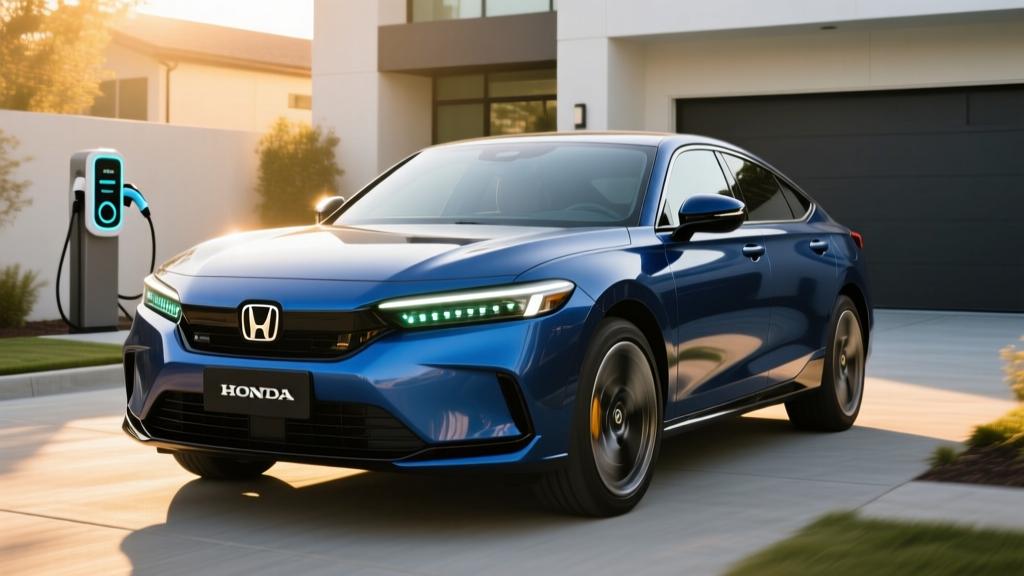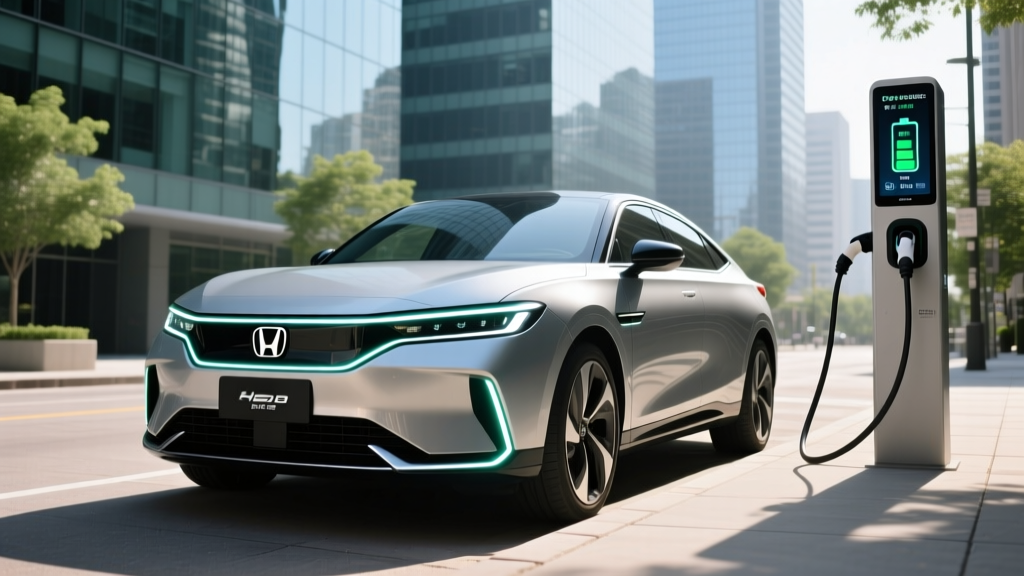
Quick Answer: The 2026 Honda Prologue is Honda's first mass-market electric car, offering up to 296 miles of EPA-estimated range, a GM-sourced Ultium battery platform, and available AWD. Starting at $47,400, it qualifies for the $7,500 federal §30D tax credit (subject to income and sourcing rules), bringing effective pricing to ~$39,900. It's best suited for buyers who want Honda's ergonomics and dealer network with zero tailpipe emissions — but if you can't charge at home or regularly drive over 300 miles in cold weather, a Honda CR-V Hybrid may be the smarter buy.
Honda's Electric Car Lineup: What's Actually Available?
As of 2026, Honda sells one battery-electric vehicle in the US: the Honda Prologue, a midsize SUV built on General Motors' Ultium platform. Honda's earlier Honda e (a small city EV) was never sold in the US, and the Clarity EV was discontinued after 2021. A second Honda EV, built on Honda's own dedicated EV architecture, is expected for the 2027 model year but remains unannounced in final spec.
The Prologue comes in three trims — EX, Touring, and Elite — with front-wheel drive standard on EX and Touring, and all-wheel drive available across the lineup. Here's the spec breakdown buyers need:
| Spec | EX FWD | Touring FWD | Elite AWD |
|---|---|---|---|
| EPA Range | 296 mi | 296 mi | 281 mi |
| Battery (usable) | 85 kWh, NMC (Ultium) | ||
| Horsepower | 212 hp | 212 hp | 288 hp |
| 0–60 mph | ~7.5 sec | ~7.5 sec | ~6.0 sec |
| Peak DC Fast Charge | 150 kW | ||
| 10–80% DC Charge | ~35 min | ||
| Level 2 Charge Rate | 11.5 kW (AC) | ||
| MPGe (combined) | 99 MPGe | 99 MPGe | 95 MPGe |
| Cargo Volume | 25.2 cu ft (rear up) / 57.7 cu ft (rear folded) | ||
| Base MSRP | $47,400 | $51,700 | $57,900 |
| Battery Warranty | 8 years / 100,000 miles | ||
Real-World Range Reality: The EPA rates the Prologue EX/Touring FWD at 296 miles. In real-world highway driving at 70–75 mph, expect approximately 245–265 miles. In cold weather (below 32°F), range drops 15–25%, putting realistic winter range at roughly 220–250 miles for FWD trims and 210–235 miles for the AWD Elite. Honda does not include a heat pump on the Prologue — it uses resistive cabin heating, which draws more energy in winter than a heat pump system would.
Prologue vs. Gas and Hybrid: The Cost Comparison
The most common cross-shop for Prologue buyers is Honda's own CR-V lineup. Let's compare the Prologue EX FWD against the CR-V Hybrid Sport Touring — a trim with similar feature content — over five years and 60,000 miles of ownership.
| Cost Category | 2026 Prologue EX FWD | 2026 CR-V Hybrid Sport Touring |
|---|---|---|
| Base MSRP | $47,400 | $40,850 |
| Federal Tax Credit (§30D) | –$7,500* | $0 |
| Effective Purchase Price | $39,900 | $40,850 |
| Fuel / Energy (60k mi) | $3,300 (home L2 avg) | $6,200 (gasoline) |
| Maintenance (60k mi) | $650 | $2,100 |
| Insurance (5-yr avg) | $8,500 | $7,200 |
| Estimated Depreciation | $16,800 | $14,100 |
| 5-Year Total Cost | $69,150 | $70,450 |
*§30D credit eligibility requires buyer income below $150k (single) / $300k (joint), vehicle MSRP under $80,000 (SUV), and battery sourcing compliance. Credit can be transferred at point of sale as a purchase discount. Verify current-year rules at IRS.gov and consult a tax professional.
The Prologue's lower operating costs — electricity at roughly $0.14/kWh nationally versus gasoline at ~$3.30/gallon — and reduced maintenance (no oil changes, fewer brake replacements due to regenerative braking) close the gap against the CR-V Hybrid within three to four years. However, EV insurance premiums run 15–20% higher on average, and EV depreciation remains steeper than established hybrids, partially offsetting savings.
For buyers who drive under 10,000 miles annually, the CR-V Hybrid's lower purchase price and insurance may result in lower total cost. Above 12,000 miles per year, the Prologue's per-mile energy savings compound significantly.
Charging the Prologue: Home, Public, and What It Costs
The Prologue uses a CCS1 connector for DC fast charging and a J1772 inlet for Level 2 AC charging. (Honda has confirmed future models will adopt NACS for Tesla Supercharger access, but the current Prologue requires a CCS-to-NACS adapter for Supercharger use — and not all Supercharger stalls support adapter-based charging yet.)
| Charging Level | Power | Miles Added per Hour | Use Case |
|---|---|---|---|
| Level 1 (120V outlet) | ~1.4 kW | ~4 mi/hr | Overnight trickle; emergency top-up |
| Level 2 (240V home) | 11.5 kW | ~34 mi/hr | Daily home charging; full charge in ~8 hrs |
| DC Fast Charge | Peak 150 kW | ~180 mi/hr (peak) | Road trips; 10–80% in ~35 min |
Charging curve reality: The Prologue's 150 kW peak rate is not sustained across the entire session. The battery accepts peak power roughly between 10–40% state of charge, then tapers progressively. From 60–80%, charge rates drop to approximately 80–100 kW. This means the advertised 10–80% time of ~35 minutes reflects the taper — don't expect 150 kW for the full session.
Home charging setup: A Level 2 home charger (240V, 48-amp circuit) is essential for practical daily ownership. Expect to spend $500–$800 on a quality Level 2 EVSE (ChargePoint Home Flex, Emporia Level 2, or similar) plus $800–$2,500 for professional electrician installation, depending on panel proximity and whether a 200-amp panel upgrade is needed. Total home charging setup: $1,300–$3,300. Honda includes a dual-level charge cord with the Prologue that can plug into a 240V NEMA 14-50 outlet at up to 7.7 kW — adequate for overnight charging but slower than a hardwired 48-amp station.
Public charging cost: DC fast charging on networks like Electrify America or EVgo typically costs $0.35–$0.55/kWh. A 10–80% charge (~60 kWh) costs roughly $21–$33 on the road. This is more expensive than home charging but still generally cheaper per mile than gasoline at current prices. For road trips exceeding 280 miles, plan one 30–35 minute charging stop.
Federal Tax Credit Eligibility for the Prologue
The 2026 Honda Prologue qualifies for the full $7,500 federal clean vehicle credit under IRS §30D, but not every buyer will qualify. Here's the eligibility checklist:
- Income cap: Modified AGI must not exceed $150,000 (single filer), $225,000 (head of household), or $300,000 (married filing jointly)
- MSRP cap: Vehicle must be under $80,000 for SUVs/vans/pickups — all Prologue trims qualify
- Battery sourcing: Battery components and critical minerals must meet phased-in domestic/FTA-sourcing thresholds (the Prologue's GM Ultium battery currently meets these requirements)
- Transfer at sale: As of 2024+, the credit can be transferred to the dealer as a point-of-sale discount, reducing your out-of-pocket cost immediately — you do not need to wait until tax filing
- One credit per buyer per year: You cannot claim a new EV credit and a used EV credit in the same tax year
Because battery sourcing rules and FTO (foreign entity of concern) restrictions evolve, always verify current Prologue eligibility on fueleconomy.gov before purchasing.
Common EV Misconceptions, Addressed with Data
| Myth | Fact |
|---|---|
| "EV batteries need replacing every few years" | The Prologue's 85 kWh Ultium battery is warranted for 8 years/100,000 miles against degradation below 70% capacity. GM's Ultium data from earlier deployments (Cadillac Lyriq, Chevy Blazer EV) shows ~5–8% degradation at 50,000 miles. Full battery replacement would cost approximately $14,000–$18,000 out of warranty, but most packs outlast the vehicle. |
| "EVs are worse in winter" | Range drops 15–25% in sub-freezing temperatures due to cabin heating demand and reduced battery efficiency. Preconditioning the battery while plugged in recovers some range. AWD traction is excellent (instant torque, low center of gravity), but plan for shorter real-world range in cold climates. |
| "Public charging is always broken" | Reliability varies by network. Tesla Superchargers average ~97% uptime (with adapter limitations for CCS vehicles). Electrify America and EVgo have improved to ~85–90% uptime in 2025–2026, but rural corridors still have gaps. Use PlugShare or A Better Routeplanner to verify stations before road trips. |
| "I can't take road trips in an EV" | The Prologue's 281–296 mile EPA range and 150 kW DC charging mean a 500-mile trip requires one ~35-minute stop. It's slower than a 10-minute gas stop, but manageable for most drivers. For frequent 400+ mile trips, a PHEV or hybrid may be more practical. |
| "EVs cost more to insure" | True, on average. Prologue insurance runs roughly 15–20% higher than a comparable CR-V Hybrid due to higher repair costs (specialized body structure, sensor recalibration). Shop quotes before buying — some insurers (Geico, Progressive) have narrowed the gap. |
Who Should Buy the Honda Prologue — and Who Shouldn't
Buy the Prologue if:
- You have reliable Level 2 home charging (garage or driveway with 240V access)
- Your daily commute is under 80 miles round-trip (you'll rarely need public charging)
- You qualify for the §30D tax credit, bringing effective pricing below the CR-V Hybrid
- You value quiet operation, instant torque, and reduced maintenance
- You want to buy from a Honda dealer with local service support
Skip the Prologue (and choose a CR-V Hybrid or wait) if:
- You live in an apartment or lack home/workplace charging access — public-only charging erodes cost savings and convenience
- You regularly drive 300+ miles in a single day in cold weather — the real-world winter range of ~220 miles means multiple stops
- Your household income exceeds §30D caps — without the credit, the Prologue costs $6,500+ more than a CR-V Hybrid at purchase
- You want Honda's upcoming dedicated EV platform with anticipated better efficiency and heat pump — expected 2027+
- You need maximum cargo space — the Prologue's 25.2 cu ft behind the second row trails the CR-V Hybrid's 36.3 cu ft
First-Time EV Buyer Essentials
If the Prologue is your first electric car, here's what the brochures don't emphasize:
kW vs. kWh — know the difference. kW (kilowatts) measures power — how fast energy flows. kWh (kilowatt-hours) measures energy — how much the battery holds. The Prologue has an 85 kWh battery and charges at up to 150 kW. Think of it like a gas tank: kWh is the tank size, kW is the pump flow rate.
Preconditioning matters. Before DC fast charging, the Prologue's battery management system warms or cools the battery to optimal temperature. Navigate to a charger using the built-in navigation and the car will precondition automatically. Without preconditioning, cold batteries charge significantly slower — sometimes half the peak rate.
The 80% rule. Lithium-ion batteries charge fastest between 10–80%. Above 80%, charge speed drops dramatically (the "charge curve taper"). For daily driving, set your charge limit to 80–85% to reduce battery stress and save time. Only charge to 100% when you need maximum range for a trip.
Regenerative braking changes how you drive. The Prologue offers adjustable regen via steering-wheel paddles. At maximum regen, you can nearly one-pedal drive — lifting off the accelerator slows the car significantly, recovering energy back to the battery. In stop-and-go traffic, this reduces brake wear and improves efficiency.
Home electrical panel check. Before buying, have a licensed electrician assess your panel. A 48-amp Level 2 charger requires a 60-amp dedicated circuit. Older homes with 100-amp panels may need a $1,500–$3,000 panel upgrade to 200 amps. This is the single most overlooked cost for first-time EV buyers.
Frequently Asked Questions
Does the Honda Prologue qualify for the $7,500 federal tax credit?
Yes, the 2026 Prologue currently qualifies for the full $7,500 §30D credit, assuming you meet income limits ($150k single / $300k joint) and the battery sourcing requirements remain met. The credit can be applied as a point-of-sale discount at participating dealers. Always verify current eligibility on fueleconomy.gov and consult a tax professional.
Can I charge the Honda Prologue at Tesla Superchargers?
Not natively. The Prologue uses a CCS1 connector. Honda has indicated future EVs will adopt NACS, but current Prologue owners need a CCS-to-NACS adapter for Supercharger access — and compatibility is not universal across all Supercharger stalls. For now, rely on Electrify America, EVgo, ChargePoint, and other CCS-compatible networks for DC fast charging.
How long does the Prologue battery last?
Honda/GM warrant the 85 kWh Ultium battery for 8 years or 100,000 miles against capacity loss below 70%. Based on Ultium platform data from the Cadillac Lyriq and Chevy Blazer EV, real-world degradation appears to be approximately 5–8% over the first 50,000 miles. With proper care (avoiding frequent 100% charges, minimizing DC fast charging when possible, preconditioning), most owners should see 85–90% capacity retention at 100,000 miles.
Is the Honda Prologue better than the CR-V Hybrid?
It depends on your situation. The Prologue wins on per-mile fuel cost ($0.055/mi vs. $0.11/mi for the CR-V Hybrid), maintenance savings, and available tax credit. The CR-V Hybrid wins on cargo space (36.3 vs. 25.2 cu ft), lower insurance, no charging dependency, and better cold-weather range consistency. If you charge at home and drive 12,000+ miles/year, the Prologue likely saves money over 5 years. If you lack home charging or take frequent long winter road trips, the CR-V Hybrid is the lower-friction choice.
What's the real-world range of the Honda Prologue in winter?
The Prologue FWD is EPA-rated at 296 miles; the AWD Elite at 281 miles. In sustained sub-freezing temperatures, expect a 15–25% reduction due to resistive heating load and reduced battery efficiency. That translates to roughly 220–250 real-world winter miles for FWD trims and 210–235 miles for AWD. Preconditioning while plugged in and using seat/steering wheel heaters (more efficient than cabin air heating) can recover 10–15 miles of that loss.