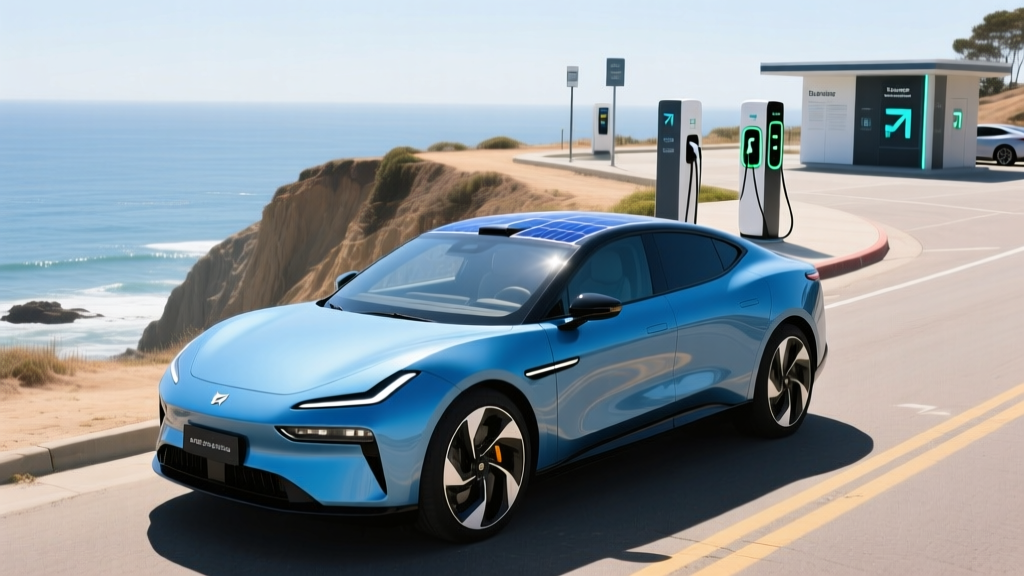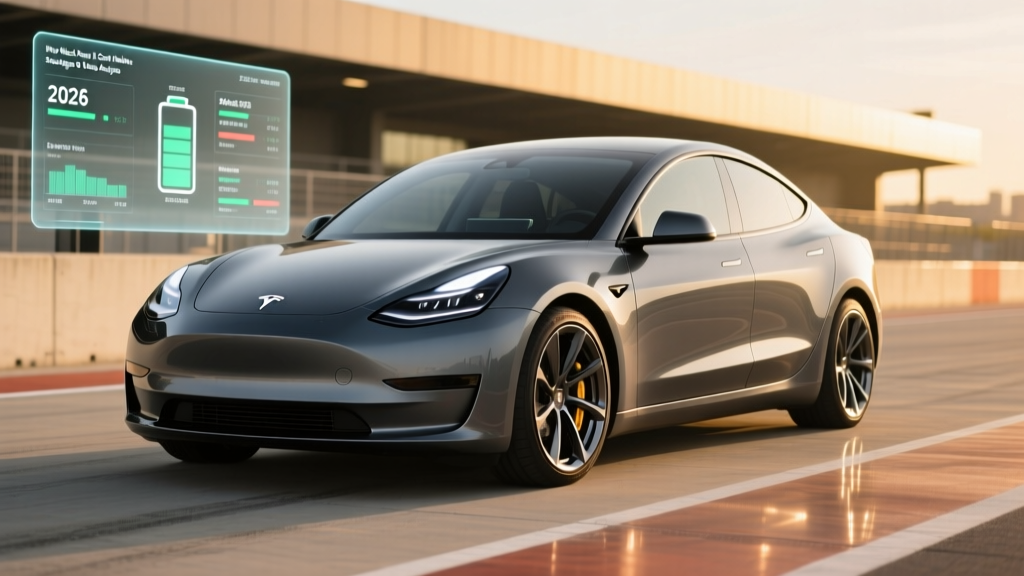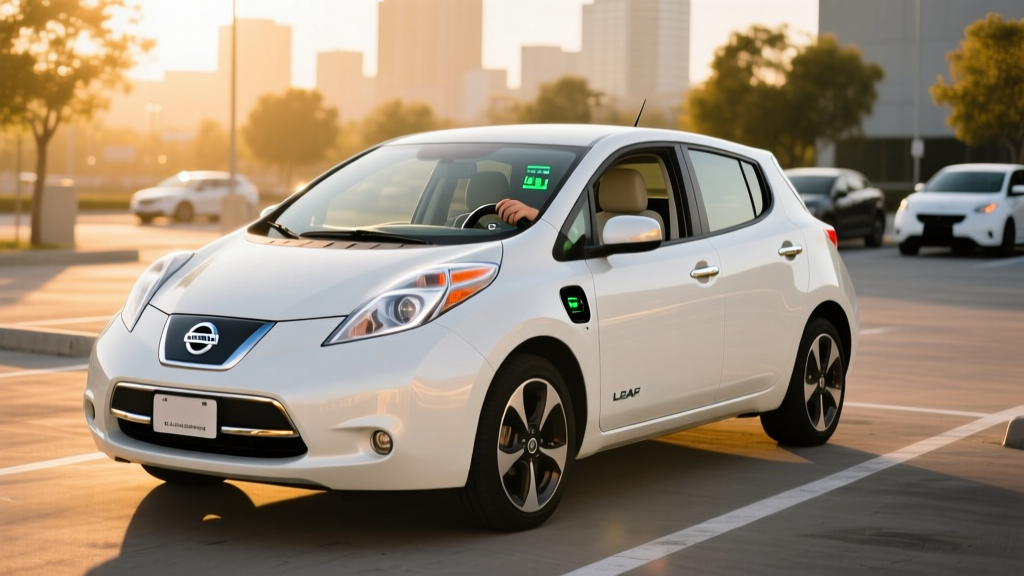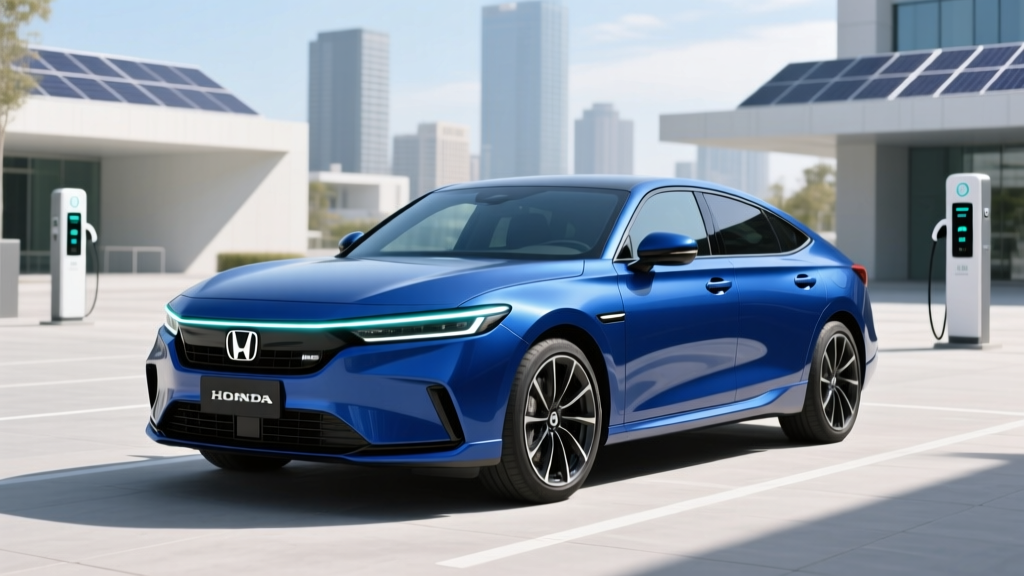
The Honda Prologue arrived as Honda's first mass-market electric SUV, and the Pacific Blue Metallic paint has become its signature look. But beyond the striking color, buyers need to know the numbers that matter: real-world range, charging speed, tax-credit eligibility, and whether this GM-platform EV can compete with the Tesla Model Y and Hyundai IONIQ 5.
Quick Verdict: Who Should Consider the Prologue?
The 2026 Honda Prologue is a competent, comfortable midsize electric SUV that prioritizes daily drivability over cutting-edge performance. It's best suited for families and commuters who want Honda's reputation for reliability, straightforward controls, and a familiar driving position — without the learning curve of Tesla's minimalist interior or the polarizing design of Hyundai's offerings.
However, the Prologue faces stiff competition. Its 296-mile EPA range (on FWD trims) trails the IONIQ 5's 303 miles, and its 150 kW peak DC charging speed is outpaced by Hyundai's 350 kW capability on 800V chargers. If you prioritize fast road-trip charging or maximum range, look elsewhere. If you want a comfortable, no-nonsense EV with Honda's dealer network behind it, the Prologue delivers.
Range and Efficiency: EPA Numbers vs. Real-World Expectations
Real-World Expectation: Expect 250–270 miles on highway trips at 70 mph, dropping to 200–220 miles in freezing temperatures with cabin heating.
The Prologue's EPA range figures vary by trim and drivetrain. The base EX with front-wheel drive achieves 296 miles, while adding all-wheel drive reduces range by 15 miles. The top-tier Elite AWD splits the difference at 288 miles thanks to slightly different equipment weight.
In real-world highway driving, expect to lose 10–15% of EPA range. At sustained 70 mph speeds, aerodynamic drag increases energy consumption significantly. Cold weather compounds this: lithium-ion batteries lose efficiency below 40°F, and resistive cabin heating can consume 2–4 kW continuously, cutting range by 20–30% in sub-freezing conditions.
Efficiency is rated at 99 MPGe combined (FWD) and 93 MPGe combined (AWD), which translates to roughly 34 kWh/100 mi and 36 kWh/100 mi, respectively. These figures are competitive but not class-leading — the IONIQ 5 achieves 114 MPGe combined on its most efficient trim.
Battery and Charging: What You Need to Know
| Charging Type | Power/Rate | Time or Miles Added |
|---|---|---|
| Battery Capacity | 85 kWh usable (NMC chemistry) | — |
| DC Fast Charging (Peak) | 150 kW max | 10–80% in ~32 minutes |
| Level 2 Home Charging | 11.5 kW (48A) | ~27 miles per hour of charging |
| Level 1 (120V Outlet) | 1.4 kW | ~3–4 miles per hour |
The Prologue uses an 85 kWh (usable) NMC lithium-ion battery, shared with the Chevrolet Blazer EV and Cadillac Lyriq. Honda chose NMC chemistry over LFP for its superior energy density and cold-weather performance, though this means slightly faster long-term degradation compared to Tesla's LFP-equipped Model 3/Y.
DC fast charging peaks at 150 kW, but this is a peak rate, not a sustained rate. The charging curve tapers significantly above 60% state of charge, which is why a 10–80% session takes approximately 32 minutes. For context, the Hyundai IONIQ 5 can complete the same 10–80% charge in 18 minutes on a 350 kW charger, and the Tesla Model Y (with NACS connector) can achieve similar times on V3 Superchargers.
At home, the Prologue accepts 11.5 kW on Level 2, which adds roughly 27 miles of range per hour. A full overnight charge from 20% to 100% takes about 6 hours. Honda includes a dual-level charge cord with the vehicle, but most owners will want to install a dedicated Level 2 wall connector for convenience and faster charging.
Performance and Drivetrain
The Prologue offers two powertrain configurations:
- FWD (EX trim): Single front motor, 212 hp, 236 lb-ft torque, 0–60 mph in 7.8 seconds
- AWD (EX-L, Elite): Dual motors, 288 hp, 333 lb-ft torque, 0–60 mph in 6.2 seconds
Acceleration is adequate for highway merging and passing, but the Prologue is tuned for comfort, not sportiness. The AWD version's 6.2-second 0–60 time feels brisk in daily driving, but it won't match the instant torque delivery of a Tesla Model Y Long Range (4.8 seconds) or the IONIQ 5's dual-motor variant (5.1 seconds).
Ride quality is a strong point. The Prologue's suspension absorbs bumps well, and cabin noise is minimal at highway speeds. Steering is light and precise, making it easy to maneuver in parking lots. However, the regenerative braking system lacks the one-pedal driving strength of competitors — you'll still use the brake pedal frequently, and the regen paddle behind the wheel offers only modest deceleration.
Interior, Cargo, and Technology
The Prologue's interior is spacious and practical, with 103.2 cubic feet of passenger volume and generous rear legroom (38.9 inches). Cargo capacity is 25.2 cubic feet behind the second row, expanding to 57.7 cubic feet with the rear seats folded. This trails the Model Y's 76 cubic feet maximum, but the Prologue's cargo area is more traditionally shaped and easier to load.
Infotainment is handled by an 11.3-inch touchscreen running Google Built-In, which includes native Google Maps navigation, Google Assistant, and access to the Play Store for apps. Wireless Apple CarPlay and Android Auto are standard. The system is responsive and intuitive, though some owners report occasional lag when loading map data.
Driver assistance features are comprehensive under the Honda Sensing suite: adaptive cruise control, lane-keeping assist, traffic sign recognition, and blind-spot monitoring are all standard. However, this is a Level 2 system — the driver must remain engaged and keep hands on the wheel. It does not offer hands-free driving like GM's Super Cruise or Ford's BlueCruise.
Pricing, Trims, and Federal Tax Credit Eligibility
| Trim | MSRP | Estimated Price After §30D Credit |
|---|---|---|
| EX (FWD) | $47,400 | ~$39,900* |
| EX (AWD) | $49,400 | ~$41,900* |
| EX-L (AWD) | $52,400 | ~$44,900* |
| Elite (AWD) | $57,900 | ~$50,400* |
*Tax credit eligibility depends on buyer income, MSRP caps, and battery sourcing requirements. Verify eligibility with a tax professional and consult IRS guidelines.
The Prologue qualifies for the full $7,500 federal tax credit under IRS §30D, provided you meet these requirements:
- Income caps: Adjusted gross income ≤ $150,000 (single), $225,000 (head of household), $300,000 (married filing jointly)
- MSRP cap: Vehicle MSRP must be ≤ $80,000 for SUVs (all Prologue trims qualify)
- Battery sourcing: The vehicle must meet critical minerals and battery component requirements, which Honda has confirmed the Prologue satisfies for 2026
As of 2026, the §30D credit can be transferred to the dealer at point of sale, reducing your purchase price upfront rather than waiting for a tax refund. However, this requires the dealer to participate in the IRS advance payment program — confirm this with your Honda dealer before finalizing the purchase.
Warranty and Long-Term Ownership
Honda provides a 3-year/36,000-mile limited warranty and a 5-year/60,000-mile powertrain warranty. The high-voltage battery is covered for 8 years or 100,000 miles (whichever comes first) against defects and excessive capacity loss. Honda defines "excessive" as dropping below 70% of original capacity, which is standard for the industry.
Based on data from the Chevrolet Blazer EV (which shares the Ultium platform), battery degradation is expected to be minimal in the first 5 years — typically 5–8% capacity loss under normal use. However, frequent DC fast charging, extreme temperatures, and consistently charging to 100% can accelerate degradation. For optimal battery health, charge to 80% for daily use and reserve 100% charges for long trips.
Pros and Cons
Pros
- Comfortable ride quality and quiet cabin
- Spacious interior with generous rear legroom
- Intuitive Google Built-In infotainment
- Comprehensive Honda Sensing safety suite
- Qualifies for full $7,500 federal tax credit
- Honda's extensive dealer network for service
Cons
- DC charging speed (150 kW) lags competitors
- Range (296 mi max) trails IONIQ 5 and Model Y
- Regenerative braking is weak; no true one-pedal driving
- Cargo space smaller than Model Y
- No hands-free driving feature (unlike Super Cruise/BlueCruise)
- Higher starting price than some competitors
Should You Buy the Honda Prologue?
The Prologue is a solid choice if you prioritize comfort, practicality, and Honda's dealer support over cutting-edge EV technology. It's well-suited for:
- Commuters: Adequate range and comfortable ride for daily driving
- Families: Spacious interior, easy-to-use controls, strong safety features
- First-time EV buyers: Familiar Honda driving dynamics with minimal learning curve
However, consider alternatives if:
- You road-trip frequently: The IONIQ 5's faster charging and longer range make it more practical
- You want maximum cargo space: The Model Y offers significantly more storage
- You prioritize performance: Tesla and Hyundai offer quicker acceleration and sportier handling
Frequently Asked Questions
What is the real-world range of the Honda Prologue?
Expect 250–270 miles on highway trips at 70 mph, and 200–220 miles in freezing weather with cabin heating. The EPA rates it at 296 miles for FWD trims, but real-world conditions reduce this by 10–30%.
How fast does the Prologue charge?
DC fast charging peaks at 150 kW, achieving 10–80% in about 32 minutes. At home on Level 2 (11.5 kW), it adds roughly 27 miles per hour, so a full overnight charge takes about 6 hours.
How much does the Prologue cost after tax credits?
The base EX FWD starts at $47,400 and drops to approximately $39,900 after the $7,500 federal tax credit, assuming you meet income and eligibility requirements. Verify with a tax professional and confirm your dealer participates in the point-of-sale credit transfer program.
Is the Prologue worth buying vs. the Tesla Model Y or Hyundai IONIQ 5?
The Prologue is competitive but not class-leading. Choose it if you value Honda's dealer network, comfortable ride, and straightforward controls. Choose the Model Y for cargo space and Supercharger access, or the IONIQ 5 for faster charging and longer range.
Does the Prologue qualify for the federal EV tax credit?
Yes, the 2026 Prologue qualifies for the full $7,500 credit under IRS §30D, provided you meet income caps (≤$150k single, ≤$300k married filing jointly) and the vehicle meets battery sourcing requirements. Honda has confirmed the Prologue satisfies these requirements for 2026.
What are the biggest drawbacks of the Prologue?
The main limitations are its 150 kW DC charging speed (slower than competitors), 296-mile maximum range (adequate but not best-in-class), and lack of hands-free driving features. Cargo space also trails the Model Y significantly.