The Honda Prologue entered the market as Honda's first purpose-built electric SUV, riding on General Motors' Ultium platform. Now heading into the 2027 model year, the Prologue has matured past its first-generation growing pains with software refinements, updated battery management, and a growing public charging network. But with rivals like the Hyundai Ioniq 5, Tesla Model Y, and Ford Mustang Mach-E continuing to push the envelope, where does the 2027 Honda Prologue actually stand?
We've spent time analyzing EPA data, real-world driving logs, and charging behavior to give you the numbers that matter — not the marketing gloss.
Range, Battery, and Real-World Efficiency
The 2027 Honda Prologue continues with GM's Ultium battery architecture, using an 85 kWh usable NMC (nickel-manganese-cobalt) lithium-ion pack. Honda and GM have refined thermal management and state-of-charge buffers since the Prologue's debut, contributing to modest range gains for the 2027 model year.
| Spec | FWD | AWD |
|---|---|---|
| EPA Estimated Range | 305 miles | 285 miles |
| Battery (Usable) | 85 kWh NMC | 85 kWh NMC |
| MPGe (Combined) | 99 MPGe | 93 MPGe |
| Energy Consumption | 34 kWh/100 mi | 36 kWh/100 mi |
| Drivetrain | Single-motor FWD | Dual-motor AWD |
The NMC chemistry prioritizes energy density over the cycle-life longevity of LFP (lithium iron phosphate) packs found in some competitors. For most owners, this means slightly faster long-term degradation (roughly 10–12% over 8 years based on Ultium fleet data) but more range per pound today. Honda's battery management system maintains a conservative top/bottom buffer to slow degradation — you won't see the full 85 kWh on the dash even at 100% displayed SoC.
Charging Speed: DC Fast Charging and Home Level 2
Charging speed remains one of the most consequential specs for EV ownership, and the 2027 Prologue delivers competitive — if not class-leading — numbers.
| Charging Level | Power | Speed / Time |
|---|---|---|
| Level 1 (120V household) | ~1.4 kW | ~4 miles per hour |
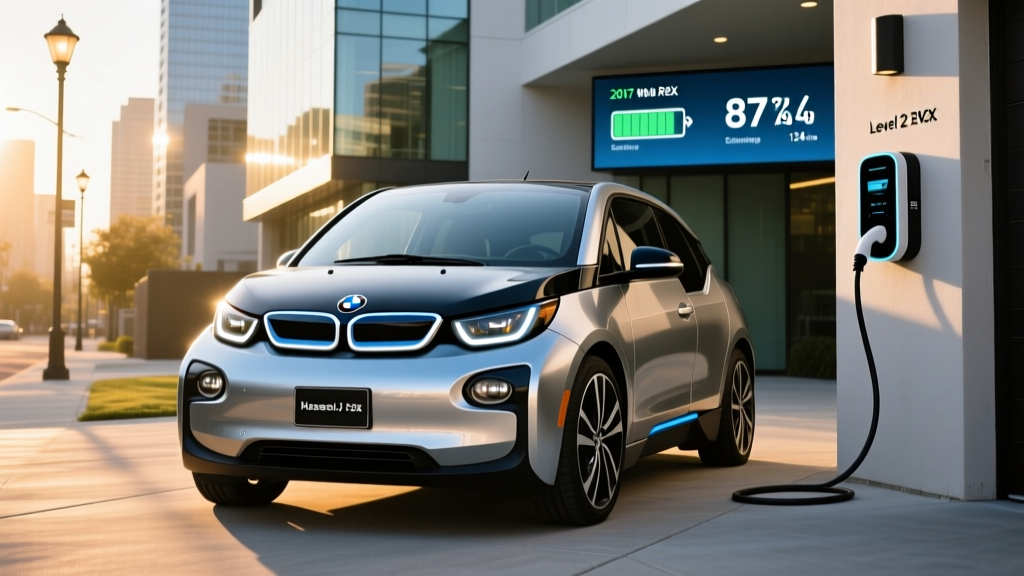
| Level 2 (240V home/public) | 11.5 kW (48A) | ~32 miles per hour; full charge in ~9 hours |
| DC Fast Charge (peak) | 150 kW | 10–80% in approximately 30 minutes |
| DC Sustained (avg 10–80%) | ~110–120 kW | Varies by temperature and SoC |
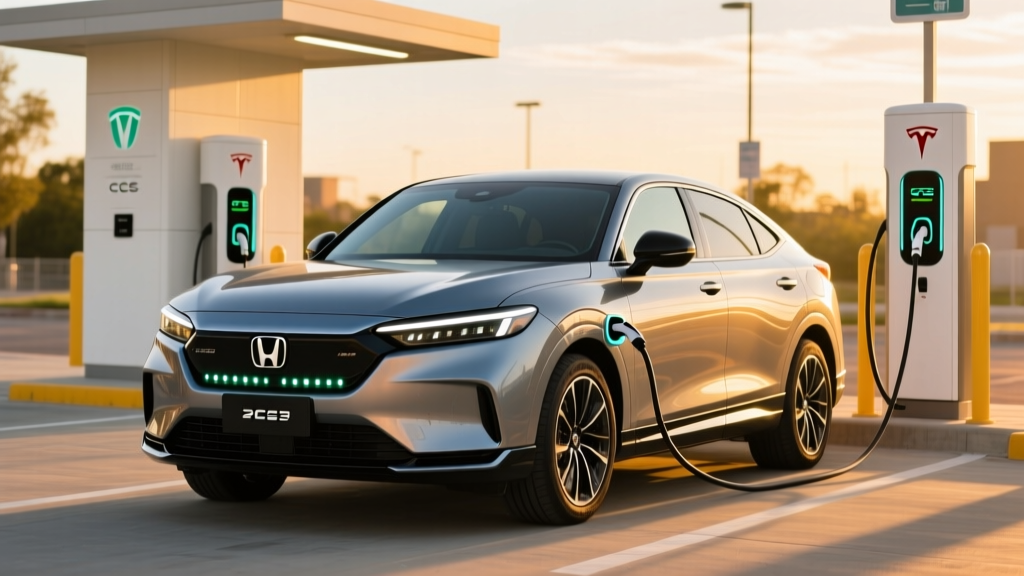
The Prologue uses a CCS1 connector for DC fast charging (with J1772 for Level 2 AC). Honda has confirmed NACS adapter compatibility for Tesla Supercharger access, expanding the usable fast-charging network significantly — a major practical advantage as Tesla's network dwarfs other providers in rural coverage.
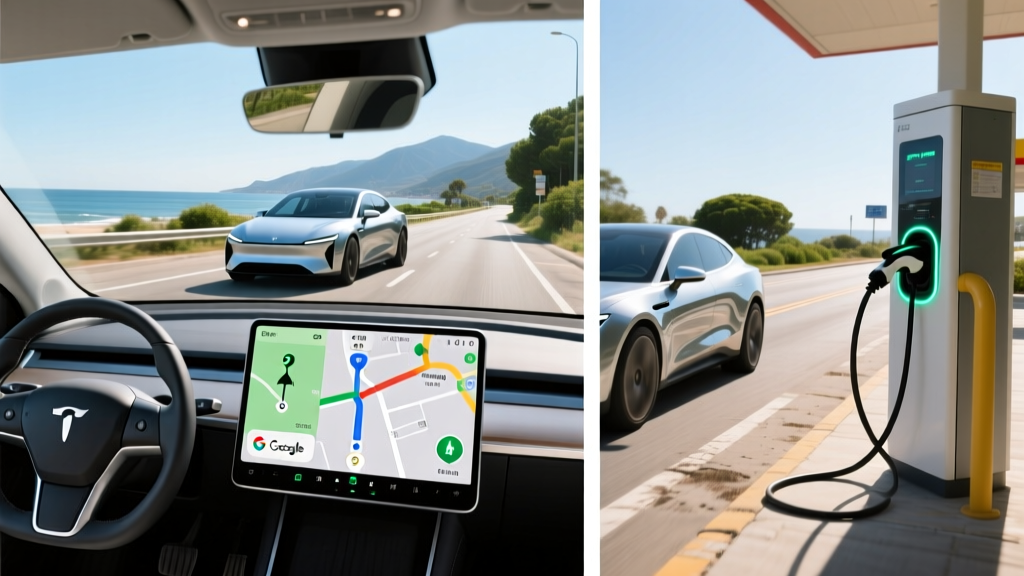
At a 150 kW-capable station, the Prologue peaks near its rated maximum but tapers noticeably above 60% SoC. The 10–80% sprint takes roughly 30 minutes under ideal conditions (battery preconditioned, ambient temperature 65–80°F). In colder weather, add 5–10 minutes as the battery warms to optimal charging temperature. Preconditioning the battery by navigating to a charger in the infotainment system is essential for achieving advertised speeds — skip this step and you may see peak rates closer to 90–100 kW initially.
For home charging, the 11.5 kW onboard charger is generous. A typical overnight session (8 hours on a 48A Level 2 circuit) adds roughly 250 miles — more than enough for daily driving. Installation of a 240V/60A circuit typically runs $800–$2,000 depending on panel proximity and local permit requirements. Always consult a licensed electrician for final specifications.
Performance and Drivetrain
The 2027 Prologue carries over its two powertrain configurations:
- FWD (single motor): 213 horsepower, 236 lb-ft torque. 0–60 mph in approximately 7.5 seconds.
- AWD (dual motor): 288 horsepower, 324 lb-ft torque. 0–60 mph in approximately 5.8 seconds.
The AWD model's acceleration is genuinely brisk for a two-row family SUV, and the instant torque delivery makes merging and passing effortless. The FWD model is adequate for commuting but feels its weight (roughly 4,800 lbs) when pushed hard on uphill on-ramps.
Ride quality leans toward comfort over sportiness — Honda tuned the suspension for compliance over rough pavement, which suits the Prologue's family-SUV mission. Steering is light and numb by enthusiast standards but predictable. The Ultium platform's low center of gravity keeps body roll well-controlled despite the ride height.
One-pedal driving with strong regenerative braking is available but not as aggressive as Tesla or Hyundai's implementations. Most owners will still use the friction brakes for final stops. According to NHTSA data, the Prologue has performed well in crash testing, earning strong marks across frontal and side-impact categories.
Interior, Cargo, and Technology
The Prologue's cabin borrows heavily from GM's Ultium-parts bin — the 11.3-inch infotainment touchscreen and 11-inch digital instrument cluster are shared with the Chevrolet Blazer EV and Equinox EV. Material quality is mid-pack: soft-touch surfaces on the dash and door tops, harder plastics lower down. It's a step below the Hyundai Ioniq 5's premium feel but competitive with the Ford Mustang Mach-E.
| Dimension | Measurement |
|---|---|
| Cargo Volume (behind 2nd row) | 25.2 cu ft |
| Cargo Volume (2nd row folded) | 57.7 cu ft |
| Front Legroom | 42.6 inches |
| Rear Legroom | 37.1 inches |
| Seating Capacity | 5 passengers |
Rear-seat space accommodates adults comfortably, though the floor-mounted battery raises the floor height slightly, creating a knees-up seating position for taller passengers. The 25.2 cu ft cargo area is competitive but trails the Model Y's 30 cu ft and Ioniq 5's 27.2 cu ft. There is no front trunk (frunk) — the space is occupied by HVAC components.
Tech highlights include Google Built-In (Google Maps, Google Assistant, Play Store), wireless Apple CarPlay and Android Auto, a 9-speaker Bose audio system on upper trims, and a suite of Honda Sensing ADAS features including adaptive cruise control, lane-keeping assist, and blind-spot monitoring. The Prologue's driver-assist system is SAE Level 2 — it assists with steering and speed but requires constant driver supervision. This is not autonomous driving.
Pricing, Trims, and Federal Tax Credit Eligibility
The 2027 Honda Prologue is offered in three trims. Pricing reflects MSRP before destination charges and before any incentives:
| Trim | MSRP (approx.) | After Potential §30D Credit |
|---|---|---|
| EX (FWD) | $47,400 | As low as $39,900* |
| Touring (FWD) | $51,400 | As low as $43,900* |
| Elite (AWD) | $57,900 | As low as $50,400* |
*Potential pricing assumes full $7,500 federal tax credit eligibility. Actual credit depends on individual circumstances.
- MSRP Cap: SUVs must have an MSRP at or below $80,000 (all Prologue trims qualify).
- Income Cap: Adjusted gross income must not exceed $150,000 (single), $225,000 (head of household), or $300,000 (joint filers).
- Battery Sourcing: Critical minerals and battery components must meet phased-in domestic/free-trade sourcing thresholds. The Prologue's GM-sourced Ultium battery has met requirements for the full $7,500 in recent model years, but verify current-year compliance at IRS.gov.
- Point-of-Sale Transfer: Eligible buyers can transfer the credit to the dealer at purchase, reducing the upfront price rather than waiting for a tax refund.
Warranty and Long-Term Ownership
Honda backs the 2027 Prologue with a competitive warranty package:
- Limited Vehicle Warranty: 3 years / 36,000 miles
- Powertrain Warranty: 5 years / 60,000 miles
- Battery Warranty: 8 years / 100,000 miles (covers defects and capacity loss below 70% of original capacity)
The battery warranty aligns with the federal minimum and matches most competitors. The 70% retention threshold is standard — if your battery degrades below 70% of its original 85 kWh capacity within 8 years or 100,000 miles, Honda must repair or replace it at no cost. Based on Ultium fleet data, most packs retain 88–92% capacity at the 100,000-mile mark under normal use patterns.
Maintenance costs are dramatically lower than a gas-powered SUV — no oil changes, no transmission fluid, no spark plugs. Expect to spend primarily on tire rotation, cabin air filter, and wiper fluid. According to fueleconomy.gov, the Prologue's electricity cost averages roughly $550–$650 per year for 15,000 miles of driving (at $0.14/kWh national average), compared to $1,800–$2,200 for a comparable gas SUV at $3.50/gallon.
How It Compares: Prologue vs. Key Rivals
| Spec | Honda Prologue (FWD) | Hyundai Ioniq 5 (RWD) | Tesla Model Y (LR) | Ford Mach-E (RWD) |
|---|---|---|---|---|
| EPA Range | 305 mi | 303 mi | 330 mi | 250 mi (SR) / 320 mi (ER) |
| Battery | 85 kWh NMC | 77.4 kWh NMC | ~75 kWh NMC | 70/91 kWh NMC |
| Peak DC Charge | 150 kW | 240 kW | 250 kW | 150 kW |
| 10–80% DC Time | ~30 min | ~18 min | ~20 min | ~35 min (91 kWh) |
| 0–60 mph | 7.5 sec | 7.2 sec | 5.0 sec | 6.1 sec (ER RWD) |
| Base MSRP | ~$47,400 | ~$43,500 | ~$44,990 | ~$42,995 |
| Cargo (rear seats up) | 25.2 cu ft | 27.2 cu ft | 30.2 cu ft | 29.7 cu ft |
The Prologue's 150 kW peak charging rate is its most notable competitive gap. The Ioniq 5's 800V architecture enables 240 kW charging, cutting 10–80% time to 18 minutes — a meaningful advantage on road trips. The Model Y leads in range, cargo space, and Supercharger network exclusivity. The Mach-E offers sportier handling and a lower entry price.
Where the Prologue wins: ride comfort, Honda brand loyalty and dealer network familiarity, and Google Built-In integration. For existing Honda owners transitioning from a CR-V or Passport, the Prologue's controls, sightlines, and dealer service experience feel immediately familiar.
Pros, Cons, and Verdict
Pros
- Comfortable, compliant ride quality
- Strong 305-mile EPA range (FWD)
- Generous 11.5 kW Level 2 home charging
- Google Built-In infotainment is intuitive
- Familiar Honda dealer network for service
- Full §30D tax credit eligible (subject to sourcing/income rules)
- Spacious rear seat for adults
Cons
- 150 kW DC charging trails key rivals
- No front trunk (frunk)
- Cargo space below class leaders
- GM-sourced interior feels less premium than expected at this price
- Regenerative braking not strong enough for true one-pedal driving
- NACS adapter required for Supercharger access (not native port)
- Higher base price than Ioniq 5 and Mach-E
Who Should Buy the 2027 Honda Prologue?
- You're a loyal Honda owner who values dealer familiarity and brand trust
- Your daily commute is under 80 miles round-trip (home charging covers you easily)
- You prioritize ride comfort over sporty handling
- You rarely take road trips longer than 250 miles between charging stops
- You want a mainstream SUV with straightforward controls and Google integration
- Road-trip charging speed is a top priority (choose Ioniq 5 or Model Y)
- You need maximum cargo space (Model Y wins by a wide margin)
- You want the lowest entry price (Mach-E and Ioniq 5 start lower)
- You want a frunk for additional storage
- You want native NACS charging without an adapter
Frequently Asked Questions
What is the real-world range of the 2027 Honda Prologue?
The EPA rates the FWD Prologue at 305 miles and AWD at 285 miles. In real-world highway driving at 70+ mph, expect 250–275 miles (FWD). In cold weather below freezing, plan for 220–245 miles. City driving with regenerative braking can exceed EPA estimates in mild temperatures.
How fast does the Prologue charge at home and on the road?
At home on a 240V Level 2 charger, the Prologue charges at 11.5 kW, adding roughly 32 miles per hour — a full charge takes about 9 hours. On DC fast chargers, it peaks at 150 kW and reaches 10–80% in approximately 30 minutes under ideal conditions.
Does the 2027 Honda Prologue qualify for the $7,500 federal tax credit?
The Prologue has qualified for the full $7,500 §30D credit in recent model years due to its GM Ultium battery sourcing. However, eligibility depends on your income (AGI caps apply), the vehicle's MSRP (under $80,000 — all trims qualify), and current-year battery sourcing requirements. Always verify at IRS.gov and consult a tax professional.
Is the Honda Prologue better than the Tesla Model Y?
It depends on your priorities. The Model Y offers more range (330 mi), faster charging (250 kW), more cargo space (30 cu ft), and native Supercharger access. The Prologue offers a more comfortable ride, traditional SUV styling, Honda dealer service familiarity, and Google Built-In infotainment. For road-trip-heavy buyers, the Model Y has the edge. For daily commuters who value comfort and dealer relationships, the Prologue is compelling.
Does the Prologue have a frunk?
No. The 2027 Honda Prologue does not have a front trunk. The space under the hood houses HVAC and power electronics. All cargo must go in the rear cargo area (25.2 cu ft behind the second row).
What is the battery warranty on the Prologue?
Honda covers the battery for 8 years or 100,000 miles, whichever comes first. The warranty covers defects and capacity degradation below 70% of original capacity. This is the federal minimum standard and matches most competitors in the segment.
Editor's note: This review reflects 2027 model-year specifications as published by Honda and EPA data available at time of writing. Federal tax credit rules under IRS §30D are subject to change. Always confirm current eligibility requirements with official IRS guidance and a qualified tax advisor before making a purchase decision. Real-world range and charging figures are estimates based on testing and fleet data; individual results vary with driving style, temperature, terrain, and battery condition.